


It’s no secret that the French Riviera tends to steal the spotlight when it comes to desirable coastal destinations — cue visions of beaches with bright white umbrellas set against a colourful backdrop of pastel buildings and shimmering blue waters. The glitz and glamour of the Côte d’Azur are what many travellers have come to revel in; however, in the midst of surging crowds and summer temperatures, France’s other coastlines leave much to be discovered beyond this iconic southerly stretch. Here are six alternative sunny seaside spots to discover this summer…
North coast: Normandy
Key towns: Deauville, Trouville-sur-Mer, Honfleur and Étretat.
Best for: Cultural depth and unbeatable convenience. Normandy is just two hours from the capital by train, making it an accessible coastal escape from Paris for a long weekend.
Best time to visit: May to September.
The region most prized by Parisian vacationers, Normandy sits just two hours from the City of Light by train or car, offering the best of countryside respite and coastal charm. For those in search of beaches and culture alike, the twin cities of Deauville and Trouville-sur-Mer boast an art deco backdrop for acclaimed cultural events, such as the American Film Festival, and classic French brasseries, like Les Vapeurs, where trays of fresh oysters are served on top of starched white tablecloths. Linger a little longer at Les Franciscaines, a beautifully remodelled convent turned cultural centre, with rotating exhibitions and creative ateliers drawing visitors of all ages. Those enamoured of rolling green fields should find refuge at Manoir de Surville, a regal stay nestled in the heart of Normandy and perfectly placed to explore the region in full, from Deauville’s culture to Étretat’s sweeping cliffs to the bustling artistic port of Honfleur.
Northwest coast: Brittany
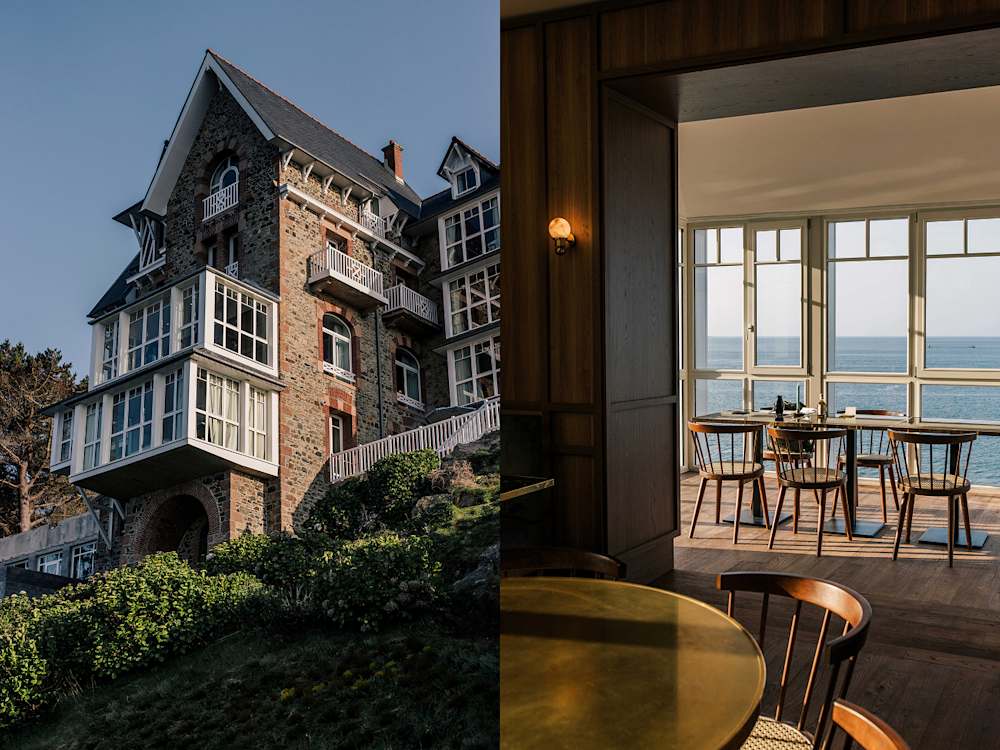
Les Bassans
Key towns: Saint-Malo, Cancale, Dinard and Saint-Briac-sur-Mer.
Best for: Ancient villages, a Breton identity rooted in Celtic tradition, and emerald coastlines that reveals something new at every turn.
Best time to visit: June to September.
Dramatic landscapes, mouthwatering pastries and crisp cider are just a few of Bretagne‘s charms, rooted in an ancient heritage that stretches from the rugged western coastlines to the quaint villages dotted along the northern Emerald Coast. Brittany‘s beachside towns and inland mediaeval villages weave together into a singular mosaic, which is best explored by car. Begin your journey in the storied port city of Saint-Malo, with an unmissable lunch at Grain Noir, a celebrated crêperie serving the best of Breton galettes, crêpes and cidres. From there, drift west to the towns of Dinard and Saint-Briac-sur-Mer, where chic hideaways Le Nessay and Castelbrac promise sprawling views and direct ocean access for guests in no particular hurry. Further along the coast, Les Bassans is a true retreat for nature lovers, and while dolphin sightings can’t be guaranteed, they’re certainly not out of the question, either.
West coast: Île de Ré
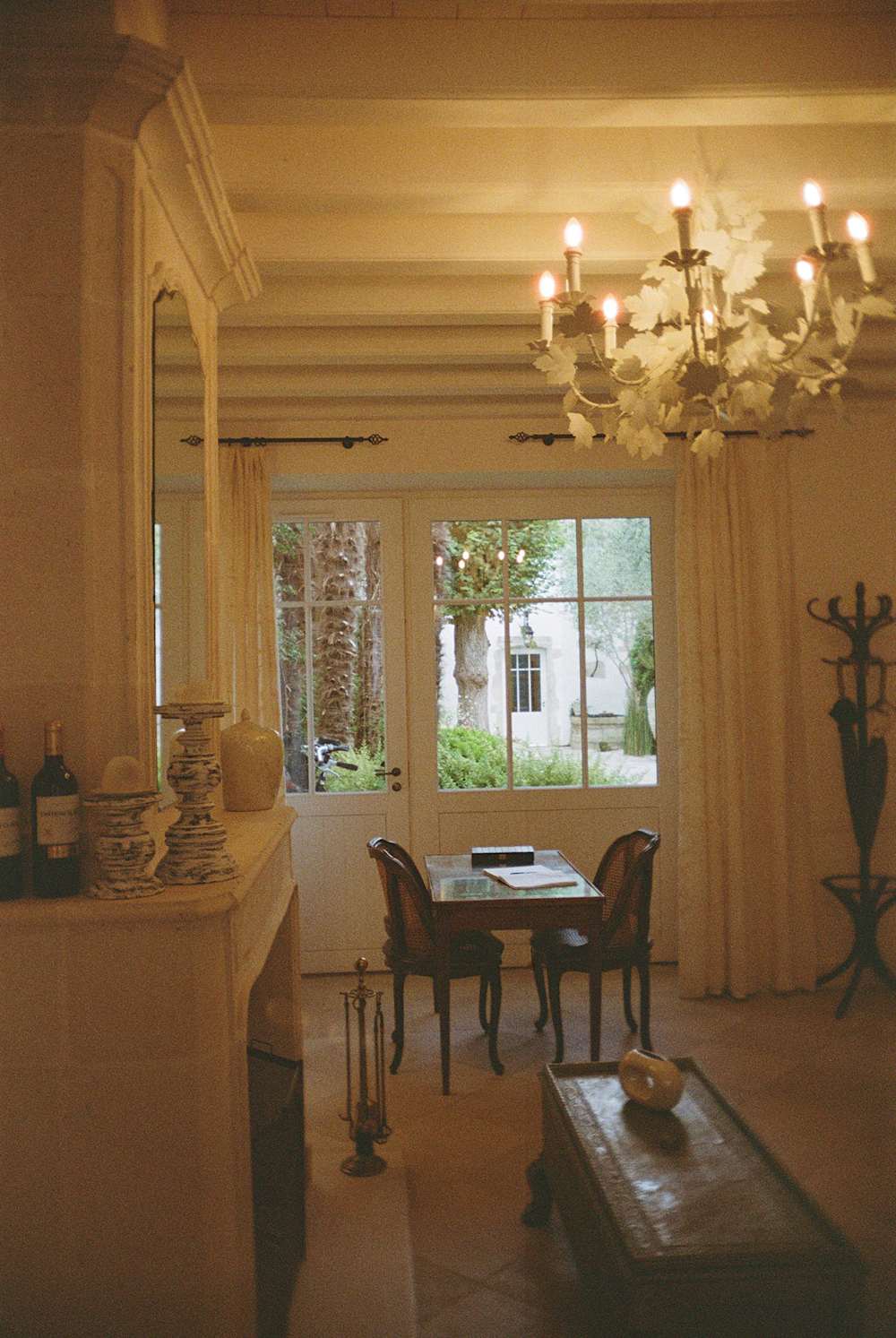
Villa Clarisse
Key towns: Saint-Martin-de-Ré, La Flotte and Ars-en-Ré.
Best for: Endless cycling paths for those leisurely bike-ride days when you have no particular place to be.
Best time to visit: June to September.
When relaxation is on the agenda, Île de Ré is the answer. This quaint island off the western Atlantic coast is an invitation to rest and recharge among vast pine forests, flat biking paths and laidback coastal villages. Commonly referred to as ‘Ré la Blanche‘, the island’s whitewashed houses, salt marshes and pops of colour create a striking luminosity. Hop on a bike — the preferred mode of transportation — and find yourself at a local morning market or gliding along soft sand dunes speckled with tall grasses swaying in the wind. As for where to stay, the main town of Saint-Martin-de-Ré delivers several notable options. Cradled between cobblestone alleyways, Villa Clarisse charms with its exposed wooden beams and shutters, both emblematic of traditional island architecture, updated for a contemporary feel; while Hôtel de Toiras is equally well-regarded, both for its central location and brasserie-style restaurant, George’s.
West coast: Île d’Yeu
Key town: Port-Joinville.
Best for: Island simplicity, unhurried summer days and long seafood lunches.
Best time to visit: June to September.
Another island set off France’s Atlantic coast, Île d’Yeu is a slightly more under-the-radar escape where rocky cliffs meet sandy beaches and turquoise waters. Like Île de Ré, its whitewashed buildings and relaxed biking define daily life, with time passing simply, free from the city’s hustle, the Riviera’s crowds and relentless summer heat. When tranquillity has run its course, Port-Joinville delivers a livelier pulse, its quays dotted with crêperies, boutique and a daily market showcasing the best of the island’s produce, such as briny oysters and fleur de sel. Nearby, Les Hauts Mers is a refined oceanfront retreat with nautical-inspired interiors, ideally positioned for a bicycle ride to Le Bar de la Meule, where cocktails in the sun and freshly caught fish await. La Mission Hôtel & Spa feels more whimsical in spirit, with poolside lounging and rooftop drinks channelling the easy, unhurried spirit of summer on the Atlantic.
Southwest coast: Basque Country and beyond
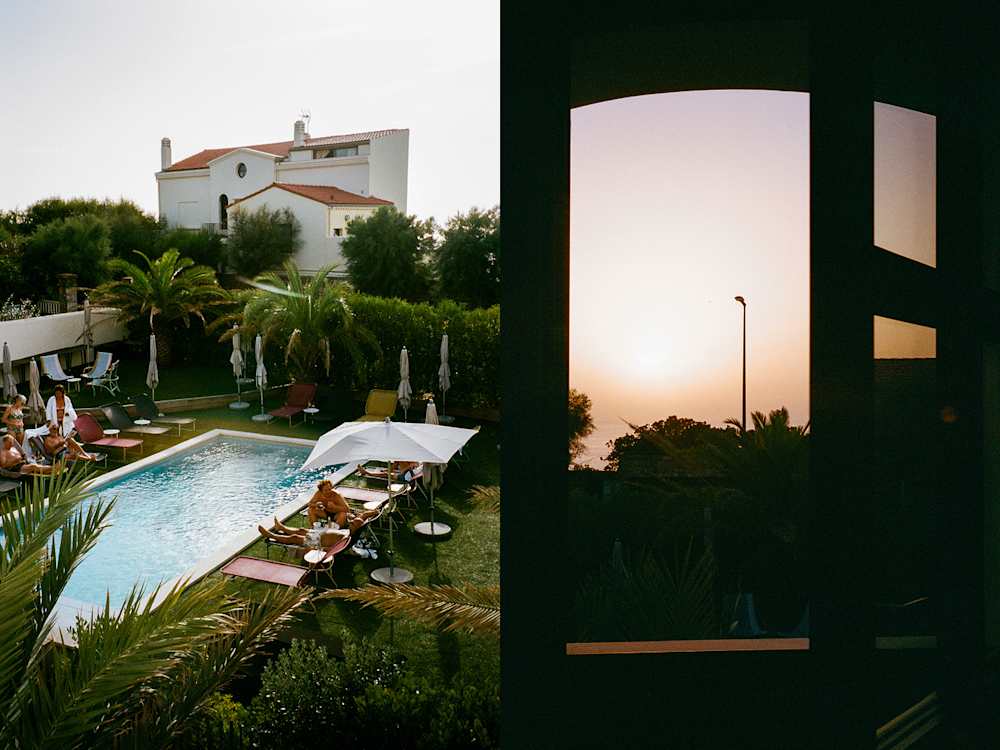
Hôtel Le Garage
Key towns: Biarritz, Hossegor and Guéthary.
Best for: Basque traditions, Belle Époque grandeur and surf culture at its most refined.
Best time to visit: May to October.
Crashing waves meet pastel-striped umbrellas along the shores of Biarritz, a Belle Époque seaside resort every bit as iconic as the Riviera. This corner of the Basque Coast strikes the ideal balance of laidback luxury: mornings beginning with coffee from Lobita, a browse through Les Halles market, and a dip in the sea (surfboard optional), before winding down at local wine bar Chéri Bibi and turning in at Regina Experimental or Hôtel Le Garage. The culture and charm of this coastline extends well beyond Biarritz, with Hossegor and Guéthary quietly stepping into the spotlight for their easygoing surf scenes, well-curated shops and understated natural splendour. In Hossegor, Les Hortensias du Lac hotel distils the coastal character with quiet ease — the lake on one side and the sea a short distance on the other — inviting visitors to slow down and settle into the pace of this peaceful part of France.
Southeast coast: Corsica
Key towns: Bastia, Bonifacio, Porto-Vecchio and Ajaccio.
Best for: Equal parts adventure and Mediterranean ease. Dramatic landscapes, citrus-lined coasts and a character found nowhere else in France.
Best time to visit: May to October.
Located off the country’s southern coast, an hour-long ferry ride from Sardinia, Corsica is a destination unlike any other, defined by deep heritage and a fiercely independent identity that endures despite remaining a part of France. Innately Mediterranean in feeling, the island blooms with citrus trees and wild iris framed against open sea and jagged mountain ranges. Corsica is not a singular experience, catering to the adventurous with formidable hiking and to the leisurely traveller with unlimited seaside lounging and elevated dining inspired by its natural surroundings. For a taste of southern Corsica, Les Regalia is a family-run retreat perched among pine and olive trees, with ocean views that only enhance the setting further. In the north, A Casa Reale is a four-room bed-and-breakfast steeped in history, built in the 17th century and once home to Sir Gilbert Elliot, Viceroy of Corsica, before later welcoming guests including Gustave Flaubert. Regardless of which part of the island you call home for your stay, Corsica will leave its mark; a place so alive with character and contradiction that one visit rarely feels like enough.
Stick to the south on an art trail of the region, or plot the perfect weekend in Paris
A former tech start-up founder, Maddy Odom‘s writing has been published in various publications including Travel + Leisure, YOLO Journal and Small Luxury Hotels. She also shares her own weekly reflections on places, perspectives and ways of living well through her Substack newsletter, Slow Sailing.