


In the summer of 1959, John Steinbeck was in Bruton. Not content with the might of his pen, The Grapes of Wrath author went shopping for something with a bit more bite: a battle axe. In a letter home, he described plans to commission a weapon ‘like the ones the Norse and Saxon warriors carried for war and work’. Had he gone giddy with the charms of the West Country? Quite possibly. But it’s not as outlandish as it seems, because Bruton still had a medieval forge back then. Today, it’s part of Number One Bruton.
Steinbeck had come to Somerset in pursuit of Arthurian legends. Judging by his shopping list, all that research on heraldic knights had really got under his skin. His book ended up being a misfire, but the writer remembered his six months in the town as among the happiest in his life. If Bruton could charm a man who made a career sloughing away at human nature, then its powers are not to be taken lightly.
Number One Bruton
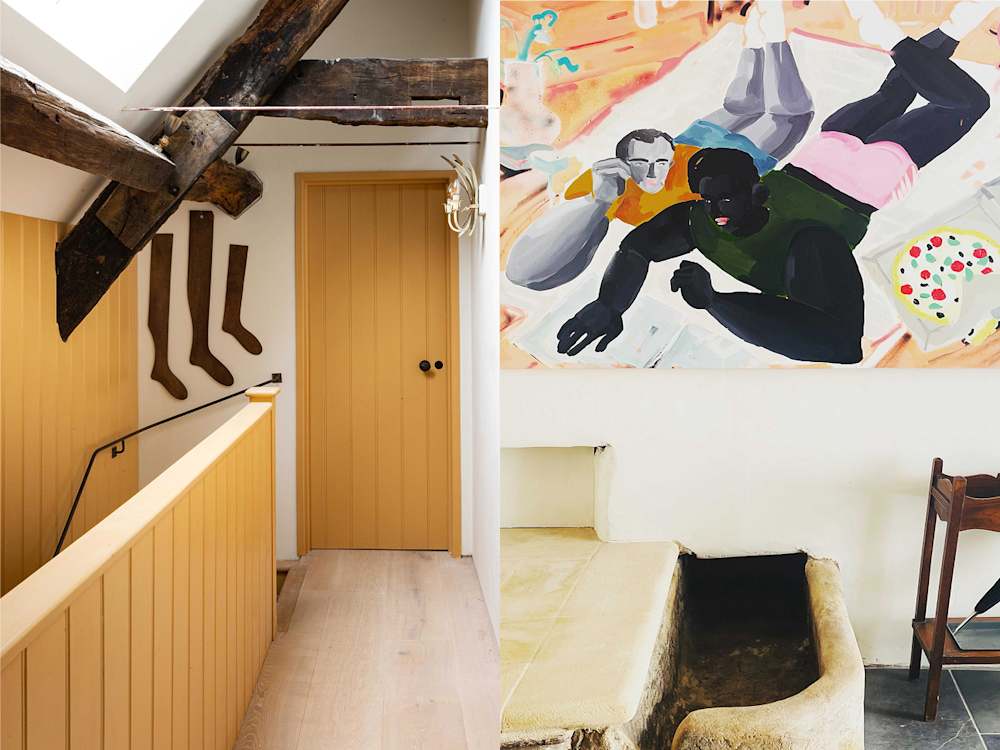
So here I am, arriving to good omens. It’s unseasonably warm for spring, so I’m shedding layers as I stroll into town, crossing the River Brue on my way to the high street. Up ahead is a handsome Georgian townhouse with a front door of daffodil yellow — Number One, in all its glory. I’m whisked through to my room off the courtyard garden, planted with well-travelled flora like willow-leaved pear, katsura and a shrub known in China as the ‘seven-son flower tree’. This is the work of celebrated garden designer Penelope Hobhouse, who’s transformed what was once a derelict yard into a verdant bower.
My room, one of the 18th-century cottages, is spacious enough to swing a mummified cat in. Why the odd idiom? During the hotel’s five-year renovation, the skeleton of a mummified cat turned up in a wall. According to Claudia Waddam, who owns and runs Number One alongside her husband Aled Rees, this curio was thought to be 400 years old and presumed to be some sort of talisman. She did the sensible thing: she put it right back where she found it.
It’s performing its duties admirably, because Cottage Two is as far from the evil eye as you can get. It’s a long room, with original timber beams and a floor of red-clay tile laid out in a herringbone pattern. On one side is a bespoke spindle bed topped with a gloriously comfortable mattress — handmade, no less, as is the case in every room. At the other end is a powder-blue sofa, topped with William Morris cushions and flanked by a vintage cabinet that looks to be inspired by Middle Eastern art.
Number One Bruton
You soon realise that nothing here is off the shelf. It’s all original — the art, the upholstery, the leather detailing on the room key — which is a testament to Waddam’s pulling power with local artists and designers. The spirit of collaboration is everywhere, right down to the cider in the minibar, pressed from the orchard bounty of fellow Somerset stay The Newt. But it’s in the living room of the main house that you begin to understand the true cultural heft of Number One.
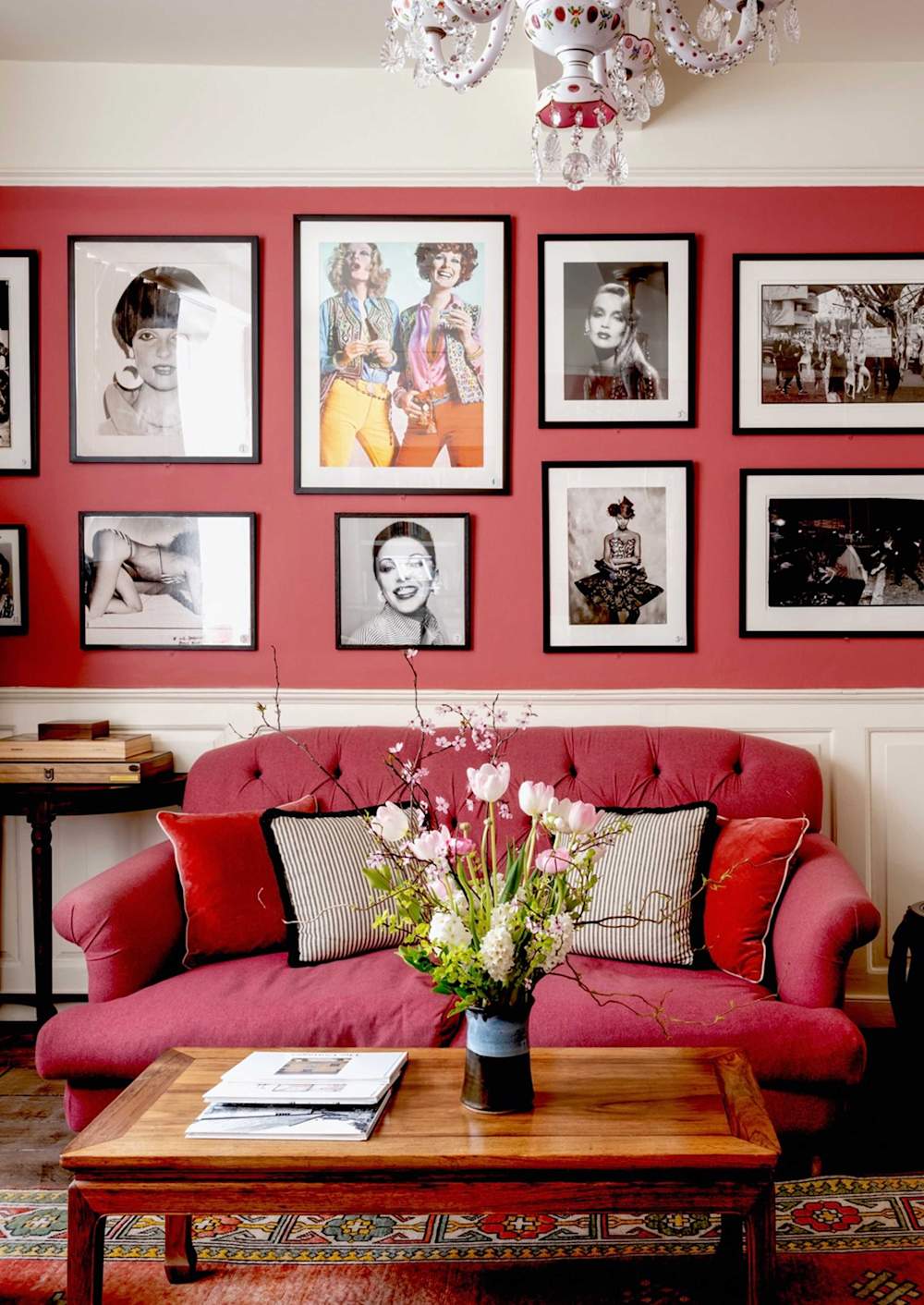
Walking in, I’m a little bemused. It isn’t the Iranian rug or the Syrian antiques that are responsible, as impressive as those are. It’s the photographs on the walls: originals by David Bailey, Don McCullin, Nik Wheeler, Terence Donovan and Dafydd Jones. As I soon discover, Waddam’s family have longstanding connections to the press. Her mother, Brigid Keenan, was an editor for The Sunday Times, The Observer and the groundbreaking Nova magazine, before she turned her attention to writing books. These photographs are all by family friends.
Briar
In a way, this makes perfect sense. Bruton has made a name for itself as a hotbed of creativity. It’s not a big place but it packs an outsized punch: home to Hauser & Wirth Somerset; boutiques like Philo & Philo, an interiors store run by fashion designer Phoebe Philo’s mother and sister; and a collection of covetable restaurants, not least Merlin Labron-Johnson’s award-winning Osip. This lauded field-to-fork restaurant started out at Number One before moving to a tiny hamlet a few miles up the road. In an hour, I have a date with its successor, Briar.
But first, a drink. Propping up Number One’s right shoulder is The Old Pharmacy, a small-plates bistro and wine bar in a 500-year-old building with a medicinal past. The wines here run the gamut from the traditional to full-on funk, but you can also toast to good health with the fine line of herbal tinctures and cordials. On the hotel’s left is the Blue Ball, Bruton’s cosy, street-corner pub. Waddam and Rees bought it, gave it a sensitive facelift and turned it into a proper community boozer, where local ales and ciders are sunk over darts championships and folk-music nights.
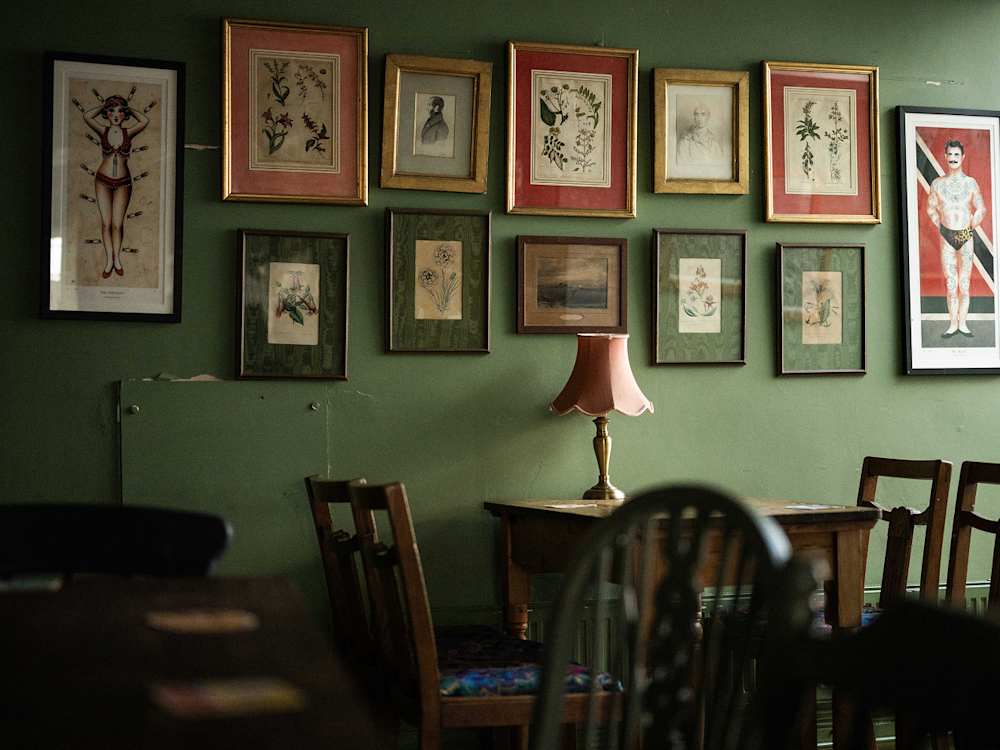
Blue Ball
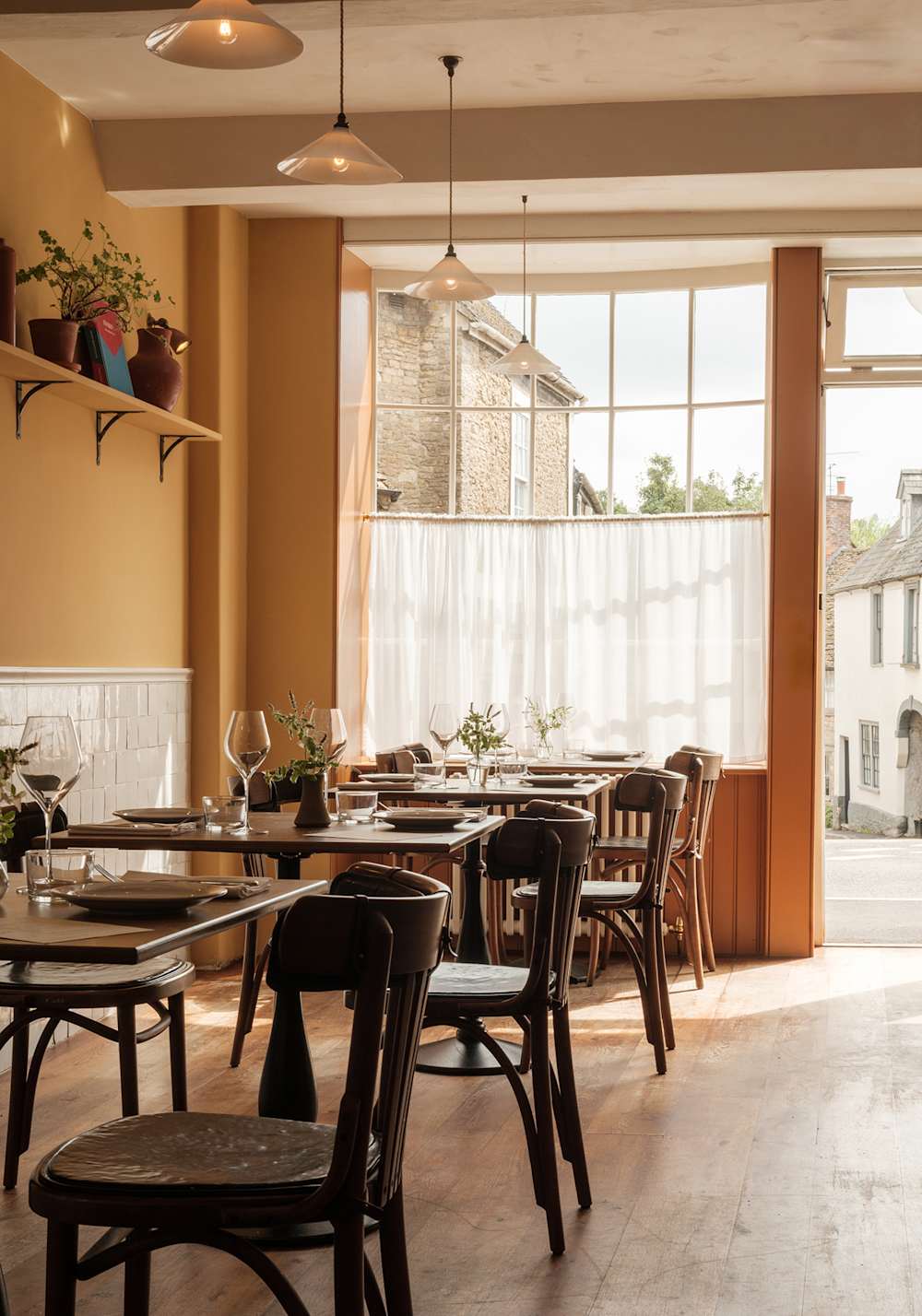
Briar beckons. I take up position by the shopfront window, a relic from the old ironmongers where Steinbeck ordered his axe. Slicing away in the open kitchen is Cheshire-born chef Sam Lomas, who used to head up the restaurant at Glebe House in Devon. It can’t have been easy to take up the mantel from Osip, frequently named among the best restaurants in the UK. But Lomas has — to borrow some metalworking parlance — nailed it. It’s a sharing-plates setup, showcasing his cheffed-up West Country fare. The menu is tweaked daily, depending on what he’s plucked from the kitchen garden or acquired that morning from local suppliers. It’s even printed with the moon phase (waning crescent) and weather forecast (sunny).
I begin with a favourite of mice and men — cheddar, in the form of warm gougères, one of Sam’s signatures. These plump little pillows of cheese-filled pastry are dangerously moreish, accompanied by a pickled-walnut ketchup. Then comes the smoked beetroot, firm to the bite and slathered in horseradish cream. Hot on its heels is a plate of roasted crown-prince squash, muddled with black olives, almond and mint. And for the finale, medallions of tender lamb with black-pepper yoghurt, asparagus and wild garlic. It is glorious, every dish. I retire to bed with that peculiar satisfaction you get from knowing that everything you’ve eaten came from within a few square miles.
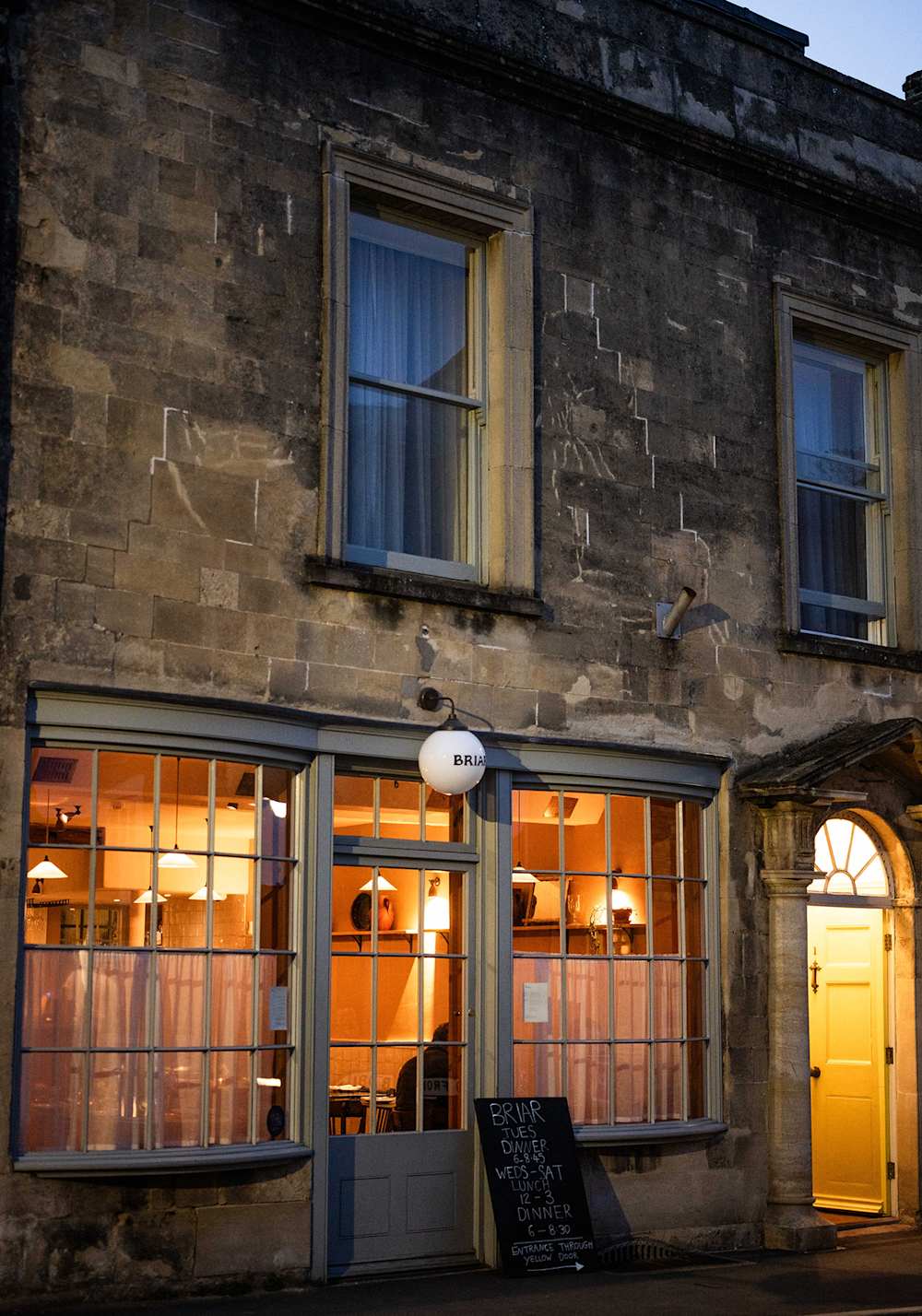
Briar
My only full day in Bruton is nigh perfect. I visit Hauser & Wirth Somerset to see Don McCullin: 90, an exhibition of 90 of the photojournalist’s seminal photographs, timed to coincide with his 90th year. I raid the high street and local farm shops, loading up on Somerset charcuterie, pét-nat cider and apricot jam. I walk to the nearby village of Batcombe, crossing field and hill to reach country pub The Three Horseshoes, opened by Margot Henderson of Rochelle Canteen fame. Before dinner, I sit out on the terrace, overlooking a 15th-century church of honey-hued sandstone.
It’s not hard to see why Steinbeck fell for this place. Whispers of the old and ancient still swirl around its fields, woodlands and chalk hills. He might have come for King Arthur, but I’d say the grail he found was Bruton itself. With Number One leading the way, the town is only getting better, adding new layers of creativity and culinary wizardry to its historical heft.
Ready to strike out west? Read our Somerset food guide or explore our full collection of the county’s hotels