


Morocco’s High Atlas Mountains are improbably verdant as I thread along the twisty-turny passes on the drive up with one of my dearest friends. Climbing higher and higher, through steep-sided gorges, we glimpse higgledy-piggledy settlements of boxy earthen houses clinging to the scarps, and streams of snowmelt trickling down crags. The skies had only just cleared following more than a month of heavy rain — a rare phenomenon in these arid parts — and yolk-yellow wildflowers are clustering beneath the Aleppo pines as surprising pops of vivid greenery emerge from rust-coloured rock.
We’re heading to Olinto Atlas Mountain Retreat — a veritable desert oasis in the high-altitude Ouirgane Valley, next to ruling monarch King Mohammed VI’s vast private hunting grounds. As we both arrived here suitably frazzled (I’m grappling with deadlines and my friend is grafting through a house renovation back home), we intend to spend our long weekend here doing very little.
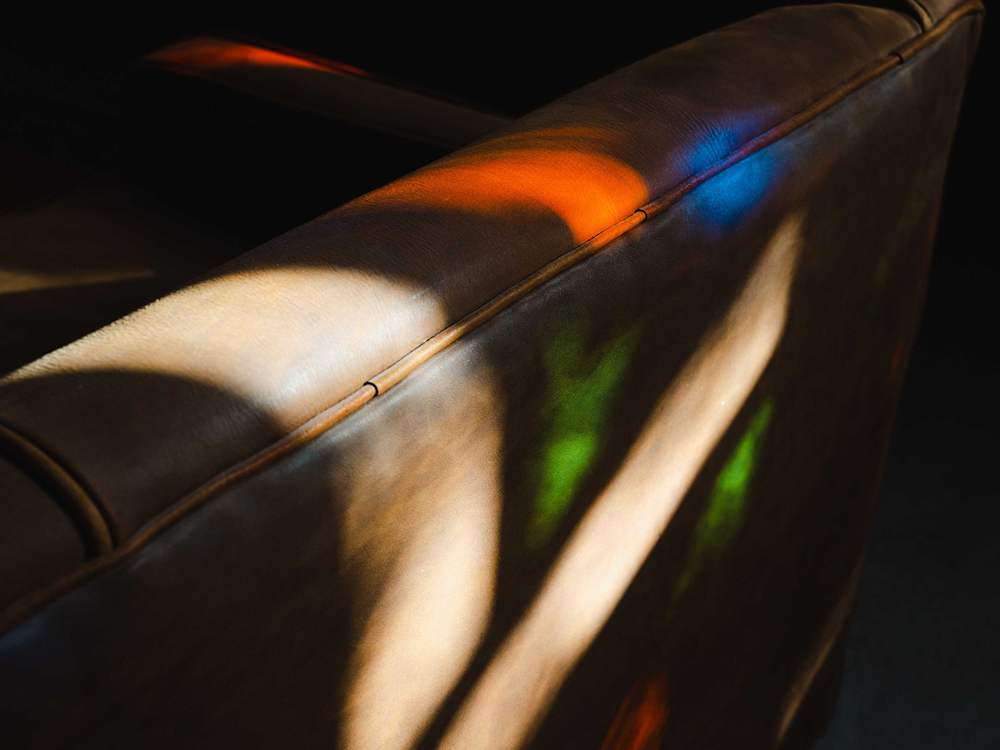
After just over an hour on the road from Marrakech Menara Airport, we arrive, driving through a set of elaborate metal gates and stepping into the lobby, with its arched windows and hand-tufted rugs spread across bejmat tiles. Marouane, Olinto’s sharply dressed managing director, who grew up not far from the hotel, checks us in and mentions that he was approached to run the place after a chance encounter in a nearby village. As we chat, sunlight bounces off the mashrabiya screens, dappling the space with sparkly dots.
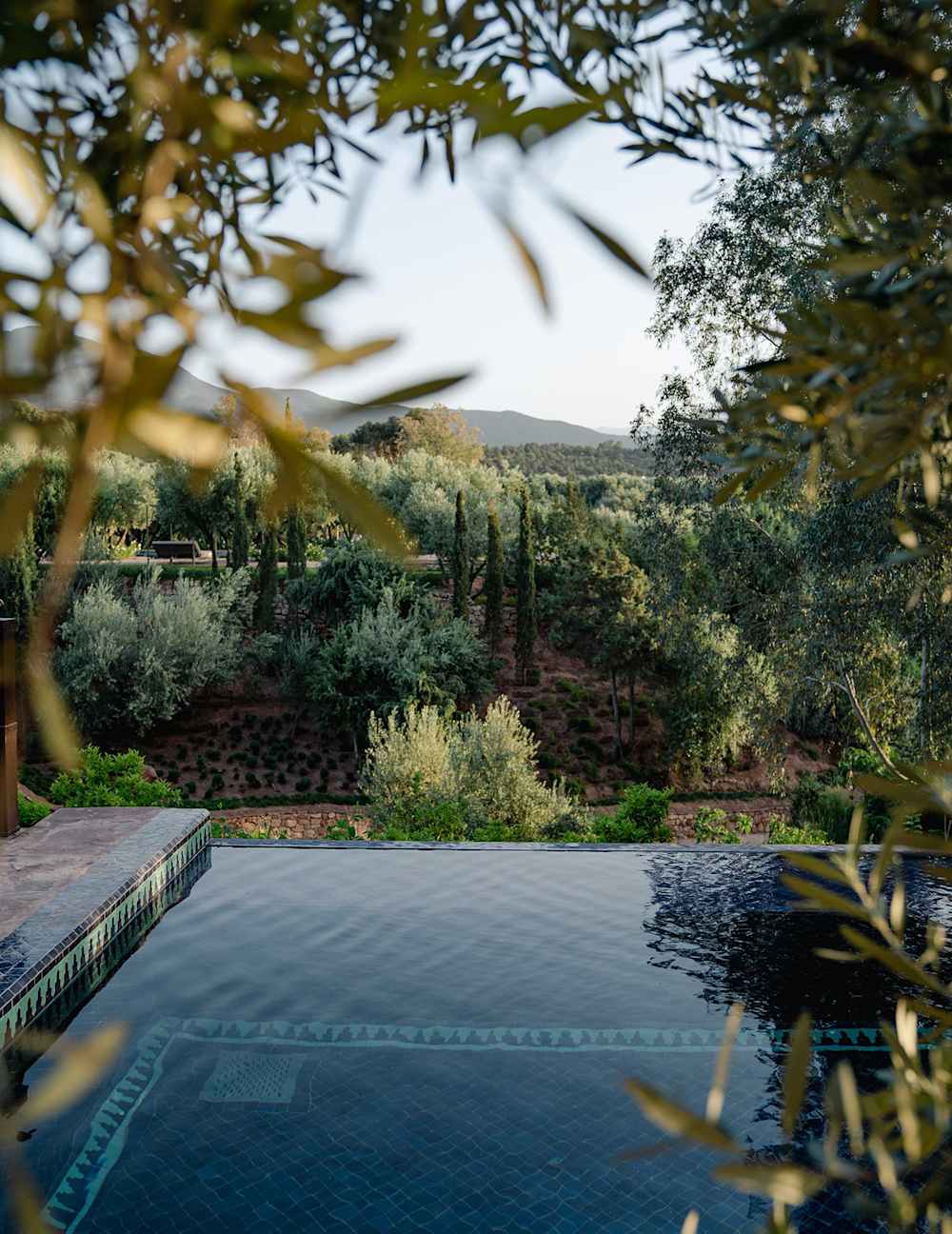
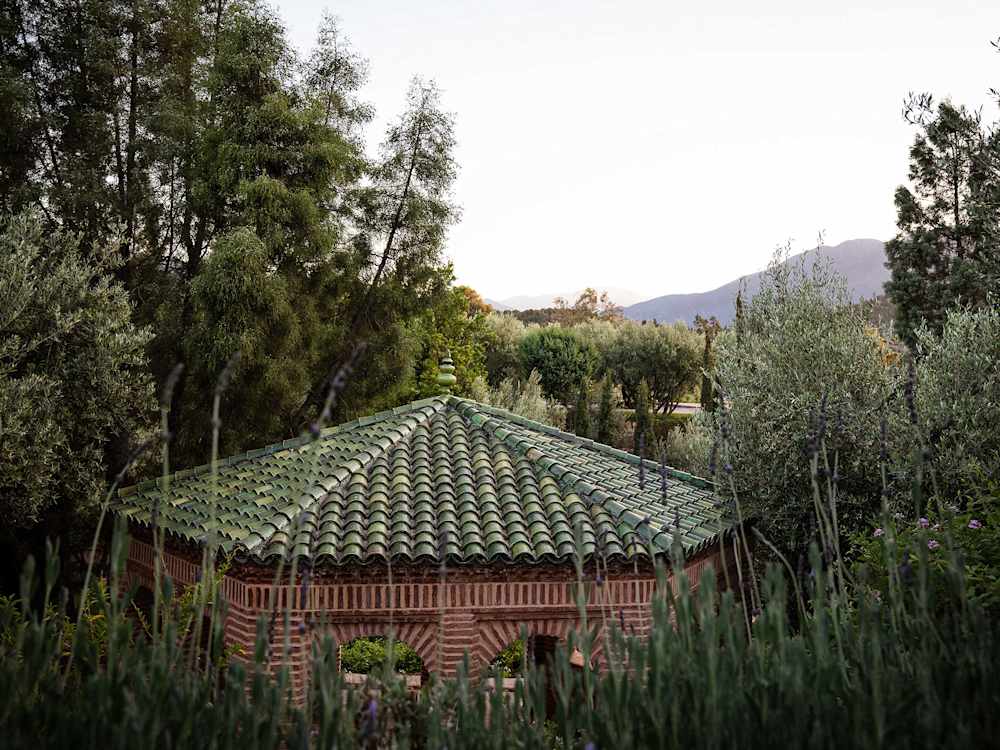
We amble through the grounds, past buildings criss-crossed with flowering vines, ornate fountains and trees heavy with fruit. It’s puzzling to think that only a few years back, this was just an olive farm. It’s now tended to by a dozen or so gardeners, who we see pruning, staking and watering in wide-brimmed hats. Glassine ponds strewn with lilies punctuate the foliage — look closely and you’ll spy flashes of orange just beneath the water’s surface as ornamental carp weave to and fro; and with my trusty, bird-identification app, Merlin, I pick up the shrill squeaks of European serins.
Following a lunch of line-caught sea-bass with Jerusalem artichokes — served beneath the courtyard’s jasmine-entangled pergola — we wander over to the swimming pool, which is a vivid shade of jade, and plonk ourselves down for the remainder of the afternoon, delighting in the feeling of the sun on our skin and gawping at the peaks in the distance.
Responsible for magicking all this together is the French-Italian former antiques dealer Prince Fabrizio Ruspoli di Poggio Suasa. Over ice-cold chablis and canapés in his fire-warmed sitting room that evening, we’re told how — having spent his childhood summers visiting his grandmother at her home in Tangier — he felt drawn to Morocco and started to build a life here. When designing Olinto’s grounds, he deliberately eschewed the formality of traditional Islamic planting in favour of something wilder, a botanical idyll in which guests could really lose themselves. He found inspiration in the rambling grounds of English country estates; every detail reflects his dedication to his vision, and it feels undeniably romantic.
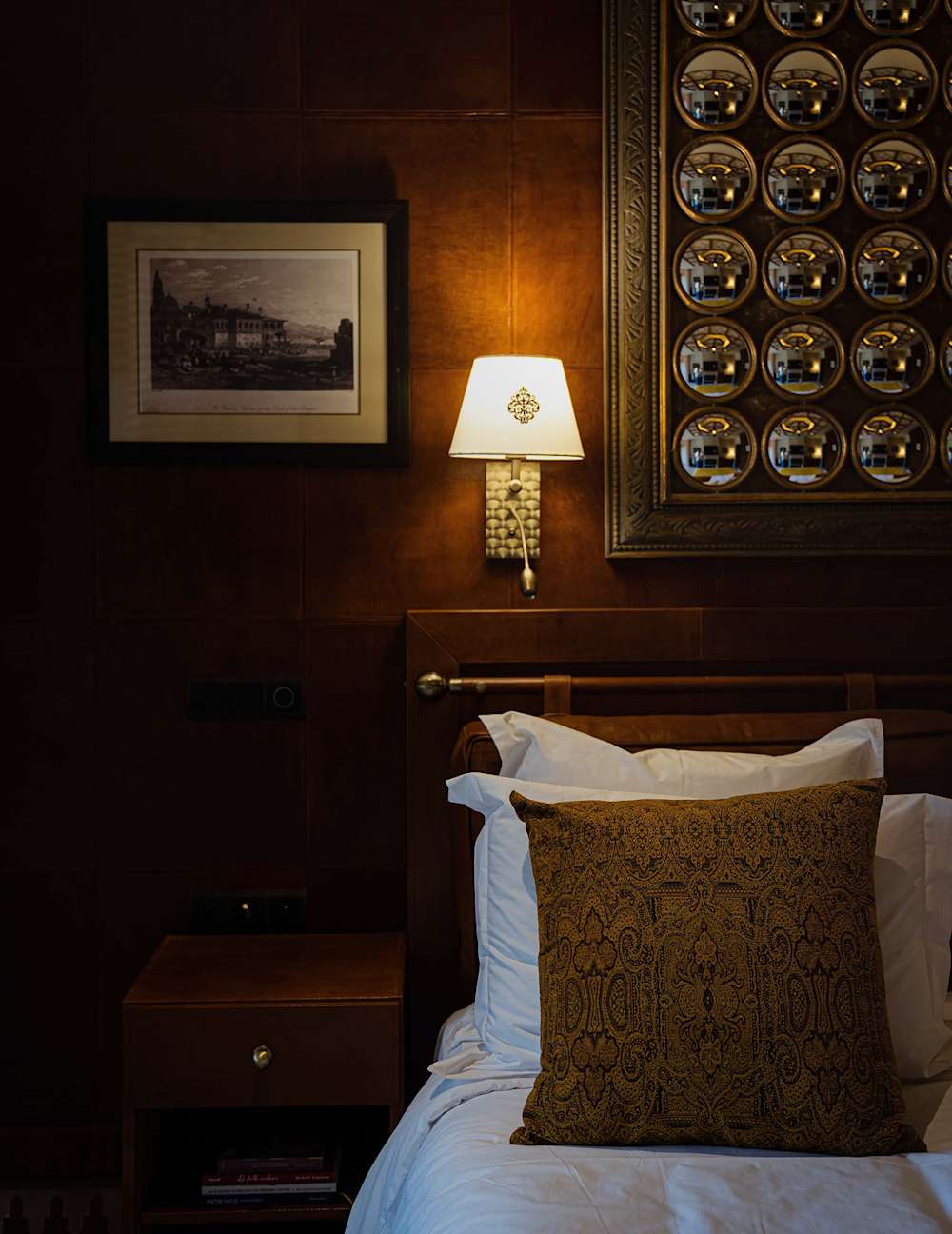
The same can be said for the nine standalone guest pavilions, which he named after some of the shrubs, herbs and flowers growing here: acanthus, oleander, rosemary, lavender and so on. At check-in, we’d been handed the keys to Eucalyptus, a generously sized residence fit for royalty, with separate lounging and sleeping quarters, intricate zouak patterns, wood-burning fireplaces for cooler evenings and a thoughtful curation of objets from Prince Fabrizio’s own collection.
Beyond an impressive arched doorway was our very own plunge pool, complete with loungers and gasp-inducing views of snow-ringed summits. We soon learn that all nine pavilions are crowned with rooftop sundecks, too. Instead of standard-issue hotel slippers, we’re given olive-leather babouches to mooch around in, with silky tassels — needless to say, they’re coming back to London in my suitcase.
The next morning, we rise with the sun to head to breakfast, a tempting Moroccan spread: pillowy batbout flatbreads and crumpet-like baghrir pancakes ready to be slathered with local honey, amlou (an almond and argan-oil paste) and homemade jam, served to our terrace table. From the à la carte menu, an orange-and-date salad for me and eggs Benedict adorned with caviar for my friend. I wash mine down with medically inadvisable amounts of mint tea. Between its nectar-like sweetness and the ceremony of it being poured from a great height out of a hand-etched silver teapot, I find it irresistible.
Appropriately fuelled up, we nip back to our pavilion and get kitted out for gadding about the mountains on horseback — something Marouane told us we’d be mad to skip, despite our intended inactivity. My pal has been riding for pretty much as long as she’s been able to sit upright and spent her childhood accruing dressage-competition rosettes; though I lack any real skill, I’m content to hop in the saddle.
Marouane is waiting for us in the courtyard beside four well-groomed horses and their owner, all from a nearby farm. Once firmly mounted on our steeds, we trace the dusty road for a bit before turning off onto rocky slopes, crossing the occasional stream, passing families of rag-tag goats seeking shade beneath juniper bushes, and ducking now and then to avoid being jabbed by protruding branches. The horses start to canter as we near the enormous Ouirgane Dam, as one of the stable dogs runs alongside us, and we pause to take in the view, peering out over the Atlas’s scrubby slopes. There’s a cloudless sky above us — it’s not a bad way to begin Sunday morning.
Post-ride, however, we’re hot and achy, and our skin is caked in dust, so the only sensible plan of action is to make a beeline for the spa. We weigh up the options and decide to do the Royal Session together: a 90-minute extravaganza wherein a traditional hammam ritual dovetails into a massage of your choosing.
We are each handed a pair of paper spa knickers, instructed to disrobe, and make our way into the gleaming hammam: a marble-clad thing of beauty with walls tiled in the palest turquoise. The two of us lay supine at opposite ends of the chamber; once the air is heavy with steam, we’re coated top-to-toe in slippery, black, eucalyptus-scented soap, vigorously worked over with woven mitts, and sluiced with tepid water from terracotta vessels. Next comes the stretching: limbs are pulled and contorted into all manner of positions and after a liberal application of argan oil, it’s time for some firm kneading. We exchange glances through the vapour, willing ourselves not to laugh.
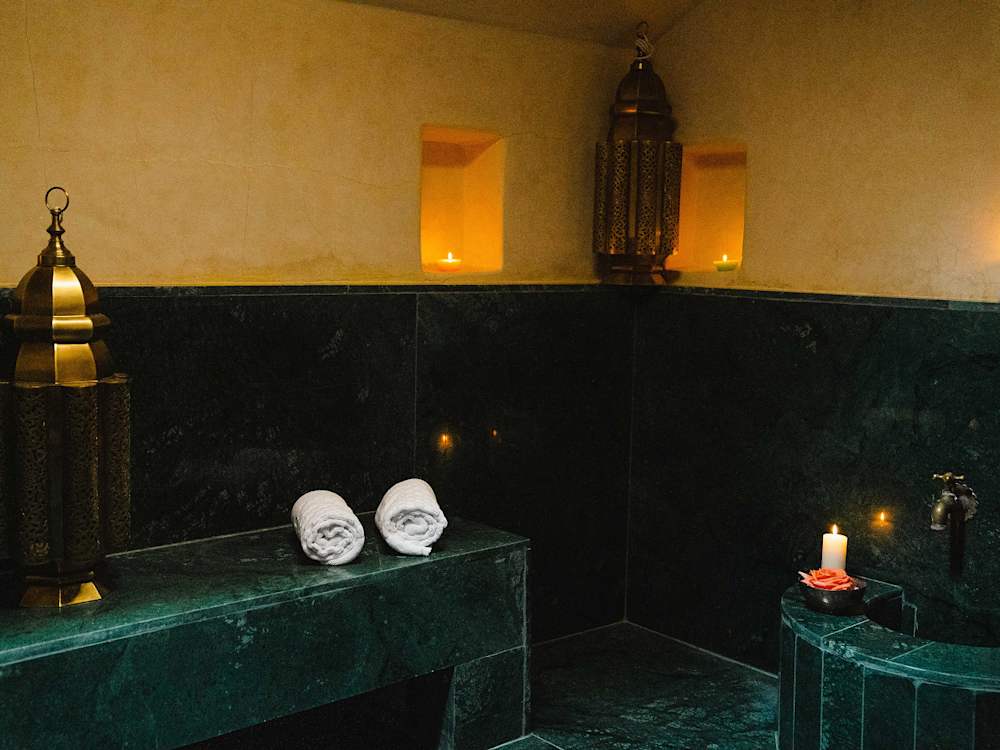
We sit upright as our hair is soaped up, rinsed and plaited — a gesture that transports me back to childhood — before one final full-body sluicing to wash away errant suds. A thorough misting with rosewater follows, then we’re bundled into fluffy robes and shown to a moodily lit treatment room. There’s reflexology for me, a hot-stone massage for her. We later emerge blinking in the light like newborn lambs, as we’re guided to a relaxation space.
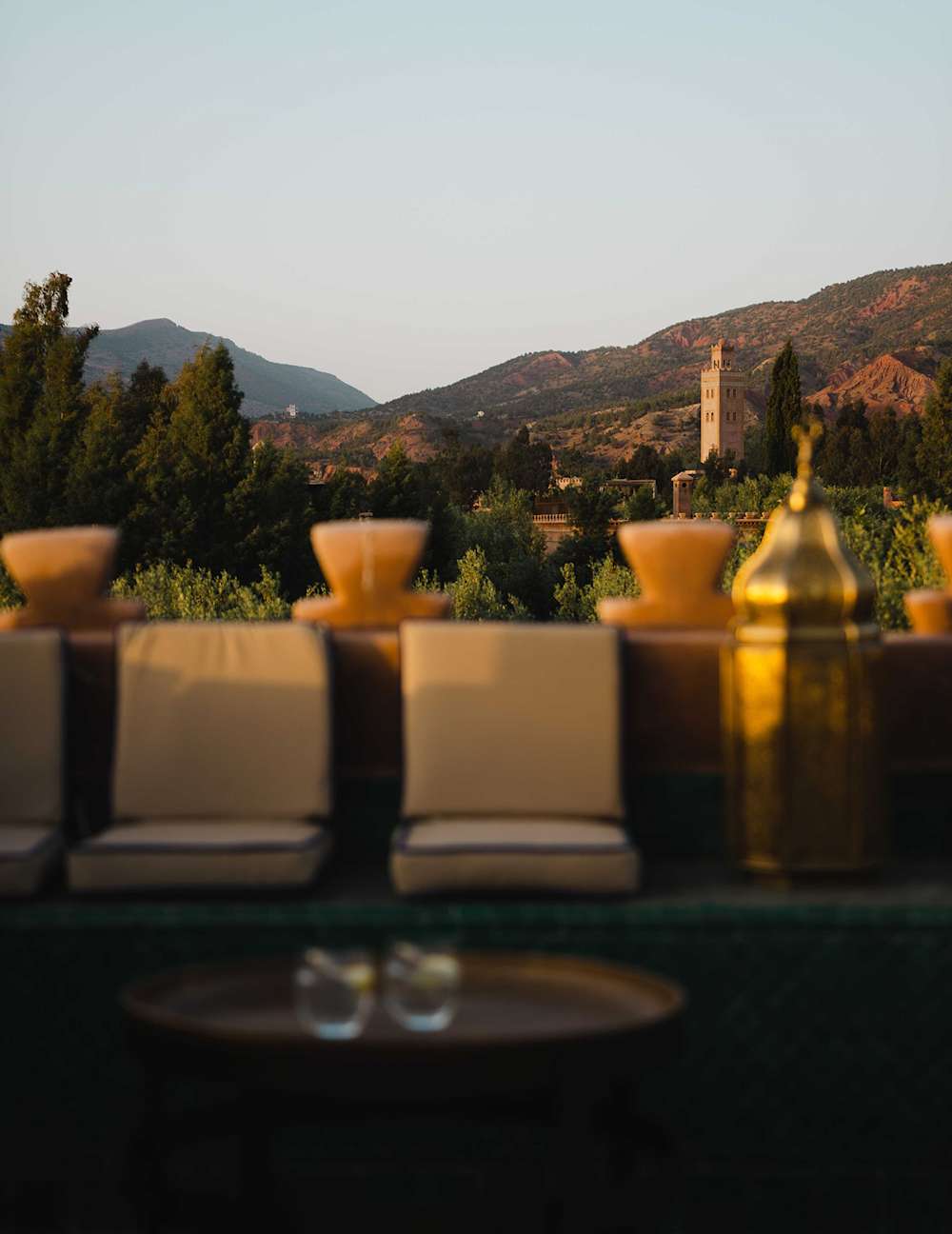
Back we go to our pavilion, and our little private pool, to laze around supping bottles of Casablanca beer, as Moroccan orange-tip butterflies flit between flowering shrubs. Unlike ours, the main pool is warmed by the sun well into the evening, so we linger to catch the last of the day’s rays there — then it’s over to the terracotta-tiled fire pit for apéritifs.
Olinto has perfected precisely the kind of escape that can restore you to something approaching normal. We now fully understand why it’s called the High Atlas, because it’s likely you’ll leave in peak condition.
Book your stay at Olinto Atlas Mountain Retreat or see more revivifying stays in Morocco