



Let us introduce you to some of the world’s most exciting hotel chefs as we explore the gourmet getaway destinations currently at the top of our wish lists.
Who’s in the kitchen?
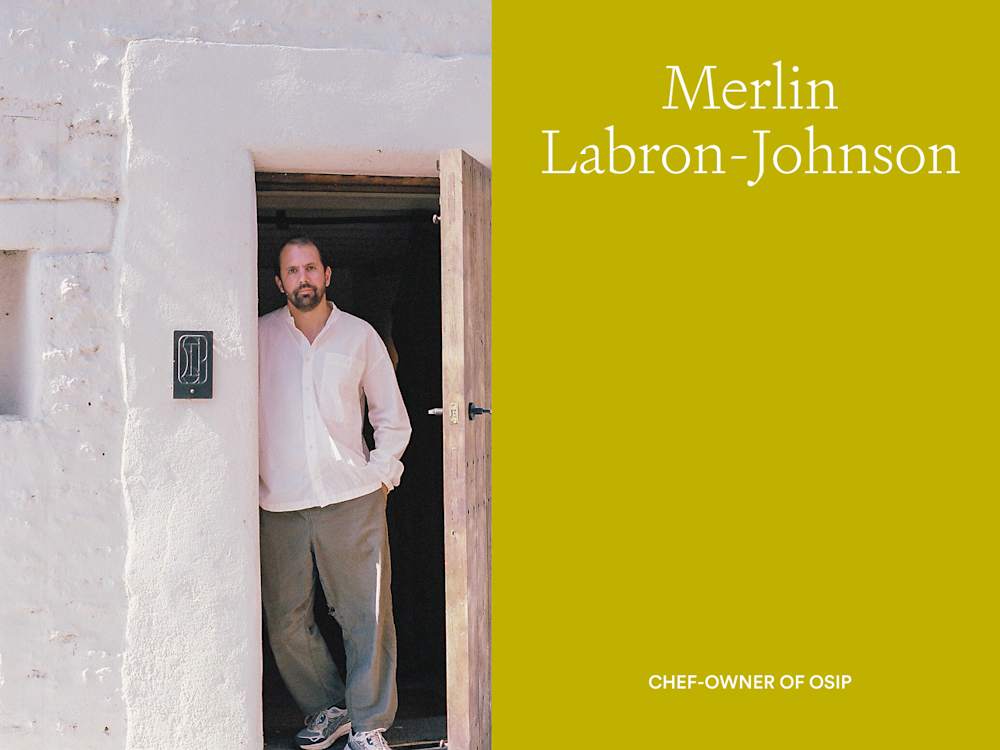
Merlin Labron-Johnson, chef-owner of enchanting Somerset restaurant-with-rooms Osip, is a wildly creative culinary talent and advocate for regenerative agriculture. The son of a poet and a museum curator, he followed an unconventional path into professional cooking, first discovering his love for the kitchen while helping out at school.
A Devon native, the countryside is Merlin’s spiritual home, but it was his London restaurant Portland that earned him his first Michelin star, just nine months after it opened, when he was just 24 years old. He then secured a Bib Gourmand at his more casual eatery Clipstone, and manned the restaurant at The Conduit members’ club before re-routing to the wilds of the West Country.
What’s cooking?
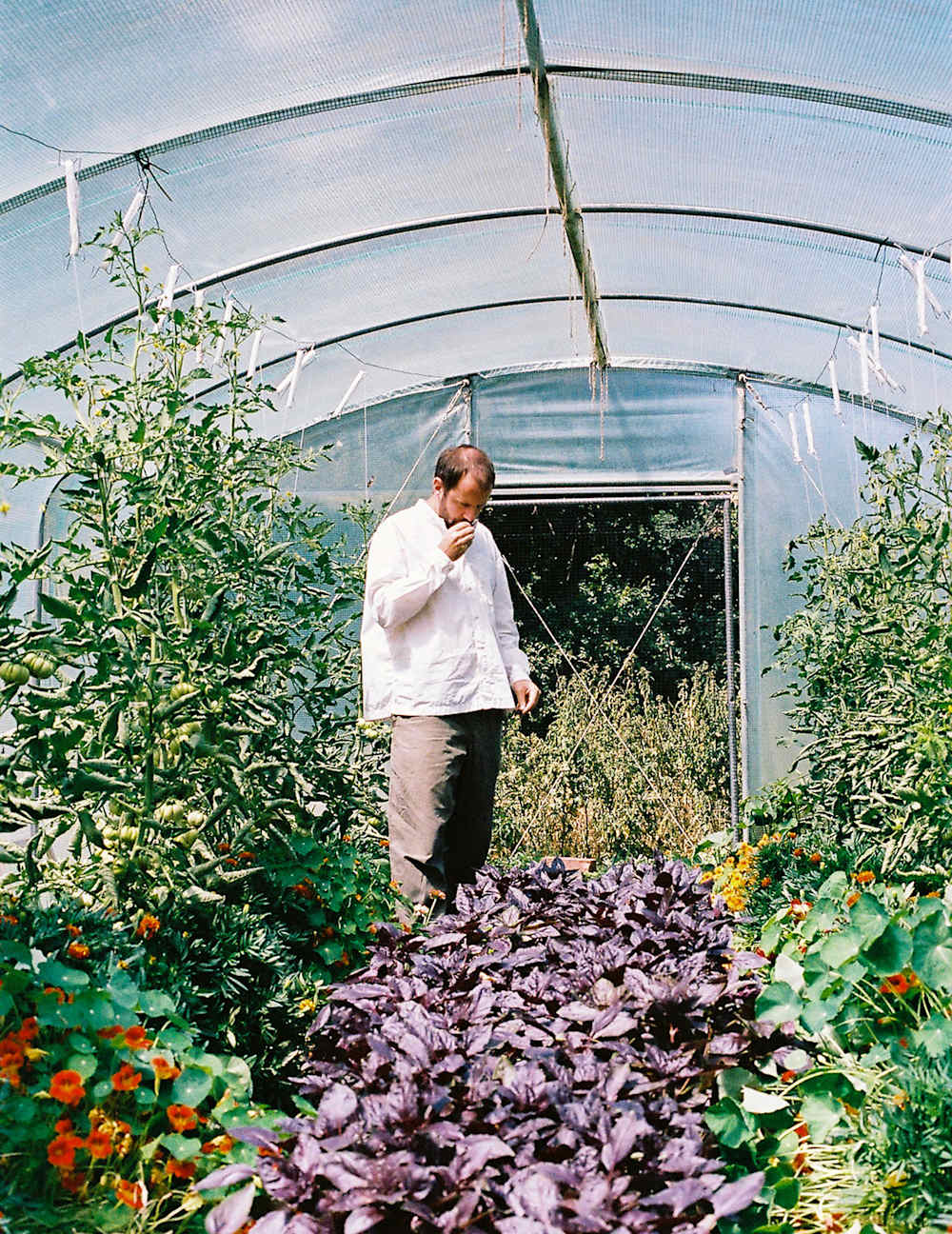
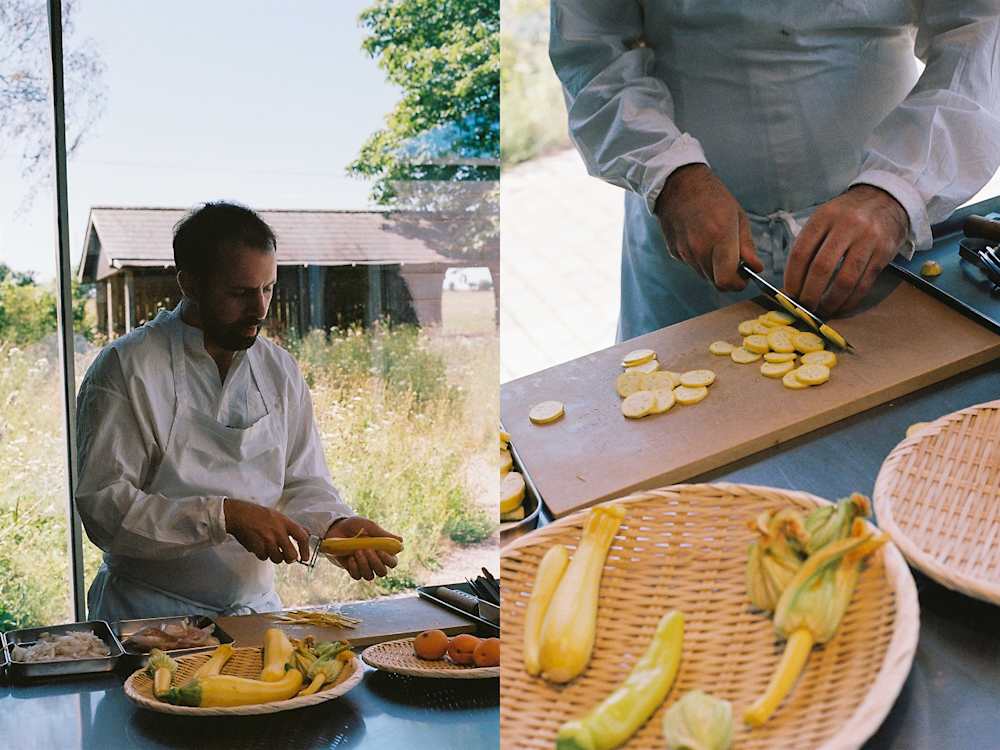
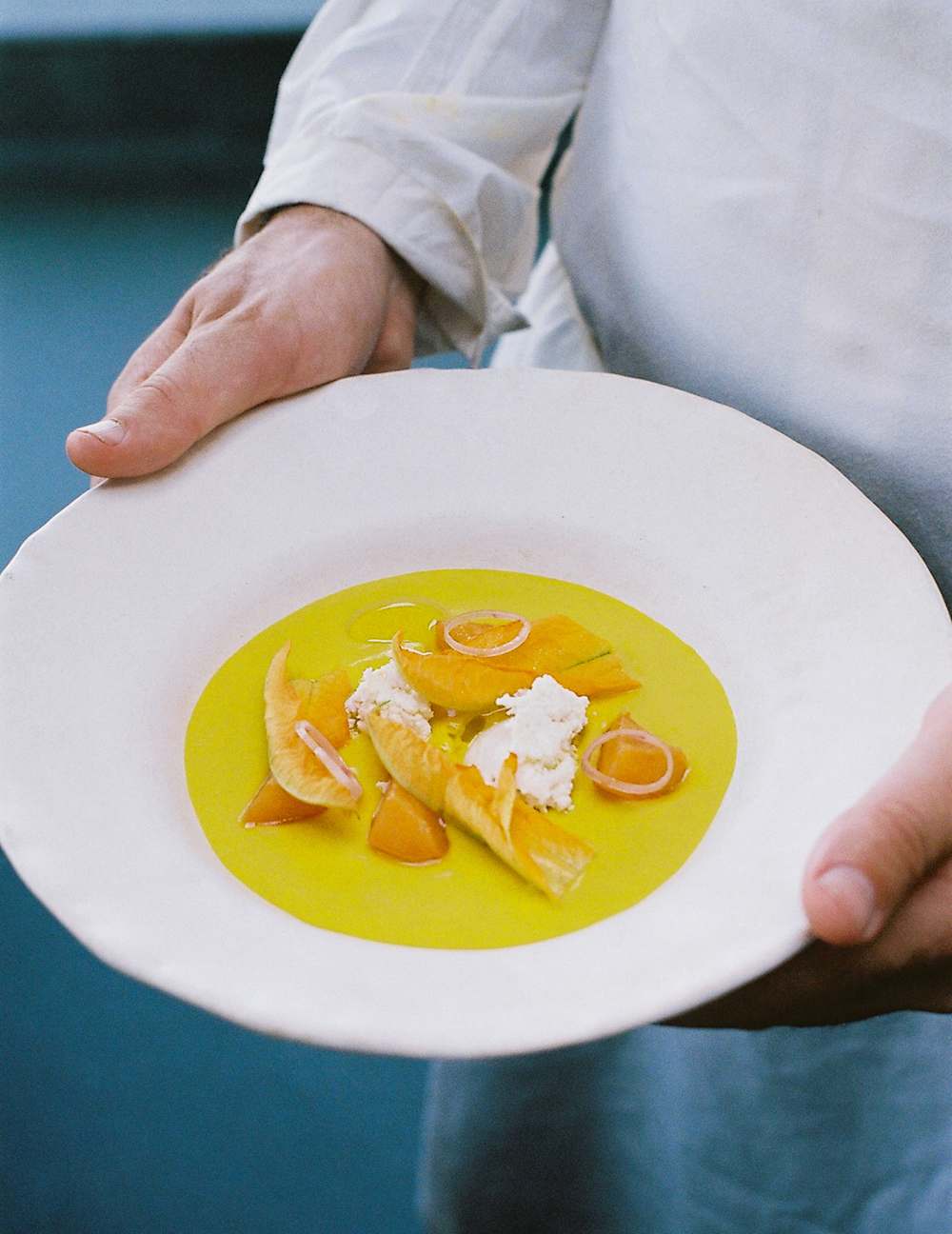
Merlin’s food is plant-forward, highly seasonal and shaped by the produce grown on Osip‘s own biodynamic farm. He was trained in classical French techniques, which are still used in his kitchen today, but the restaurant’s tasting menu feels firmly rooted in the soil of its Somerset home, with dishes such as garden-herb cannoli and honey madeleines with beeswax ice cream.
Recipe for success
Long before earning Michelin recognition of his own, Merlin honed his craft in some of Europe’s most respected kitchens. His career took him through restaurants in France, Belgium and Switzerland, as well as closer to home in Exeter and Torquay, with stints at The Elephant, Michael Caines‘ Abode, Albert Premier Hotel and In De Wulf
He cites the latter as being deeply influential: it was there he learnt techniques such as pickling, curing and preserving that continue to shape his menus today. He’s since acquired a Green Michelin Star for Osip, reflecting the restaurant’s sustainable ethos, reverence for home-grown produce and refined country cookery.
You’ve worked in kitchens throughout the UK and Europe. How has each locale informed your cookery?
Aside from London, all the places where I have worked were in the countryside. Being surrounded by nature and connected to the producers has been central to my growth and development as a cook. It’s that relationship with the land that shapes the way I cook now, in Somerset.

Which regional cuisine do you miss the most?
I have fond memories of Alpine cuisine, which I enjoyed in both France and Switzerland. [I ate] a lot of cheese — when I lived in Switzerland it was perfectly normal to eat fondue once a week, even in summer.
Your training was grounded in classical French techniques. How do you apply these to menus for a savvy, modern audience?
The technique and the fundamental ideas are classical or traditional, but the delivery is my vision for a contemporary kitchen. It’s more restrained, inspired by my love for minimalism and, of course, more focused on the beauty of the ingredients than the techniques themselves.
What were the most important lessons you learnt at In De Wulf in Belgium, and how have you applied them at Osip?
I think chef Kobe Desramaults has a real clarity of vision and an identity that is uniquely his — something he communicated to me as important, and I really took that on board. Beyond that, I’m very grateful to have learnt about wild foods, ancient preservation methods, curing, ageing, smoking, butchery and many other processes which are all present in my kitchens today.
What’s your creative process for composing a new dish or menu?
It’s collaborative — I work closely with my chefs to develop dishes, which are often evolutions of dishes I’ve previously made, [because our] repertoire of recipes is designed to coincide with our vegetable-harvest calendar. Sometimes I want to create something entirely new and there are no rules for how that process takes shape — we need to make sure that new dishes fit into the sequence of other dishes and that there’s balance and harmony across the whole menu. Inspiration comes from everywhere.
What ingredient are chefs sleeping on, and which needs to be given a rest?
Chard is a slightly underrated vegetable — it’s easy to grow, it looks beautiful and it’s incredibly wholesome. I think we can all agree that chefs putting caviar on everything and anything has become quite boring.
What are the challenges involved when the menu is agriculture-led?
In the winter we have far fewer ingredients to work with and the season is long. You need to really think outside the box and be much more creative.
You were just 24 when you won your first Michelin star. How did this affect your ambitions?
I’m not sure if I had any serious ambitions at the age of 24; I hadn’t really thought about it. I was surprised to win a Michelin star at that age, but I took it in my stride.
How did moving from the buzz of the London restaurant scene to Somerset’s countryside affect how you work?
I think I’m much more attuned to the rhythm of the countryside. I find it easier to think, work creatively and come up with new ideas when I am less distracted. I found London to be a bit overstimulating.
Which London eateries do you wish you could teleport to Somerset?
We don’t have a lot of variety in Somerset. I love food from all over the world and London has some of the best examples. Recently I’ve really enjoyed Impala, Speedboat Bar, Smoking Goat, Bibi and Berenjak.
How do you ensure the kitchen runs ethically and sustainably?
We try to take a plant-forward approach to cooking, which means the majority of our dishes are vegetarian. We grow the vegetables, fruit and herbs ourselves and this process allows us to reduce our food miles and eliminate unnecessary transport and single-use packaging. We don’t use chemical pesticides or fertilisers; we compost our food waste and return it to the soil where it began life; and we avoid single-use plastics, such as vacuum bags or clingfilm. We take a lot of small steps and are always trying to improve.

Designer Johnny Smith took the helm when designing Osip’s bedrooms, but what was your input?
I wanted to make sure that the bedrooms reflected our ethos in the restaurant, both from a sourcing and design perspective — minimalist, calm, with lots of natural light and materials sourced locally. Highlighting local craftspeople and artists is very important to me.
When I stay in a hotel, my needs are simple: natural light, good shower pressure, a comfortable bed, quality linen. And breakfast must be as considered as the dinner the night before, as it is the last thing a guest will remember. Never underestimate the power of a good breakfast.
Where are you happiest at Osip?
I’m happiest when I’m in the kitchen, on the pass, with a full dining room of guests and staff having a wonderful time. It’s what I live for. We have created an environment in the kitchen where cooks want to stay with us for a long time. We eat well, look after each other and take a huge amount of joy in teaching and sharing a vision for Osip. We look out from the kitchen over a wildflower meadow and grazing cows and that must help! Osip is a calm environment; we try to work without stress.
Quick-fire round
You’ve been tasked with creating an in-flight menu. What’s on it?
A nice salad. And I’d like there to be sushi, although I wouldn’t be making it as I don’t think I’m qualified. A perfect BLT. Maybe ice cream?
You’ve snuck some minis onto the plane. What cocktail are you making?
A Negroni.
What’s the first thing you do when you arrive at a hotel?
See if they can make a good martini.
Room service: what are you ordering?
A burger.
Favourite restaurant for blowing the budget?
La Grenouillère in France.
Book a gourmet getaway at Osip or take a culinary tour of Somerset