



I arrive at Durslade Farm on a warm spring morning, the kind that wakes the bees from their winter slumber. They’re buzzing about the gardens, looking a little unsteady, like they’re still shaking themselves awake. Birds are divebombing for other insects in the fields, enjoying the feast provided by this unseasonable weather. Just 10 minutes later, the skies in front of me are of a very different hue, framed against a stark white wall. They’re broody and portentous, with clouds that gather like dark ships on the horizon. ‘Wagnerian skies,’ explains Dea Vanagan, Hauser & Wirth Somerset’s senior director. ‘That’s what Don aims for.’
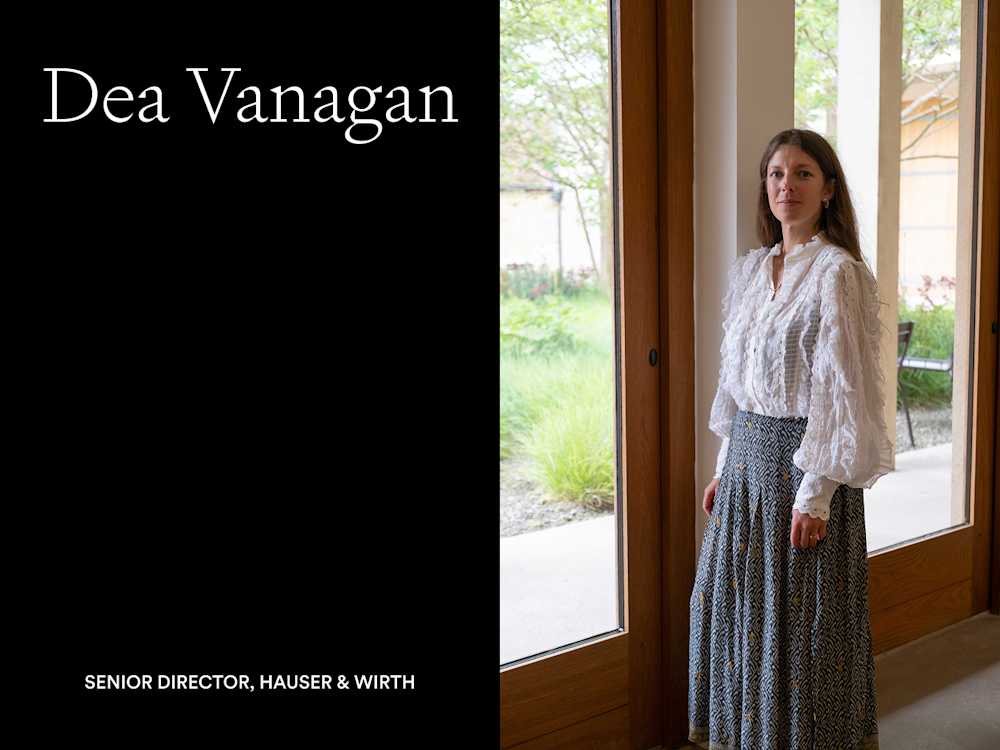
‘Don’ would be legendary British photojournalist Don McCullin. Vanagan is taking me on a private tour of Don McCullin 90, an exhibition of 90 of the photographer’s seminal works, timed to coincide with his 90th year. It’s an extraordinary anthology, presenting images of conflict and strife alongside intimate moments from McCullin’s domestic life — mushrooms in his garden shed; a bunch of grapes in his kitchen. We pause in front of a photograph of a beggar in India. ‘He looks almost like a Roman god, the way he’s contorted, with the body curling around,’ says Vanagan. ‘There’s incredible pain and suffering here, but it’s almost like a reading of a classical body. Don has given him such dignity.’
Here in Somerset, McCullin’s talent for finding grace in juxtapositions feels especially apt. Minutes ago, I was surrounded by rustic springtime scenes. Now, I’m drawn into other worlds entirely: the global stage, international politics, Syria, Lebanon, Ethiopia. Art tends to migrate towards cities, where such concerns are interrogated, debated and often unfold. In the countryside, the framing is very different. It begs the question: why did Hauser & Wirth take root here?
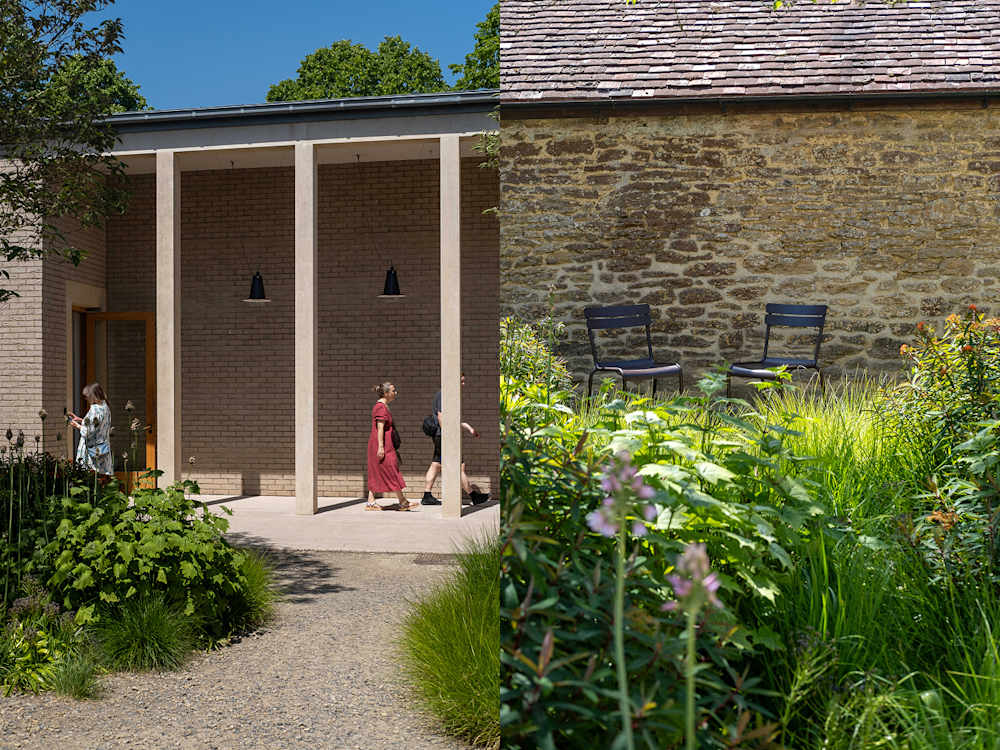
The answer begins in 2007, when the most influential couple in art set sights on Somerset for their next family home. Iwan and Manuela Wirth swapped the rush of central London for an 800-acre farm near Bruton. It was a radical change of scene. Alongside Hauser & Wirth’s co-president, Marc Payot, the Wirths had spent the preceding years founding galleries in the fast-paced art capitals of the world, starting with Zurich, London and New York. Bruton, on the other hand, had perhaps 3,000 residents.
Their ambitions were not stifled. While settling into the rhythm of rural life, they discovered a second property with a thousand acres of fields, orchards and woodland. At its heart was an 18th-century farmhouse, threshing barns, cowsheds and a piggery — a typical Somerset holding. But Durslade is unlike any other farm in Southwest England. Since 2014, it’s been home to Hauser & Wirth Somerset, worlds away from a city-ensconced white cube.
‘They fell in love with it,’ Vanagan says simply. ‘Durslade had been derelict for many years, but they were very inspired by the buildings and the land. [Iwan and Manuela] are very bold people — they have this great passion for restoring historic buildings and connecting people to art; they’re also lovers of food and beautiful gardens. This was a space where they could explore all these things.’
Fortune has favoured the bold. The gallery spaces and grounds have hosted landmark exhibitions, including major retrospectives on Henry Moore and Alexander Calder. There’s the Farm Shop, showcasing the fruits of the estate. It was thrumming with activity when I arrived, full of shoppers stocking up on meats from the farm; wine from the vineyards; honey from the hives; and cider pressed from the orchards. The newest addition is Da Costa, a charming Italian restaurant inspired by Iwan Wirth’s maternal grandfather, who came from a mountain village in the Veneto region of Northern Italy.
If connecting people to art is the aim, Hauser & Wirth Somerset has set an inspired template. Yes, there’s the rural location, where a gallery of this stature is rarely found. But it’s the breadth of what’s on offer that will win many hearts and minds. This is a place to savour and return to, with a restaurant that mirrors the seasons and shapeshifting gardens by Piet Oudolf, the father of ‘New Perennialism’. After coming to the end of McCullin’s powerful compositions in black and white, we step out into Oudolf Field, where the colour comes rushing back.
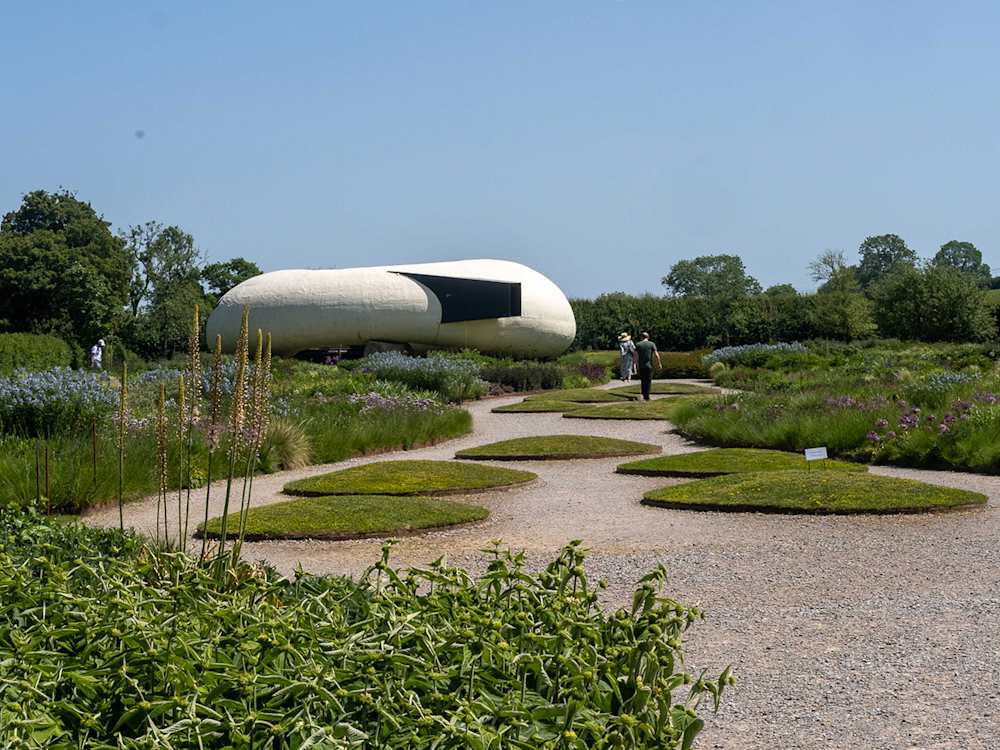
‘[Oudolf] is so much more than a gardener,’ says Vanagan. ‘He’s very passionate about showing you the lifecycle of plants; how they move and change throughout the year. For me, it’s one of the greatest pleasures of working here. It’s like seeing a visual symphony — and every day, I swear to you, something is different.’
Since the gallery opened, Bruton has undergone its own metamorphosis, attracting visionary restaurants and hotels like Number One Bruton, which is deeply engaged with local artists and makers. I can’t help but feel that Hauser & Wirth is behind this cultural revolution, so I put my favourite causality conundrum to Vanagan: what came first, the chicken or the egg?
‘The South West has always had an abundance of creatives,’ she tells me. ‘In the run up to opening the gallery, we got to know ironmongers, framers, woodworkers, writers — there was a whole community here. What the gallery did was create a place for people to gather and connect; it really fed that appetite. In town, there’s much more to tap into now: galleries like Bo Lee and Fred Levine; supper clubs at The Space on Bruton High Street; and talks hosted in the club room of At the Chapel.’
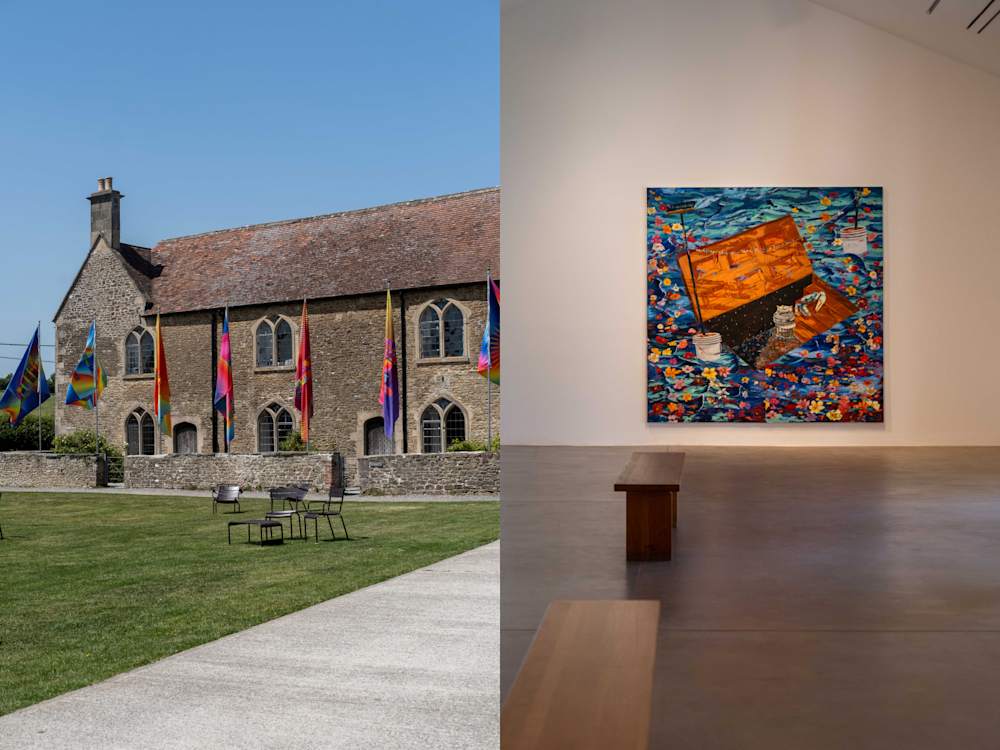
There’s another boon to this burgeoning scene: Hauser & Wirth Somerset’s residency programme. During my visit, the gallery is already preparing for its next exhibition, Angel Otero: Agua Salada. Otero is best known for his immersive Oil Skin works, where he layers paint onto glass and peels it off in a semi-dried state. A native Puerto Rican, the artist usually splits his time between his homeland and the US. This is a big moment: his exhibition here, running until 18 October 2026, is his UK debut.
‘There’s a little studio and cottage space in the heart of Bruton,’ Vanagan tells me. ‘He’s living there right now, making works for the show. These residencies are a huge part of our community engagement, because these artists stay for a month, two months, three months. They embed themselves and get to know the locals. By the time the residency ends, people understand the art — and the artist — so much better.’
None of this is accidental. The gallery’s other key tenet is education, particularly for young people, for whom the world of art can feel impenetrable. One of the initiatives is Arthaus, a youth collective for 15 to 19-year-olds. They meet at the gallery regularly, where they get access to Hauser & Wirth’s roster of practising artists, as well as its studio spaces, curators and technicians. ‘Artists are the centre of our universe,’ Vanagan tells me, ‘but these learning moments are so important to us — giving young people the tools to approach art, to understand it, to ask questions and not be afraid of it. That’s something we champion wholeheartedly.’
We end my visit in the Roth Bar. It’s an installation piece and fully functioning bar by artist Oddur Roth, composed of everyday objects (musical instruments, lamps, televisions, tools), as well as carpentry scraps and salvaged materials. Oddur is the grandson of the late Swiss artist Dieter Roth, who created the first Roth Bars in the 1970s.
‘Dieter would collect objects that referenced his life and history,’ explains Vanagan. ‘To him, there was no separation between life and art, everything was immersed as one. He was a professor, but he believed the classroom wasn’t the right environment to teach artists. Instead, he would bring them to his studio, where he’d have a bar. If you weren’t being truthful enough, he would say, “drink this, and let’s get to the truth”. It was a different time!’
For me, the Roth Bar cuts to the heart of what makes Hauser & Wirth Somerset special. It’s a deeply democratic work that achieves what many galleries can’t — proving that fine art and human rituals can exist in harmony. As Vanagan puts it, ‘This is a social sculpture, one that’s only activated when you order a martini, or the moment you sit down and start trading stories with the person next to you.’
The Roth Bar doesn’t query whether you came for a pint or to ponder its meaning; instead, it sets the stage for connection. The same can be said for Hauser & Wirth Somerset as a whole: extraordinary art is front and centre, but you might be equally animated by a wine-steeped lunch at Da Costa, or by revelling in the artfully unkempt nature of Oudolf Field. That’s the beauty of placing the gallery on a working farm. Wherever you look, you’re reminded of our need to create and connect — with the land and each other.
Read more about Number One Bruton, discover Somerset’s best restaurants or explore our full collection of the county’s hotels