



There is something quite intoxicating about fleeing the slate-grey skies of London in March and escaping four hours due south, the churned and muddy fields of England slipping away to be replaced by the wide dunes and rocky sand of North Africa. The light visibly changes, warming into red and deep orange hues. The theme tune of Lawrence of Arabia swells in my ears as I glance guiltily at my copy of Orientalism by Edward Said. The plane skims the leaves of the highest palm trees as it touches down onto the picturesque spread of Marrakech.
After waiting in a short bureau de change queue to acquire a really satisfying wad of cash, I’m in a cab on the way to Dar Rhizlane. I’m sure that business owners and economists have many great things to say about the cashless society and its efficiencies but, God, there’s nothing more fun than an ostentatious amount of notes, regardless of value.
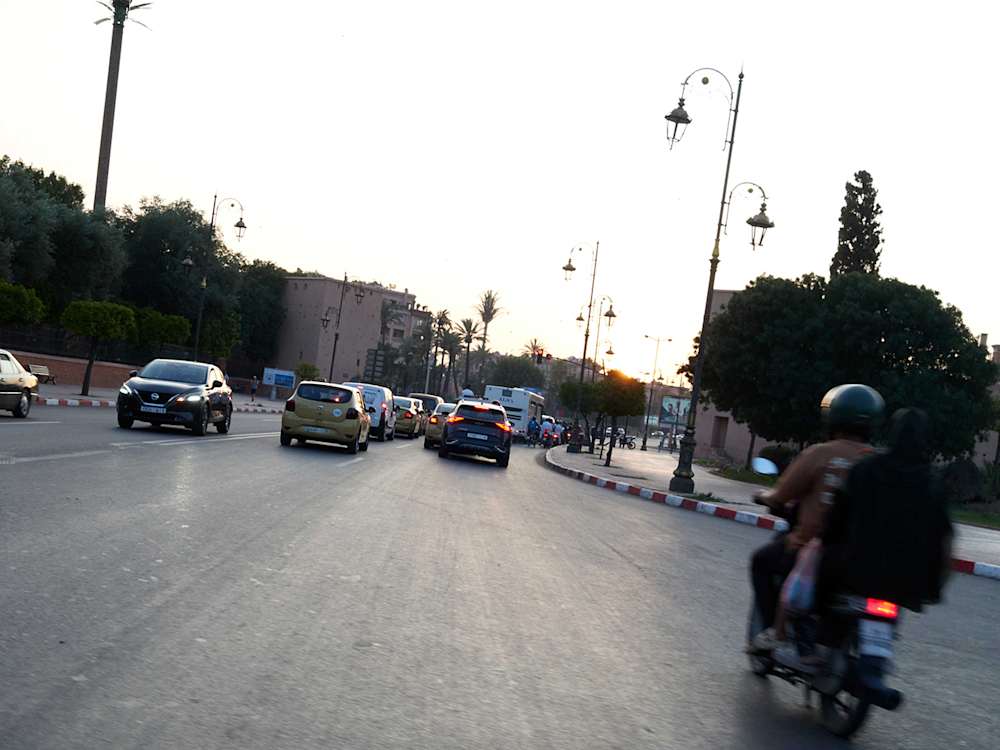
(A quick note on the taxi drivers of Morocco: their welcome will be warm, but their approach to fares is often… creative. It’s easier to broadly accept their first price, get them down to half, and then leave it. Morocco seems to be a country with a true lust for haggling and it’s a Pyrrhic victory to spend too long trying to save £2 on a £4 fare. The other remarkable thing about Moroccan taxi drivers is their absolute refusal to wear a seatbelt, flummoxing the modern technology that will be beeping at them all day.)
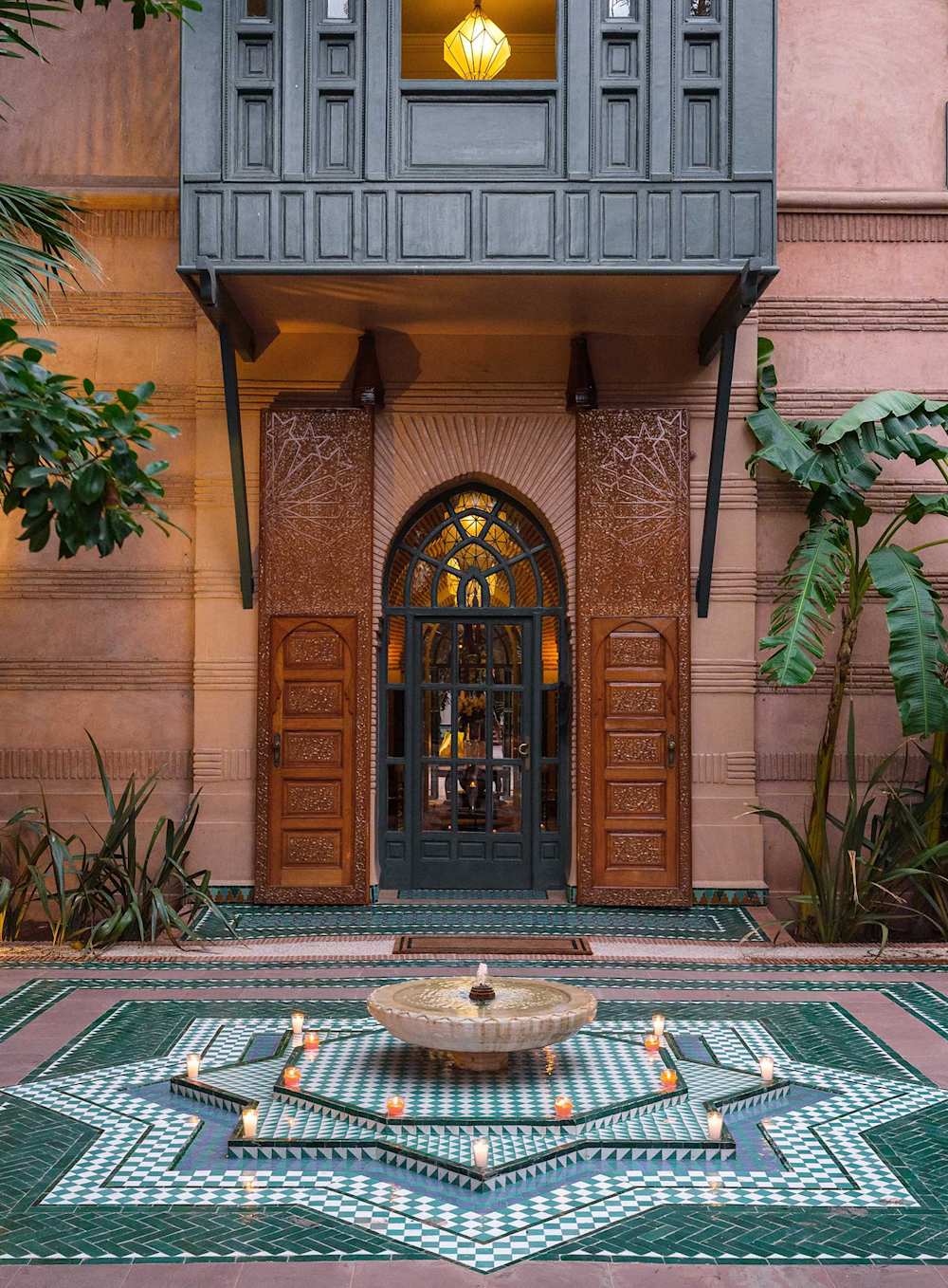
But back to Dar Rhizlane. I arrive at the hotel, set back from the main road and guarded by a symmetrical fountain. I feel like I’m being welcomed into the home of an impossibly chic relative. The front desk and senior staff are mostly women, dressed in extremely tasteful long dresses and seeming to levitate around the place, guiding me through the picturesque grounds and explaining things in intoxicatingly accented English.
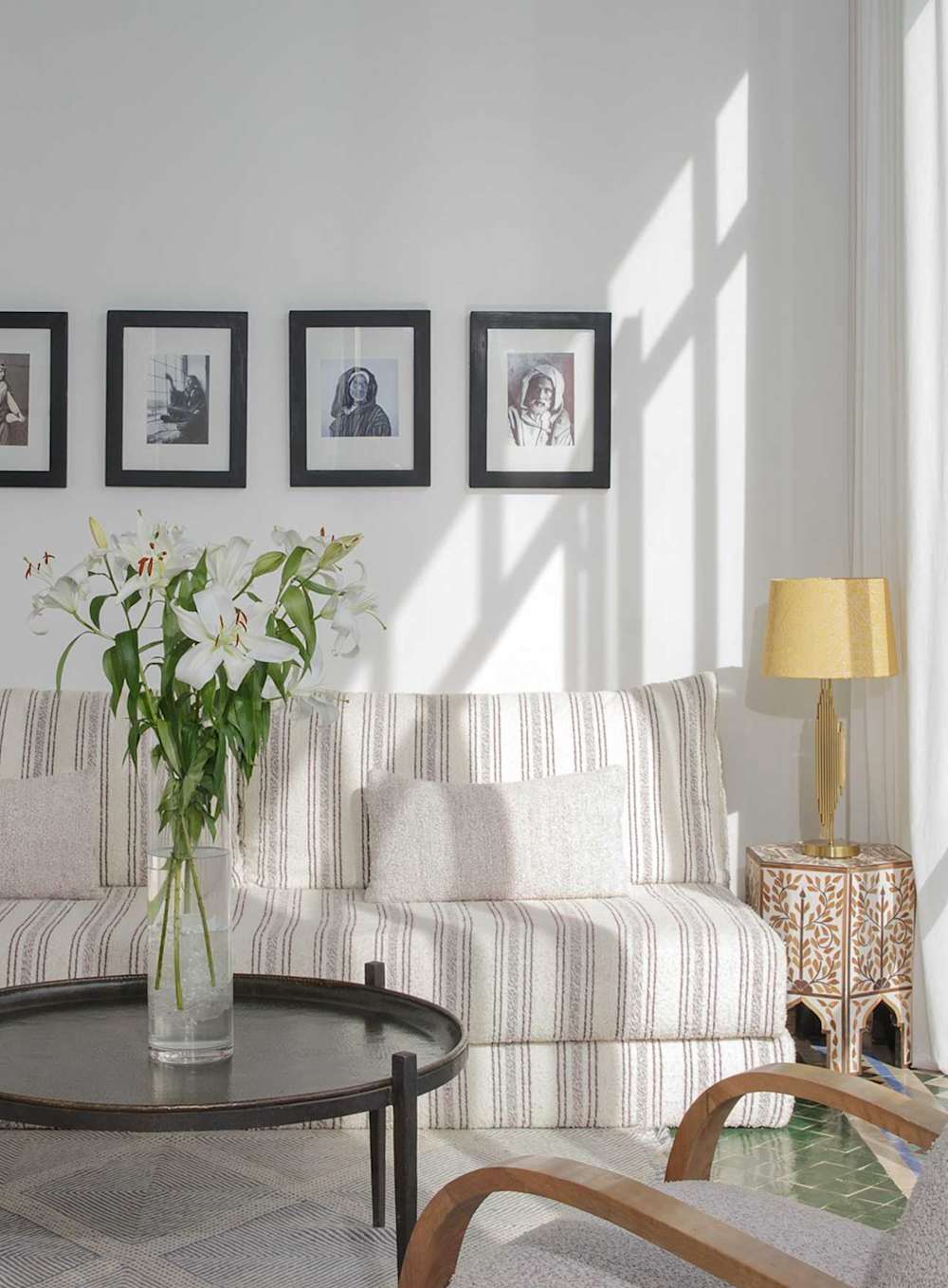
I’m immediately invited to sit on low leather couches by the pool and offered Moroccan tea from a decorative teapot. There’s a school of thought within food anthropology that tea became popular predominantly as a vehicle for sugar and caffeine, keeping the malnutritioned British masses going even through scarcity. That mainly died out, although you can see a remnant of it in the four sugars of ‘builder’s tea’. The Moroccans are clearly traditionalists in this regard — their mint tea is a beautiful hit of sugar, with both dried and fresh mint, giving it an earthy complexity.
The hotel is made of two parts: the original house, which dates back to the 1940s, and the new building, which contains a handful of rooms alongside the hammam and restaurant. In between is a warren of quiet blissfulness. The pool is ringed by orange trees heavy with fruit and a wide terrace, fit to host the best and most beautiful of Moroccan society.
Rose-petal-topped streams flow through the property. Everywhere, there’s a constant, calming trickle of water. In her book In Morocco, which today reads as more than a little antiquated, Edith Wharton describes how, ‘In a languid twilight, the hours drift by to the ceaseless music of the fountains’. It’s hard to imagine she isn’t talking about somewhere just like Dar Rhizlane.
Although it was very tempting to impersonate the hotel cat and spend my days moving between sunny spots on the veranda, I did eventually get my act together and, taking advantage of the warm but not sweltering weather, headed into the souk. Dar Rhizlane sits in a calm oasis just outside of the centre. It appeared further away on a map, but turned out to be no more than a 10-minute drive, although something of a contrast in terms of serenity.
After several hours dipping through the chaotic corridors of the market, resisting at least 12 invitations to various hidden carpet shops, and after the acquisition of at least one belt I didn’t really want and one bag I’m incredibly happy I purchased, it was a real pleasure to get back to the hotel for the crispest of lagers to wash out the dust.
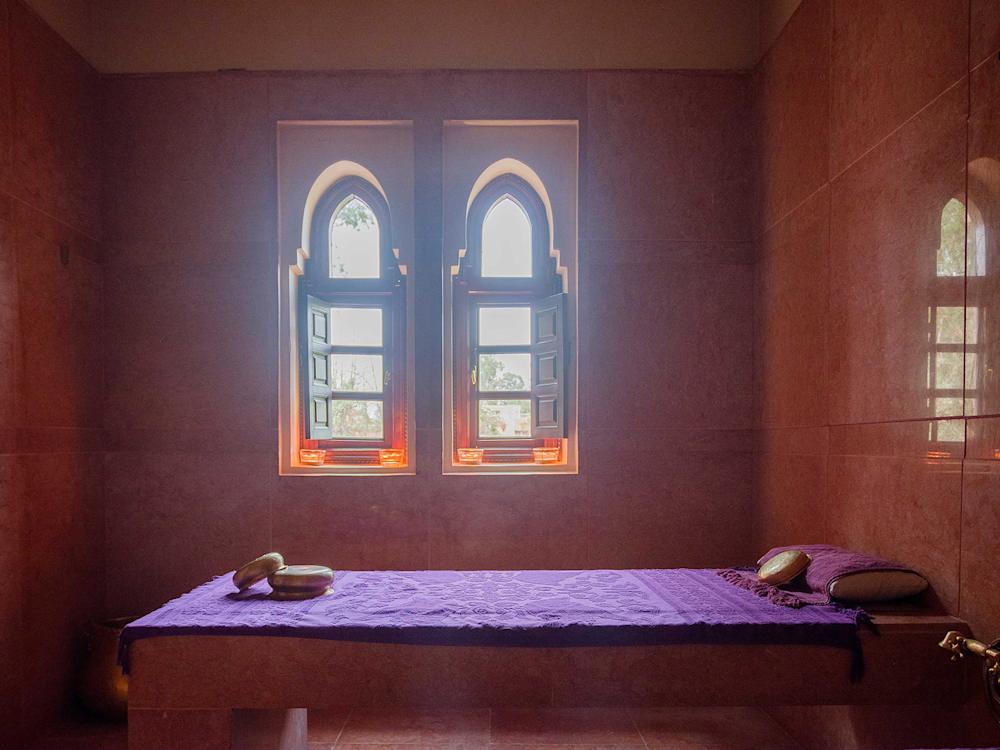
The next day was largely put aside for the spa, and I settled in for the full experience. The tall brick hammam is studded with coloured glass, and is embracingly warm and steamy. I imagine this is what it feels like to be one of the mint leaves inside that decorative teapot. Right when it felt like I was about to pass out from the heat, I was summoned for a refreshing shower and a truly excellent massage. I’ll say that, if given the chance to do it all over again, I may have convinced myself to be slightly more restrained at the hotel’s sumptuous breakfast beforehand. Being exfoliated with black soap on a full stomach made me imagine someone trying to sand down a hot-air balloon. Nevertheless, I emerged with baby-soft skin.
Back on the balcony of my impossibly large room, cooling off with yet another mint tea and some very pleasant baklava-adjacent treats, both the misery of wintry London and the heave of the souk could not have felt further away.
Read our review of This Time Tomorrow in Marrakech, plot the perfect weekend there, or see more of our favourite hotels in the city
_________________________________________________________________________________
Born-and-bred Londoner Nicolas Payne-Baader co-founded Slop magazine, a quarterly publication all about produce and producers, in 2023. After training as a butcher, he worked in hospitality at St John, then Dalla in Hackney. His varied CV also includes roles in PR and marketing, for the hatters Lock & Co among others. Alongside his work on Slop‘s editorial, Nicolas specialises in lookbook writing, SEO development and branding.