


I’m on a sheer precipice, a steady wind buffeting my face as I inch forward and peer over the edge of a summit nearly 1,700 metres above sea level. Having scaled the final stretch of an ascent to the rugged western extent of the Picos de Europa mountain range in northern Spain, my aching limbs gain fresh impetus from a rising sense of anticipation. Yet this quickly dissolves on arrival as I’m greeted by a thick blanket of low-level cloud, which swirls past and engulfs both me and the rocks I cling to.
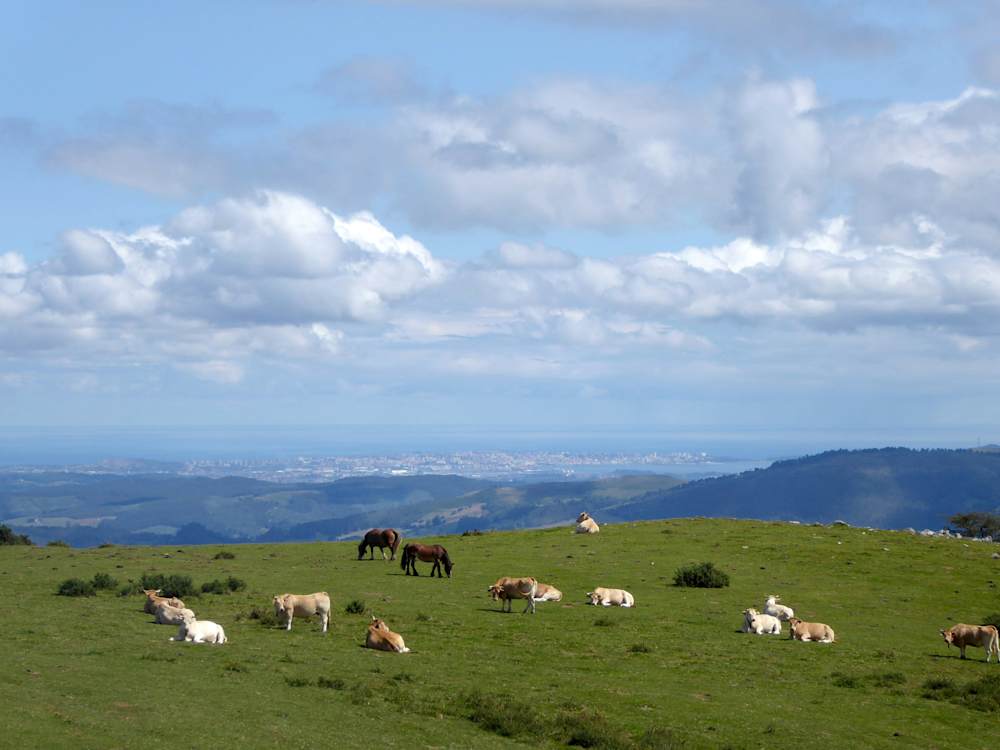
Cantabria
A few seconds later, just before I start to console myself that the journey here was surely as rewarding as any summit views, a slim break in the cloud reveals a dizzying vertical drop and swathes of forest in the distant valley below. As my eyes start to adjust, the clouds part further still and I inhale sharply as an astonishing vista emerges, stretching across the green Asturian countryside to the distant shimmer of the Cantabrian Sea. All of which makes it easy to understand why this storied viewpoint, the Mirador de Ordiales, was the favourite spot — and final resting place — of Pedro Pidal, who set in motion Spain’s National Parks Act, helping keep these peaks out of the clutches of mining corporations and developers.
Spanning the regions of Asturias, Cantabria and Castilla y León, this dramatic range is a dream for hikers, described by Pidal as a ‘fairy-tale kingdom of chamois and eagles’ — two of a diverse array of species that call these Alpine slopes home. Rising to altitudes of 2,500 metres and sandwiched between the Bay of Biscay and the warmer central plains of Castile, the Picos’ verdant northern reaches — well watered by Atlantic weather fronts — give way to soaring limestone towers and glacier-carved gorges, created as thunderous rivers slice their way to the coast. Criss-crossing the range are a handful of well-worn hiking routes and many more technical paths created over centuries as nomadic shepherds move their flocks between upland and lowland pastures.
Looking westwards, I spy the town of Cangas de Onis in the distance, where my day began many hours earlier. Since then, a series of dizzying switchbacks had led me up to the village of Covadonga, whose breathtaking cathedral rises above beech forest, and Los Lagos, where two shimmering lakes are framed beautifully by the mountains beyond. Here, with the air crisp and skies blue, cowbells soundtrack my first of many encounters with the handsome Asturian mountain cattle, whose milk is used to make the region’s pungent, cave-matured Gamonéu cheese. Winding paths that lead past rustic majadas (sheepfolds and shepherds’ lodgings) and rockier stretches marked out by cairns had directed me to my lofty lookout.
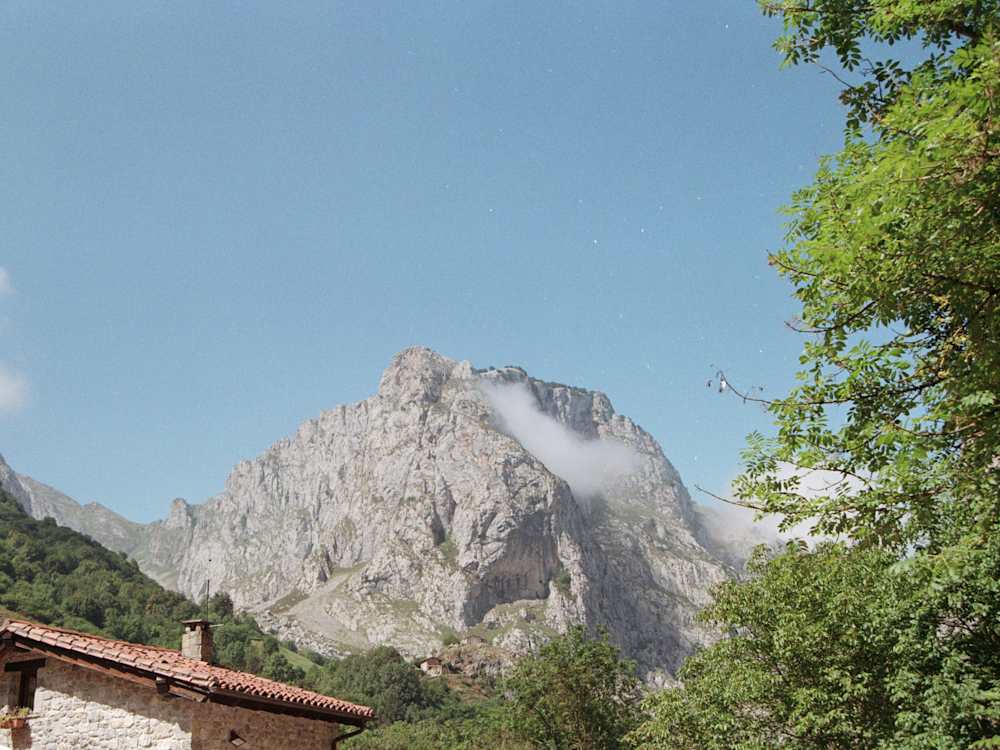
Bulnes
After watching a scattering of wild chamois hop nimbly between cliff faces, I head back towards the lakes, stopping off at Refugio de Vegarredonda, one of a series of rugged mountain huts across the Picos de Europa that service out-of-puff hikers and overnighting mountaineers. Here I join the throng, sharing stories over spoonfuls of fabada asturiana — a restorative stew of beans and pork — as the sinking sun colours the Picos’ limestone towers shades of pink.
Over several days, I become better acquainted with the rhythms of these mountains. Earlier snowfall has dusted the highest peaks white, while the shift into autumn turns lowland forests ablaze with colour as the leaves start to fall. One morning, I wake early to a spectacular cloud inversion, with only the highest peaks visible above valleys filled with seas of white mist. Later in the day, the vast wingspan of griffon vultures becomes a frequent sight as these mighty birds circle upwards on thermals created by the afternoon sun.
The range’s dramatic topography proves equally breathtaking as I head eastwards. The seemingly vertical drop of around 800 metres into Cares Gorge is a test of endurance and concentration as I zig-zag left and right, picking my footing carefully on unstable slopes as the Picos de Europa’s central massif rises in front of me, and with each step I descend towards the village of Poncebos. Crossing the cascading Cares River, my next destination — and waiting dinner reservation — lies 400 metres above me, hidden behind a steep curtain of limestone.
Settled by shepherds among some of the Picos de Europa’s highest peaks, Bulnes was only accessible on foot until the completion of an underground funicular 25 years ago offered a less gruelling alternative to the two-hour ascent on foot. Although the funicular also increased visitor footfall, Bulnes remains one of the Picos de Europa’s most compelling destinations, thanks to its picturesque cluster of rustic stone houses and farms. After the last cable car departs, sealing the village off from the outside world once more, I nurse an Asturian cider and await a feast of roasted cabrito (baby goat). The gentle sound of cowbells carries on the breeze and, as the light fades over the highest peaks, I revel in the tranquility of a moment untouched by the clatter of modern life.
PICOS DE EUROPA HIKES FOR ALL ABILITIES
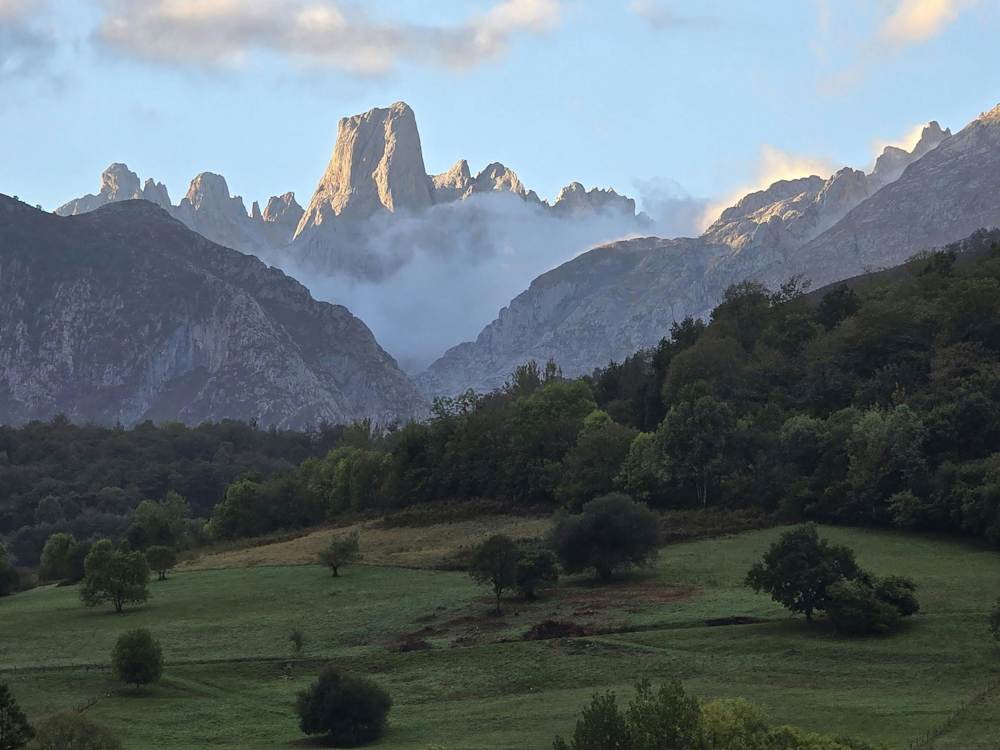
Fuente Dé to Los Puertos de Áliva
On the southern edge of the Picos de Europa, Fuente Dé is the launchpad for a cable car to the range’s most dramatic high-mountain terrain. Numerous peaks — including Peña Vieja, one of the Pico’s most popular summits — are accessible from the upper cable station, but this gentler, four- to five-hour alternative sees a short, sharp climb followed by a lengthy descent that circles through beautiful Alpine pastures and beech forest back to Fuente Dé.
Mirador de Ordiales
This challenging but hugely rewarding hike starts at the Covadonga Lakes and passes through gentle upland pastures and rocky lunar outcrops to a summit located at the Picos’ western extent, serving up spectacular views across Asturias to the Cantabrian Sea. About 15 miles in length, it’s a seven- to eight-hour round trip, with the ascent of nearby Pico Cotalba providing an optional add-on for those seeking to challenge themselves further.
Cares Gorge
Among Spain’s most popular hiking routes, this jaw-dropping gorge trail connects the villages of Poncebos and Caín. Hugging the surging Cares river, it winds past peaks that soar to 2,000 metres on both sides, at times carved directly into the rockface. Starting in either village, it’s about 14 miles out and back along relatively flat terrain, promising a moderately challenging walk that’s certain to linger long in the memory.
Poncebos to Bulnes
A steady two-hour ascent along the Texu Canal, which runs between two near-vertical rock walls, leads hikers to the beautiful village of Bulnes, which lies 400 metres above the Cares Gorge. For those less animated by the ascent, an underground funicular runs along much of the route, while an additional short hike to the Mirador Picu Urriellu delivers views of the Picos’ most iconic mountain, El Naranjo de Bulnes.
HOW TO DO IT
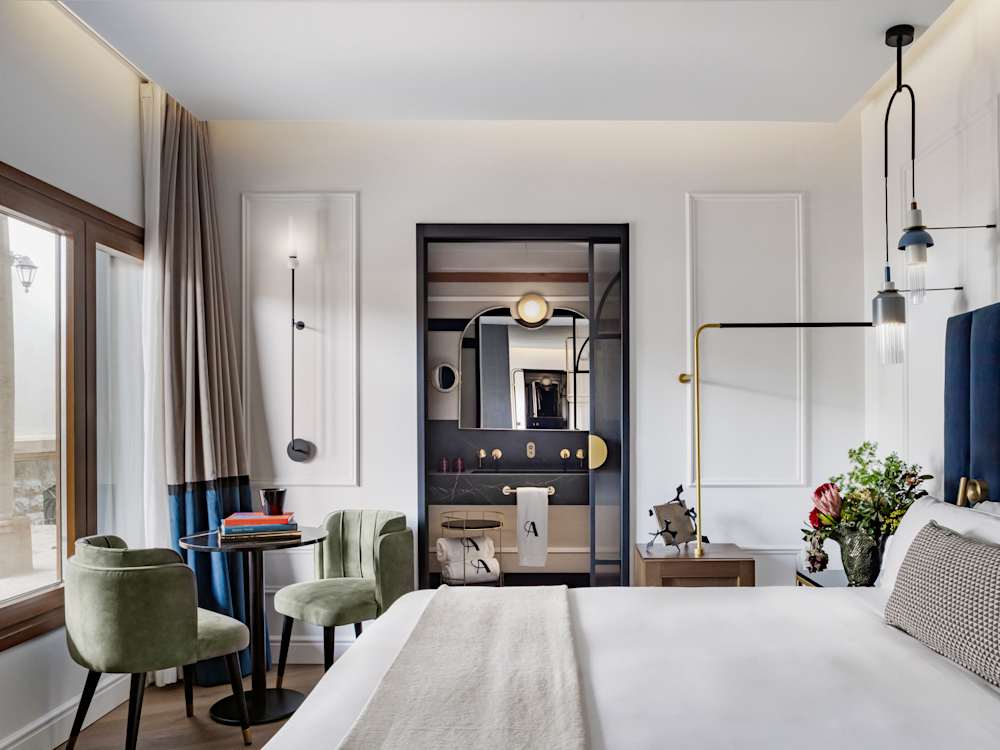
Palacio Arriluce Hotel
Asturias, Santander or Bilbao airports all lie within around two hours of the Picos de Europa, with car hire recommended to access the range’s more remote parts. With most hikes achievable in a day, base yourself at Coolrooms Palacio de Luces in Asturias, which lies less than an hour from the Picos western massif. This welcoming retreat boasts refined rooms that echo the palette of the Asturian countryside and a spa — complete with pool, sauna and Turkish bath — to soothe tired limbs. For those arriving from the east, combine mountains and coast with a stay at the Palacio Arriluce Hotel near Bilbao. Two-and-a-half hours from the Picos’ eastern slopes, this former mansion overlooks the Bay of Biscay and offers elevated Basque cuisine.
Chase more dizzying highs with our full collection of hotels in Spain