


Spending time in the Basque Country is fantastic for the soul. It has a culture entirely its own and the Basques take everything they do seriously — from their frequent fêtes to their immovable sense of community, and fiercely regional approach to food that sets this corner of France apart. Tucked between the Atlantic and the Pyrenees, and straddling the Spanish border, it’s a place of shifting landscapes and strong identity. Rolling hills peppered with wild ponies, buzzy surf towns, fishing ports and mountain villages are all accessible within a short drive.
While my soul felt nourished after two months in this beautiful part of the world, my waistline was, perhaps, a little too nourished. With so many local delicacies to sample and my incessant need to ‘just have a little bite’ of everything, I left with my jeans a little tighter and a whole new repertoire of flavour pairings to try at home.
Eating your way around the Basque Country isn’t an easy feat. Each town has its specialities, customs and ingredients. You might not be able to try everything on one trip, so here’s our gourmet guide — covering everything from sweet Gâteau Basque to Michelin-starred menus to food-forward stays — to help you on your culinary journey along the Côte de Basques.
Basque favourites in Biarritz
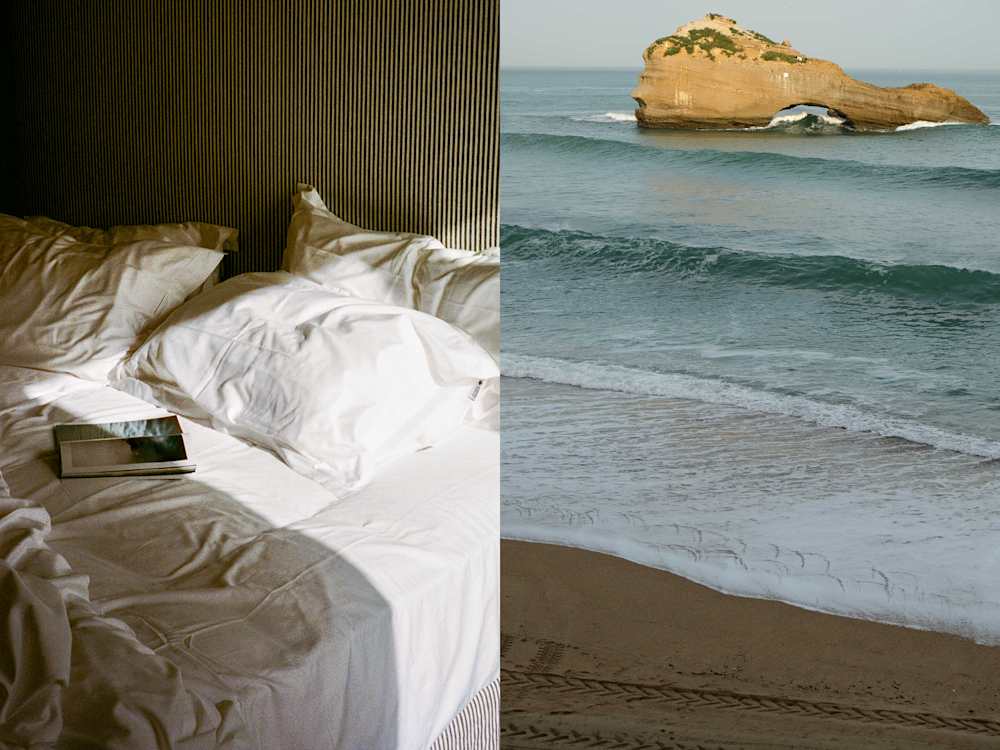
Regina Experimental Biarritz
Make Biarritz your starting point — it’s a brilliant base for exploring the culinary foundations of Basque cuisine. Begin in town with a trip to Les Halles, the bustling indoor market. As you bop between stalls, pick up a warm baguette, some nutty Ossau-Iraty cheese, a saucisson Basque laced with Espelette pepper and a Gâteau Basque (cherry is the flavour of choice). Throw in a bottle of Irouléguy wine and stroll for 10 minutes to the picturesque Plage du Port Vieux for a picnic.
Next stop is Bayonne, a 20-minute drive inland and a city known for two things: chocolate and ham. It’s considered the birthplace of chocolate in France, thanks to Sephardic Jewish artisans who brought cacao-processing techniques here from Spain in the 17th century. You can sample it all over town, but the most iconic offerings are from Chocolat Cazenave, founded in 1854.
As for ham, Bayonne takes it very seriously. Every April, the town hosts La Foire au Jambon, a three-day celebration of all things cured and salted. First held in 1462, it’s now a riot of pink scarves, beer, live music and ham by the cone-load. What makes jambon de Bayonne so special? Its strict AOP status (which translates to Protected Designation of Origin) means it must be made from select local pigs, cured with salt from the Adour Basin, and aged in fresh mountain air for at least seven months. The result is ham that’s rich, silky and gently salty.
One final delicacy to try: Maison Adam’s macarons. Originally made for the wedding of Louis XIV and Maria Theresa of Spain in 1660, these aren’t the pastel Parisian macarons you might expect, but pillowy rounds of toasted almond, sugar and egg white, made from a secret recipe that’s barely changed in 350 years.
Where to Stay
The Regina Experimental is the most photographed hotel in town, and for good reason: its vast Art Deco atrium nods to the building’s glamorous past, and the pool looks straight out of a Slim Aarons photograph. Just next door is Hôtel Le Garage, set in the Regina’s former garage, which is similarly design-led, with great cocktails and Instagrammable interiors. Visit in summer and don’t miss their lively garden parties each Thursday. For somewhere more relaxed, Brindos Lac & Château sits on the edge of a peaceful lake (one of the largest in France), so you can paddleboard before breakfast or take a yoga class on the deck.
Fresh-as-can-be seafood in Hondarribia
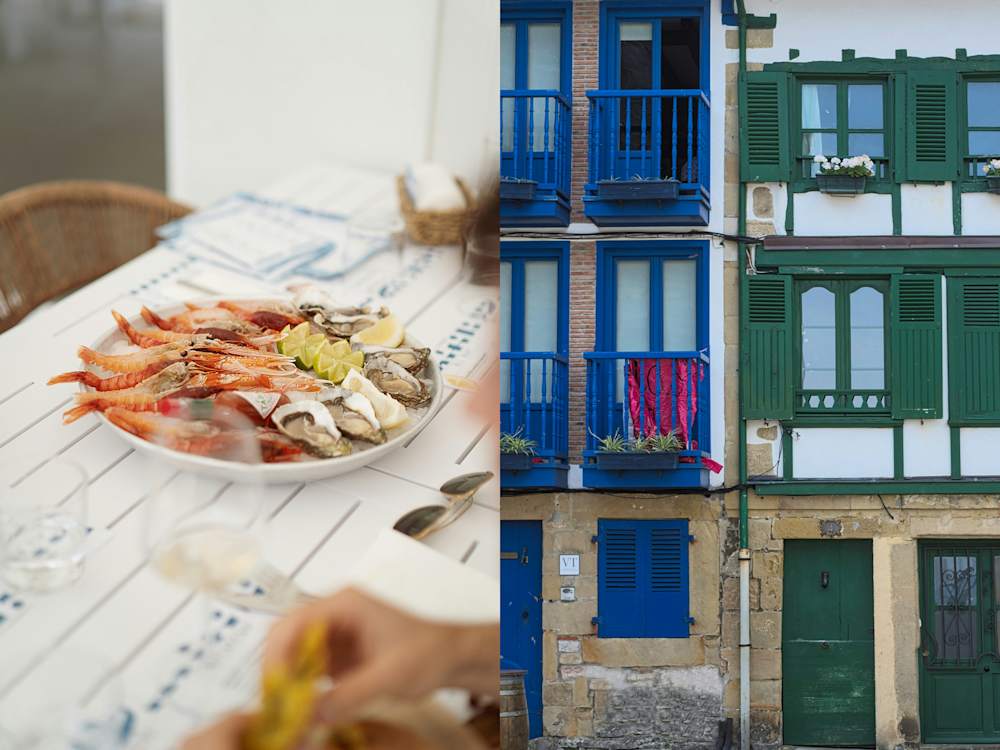
Next, we’re heading towards the Spanish border. Leave Biarritz and take the coastal road, stopping in the small town of Guéthary for coffee at Providence Moments and Goods, and the fishing port of Saint-Jean-de-Luz for a wander, before arriving in Hendaye, ready for a seafood fix.
Straddling the French-Spanish border, Hendaye and Hondarribia sit opposite each other at the mouth of the Bidasoa River: two postcard-perfect fishing towns with a shared maritime soul and wildly good seafood. The easiest way to get between them? A short hop across the water on the ferry, which runs every few minutes and costs just a couple of Euros.
In Hendaye, things are slower and simpler. It’s all about grilled fish straight off the boat, cooked à la plancha with olive oil, lemon and local herbs. Look for octopus, moules, and whole sardines served with a glass of chilled Txakoli at relaxed beachfront spots like Chez Patxi or Txirimiri where the food is fresh and unfussy.
Across the bay in Hondarribia, the creativity picks up and the town has evolved into a bit of a gastronomic hotspot. La Hermandad de Pescadores, aptly housed in the old fishermen’s guild, serves deeply traditional dishes like sopa de pescado, cod pil-pil style and txangurro (spider crab). For something more refined, Alameda is the town’s Michelin-starred gem, offering two elegant, seasonal tasting menus that showcase the best of the Basque coast.
Where to Stay
Tucked away in the old town of Hondarribia, Villa Magalean Hotel & Spa is a charming, converted Fifties beach house, with just eight rooms. It’s a true celebration of all things Euskadi. Expect French-Basque elegance, generous rooms with private terraces, and a deeply soothing spa to return to after a day of seafood and sea air.
Pintxos aplenty in San Sebastián
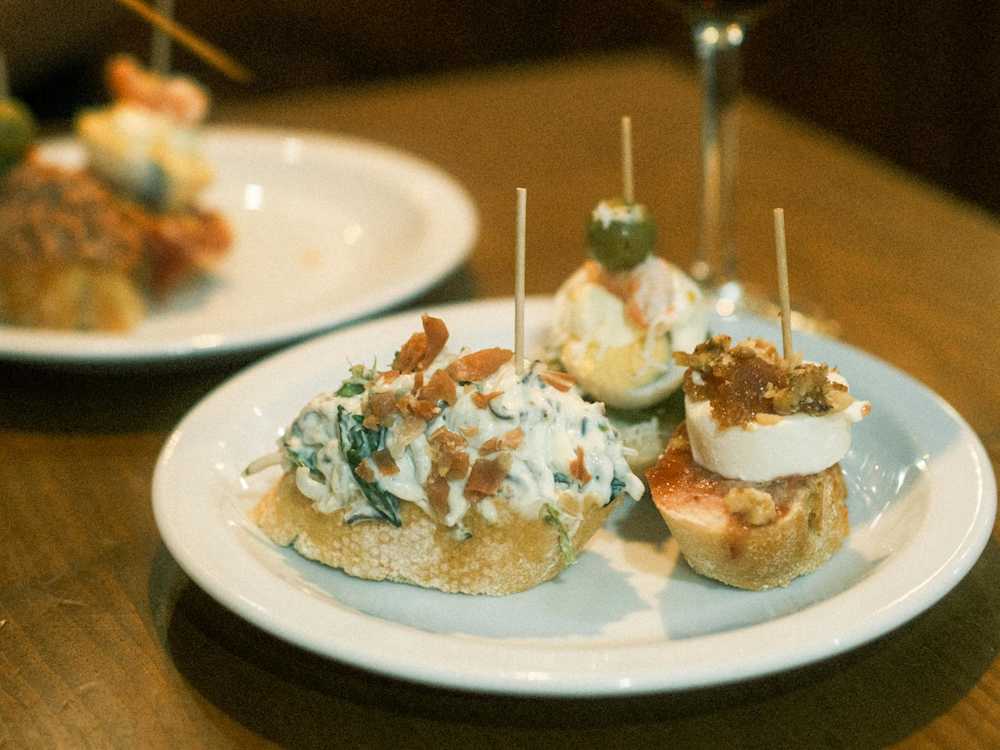
Often called the foodie capital of Europe, San Sebastián (or Donostia as it’s known to locals) is a city where food isn’t just a passion, it’s fundamental. Families gather in txokos (private cooking clubs) to share recipes and meals, and the city’s devotion to good eating is visible on every corner. Most evidently, in one of the 200-plus pintxo bars that grace the city’s streets.
Start your pintxos tour in Parte Vieja. The best tactic here is little and often; it’s very easy to find a spot you love and keep ordering more, but you’ll want to leave room to try something at every stop.
Gandarias is a local favourite known for its lobster stir-fried in whisky and jamón ibérico sliced to order. From there, head to the legendary Bar Nestor, where the menu consists of just a handful of items. Order the tomato salad, chuleta (bone-in ribeye), and — if you’re lucky — a slice of their cult tortilla (they make only two a day, and it disappears in minutes).
Next stop: Bar Sport (10 Fermin Calbeton Kalea), where the foie gras is flash-seared and the pimientos de padrón are reliably delicious. Then on to Borda Berri next door, where the veal cheeks and orzotto with Idiazabal cheese (similar to risotto, but made with orzo) are must-orders. And finally, don’t skip Haizea (8 Aldamar Kalea), a low-key spot filled with locals, which no less than Anthony Bourdain was a fan of. Try the gildas or txipiron (baby squid) cooked in its ink and served with rice. Finish with a slice of Basque cheesecake from La Viña — or better yet, grab one to take back to your hotel.
Where to Stay
In San Sebastián there are two standout stays to choose from. Arima Hotel & Spa, set on the edge of the Miramón forest, is a serene, Scandi-style escape with a rooftop pool, expansive wellness space and sustainability at its core. For something more central, within easy walking distance of the old town after a couple of glasses of Txakoli, Villa Favorita is just the ticket. This 19th-century mansion, perched on La Concha Bay, is elegant with stirring sea views, and it has one of the best restaurants in town — the two-Michelin-starred Amelia.
Boundary-pushing fine dining in Bilbao
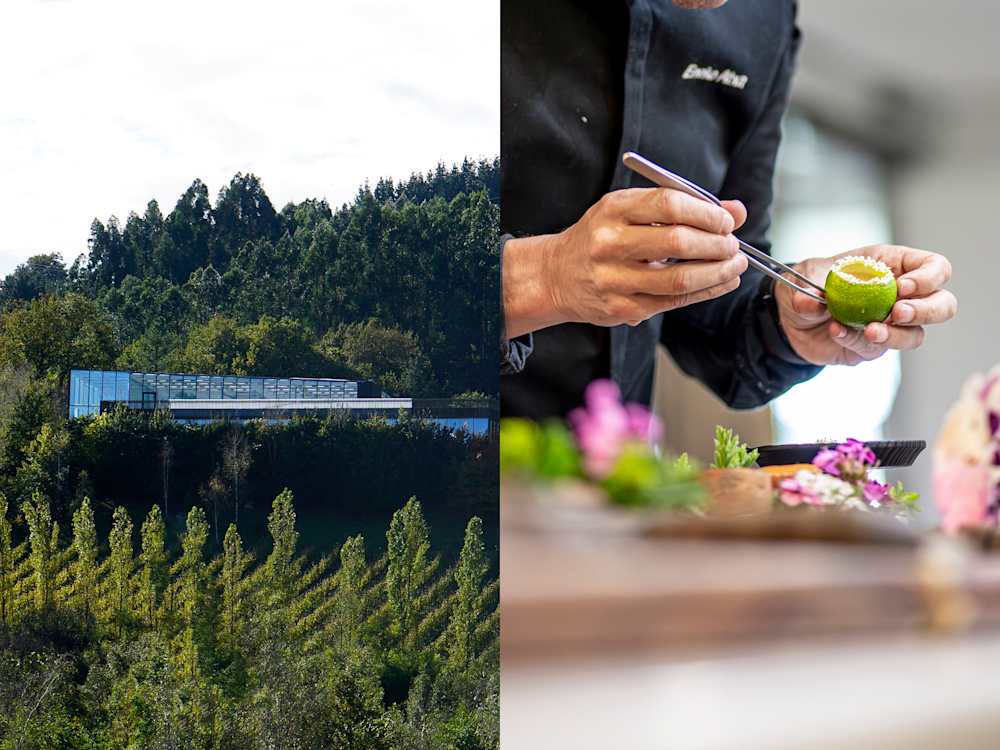
Azurmendi
Bilbao, a city once defined by its industry, is now known for its daring spirit of creativity and reinvention. The iconic Guggenheim Museum, with its sail-like Frank Gehry-designed curves, first signalled the city’s shift into becoming a global cultural capital. Today, exciting new projects like Zaha Hadid Architects’ masterplan for Zorrotzaurre Island continue to push the boundaries of urban design. This same sense of spirit runs through Bilbao’s fine-dining scene, where a new guard of chefs is making waves.
Bilbao and Biscay are home to an impressive 14 Michelin stars across 12 restaurants (as of 2026), but it’s the diversity and creative energy behind each that sets the city apart. At the top is Azurmendi, chef Eneko Atxa’s three-star restaurant in the green hills of Larrabetzu, which blends technical brilliance with a deep commitment to sustainability. Regularly ranked among the World’s 50 Best, your meal begins with a ‘picnic’ in the greenhouse before moving to the glass-walled dining room for dishes like sea urchin with chamomile or chocolate-coated partridge.
Back in the city, there’s Kimtxu, where Basque technique meets Southeast Asian flavours for an unexpected, but totally delicious fusion. Try a bit of everything with their affordable seven-course tasting menu. It’s bold, fresh and exactly the kind of restaurant that showcases where Bilbao’s food scene is heading.
You’re probably full now, but, if you’re looking for one final sweet treat before heading home, pop into a local bakery and grab a Carolina. This whimsical, almost sculptural dessert looks like something out of Mr Wonka’s Chocolate Factory. It’s made up of a buttery puff-pastry base layered with egg custard, then crowned with a towering swirl of glossy meringue, half dipped in dark chocolate. See it as the final full-stop to your indulgent trip.
Where to Stay
Palacio Arriluce Hotel is a grand, sea-facing retreat in Getxo, just outside Bilbao. With sweeping views over the Bay of Biscay, the property brings together old-world elegance and modern design. Two things make this hotel especially memorable: the library, stacked full of vintage books, and the palace’s former chapel (complete with stained-glass windows), which now serves as the hotel’s cocktail joint, Bar Inglés.
Discover more delicious stays in the Basque Country