



We’ve all heard of Italy’s great lakes, but which is the right one for you? Each is distinct, whether in size, shape or general vibe. Do you want to celeb-spot in Lake Como, discover the grand island residences of Lake Maggiore or be fully reset and restored in Lake Garda? Here’s our Italian lakes guide to help you decide…
Lake Como
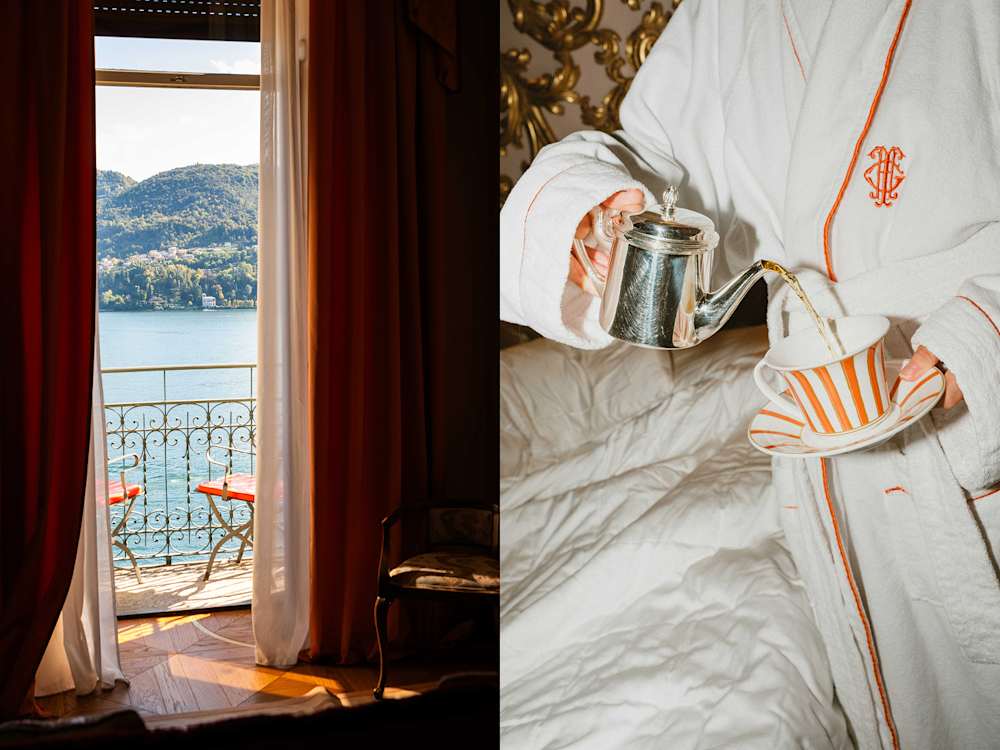
Grand Hotel Tremezzo
The lake: Taking the shape of an inverted ‘Y’, Lago di Como needs no introduction, and not just because a certain fictional emergency-room doctor bought a home here 20 years ago. This deep glacial lake is in Lombardy in northern Italy, with a dramatic backdrop of towering Alpine peaks, equally lofty cypress trees and grand orange-, peach- and lemon-hued villas you’d sell a kidney to own.
It was conquered by the Romans in 196BC and became a strategic location for trade; later, a silk industry was established and continues to thrive today, with factories supplying Gucci and Hermès. Lake Como has long been a refuge for European aristocracy and artists, and the well-heeled continue to flock here today. If I was pushed, I’d say Como is my personal favourite of the three Italian lakes in question. There’s something about the harmony of its staggering beauty, created by the hands of both nature and man.
The vibe: Impossibly glamorous — Como isn’t the favourite of the jet-set for nothing.
The crowd: George and Amal Clooney, scions of the Pirelli and L’Oréal empires, and assorted Russian oligarchs all have homes on Lake Como. Taylor Swift and Robert de Niro have both hired out the private Villa Sola Cabiati. Most recently, the cast of The Devil Wears Prada 2 decamped here to film.
The hotels: There are a couple of grand old ladies of the lake, but few achieve the glamour of Grand Hotel Tremezzo, founded in 1910, just across the water from Bellagio. Arriving for a stay this March, we pulled up into the driveway and were soon surrounded by liveried staff, relieving us of car keys and luggage and ushering us into a lift. We soon ascended to heaven — well, the lobby, but with its views of the lake, stately proportions, vases of fresh flowers and generally dripping decadence, it’s not far off. The rooms are old-school but perfectly so, with antique furniture, brocade curtains and gilded wallpaper. The ones on the lake side have small balconies for admiring the view and breathing in the mountain air, and the ones overlooking the tiered garden aren’t exactly bad either.
The floating pool, with its orange-and-white-striped parasols, is an iconic Como destination. A dip in the lake followed by lunch on the terrace will have you wondering afterwards if it was all a dream. The hotel is also home to a fine-dining restaurant, a classic trattoria with a wine cellar attached, and a spa in the 18th-century villa next door.
Near the comune of Moltrasio and just up the road from George and Amal’s gaff, Passalacqua comes with lofty expectations — it topped the 50 Best’s debut hotel edition a couple of years ago. It’s run by the De Santis family, who also own Grand Hotel Tremezzo, and they are devoted custodians of what was once the summer home of the composer Bellini. It’s much more intimate with just 24 rooms, so it’s the Como stay for you if you want somewhere that feels more like a private home.
The must-visit towns: Since it’s where the three forks convene, terracotta-toned Bellagio is the heart of Lake Como, and this scenic town should find a place on your itinerary. But just a little further north, the colourful fishing village of Varenna is possibly even prettier. It’s home to a photogenic wrought-iron gate (the Gate of Heaven, set within the gardens of the Hotel Villa Cipressi), that’s now besieged by influencers and photo-opportunists. Resist the urge to join the ticketed queue for a snap.
The must-do activity: To truly appreciate the lake, you have to get out on the water, ideally on a vintage wooden Riva. Boat tours will take you past many of the grand houses the lake is famous for, including Villa Carlotta and its botanical gardens; and Villa del Balbianello in Lenno, though don’t expect it to have the futuristic façade it sported in Star Wars: Episode II – Attack of the Clones.
The restaurants: Not to sound obsessed, but George is said to be a fan of Il Gatto Nero in Cernobbio. It’s also imperative to get out to a crotto while in Como. These traditional rustic taverns (the word translates as ‘cave’) can be found all over the shoreline — try Crotto Valdurino in Moltrasio or Crotto dei Platani in Brienno.
Lake Maggiore
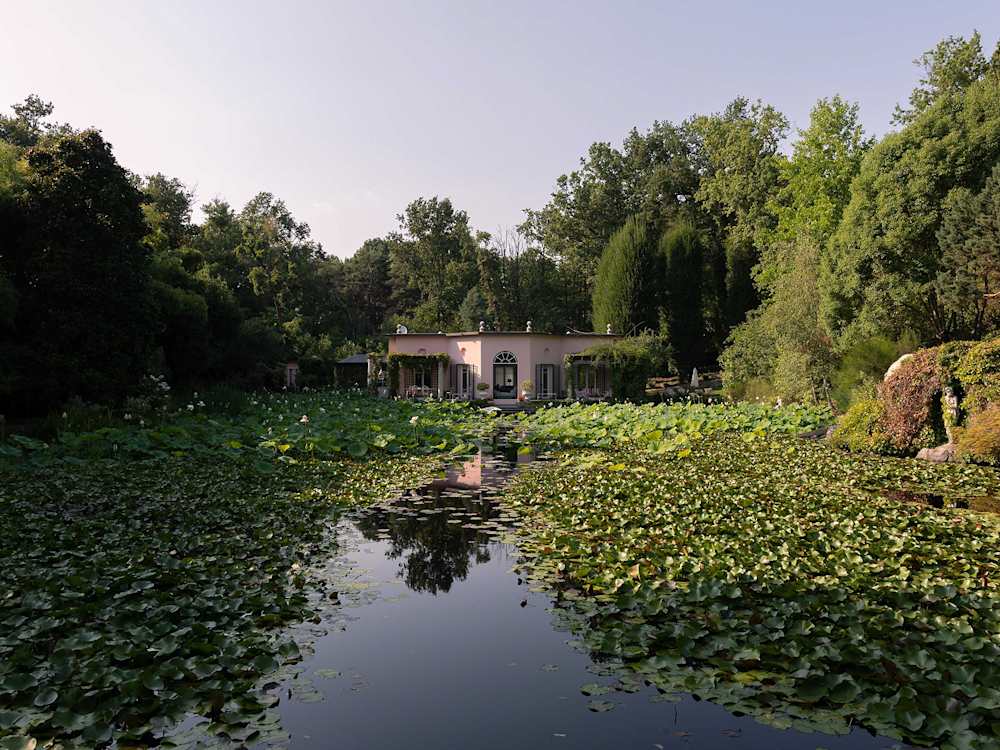
La Foleia
The lake: Lake Maggiore is in the southern Alps, between the Italian regioni of Lombardy and Piedmont, and the Swiss canton of Ticino (half of the lake is in Switzerland). It’s the second-biggest lake in Italy, hence its name, which derives from ‘major’. As with Lake Como, it’s just a short drive (around 40 minutes on a good day) from Milan. This is the lesser known of the three waterways, but it shouldn’t be overlooked.
Its shared borders give it a distinctly Teutonic-flavoured order and grace, and it has an air of impossible romance about it, too — must be all those Belle Époque villas, lakeside promenades to stroll down and spectacular mountains. From Lake Maggiore, it’s easy to explore Lake Orta as well, since it’s only around an hour’s drive away. From the summit of Mottarone, accessed via a hearty hike, you’ll be able to admire both waterways. On the Lombardy side, the cliff-edge Santa Caterina del Sasso monastery is an architectural feat.
The vibe: Charmingly old-fashioned — this is a classic Alpine holiday destination.
The crowd: More of the sensibly dressed, outdoor-proofed Alpine adventurer, here to hike, soak up the culture, and admire the hard-to-miss mountain scenery. But that doesn’t mean Maggiore is lacking in famous fans: Donatella Versace owns a villa here, Louis Vuitton staged a Resort show on Isola Bella in 2024, and Ernest Hemingway once checked in to the Grand Hotel des Iles Borromées in Stresa — the lake appears in A Farewell to Arms.
The hotel: A short drive away from the bottom of the lake, La Foleia is a pair of villas with its own (man-made) body of water between them. This peaceful pink retreat was once the home of a philosophy professor, who lived in one and used the other as his study and teaching space. You can mimic his idyllic lifestyle today, staying in the octagonal main villa, or in the second suite across the garden — each has artful, all-Italian interiors, with countless books stacked on the shelves, pastel frescoed walls and pops of pink everywhere, from the exterior paint to the striped outdoor cushions. There’s a cedar-wood sauna and hydromassage rock pool between the two, and each has a kitchen and dining area, where antipasti platters and breakfast hampers are served.
The must-visit towns: Stresa is one of Maggiore’s main hubs, and it’s from here that boats to the Borromean Islands depart. Verbania is home to Villa Taranto and its beautiful botanical gardens. Just before you reach the Swiss border, Cannobio dates back to mediaeval times, when it had a thriving wool and tanning trade.
The must-do activity: A tour of the trio of Borromean Islands on the lake: Isola Bella, Isola Madre and Isola dei Pescatori. You could easily while away a day visiting the three isles, ending with a stroll around Stresa with a congratulatory gelato. Isola Bella is home to the Borromeo Palace, with its opulent interiors and equally majestic terraced Baroque gardens.
Isola Madre has more immaculate landscaping and breathtaking views of the mountains encircling the lake. You’ll be joined by prides of peafowl as you explore the 20-acre island and its botanical gardens, rare plants and 200-year-old Kashmir cypress tree (ravaged by a tornado in 2006, but thankfully salvaged).
And what Isola dei Pescatori lacks in grandeur, it makes up for in relaxing, fishing-village charm and lake-facing cafés and restaurants. CMA Stresa Tours has boats going between all three, in an easy loop departing from and returning to the main hub of Stresa.
The restaurants: On Isola dei Pescatori, La Pescheria is a lovely spot for lunch at the water’s edge. Needless to say, seafood is the order of the day. Or try Antica Osteria il Monte Rosso on the lakeside promenade in Verbania, founded in 1854 and still going strong, with tables on the terrace for the warmer months.
Lake Garda
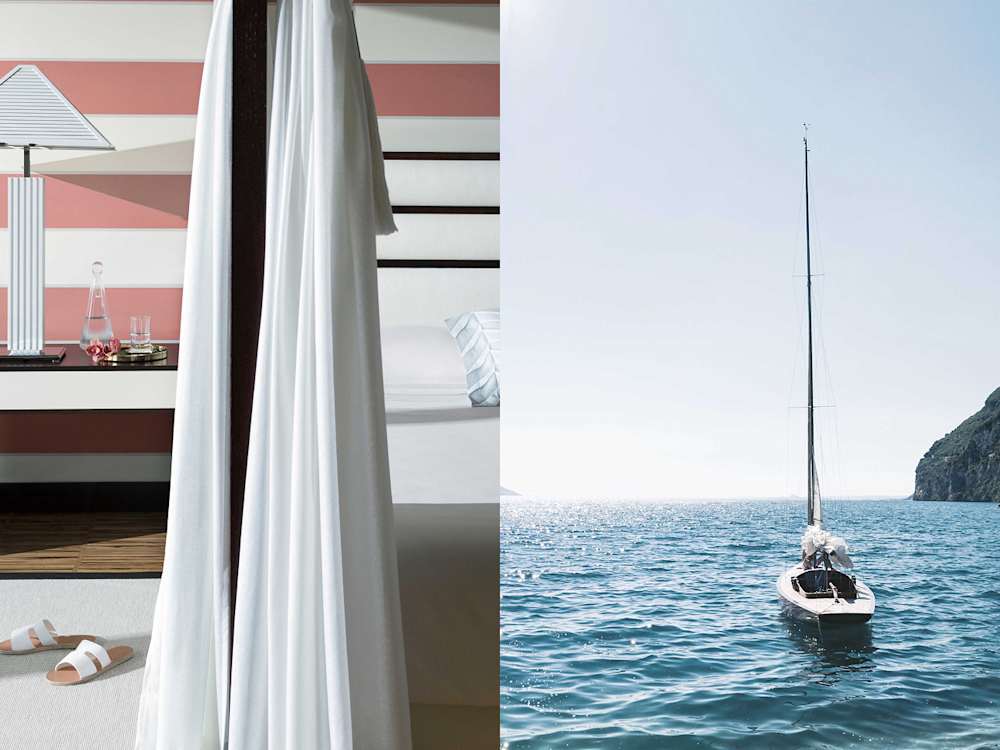
Lefay Resort and Spa Lago di Garda
The lake: The title of Italy’s largest goes to Lago di Garda, located between Milan and Venice, and the comuni of Verona, Brescia and Trento. It has been inhabited by humans since the Bronze Age, having been formed by glaciers more than a million years ago. Lake Garda is a bit of a medley — this lake can be whatever you want it to be. It even has its own theme park called Gardaland.
The northern reaches feature dramatic Alpine backdrops and perfect sailing and windsurfing conditions, but things get a little more Mediterranean on the southern shores. Across the shoreline, there are pretty villages and towns to discover, with historic castles, grand villas, Roman ruins and thermal springs; and its temperate climate assists abundant lemon and olive groves.
The vibe: A little underrated, laidback and less flashy than some of its counterparts.
The crowd: We’re going highbrow here. Winston Churchill visited Lake Garda on a painting holiday in the summer of 1949, while the German polymath Johann Wolfgang von Goethe was also enamoured of the area. Following his visit in 1786, he wrote: ‘How much do I wish that my friends were with me for a moment to enjoy the prospect, which now lies before my eyes. I might have been in Verona this evening, but a magnificent natural phenomenon was in my vicinity: Lake Garda, a splendid spectacle, which I did not want to miss, and now I am nobly rewarded for taking this circuitous route.’ And the poet and playwright Gabriele D’Annunzio built a house in Gardone Riviera, where he wrote some of his most notable works.
The hotels: There’s no disputing that mountain air is good for you and you can enjoy plenty of it, alongside pioneering medi-spa programmes, at Lefay Resort and Spa Lago di Garda. The views are almost tonic enough, but take things up a notch with spells in the saunas and saltwater whirlpools, dinners of healthful local produce on the terrace, and treatments that blend Chinese medicine with Western practices. Close to the edge of the water, BellaRiva is in refined Gardone Riviera with a restaurant terrace above the water, bicycles to borrow and a pool for swims overlooking the lake.
The must-visit towns: There are many, but the citrus-scented, cobblestoned centre of Limone sul Garda is hard to beat. Salò, on the south-west shore, has a 15th-century cathedral and lengthy lakeside promenade. I also love Garda; when I visited in the dead of January, the sky at sunset was lilac, and the towering headland at the edge of the water and the restaurants lining the shore only added to its many charms.
The must-do activity: If you’re here for sailing and windsurfing, head north to Riva del Garda. For the less sport-minded, a trip to Sirmione is in order. The ancient town is where you’ll find Scaligero Castle, alongside thermal springs and Roman ruins at the end of the peninsula. The fortress dates back to the 14th century, but it is one of the best preserved castelli in Italy.
The restaurants: As with most places in Italy, you’re destined to eat well in Lake Garda. Accomplished restaurants in the region include Il Fagiano, a Michelin-starred restaurant with a Pugliese chef inside Grand Hotel Fasano; Casa Leali, set in a 15th-century farmhouse in the comune of Puegnago del Garda; and Tancredi, overlooking the lake in Sirmione.
Discover more of our hotels in Italy, or read about two forgotten corners of Sardinia