



Whenever I go somewhere new, I like to start the trip with a story that sets the tone. So there I was, on a 5am train to London Gatwick, digging for anecdotes on the Turkish Riviera. After a few minutes of scrolling I struck gold, stumbling upon a tale of love, land and extravagance. It goes like this: Mark Antony, son of Rome, had fallen in love with the Egyptian queen, Cleopatra. A secret marriage was planned. But Antony had a quandary: what do you give the Queen of Egypt, the woman who has everything, as a wedding present? Well, it wasn’t a thing at all but a place, one he prized above all others: the entire coastline we now call the Turkish Riviera.
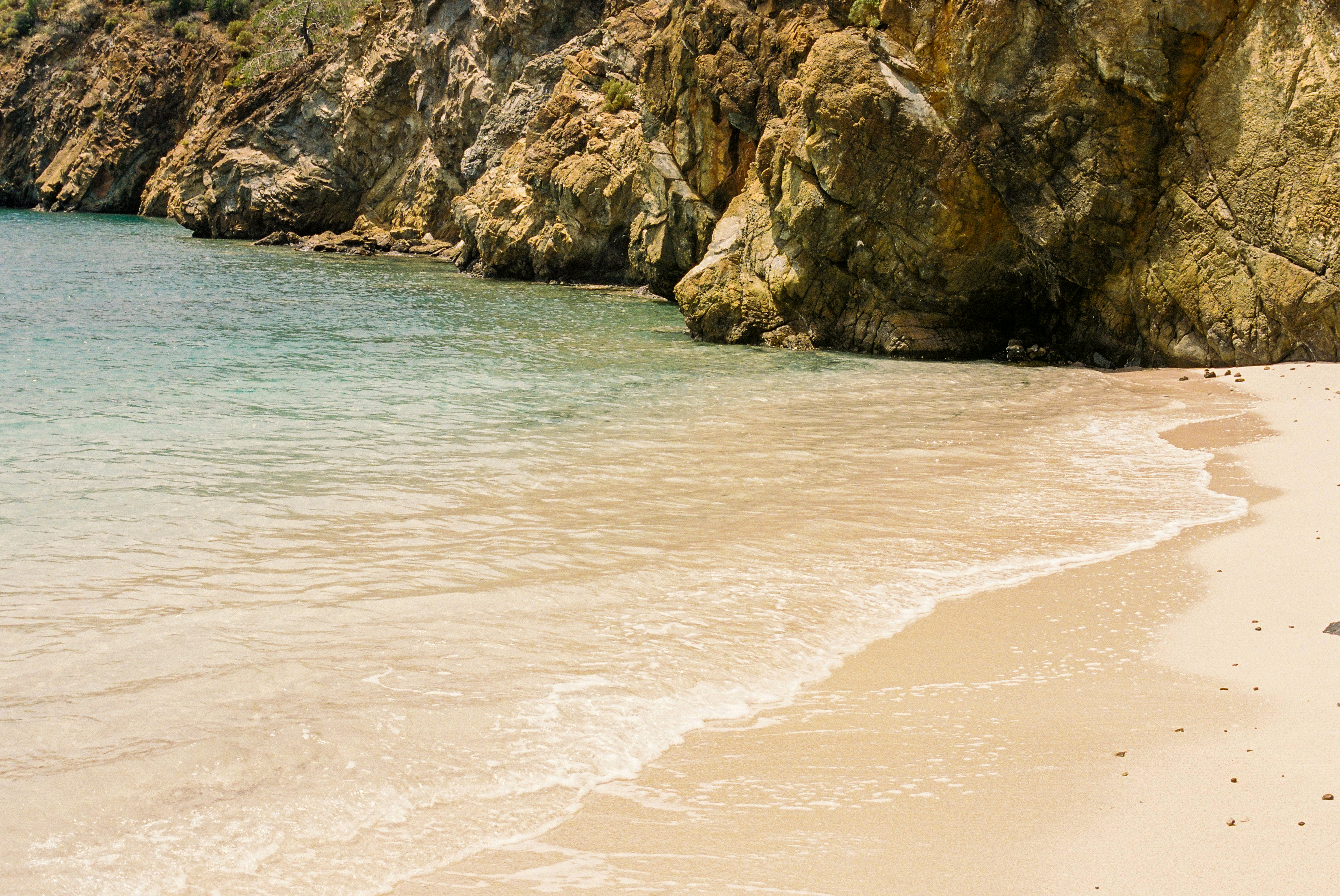
I’ve heard of some extravagant wedding gifts but this one trumps them all. What was it about this region that inspired such reverence in the well-travelled Roman? It was a question I’d have to put to the land once I arrived at Ahãma, a design-forward wellness hotel grounded in that very same landscape. A 20-minute drive from the port city of Fethiye, Ahãma is the new — and sole — resident of Günlüklü Bay, a pristine horseshoe of white sand flanked by hills fuzzed with Mediterranean pines. Unlike many of the Turkish Riviera’s traditional hotspots, this place is completely tucked away. The only intrusion from the outside world is the occasional yacht passing on the horizon. Where better to find an answer?
I’m met at the gate by Mustafa, my ‘experience manager’, who leads the way through the forest that runs down to the beach. It’s a nature reserve, left entirely to its own devices, giving it that ancient, even primordial feel. ‘Not a single tree was cut down when the hotel was built,’ says Mustafa. ‘But if a tree falls in the forest, we leave it. Nature will know what to do.’ The species here is a type of sweet gum, he explains, called Liquidambar styraciflua. These trees are incredibly rare; the forest at Ahãma is one of only a handful worldwide. Oh, and guess who used sweet gum sap as a perfume and ‘love potion’? Cleopatra, of course.
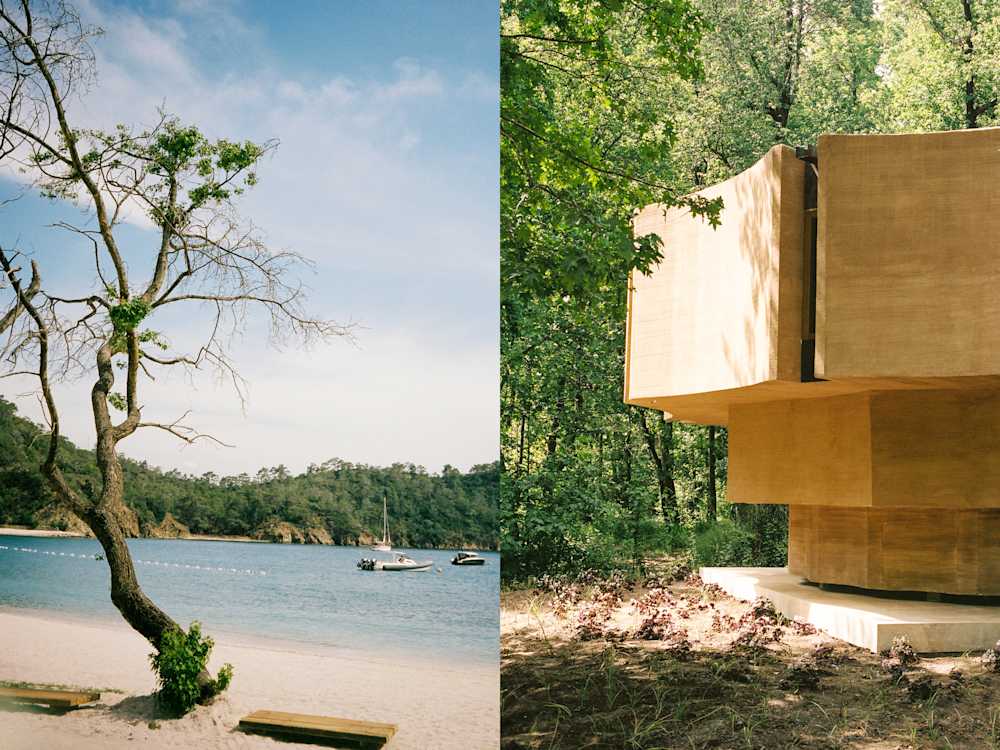
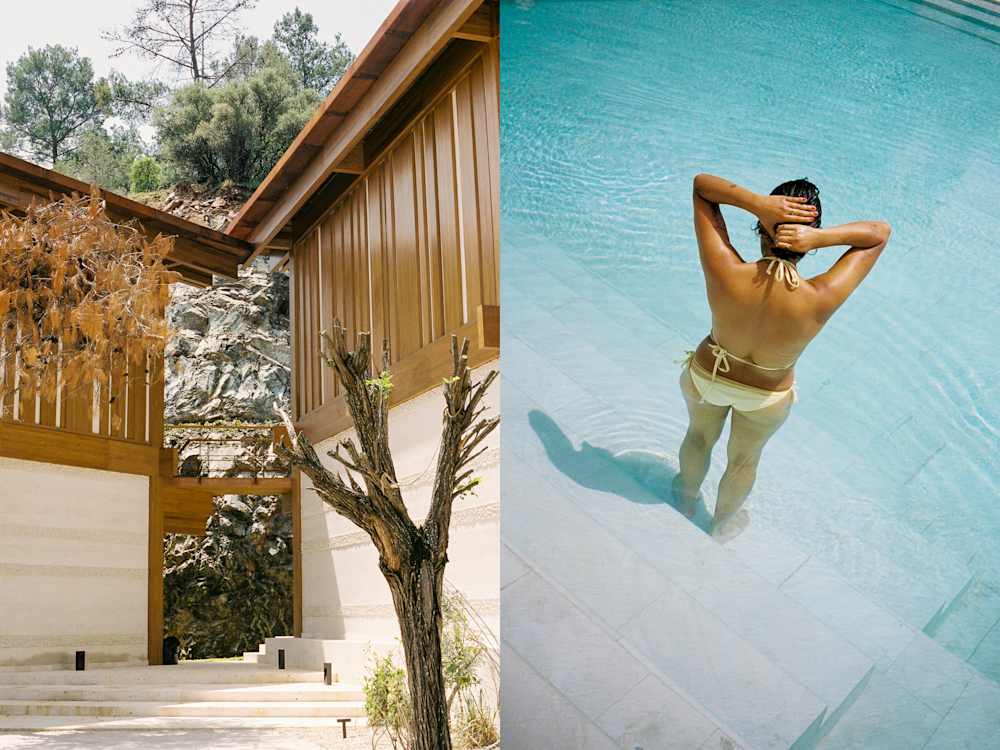
We pass through landscaped grounds that weave in and out of the forest, planted with long ears of golden-tipped grass, young saplings and all manner of wildflowers, humming with bees in the afternoon sun. This is the work of Spanish landscape architect Alvaro Sampedro, who has honoured the local flora by planting as many native species as possible. Mustafa wasn’t exaggerating about the respect for the trees: every so often, the walkway takes a sharp turn to avoid one, or the tree simply sprouts up through a hole cut into the wooden slats.
We arrive at my room, one of Ahãma’s beachfront cabanas. To me, this cluster of timber buildings looks like a Japanese fishing village, slotting into the coastal landscape with ease. Their slanted roofs sit just below the treeline on the horizon, as if bowing to the natural order of things. This elegantly unobtrusive design was created by Istanbul-based Stüdyo AB Architecture, working in collaboration with Ahãma’s creative director, Gabriela Palatchi. But if they’ve tipped their hats to the Japanese concept of wabi-sabi, they’ve also paid tribute to forms that are much more local — and ancient.
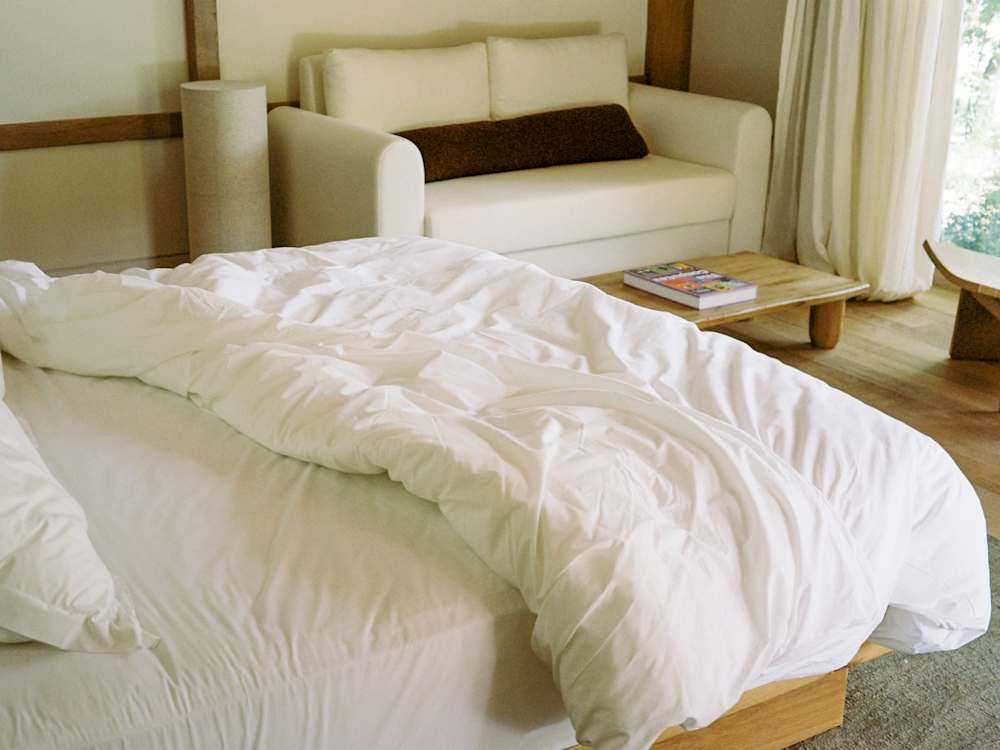
‘Ahãma’ is the word for ‘beloved’ in Lycian, the language spoken by a civilisation that once ruled over this region. I think it’s fair to say the Lycians loved the sea; they were brilliant sailors, and their tombs still watch over the water from the mountains behind the hotel. In my cabana, there’s a tribute to these monumental sarcophagi: solid blocks of stone used as decorative pedestals, hewn from the same hills the Lycians once wandered. Later, I learned that Lycian houses had porticos supported by wooden columns, which is exactly what the cabanas have here. It makes a fine spot for watching the sun setting over the bay, something that feels like a cultural act, given that Lycia was known as the ‘Land of the Light’. Who knows, maybe they came to this very beach to probe for answers in the crimson and gold.
If it’s ancient knowledge you seek, Ahãma will readily provide. The next morning, while at the hotel’s sculptural seaside restaurant, the Glasshouse, I meet Burcu Kutluk, head of wellness and rituals. She has just broken her fast, having joined an Ayurvedic retreat being hosted in the resort’s waterfront villa. ‘We’re in the process of building a culture,’ she tells me. ‘You can think of it as a global view of everything that’s good for the human soul. That includes slow living, being connected to the sun and moon, what we eat, and how we come together and celebrate as a community.’
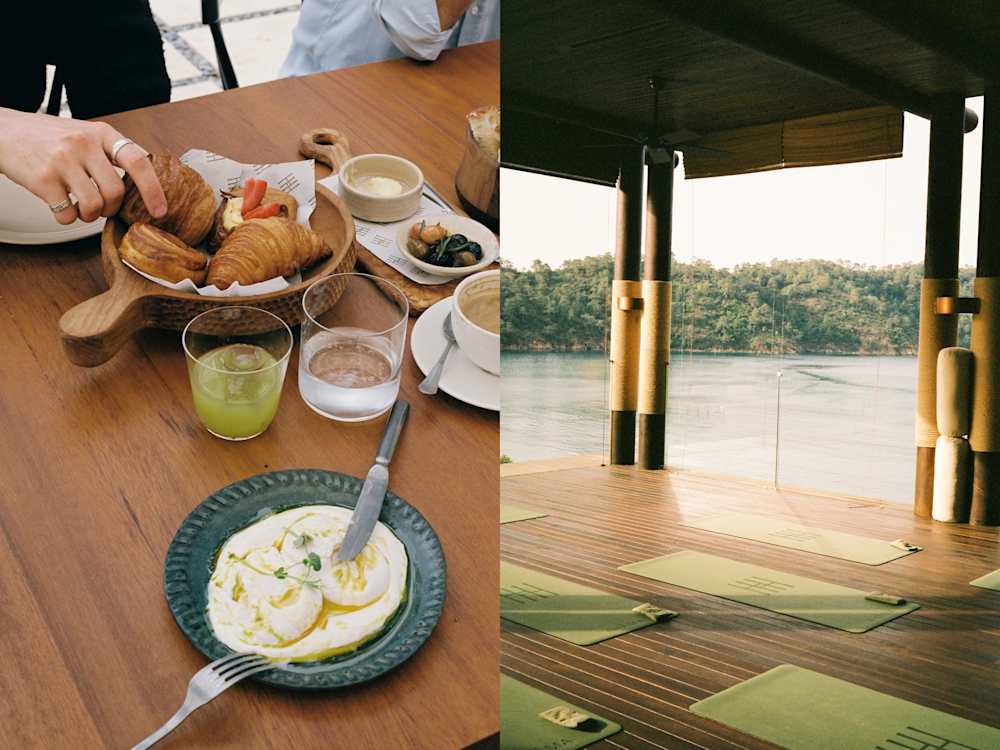
There are six to eight wellness sessions each day, all included in your room rate. Today’s lineup began with morning yoga in the hotel’s glass-walled shala, overlooking the bay from its hillside perch. Then qi gong, breathwork, a movement meditation, sound healing and finally a sunset ritual on the beach. ‘We’ll have practitioners coming from all over,’ says Burcu, ‘including Tulum, Bali and Ko Pha-Ngan; places where wellness is deeply ingrained in the local culture.’ They’ll lead retreats, too, like the Ayurvedic one Burcu has just been on, bolstered with bespoke diets, workshops and talks — the full holistic immersion. There’s even a Samurai expert coming to teach the ways of the Japanese warrior-philosophers.
An hour later, I’m flat on my back in Mexican architect Héctor Esrawe’s forest temple, where Ahãma’s sound healings are held. Arranged in a circle, we sonic travellers lie in the dark, eyes covered, bathed in the sound of Tibetan singing bowls. The all-encompassing warbling ripples through the air, rising and falling like a wave. One of my fellow voyagers is so moved to relaxation that he quickly falls asleep, adding a sonorous snore to the soundscape. Not what the practitioner intended, perhaps, but maybe this was all part of the process, just another vibration sent from the outer world. In any case, our sleeper was gently brought back to earth — with a tactful tap on the shoulder, I imagine — and we continued on our way.
Back outside, feeling pleasantly heavy on my feet, I return to my question about the world’s best wedding present. Why here, more so than any other place? It’s hard to put yourself in the shoes of someone who lived more than 2,000 years ago — but maybe, just maybe, Mark Antony felt as I do. That the land here feels as old as time, with layers of history stretching back into obscurity. It calls you, coaxes you, into reflection with its hushed forest, cerulean-blue sea and mountains filled with relics from the ancient world. And now there’s Ahãma, the hotel with a name that sounds like a chant, softly calling you back to yourself.
Explore our full collection of Turkey hotels
Photography by Hannah Dace