



I look back on the Shoreditch of 20 years ago with the kind of dreamily prismatic nostalgia filter that was applied to all my photos in the early 2000s (thanks, Hipstamatic!). The neighbourhood was in the thick of what we now call ‘indie sleaze’. We’d hit up First Thursday art-gallery crawls as much for the free booze as what was on display. The Arctic Monkeys made The Old Blue Last shake. And you’d be as likely to see Alexa Chung take to a set of decks as you would a YBA sipping pints in Hoxton Square.
The Hoxton, Shoreditch, which was to become the anchor of all this action, opened on the site of a carpark along Great Eastern Street in 2006. ‘You can still spot nods to the building’s past in the poured concrete floors,’ general manager Cecilia Horner tells me. Its brick-and-pipes look was lo-fi enough to appeal to the prevailing Vice Magazine-style unseriousness, while the Autofoto booth begged to be piled into after American comfort food at The Hoxton Grill. Its arts programming was a distillate of the surrounding culture, and a no-frills ethos meant a room rate that justified missing the last Tube home to dance till God-knows-what hour at Cargo (RIP).
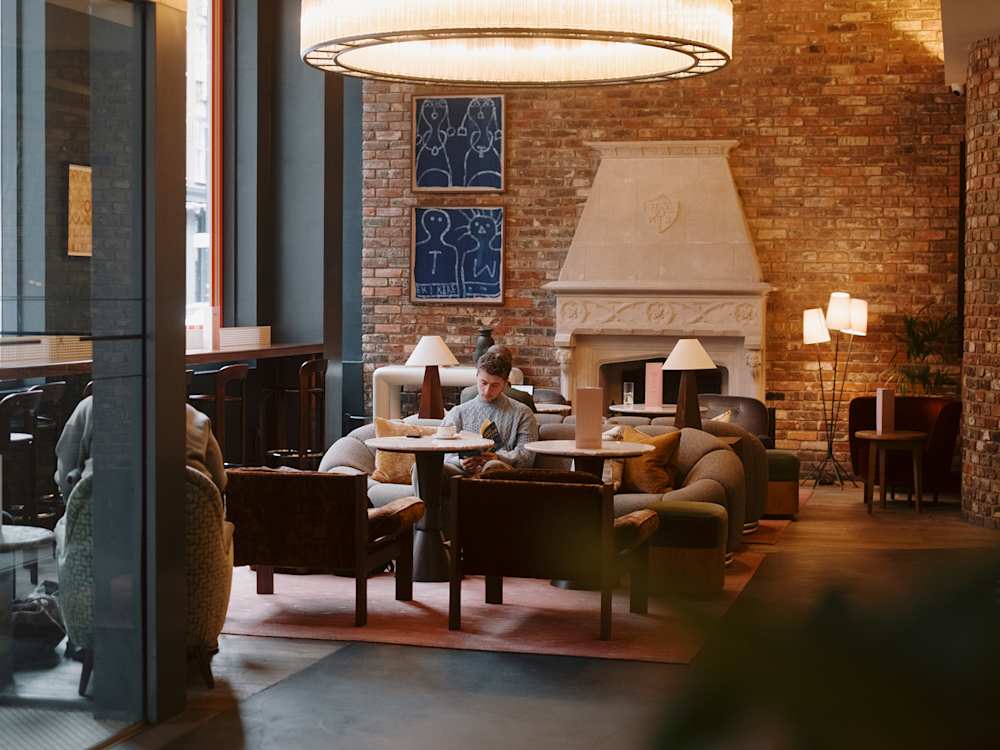
But enough ‘was’, because The Hoxton is still going strong after 20 years, an anniversary it’s celebrating in 2026 with parties across its now 19 sister properties. In celebratory spirit, I returned for an unfiltered look.
Shoreditch has matured (no more sitting on furniture found in a skip or rigging up a mate’s mate’s roommate’s busted amp), and so too has the hotel, with a grown-up makeover by in-house designers AIME Studios. Gone are the hipster-catnip cushions emblazoned with Pac Man ghosts and fixie-bike decals on walls; in their place are mustard velvets and mint terrazzo, wave-edge headboards, chocolate tiles and chrome flashes. Don’t worry, those huge round mirrors remain for selfies and OOTDs, and the price point still hovers at that ‘we may as well make a real night of it’ affordability. My room, the new ‘Cosy Up’ category, has an apéritif station with a larger minibar to help get the night started. In the lobby, AIME delved into Shoreditch’s glassblowing and silk-weaving past, with frilly fabric lampshades and glazed Victorian motifs, while the enormous ring-light chandeliers still cast a flattering light on Macbook-tappers.
They’re notable changes, but seamlessly integrated so that The Hoxton stays true to its 2006 mission statement: ‘An open-house hotel inspired by the diversity and originality of the streets that surround us.’ There are loving nods to East London via various art mediums: Becky Baur’s London Fields Lido painting; Alyse Elizabeth’s giclées of Dalston’s Rio Cinema and Victoria Park’s Pavilion Bakery; Charlotte Joseph’s sketches of Columbia Road and the Tea Building; Melis Duran’s Flower Market tapestry… Photographer Ben Hickman has hung the on-site gallery with sun-washed, cinematic imagery all ripe for reminiscence.
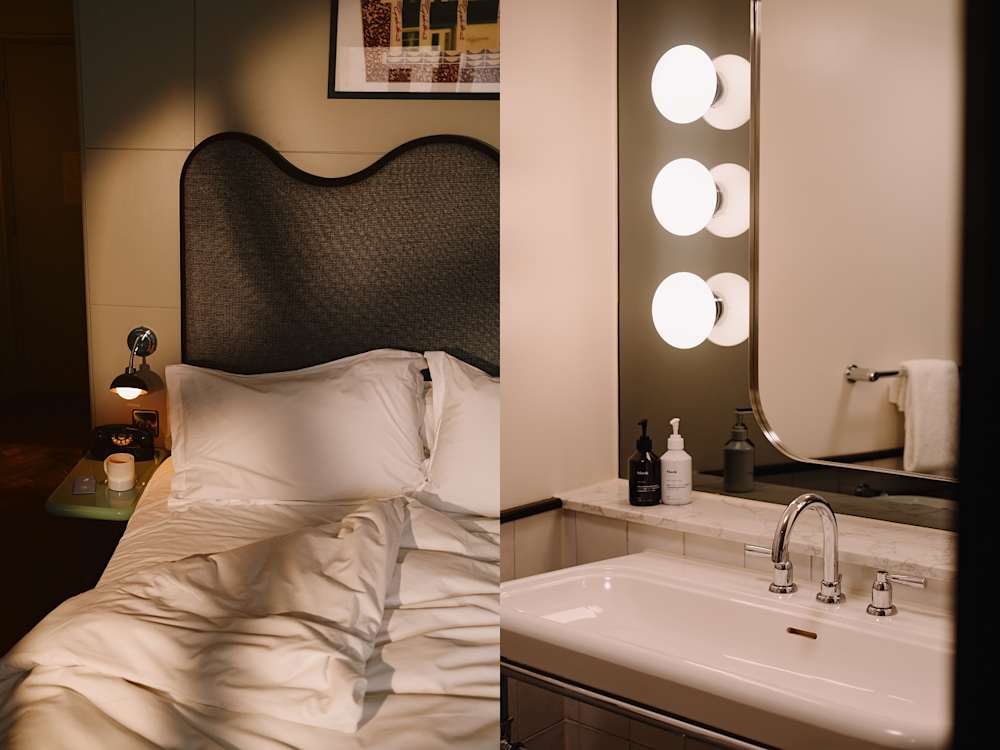
But there’s also a lot to love about Shoreditch this year. The UK version of the South x Southwest festival takes over the neighbourhood for a second time in June. Beloved gig venue XOYO is having a ‘not a comeback but a reset’ moment after a refurb, and other neighbourhoods’ losses are Shoreditch’s dining gains, since a streamlined version of cult Vietnamese café Sông Quê Pho and Thai joint Singburi changed postcodes.
In 2025, Old Street’s Plates became the world’s first vegan restaurant with a Michelin star; at the meaty end of the spectrum, in February 2026, Spanish eatery Legado earnt its first star — suckling pig is a speciality, and I enjoyed its trotters in romesco and paprika-spiced pig ears. Shoreditch lost its Nobu, but in Mitsu it’s gained an izakaya for sandos and pork chashu, while Bajan eatery Barbs is in residence at the Queen of Hoxton (the climb up the stairs is still punishing, I’m afraid).
Edifying stuff, but has Shoreditch sold its graffiti-splattered soul? It breaks my heart that there are two Simmons bars within a 10-minute walk. But galleries such as Espacio, Stolen Space, Pure Evil and Haricot still bring dynamism with the propellant power of a spraycan; while July’s Free Range graduate show at The Truman Brewery is a hotbed of emerging talent. Paint layers still accumulate on walls, with original works by Banksy, ROA and Stik joined by the fruits of female-run WOM Collective’s paint jams, portraits by French artist Zabou, and vivid tableaux by Jim Vision. The subversive, middle-finger felonious feel has faded somewhat; but as Horner says of Shoreditch’s past creative kinesis, ‘that energy has never really left — it’s evolved rather than disappeared.’ A new series of upcoming Hox Talks, curated by local design studio Slancha, examine this idea. But, Horner continues, ‘despite all the change, Shoreditch has held onto that sense of creativity and individuality that drew people to it in the first place.’
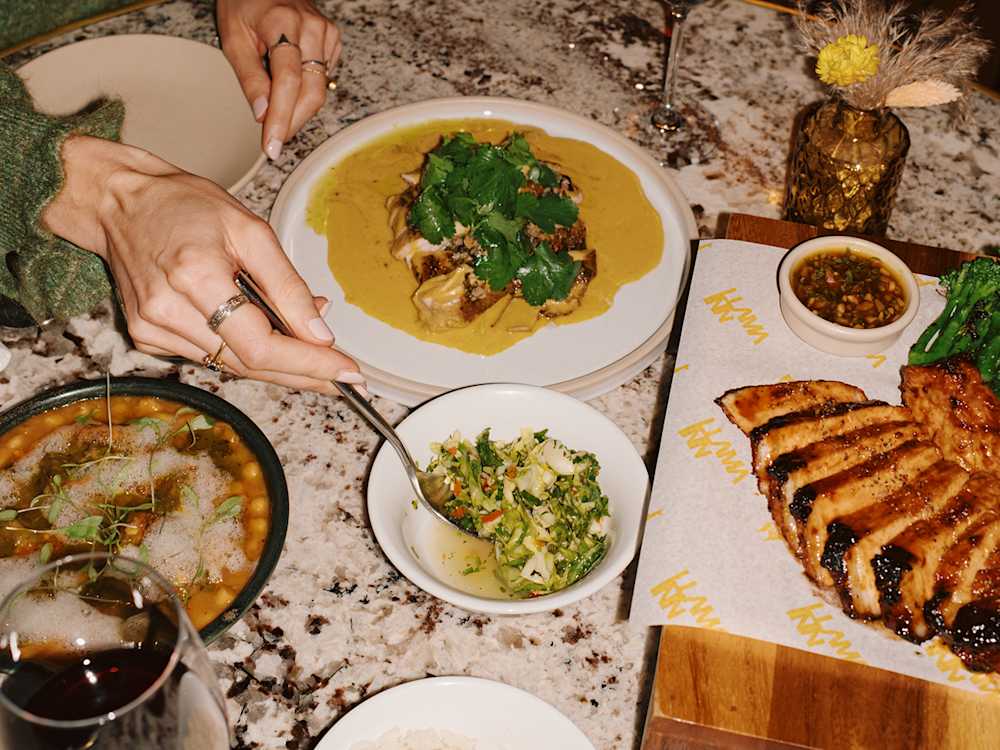
The Llama Inn
Look at The Hoxton’s Afghani rugs from nearby Ishkar or vases by HR Ceramics and soy candles by Earl of East and you’ll see that the hotel is a local champion, but also, that the locals deserve a spotlight. ‘As part of our Good Neighbours initiative, explains Horner, ‘we work with local talent and independent businesses to create space for communities to come together,’ which includes hosting supper clubs, makers’ markets and more. (I noticed both hipster survivors and Gen Z arrivistes co-working in the lobby, and catch stray soundbites around film funding, festival entries and carpentry techniques.) Perhaps Shoreditch’s lightning is back in the bottle, judging by the creative sparks here.
What’s the magic to making The Hoxton, Shoreditch, enduringly popular? From Horner’s perspective, ‘it’s a balancing act of staying relevant without losing character.’ I come to my own revelation later. While the hotel’s Peruvian rooftop eatery The Llama Inn calls to me (cheesy yucas, coconut and Thai basil Piscos, and views across the neighbourhood— yes please), I’m craving an old favourite: a Beigel Bake salt beef. But 20 years on, I’m not freezing outside in the queue lining Brick Lane or reeling from the counter staff’s infamous brusqueness, because The Hoxton now offers it as room service from 10.30pm to 7am. And so, at 11pm, my nostalgia hit is delivered to my door, to enjoy while I’m wrapped in a duvet. A classic, experienced in a delightful new way, after all these years.
How to make a Hoxton
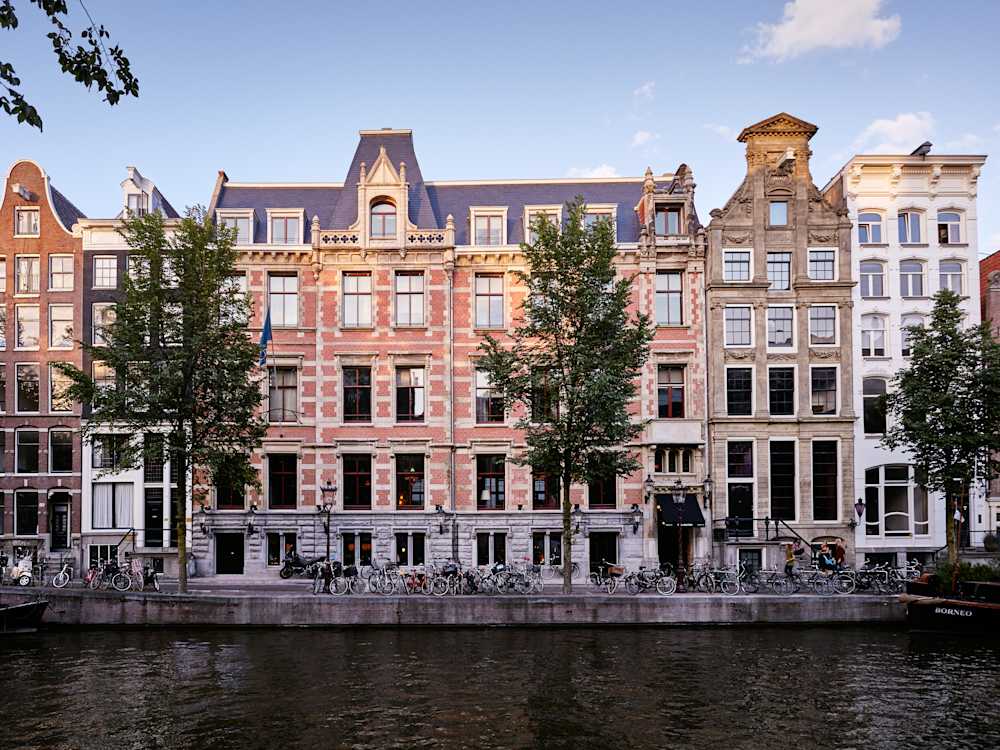
The Hoxton, Amsterdam
How does a Hoxton hotel make guests feel so at home in a new city? Especially now the group has gone global and is planning to expand further, with properties upcoming in Bengaluru, Hamburg, Krakow, Madrid, Melbourne, Mexico City, Nashville and Oslo?
We asked General Manager Cecilia Horner, who told us, ‘When looking for a new neighbourhood, the focus is on areas that offer guests a fresh perspective on the city and places with a strong sense of character. It’s just as important that a Hox adds something meaningful to the area too, creating a space that feels open to the neighbourhood as much as it does to guests.’ To help you choose your Hox, here are some of the ways in which they offer a real sense of place.
The Hoxton, Edinburgh
This elegant hideaway is set across 11 Georgian townhouses in the Haymarket neighbourhood, away from the thick of Edinburgh’s tourist trail. You can see the townhouses’ history in the colour palette, chandeliers and shapes of furnishings; and the restaurant might be Italian, but a haggis-topped pizza brings the Scottish oot.
The Hoxton, Amsterdam
Set in the lively Nine Streets district, this outpost occupies five of Amsterdam’s distinctive 17th-century townhouses by the Herengracht canal; not only that, but its bedrooms sit in a former mayoral residence. There are nods to biking (of course), artworks by locals such as painter Anne Stooker, and wood panelling and parquet hark back to the buildings’ past lives.
The Hoxton, Brussels
This Hox sits in the former HQ of computing company IBM Brussels, and as such has design cues from the late 20th century, with industrial touches, a Seventies colour palette and a retro-futurist feel.
Join the party with our full collection of Hoxton hotels