


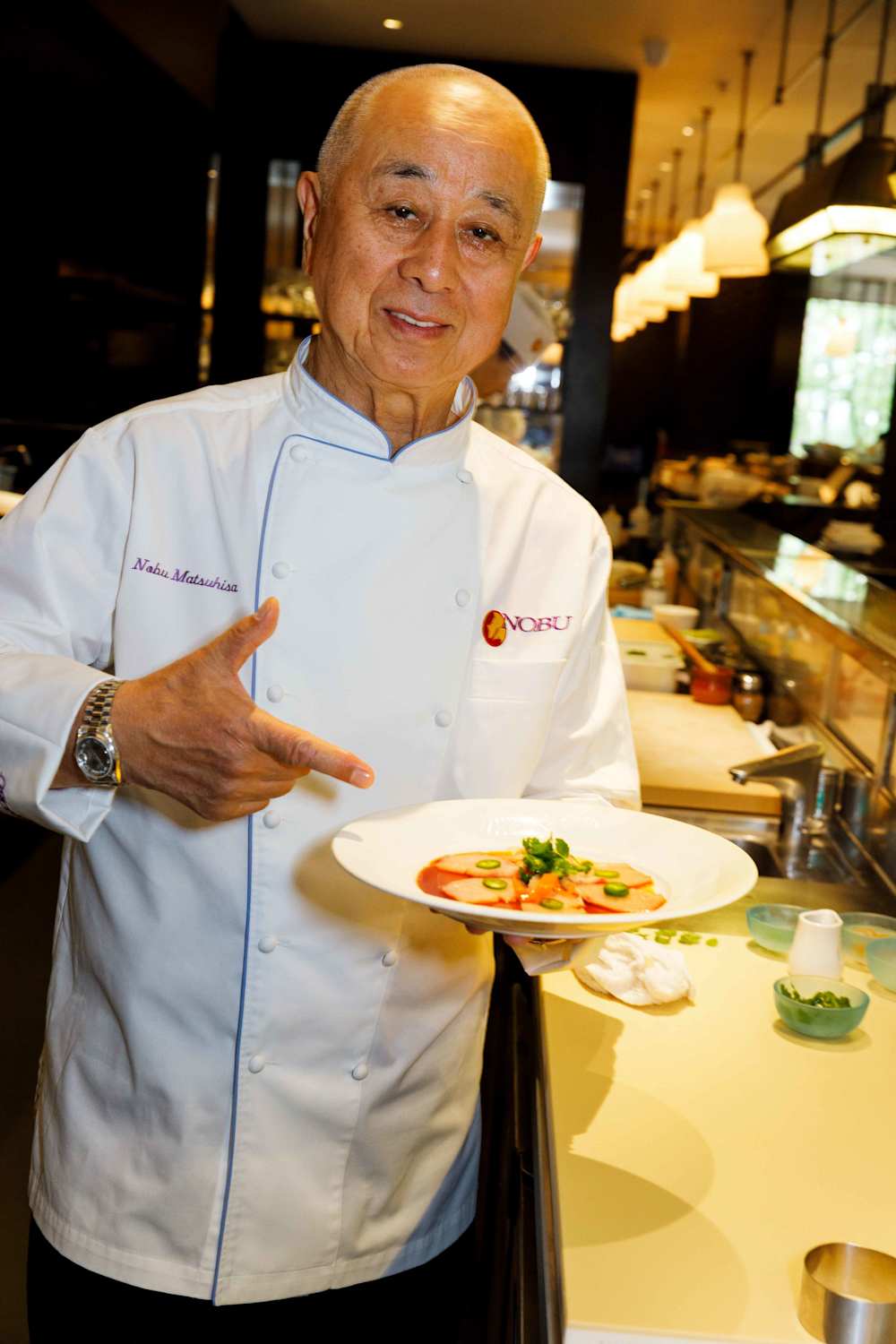
We met one of the world’s most exciting chefs at his minimalist hideout in central London, Nobu Hotel Portman Square, to chart his meteoric ascent…
WHO’S IN THE KITCHEN?
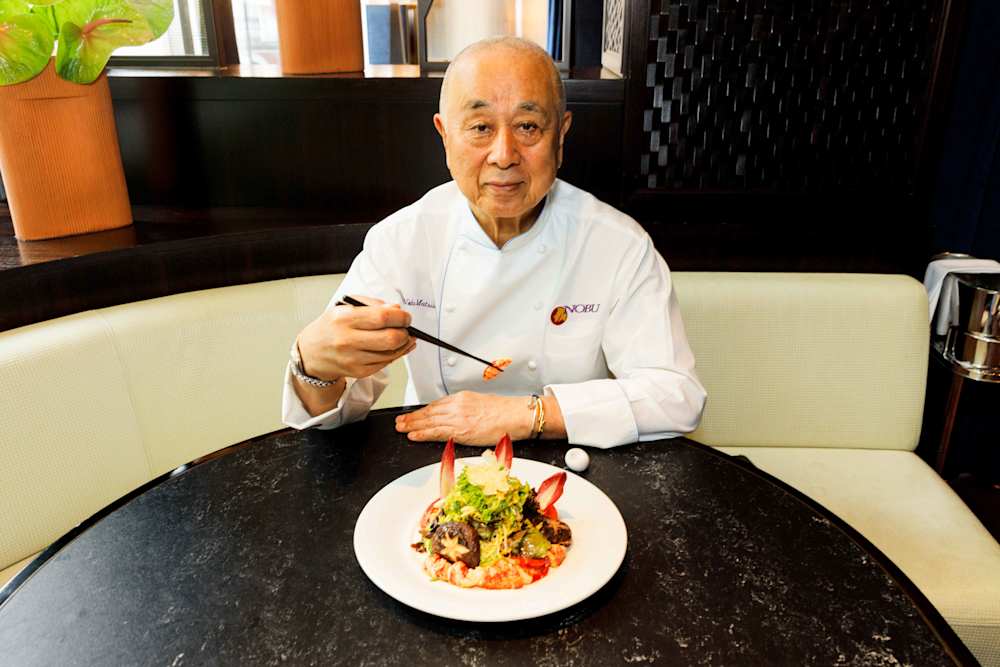
In short, a global culinary icon. Nobu is the mononymous mastermind behind the world’s most glamorous omakase, and the man who put black cod miso on the map (with a little help from Robert De Niro, who famously loved the dish so much that he became co-founder of the brand). But away from the pass, Nobu Matsuhisa is the face of a hospitality empire. Spanning more than 50 restaurants and 19 hotels (from the original Beverly Hills outpost to hotspots in Manila, Marrakech and Miami, with 25 more on the way), his brand is built on slick service, elegant design and aspirational cuisine.
WHAT’S COOKING?
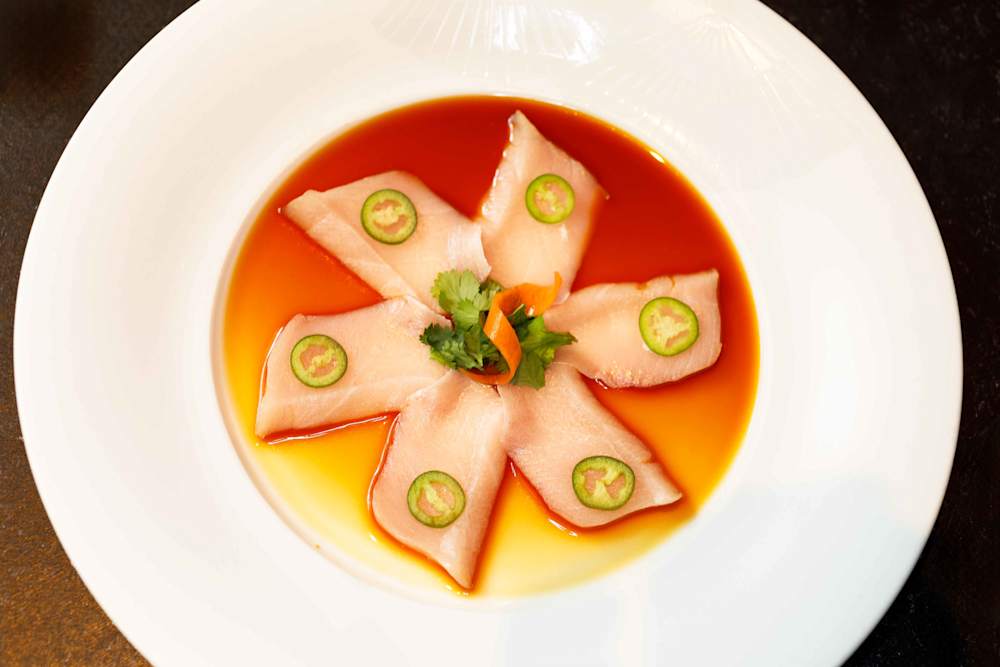
A singular blend of Japanese precision, South American passion and Californian cool. Whether it’s yellowtail jalapeño sashimi with yuzu soy or a martini with a jasmine twist, everything on the menu bears Nobu’s trademark of refined restraint and unmatched levels of umami. And that cult-status miso cod? Basically, the Beyoncé of fish: iconic, flawless and always centre stage.
RECIPE FOR SUCCESS
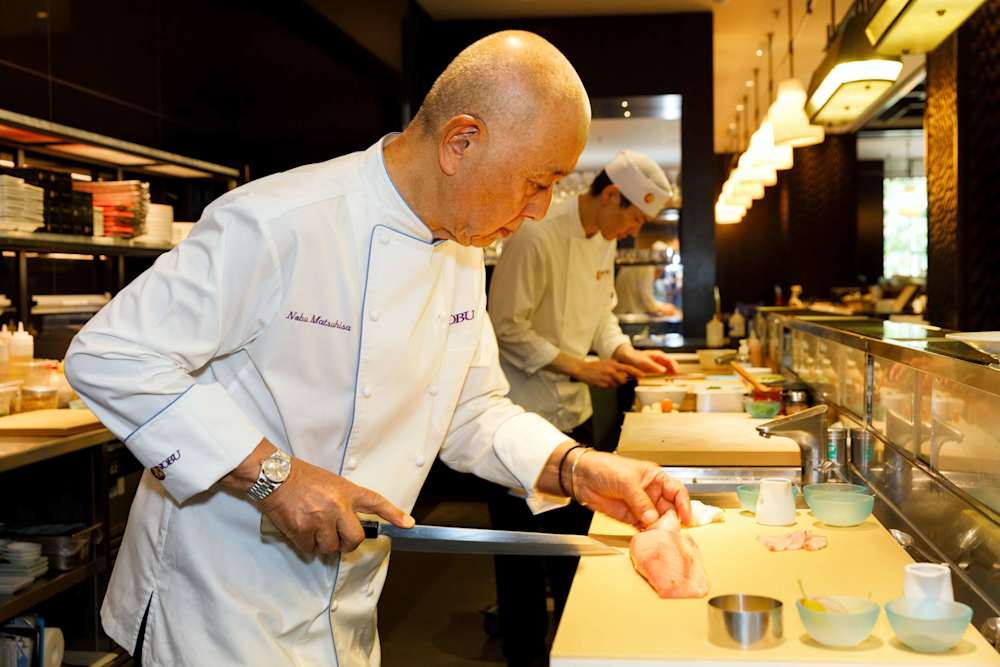
Chef Nobu’s vision is the sum of global parts. He cut his teeth as an apprentice sushi chef in Tokyo; discovered the potential of fusion cooking in Lima; learned resilience in Alaska when his first solo venture heartbreakingly burned to the ground; then gained A-list firepower when Hollywood came knocking. His food speaks in clean lines, bold flavours and unexpected sparks of colour — deceptively simple, until you take that first unforgettable bite.
Your time in Peru was pivotal in developing Nobu’s signature Japanese-Peruvian fusion. How did that experience influence your outlook not just as a chef, but as an entrepreneur?
My time in Peru changed everything. I arrived with my Japanese training, but I didn’t have access to all the ingredients I was used to. So I had to improvise with what was around me. The vibrant flavours of ají amarillo, coriander and limes opened my mind. It was the beginning of my philosophy: to be open, to learn from others and to create harmony between cultures. That experience taught me that food has no borders. It’s about emotion, respect, and connection.

Simplicity and discipline are intrinsic in Japanese culture. How do you reconcile those philosophies with the creative chaos that’s needed for menu innovation?
Japanese cooking is built on balance, with discipline giving you structure, and within that structure there is room for creativity. The chaos is not really chaos if you have a strong foundation. I like to respect the ingredients and don’t overcomplicate the dish. Innovation happens when you’re humble enough to try something new and disciplined enough to refine it.
How has travel influenced your approach to food and hospitality? And how do you ensure authenticity while adapting to so many different cultures?
Travel keeps me inspired; it reminds me there’s always more to learn. Every city, every culture has something to teach you. But no matter where we go, the heart of Nobu stays the same: kokoro, meaning with heart and spirit. We adapt to local ingredients and tastes, but we never forget who we are. Hospitality, for me, is about making people feel welcome.
Which one travel moment transformed your perspective on cooking?
When I moved to Alaska to open a restaurant, it was a big step for me. I had invested everything into that project. But after just a few weeks, the restaurant caught fire and burned down. I lost everything, not just money, but also my confidence. I was devastated. But that experience taught me something deeper than cooking: perseverance. I realised that failure can be part of the journey, and that pain can lead to growth. It changed how I viewed not only my career, but also my philosophy as a chef — to keep going, never give up and always try my best. Even if it is one step at a time.
Is there any dish on your menus that has special significance?
The Black Cod with Miso is very personal and what makes everyone think of Nobu. I created it over 30 years ago, and at the time, black cod was not a popular fish. But I saw potential. Now, it’s one of our most iconic dishes. It represents patience, transformation, and the idea that with care, you can turn something simple into something special.
Each of your restaurants leans into the culture and character of its location, whether that’s in Chicago, Marrakech, Warsaw or Ibiza. How do you adapt your vision to reflect each destination?
Before opening in any city, I spend time there meeting people, visiting markets, understanding the culture. Then we find ways to honour the local spirit while bringing the Nobu philosophy, freshness, balance and elegance to the table. It’s not about changing who we are, but about building a dialogue between Nobu and the place.

It’s been said that you travel 10 months of the year. What still excites you when you land somewhere new?
The people. Every city has new faces, new stories. I love walking into one of our restaurants and seeing a guest smile when they take that first bite. That never gets old.
What would you like guests to take away from their experience at Nobu Portman Square?
I want them to feel something beyond food, a sense of welcome, of being cared for. The energy, the atmosphere, the service, the flavours: it should feel effortless but memorable. Like visiting a friend’s home where everything is done with love and intention.
Nobu celebrated its 30th anniversary last year. What lessons do you hope the next generation of young chefs and entrepreneurs take from your journey?
Work hard. Stay humble. Be patient. Always try your best. There were many setbacks, failures and struggles in my journey, but I kept going because I love what I do. Passion is important, but so is consistency and respect for your team, your guests, and the ingredients. If you cook with heart, people will feel it.
ANSWERS À LA MINUTE
You can visit three countries for breakfast, lunch and dinner — where are you going and what are you ordering?
In the morning, I would begin in Japan. A simple breakfast of steamed vegetables, yogurt or fruit, or my old favourite of rice, miso soup and grilled fish. I would fly to Peru for lunch to enjoy ceviche. Then for dinner, [I’d go to] Paper Moon in Milan, Italy, during truffle season for the white-truffle risotto.
You’ve been tasked with creating an in-flight menu — what would you put on there?
I would keep it simple, clean and high quality — hot inaniwa noodles to ease the jet lag, and a few small dishes like sashimi, miso-glazed cod pieces, maybe a field-greens salad with Matsuhisa dressing (rice vinegar, soy sauce, onion, sugar, mustard and black pepper) for something refreshing.
You’ve snuck some miniatures onto the plane — what cocktail are you making?
A Matsuhisa Martini with Japanese Haku vodka, Hokusetsu sake and pickled ginger, shaken with ice and served with Japanese cucumber.
Room service — what are you ordering?
I’d go for simplicity: a fruit and yoghurt plate, maybe steamed vegetables — something light. Or perhaps sashimi if the quality is there.
Which dish instantly transports you home?
A Japanese breakfast of rice, miso soup, grilled fish — when I eat that, I’m back in my childhood kitchen, hearing the cutting boards, smelling the miso soup every morning.
Which dish from your travels do you wish you’d created?
The pan-fried dumplings at Toryu in Tokyo. I always go to Toryu when I am back in the city because of the juicy meat gyoza.
What’s your guilty-pleasure holiday treat?
Afternoon tea with pastries. I love dark chocolate, with 80–90% cacao, which isn’t really a guilty pleasure, because it’s not too sweet.
Favourite restaurant for blowing the budget?
Lobito de Mar. This is a wonderful seafood restaurant by Chef Dani García, which I love to visit when I am in Marbella. I love angulas, a Spanish delicacy of baby eel, which is one of my favourite things to eat when I visit Spain; however, they can be extremely expensive.
Dine your way around the other Nobu hotels across the globe, or explore more foodie favourites in our culinary collection
Shot on location at Nobu Hotel London Portman Square by Martin Parr