


Rome‘s neo-trattoria movement is transforming the city’s dining scene. Across rioni and quartieri such as Testaccio, Ostiense, San Lorenzo and Appio-Latino a new generation of chefs is reinventing the traditional Roman trattoria — the kind of unglamorous neighbourhood spots Bourdain went looking for on Rome’s outer edges — as something more upmarket and contemporary using seasonal produce, natural wine, contemporary cooking techniques and riffing on a renewed interest in historic Roman dishes.
Many sit on the fringes of the city, helping them to form a unique identity. Andrea D’Alfonsi, who owns Piatto Romano in Testaccio, says, ‘The neighbourhood is undoubtedly the primary source of inspiration for our work; its multiculturalism, its history tied to food, its people, the spices and the fact that it’s now frequented by Italian and foreign food enthusiasts.’
The trend is also partially a reaction against the calcified tourist-trap trattorias in the centre, with their identical, laminated menus. Many of these had forgotten the quinto-quarto tradition of using an animal’s offal, braising slowly and flavouring with bitter greens. Neo-trattorias are returning to the forgotten dishes of Rome’s historic cuisine. But Bourdain also pointed out that skipping cacio e pepe — ‘the most uniquely Roman of pastas’ — would be a ‘sin against God,’ a sentiment held by many of these new spots too. The classic pillars of Roman cuisine — amatriciana, carbonara and cacio e pepe — are holding fast amid this new wave. ‘We don’t change the classics,’ says Lorenzo Giuliani, co-owner of Osteria Chiari, ‘there are still limits in Rome as to how much you can change.’
As well as returning to forgotten traditions (especially offal cookery), many of these new eateries will conceive menus around the owners’ relationships with organic producers, who might be as likely to grow shiso leaves as they are basil. Natural wine is also a defining feature.
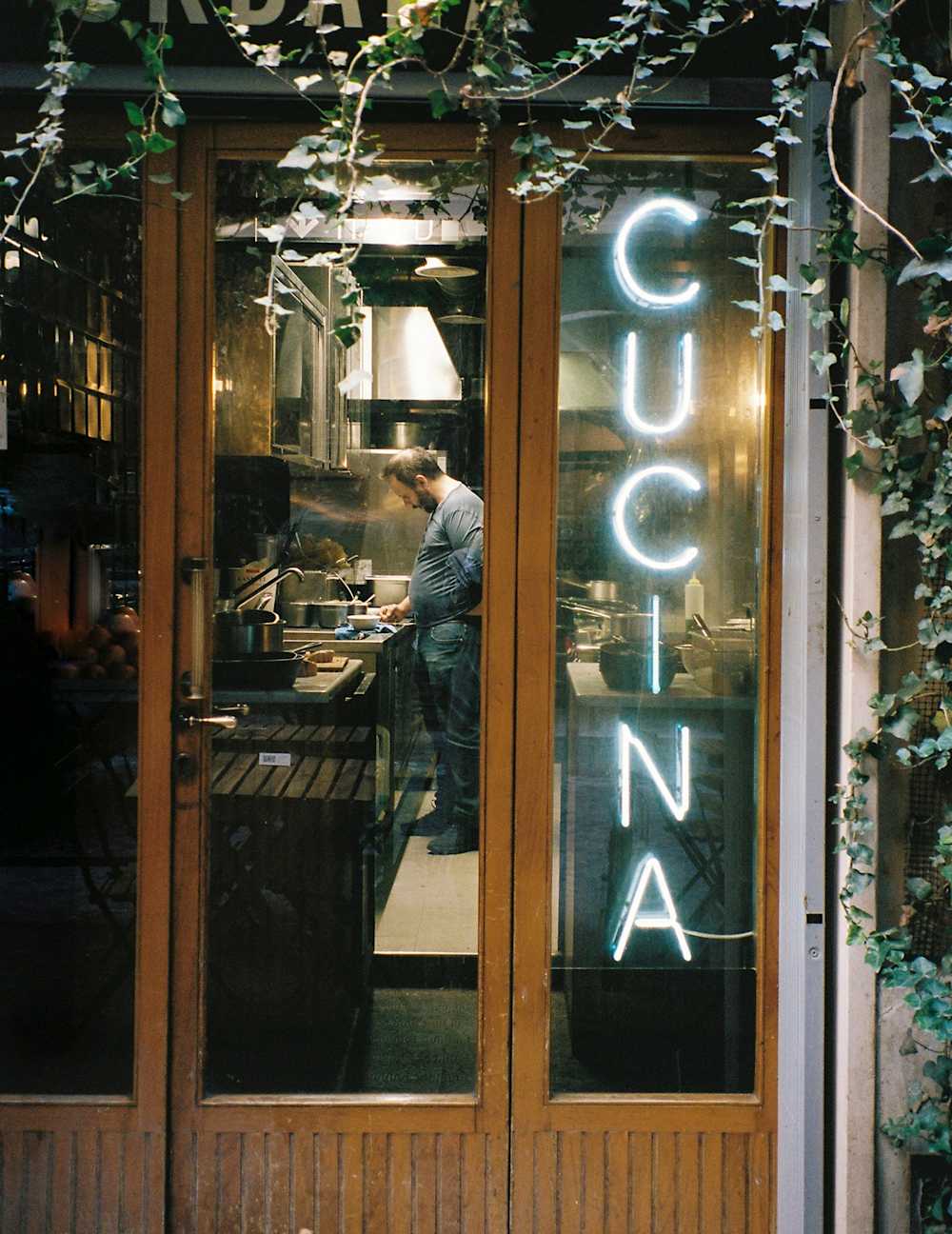
Rome attracts Italians from the north to the heel of the country, meaning neo-trattorias sometimes combine regional traditions with local ones. At SantoPalato, for instance, chef-owner Sarah Cicolini says, ‘What I did was bring something from Abruzzo, something from the Roman tradition, and then put everything together.’
But what makes these trattorias so dynamic is a disruptive spirit. Some even reject that there is a tradition to reinvent. As Giuseppe Lo Ludice, co-owner of Retrobottega says, ‘Probably the carbonara existed… but it wasn’t what we were eating at the moment. I don’t understand the hype of saying you need to do it with this, and if you don’t do it with the guanciale, then probably it’s completely wrong. You don’t know, because who knows how they used to make it 100 years ago?’
Francesca Barreca, chef and co-owner of bijou eatery Mazzo, has called for a rethink: ‘We love tradition, but we are not only tradition,’ she says. ‘Tradition for us is what we have experienced during our life.’ Her radical spirit has drawn attention. Barreca says visitors from Milan and other Italian cities have started telling her that Rome feels palpably more dynamic. She puts the shift down to a cross-pollination between chefs, a willingness to notice what’s happening outside your own kitchen rather than working in isolation.
For diners, this means ‘You can learn something new when you sit here,’ she says. Take her amatriciana, unusually built on onion rather than the traditional guanciale-and-tomato base — a small heresy that, she admits, keeps more purist diners away.
These five restaurants represent the best of Rome’s neo-trattoria movement, combining classic Roman cooking with contemporary influences. Read on to discover how.
The restaurants
Piatto Romano | Testaccio
Owner Andrea d’Alfonsi bought this trattoria 15 years ago and landed on a clear philosophy. ‘The menu is never static,’ says chef Umberto Mussato, ‘the real revolution is shopping for ingredients every day and choosing the very best.’ Mussato joined four years ago and has become known for his love of using vegetables as primary ingredients, meaning you’ll find caprese salads made with heirloom varieties like bocca di rosa tomatoes and baratierre melon, alongside sautéed sigaretta eggplants, tenerumi (squash shoots) and grattaculi (zucchini shoots).
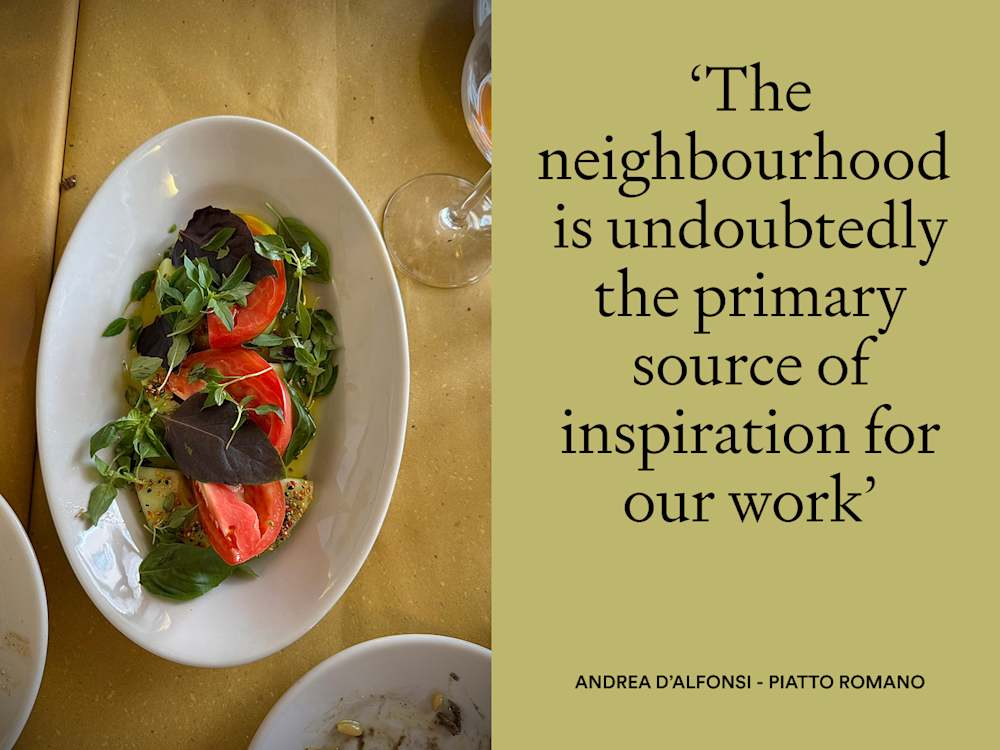
‘People love our vegetables because they’re hard to find in other places,’ Mussato says. Still, the meat is excellent, so dive into the stir-fried lamb offal with sweet onions, or unmissable lamb cacciatore. The classic Roman pastas are lightly twisted, like a cacio e pepe that remains traditional except for a dash of wild Madagascan pepper. Dessert gets the same care, like sweet granadilla (a kind of passionfruit) finished with Sichuan pepper. The lunchtime hum of the dining room feels typical of a trattoria, but it’s one with 21st-century ideas.
62 Via Giovanni Battista Bodoni
Retrobottega | Ripa
Formerly in the historic centre, Retrobottega is a geographic exception — many neo-trattorias have decamped to Rome’s outer neighbourhoods. Since relocating in April 2026, it’s doubled the size of its operation, taking over the rooftop of Rhinoceros hotel, where there are breathtaking views overlooking Rome’s oldest quarters and mediaeval streets. It still maintains the restaurant’s original ‘social table’ concept.
The menu can be tackled in a familiar antipasti, primi, secondi (usually a starter, pasta dish and fish or meat main) formula, but it’s decidedly avant garde, too. As co-owner Giuseppe Lo Ludice puts it, ‘The only certainty we have in life is the produce. So, if you source good-quality produce, then you’re able to make a good-quality recipe.’ Erring away from nostalgic framing, he says that they avoid messaging like ‘my grandmother used to do it’ Why? ‘Because your grandmother didn’t have the chance.’ The constantly evolving menu may feature unruly combinations like beef tartare with herring and pickled strawberries, aubergine parmigiana as a katsu sando, or a signature tortelli with pork ribs, spring onion and cacao that feels more Chinese than Italian.
9 Via del Velabro
SantoPalato | Appio-Latino
This trendy neo-trattoria has ceramic jugs, wooden tables with orange legs, and walls plastered in artful photography (plus restaurant merch). Stanley Tucci’s visit in his Searching for Italy series put the restaurant more on the map, but that hasn’t changed chef-owner Sarah Cicolini’s hardcore approach.
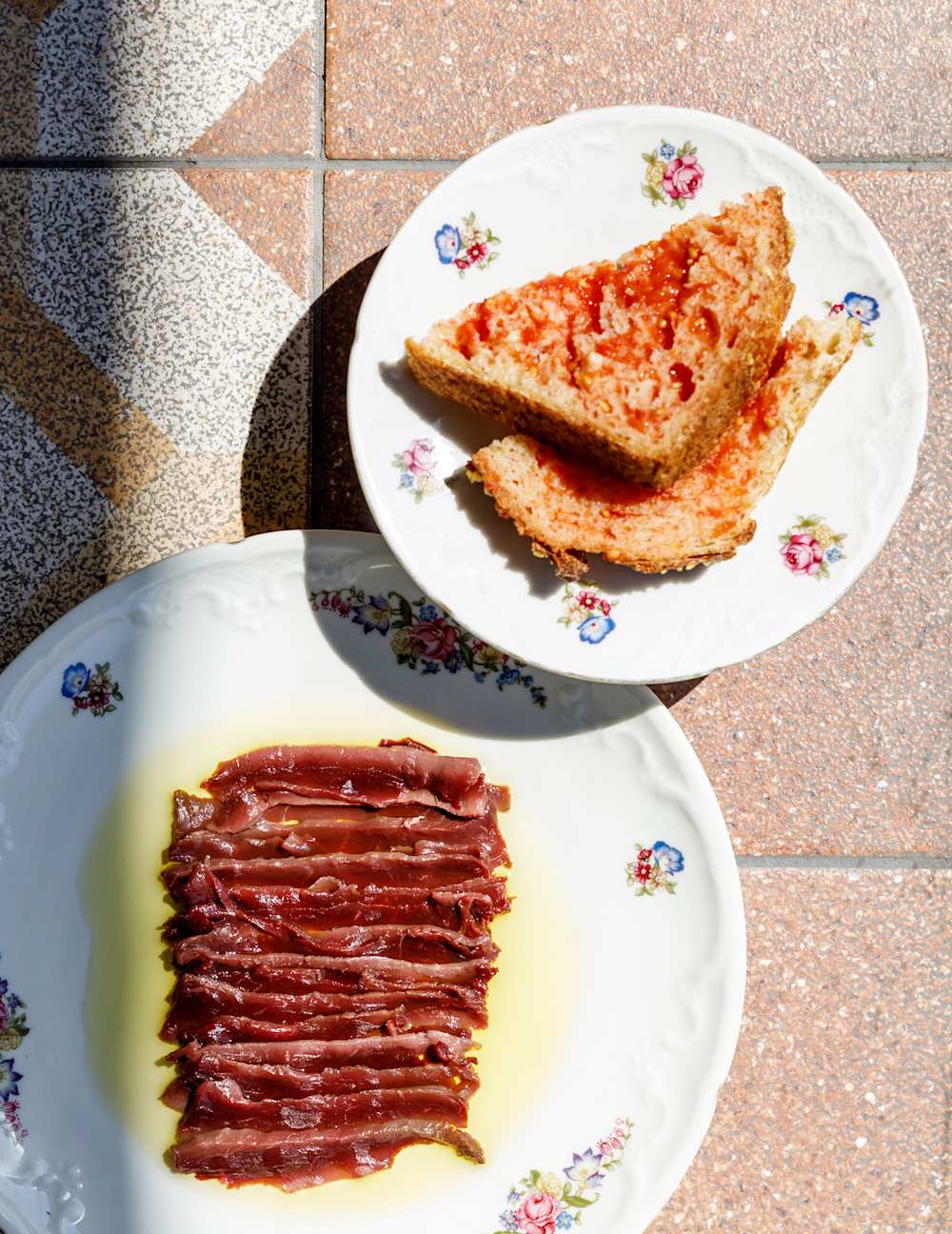
After training in fine-dining kitchens, she was drawn towards modern trattoria cooking. She opened SantoPalato in 2017, feeling that ‘there was something missing in Roman cuisine, and people were asking for something more.’ The menu is offal-forward, with dishes like smoked beef heart with pane e pomodoro, frittata with chicken liver, veal tripe cacciatore, or a main course of rockfish served with deep-fried lamb’s brain and mullet-liver mayo. If that sounds intimidating, fear not: there are plenty of daintier dishes — like aubergine and ricotta-filled anolini in tomato water, and original takes on more familiar eats, including a carbonara of decadent depth that’s somehow light, with guanciale frizzled to perfection.
28 Via Gallia
Mazzo | San Lorenzo
When chef Francesca Barreca opened Mazzo with her partner Marco Baccannelli, they did so with what they call a post-trattoria manifesto. The vision was always to make ‘something with roots in the tradition but not properly traditional’, she says. The eclectic menu — designed to be shared — features crispy beef tripe with tomato sauce and mint (a play on trippa alla romana), alongside Chinese-style pork belly, hot-and-sour-roasted lettuce with tahini, mint and lime, and the controversial amatriciana. Tripe has become a signature, but the best offal dish on the menu is the grilled beef tongue, tender and charred, enhanced by pickled vegetables and mustard mash.
Opening Mazzo in a young student neighbourhood (Sapienza University is Europe’s largest) was due to Barreca’s family roots there but Mazzo has made San Lorenzo a destination-dining spot.
62 Via degli Equi

Osteria Chiari | Ostiense
In this post-industrial neighbourhood, a newfound hospitality energy has been awoken. Co-owner Lorenzo Giuliani and his business partner opened Osteria Chiari here in September 2024, joining an area anchored by Trattoria Pennestri — which arrived in 2017, and Mostro, a café-by-day, and aperitivo-bar-by-night that opened in 2023.
‘We love this area because it’s very close to the centre,’ says Giuliani, ‘but you don’t have the crowds and the mess.’
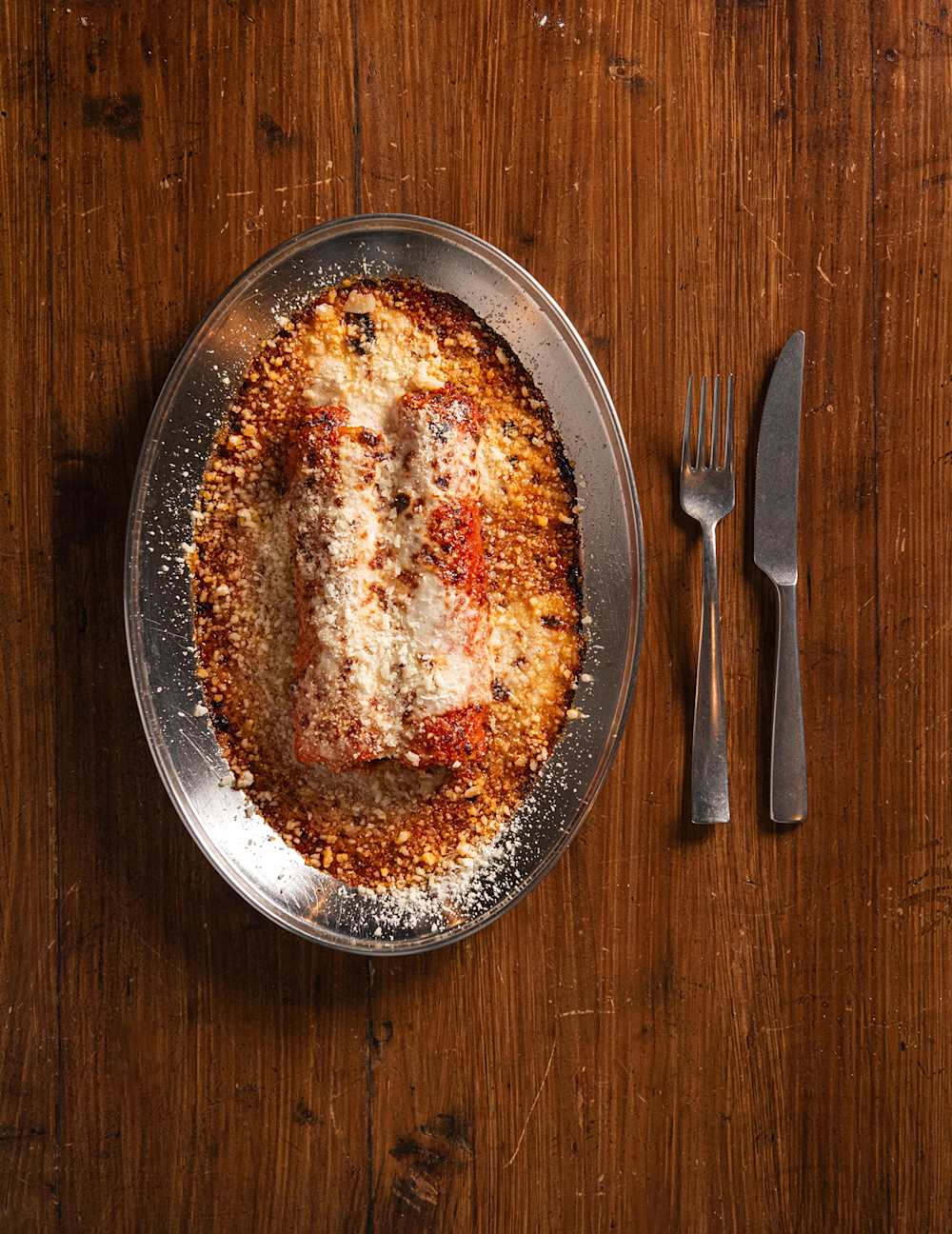
With Giuliani’s appreciation of fire cooking (he fell in love with Brat while in London), the menu is centred around a wood oven and features mainstays like wood-fired meat cannelloni, alongside classic Roman dishes. Naming the restaurant ‘osteria’ — not trattoria — is intentional, because there’s a focus on wine and list of cult bottles.
13 Via del Gazometro
Where to Stay
Palazzo Velabro
The classicism and modern elegance of Rome are embodied in this hotel, an 18th-century residence overlooking the Arch of Janus. Vintage Italian and American music set the tone in the lobby, and an herbal, citrussy scent greets you in bedrooms painted in warm tones. The courtyard terrace is ideal for clinking spritzes and the Palazzo’s central location, on the southern edge of the centre, puts you a short stroll from Circus Maximus, the Colosseum and the Metro, with easy onwards access to Testaccio and other neighbourhoods on this list. The hotel’s restaurant, Apicio16, has a mix of traditional Roman dishes and contemporary remakes, from classic amatriciana and cacio e pepe to oxtail ragù enhanced with chocolate.
Rhinoceros Roma
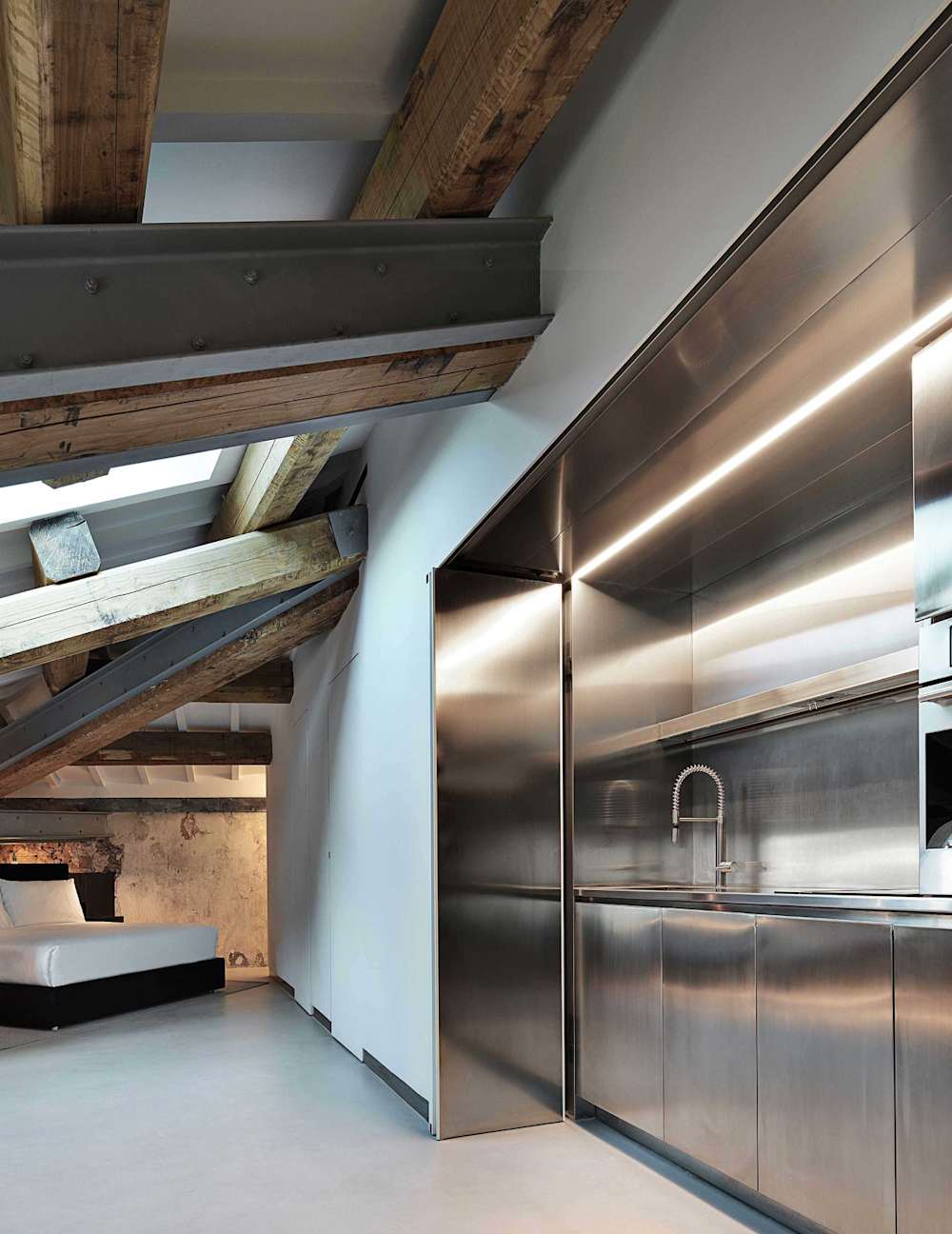
On the other side of the square from Palazzo Velabro, Rhinoceros is a Fendi-owned art hotel with a gallery that changes every two months, providing accommodation and a studio to the artist in residence. Its building was renovated by esteemed architect Jean Nouvel in 2018, and futuristic rooms are juxtaposed with classic materials. If you like the idea of sleeping in the kind of out-there room Isabella Rossellini or Marina Abramovic might choose, the master suite awaits.
Get your fill of the Eternal City with our guide to 48 hours in Rome or discover another side of the city with our guide to Monti