



Paris in the springtime is not always lovable. I’m visiting during a bank holiday and it’s the first sticky heatwave of the year; the bakery that sells the ridiculous cherry-flavoured thing I’ve been eyeing up for a week on Instagram is closed, and queues of tourists are crowding my jambon-beurre stop (rude). Everyone is irritable and glistening and not in a sexy French way — it’s time to flee, and I know exactly where to: the petit village of Barbizon, just an hour away (by Uber or a train and taxi combo) — a place that offers relief in the form of languid café terraces and cool forest glades.
For that delightful leafiness, we can thank the power of art, notably two creative groups whose efforts have made more noise than that of a tree falling in the forest. Here’s some background (a scenic one, at that): Barbizon became famous for luring 19th-century landscape painters, who formed their own school after becoming disillusioned with the rigid salons of the capital. Dubbed ‘the beautiful school of 1830’ or the ‘sons of light’, they were renowned for ‘painting things as they saw them’, no romanticising. They were pioneers of en plein air painting and made masterworks of the verdure of Fontainebleau Forest and the peasantry’s daily life. Today, this village — that mostly runs along one street and boasts one discothèque — has more galeries d’art than there are colours in a palette; and not just an artistic legacy, but one of first-wave environmentalism that’s kept the surroundings picturesque since the 1830s.
Barbizon’s painters made landscapes the sole subject of their paintings, with no mythical or historic embellishments, a radical idea at the time. They saw the divine in nature. Compellingly so — on visiting the former Ganne Inn (where artists once stayed long-term for cheap), and L’Esquisse Barbizon gallery, even I yearned for the bohemian, agrarian life of crop-gathering and animal tending they conjured onto canvas, despite having killed every plant I’ve ever owned. But they also saw this world slipping away. With the black clouds of the Industrial Revolution massing and the forest being decimated by logging, the school’s leader, Théodore Rousseau, wrote the Massacre of the Innocents manifesto and the group lobbied Napoleon III to make the forest a réserve artistique, successfully creating the world’s first officially protected nature park.
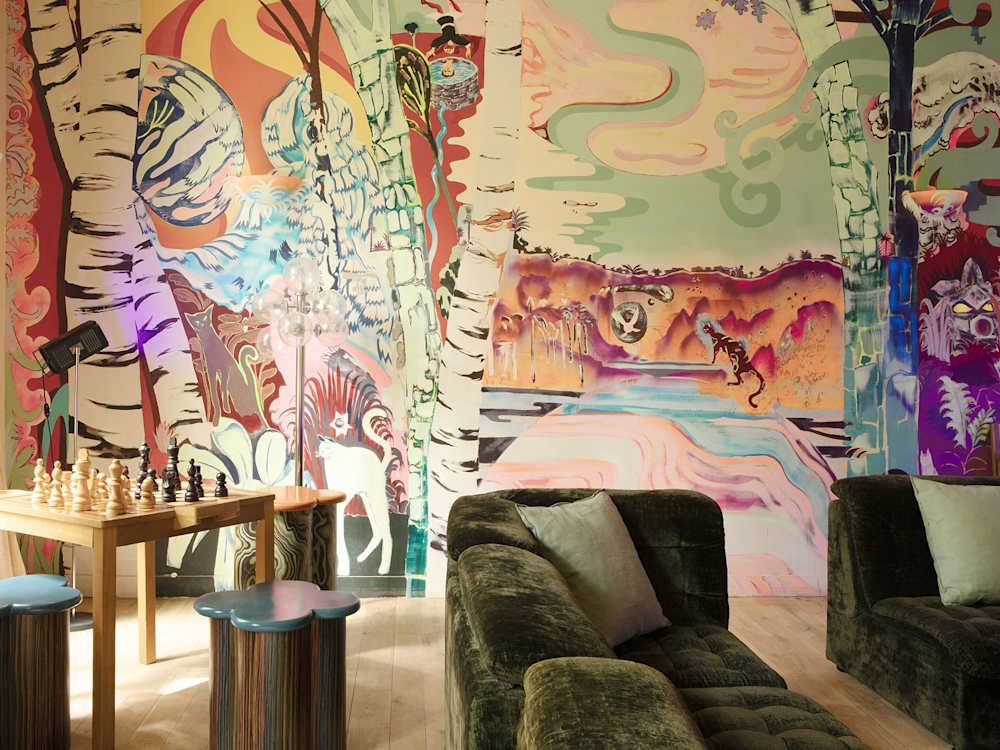
Today, that spirit of stewardship lives on in La Folie Barbizon, a boutique stay from the Chapitre Six hotel group (fans of a stay with a story, having acquired legendary outposts such as famed nightclub Bus Palladium and VIP Riviera resort Hôtel La Ponche), which nightlife magnate Lionel Bensemoun founded as an artists’ residence. Its artistic director Sarah Valente called on 20-plus artists and craftspeople to dress its rooms, lounges and garden in wild and whimsical ways, making it a world of fantasy. Each corner turned reveals smiling bear statues, flocks of pink bats, a check-in desk sporting mighty antlers and light installations that look like a xenomorph’s egg sacs (Paul Créange, the former SFX designer behind it, stated, ‘I wanted to create a light that behaves like a living organism’, so I’m not that far off). At the end of a corridor is a giant, Pepto Bismol-hued, papier-mâché baby that makes me truly hope the artist wasn’t adhering to the Barbizon school’s realism.
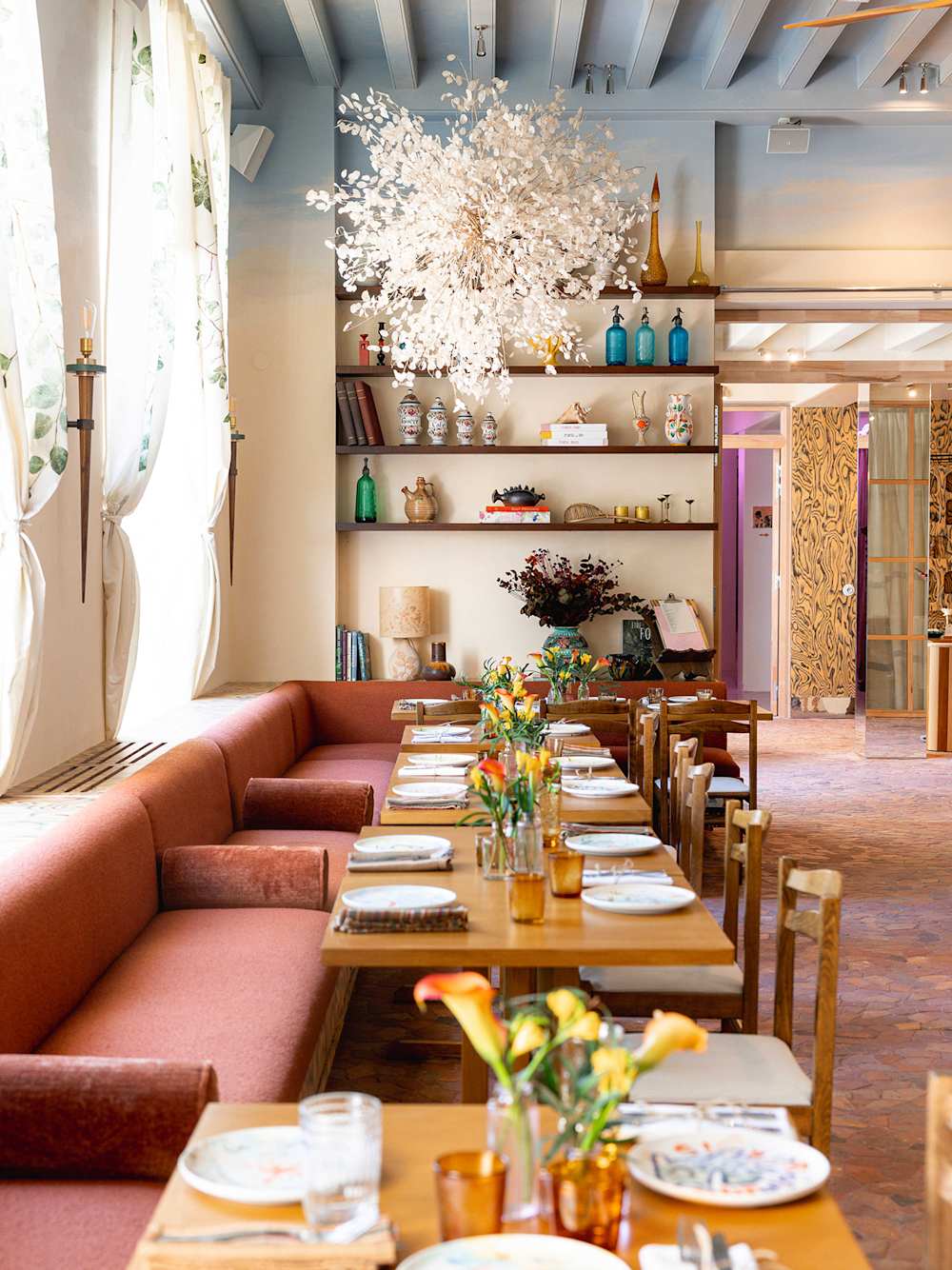
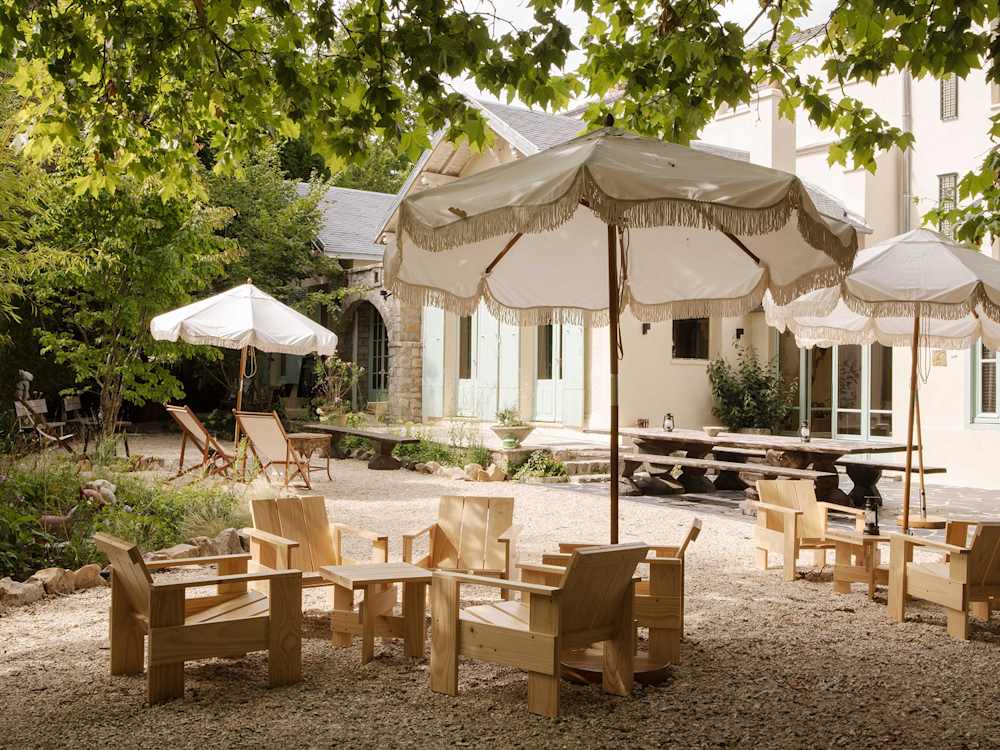
In the 1800s, Rousseau, Jean-François Millet, Jean-Baptiste-Camille Corot and their contemporaries had only just witnessed the invention of paint in tubes, allowing them to make their practice more moveable and capture the fleeting shifts in light. La Folie’s phosphorescent frescoes and acid-bright pigments would probably send them into a coma. However, there is some common — protected — ground that both groups of creatives lightly tread on.
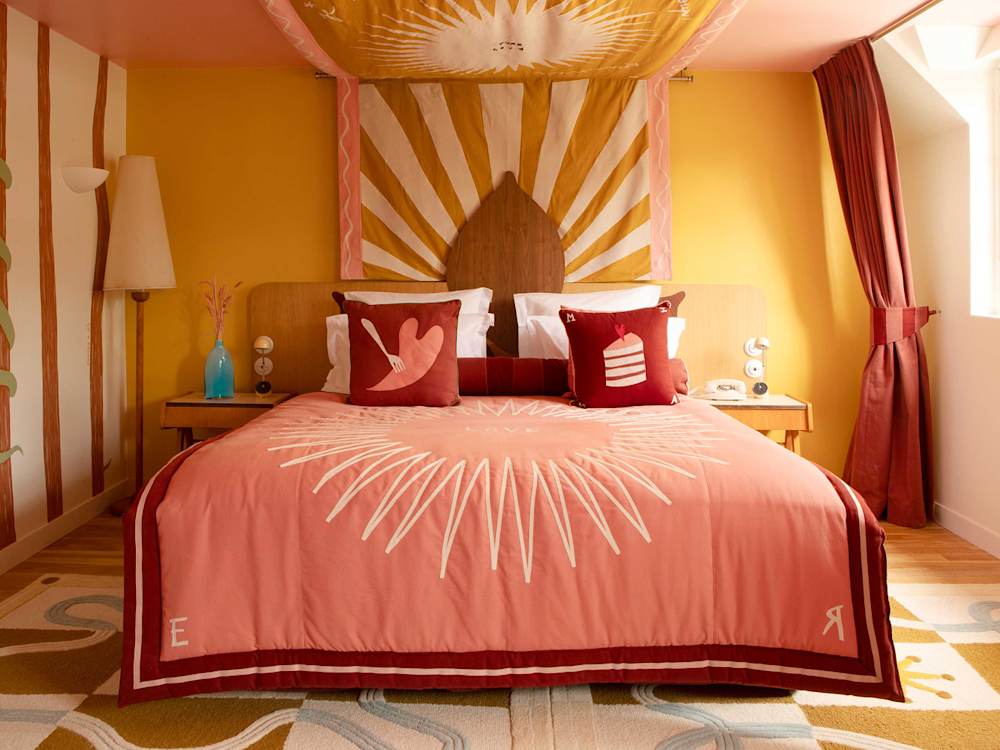
Valente is also the founder of the Greenline Foundation, which ‘harnesses the power of art to protect the world’s forests’. She first encountered Barbizon as an artist in residence (her bioluminescence-inspired work is displayed in my Junior Suite). Then Bensemoun visited Paris to see her sustainably built townhouse, Casa Franca — the first in the capital to use rammed-earth walls. Impressed, he hired her to make La Folie’s aesthetics even more revelatory. ‘People learn factual and meaningful things through emotion and imagination,’ says Valente. ‘This is what the artworks in the space do: they make us dream… they allow us to develop a different perspective on the living world.’ Each piece, from Victor de Rossi’s carved-wooden-mushroom headboards to the sun-emblazoned quilts by cult textile artists Pangea, is an ode to the forest; and a fragment of the tale of Barbizon, a mythical narrative spun by Valente, a narrative guests can interpret as they wish and be inspired to add to.
‘We raise funds to support projects dedicated to preserving forest ecosystems,’ Valente says of her foundation’s work. ‘This takes many forms: creating forest reserves abroad or acquiring forest land in France through historic forestry groups that need financial support to continue protecting these territories.’ This work has spanned Limousin to Peru (in collaboration with Cœur de Forêt and Envol Vert), with projects that put participants in the thick(et) of things: nature walks, theatrical happenings at the heart of at-risk forests, talks by microbiologists and arbor-set dinners.
Naturally, Valente was inspired by the Barbizon school. ‘[Their] story made me realise artists can truly change things and have a concrete impact on the world. At first, they were simply fascinated by the beauty of their subject, but that admiration eventually became a struggle and ultimately, a victory.’ To help realise her own victory, she assembled the Guild of Arts and Forests, a round-table of creatives and environmentalists, as ‘a way of bringing together people who are passionate about forests and the living world’, with the aim of ‘acquiring land to develop an edible and regenerative forest in the next five years’. La Folie is its meeting point, and — with Fontainebleau Forest declared a Unesco Biosphere Reserve in 1998 and safe for the foreseeable — it’s the kind of nerve-centre where green-shoots ideas may well bud and grow far.
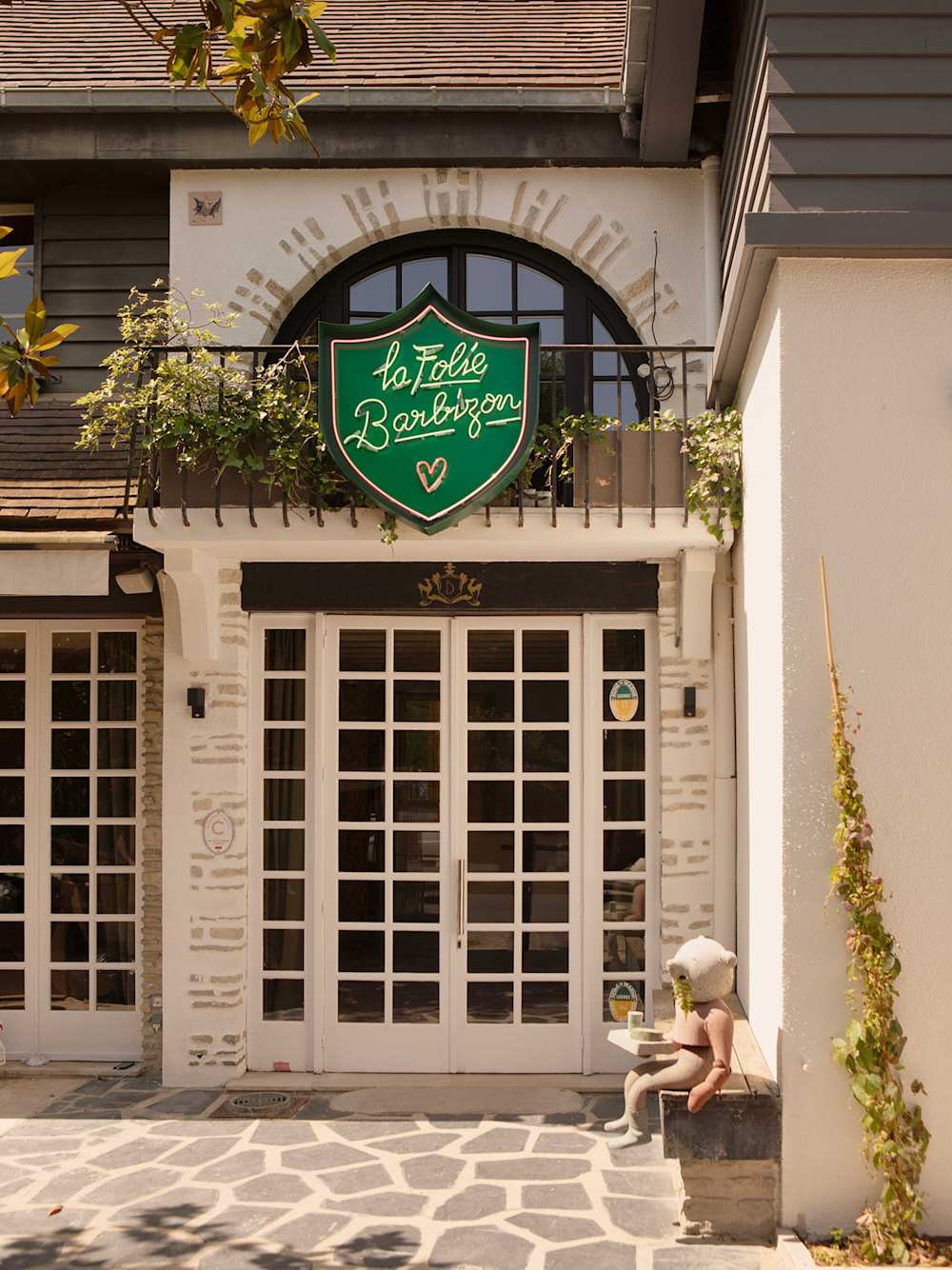
I’m not sure where the nightmare-baby sculpture fits into all this, but I buy into Valente’s mindset, that ‘change can’t happen without awareness, and art exists for that purpose: to awaken consciousness and generate emotions that eventually lead to decisions.’ I start to look closer, and like the Pre-Impressionists, I see the divine in magical moments: drawing squiggles on the theatre’s UV-charged, phosphorescent terrazzo with a blacklight torch; admiring the soft light that falls through stained-glass made of preserved aubergine peels; eating breakfast beside delicate trees moulded from recycled paper, and greeting the garden’s collection of curious ceramic critters. It makes me crave natural immersion among breathing columns of oak, scored beech bark, the crackle of unseen creatures, the sour green must of undergrowth — the forest in all its glory. I step out into the sunlight and there it is, ancient, seemingly limitless, with plenty of room to grow.
Book your enlightening break at La Folie Barbizon or discover more Earth-kind art in Italy and Argentina