



Among the rose-hued labyrinth of Marrakech’s Medina, El Fenn is a name that everybody knows: the Belgian women I share a taxi with from the airport, who coo enviously when I tell them where I’ll be checking in; the djellaba-draped old man who directs me to the hotel’s main entrance down a dusty backstreet. It’s famous for good reason — in its two decades of operation, El Fenn has championed the city’s craftsmen, served as a home-from-home for international aesthetes, and played a significant role in the city’s burgeoning contemporary arts scene.
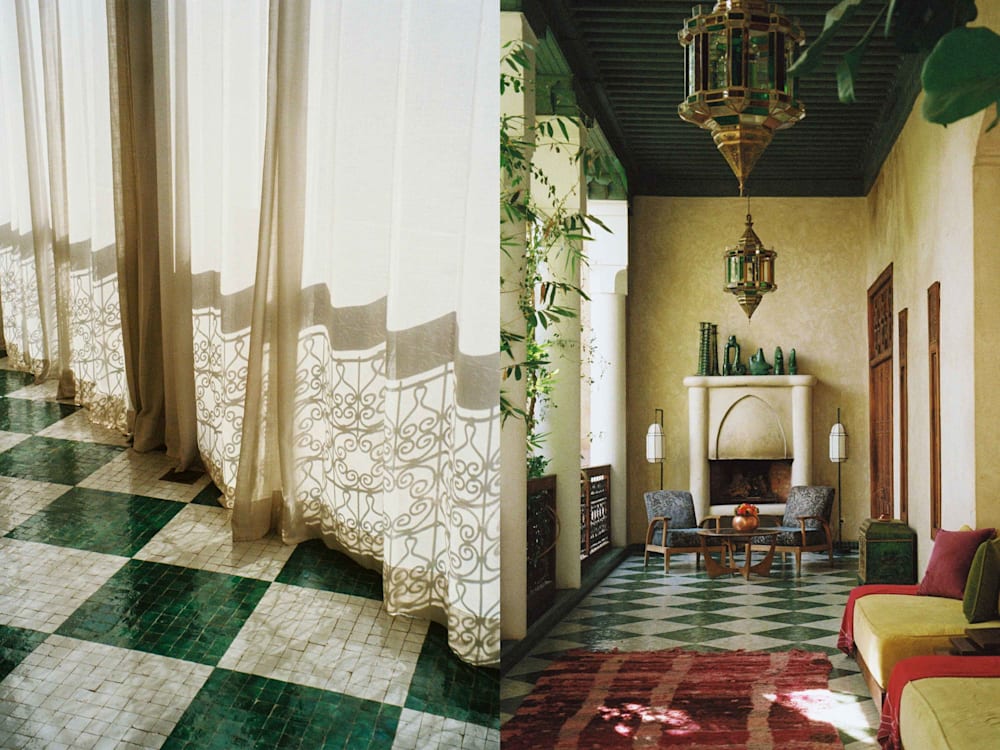
In the 1960s, Yves Saint Laurent, socialite Talitha Getty and legendary designer Bill Willis all made Marrakech their home, drawn in by the city’s crumbling beauty, soft golden light and rich tapestry of colour. It’s these same qualities that bewitched Vanessa Branson and Howell James, two of El Fenn’s four co-owners, on a trip to the city some 40 years later. ‘We had fallen in love with Marrakech, and spontaneously — over a bottle of dry white — decided it would be fun to buy a small riad together,’ Branson tells me over email ahead of my trip. ‘We viewed six or seven, until the agent said there was just one more. It was getting dark as we entered a long corridor, so we had to use the agent’s cigarette lighter to guide us. Suddenly, we emerged into the magnificent ruined courtyard that remains the heart of El Fenn today. Our excitement overruled all practicality and we shook hands with the vendors there and then.’
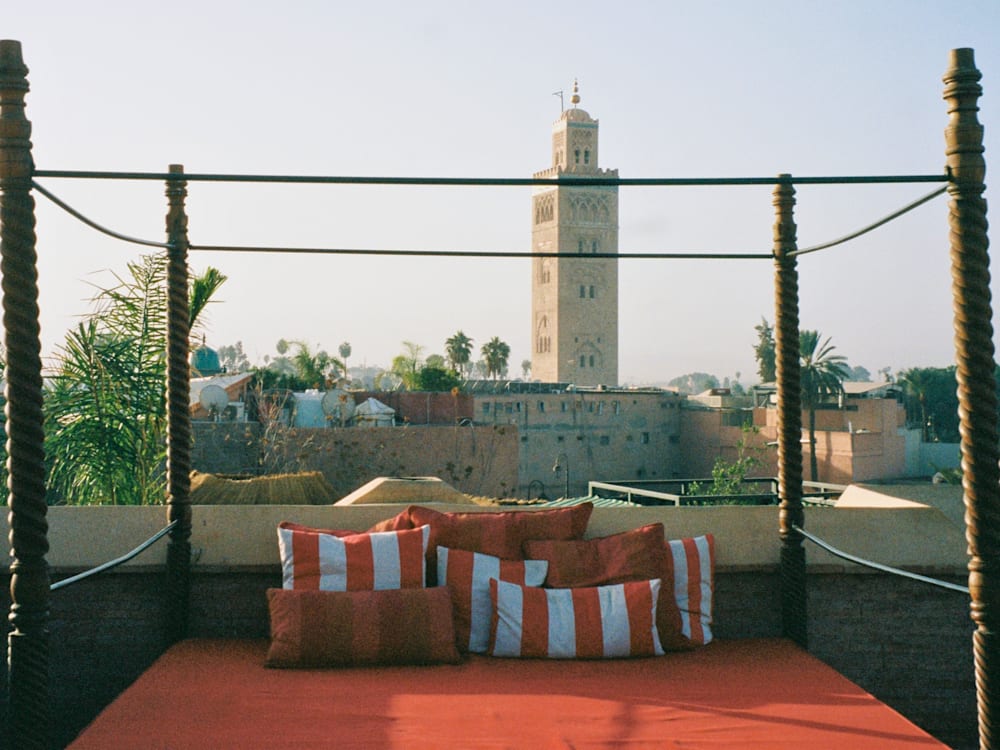
It’s 20 years later, and the riad is no longer the six-room guest house that Branson and Howell purchased. As it grew a cult following, El Fenn gradually expanded into neighbouring properties. Today, it’s a labyrinth of 12 interconnected riads with five courtyards, three pools, a spa, curated boutique and iconic rooftop bar and restaurant with unbeatable views of the Medina. The hotel’s most recent addition, the 10-room, 19th-century Colonel House, has been meticulously refurbished by local craftspeople, who have restored original features like door frames and roof tiles. It’s here where I’ll be stationed for the next couple of days, in a Medium category room replete with handmade details, from tadelakt plaster and stained-glass doors to zellige tiles and stitched leather floors. ‘Our approach to each room was very fluid,’ says Branson. ‘We would stand around in the spaces for hours laughing and joking, imagining where we would place the bathrooms, the beds, where the light fell, where the sight lines took you.’
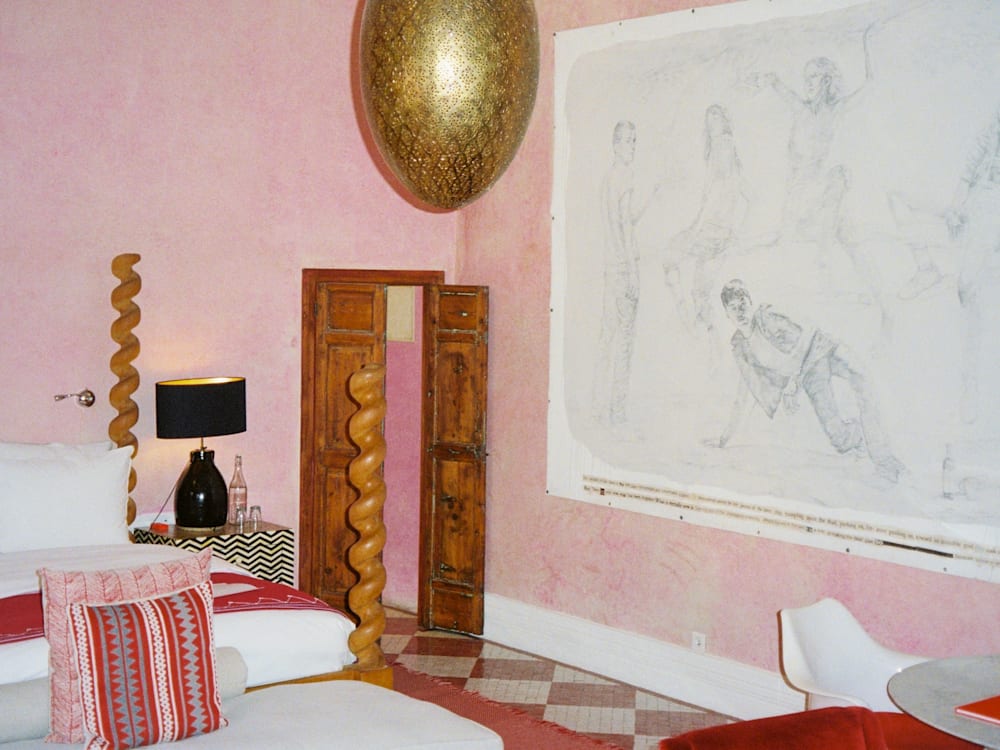
This instinctive approach to interior design birthed El Fenn’s instantly recognisable style: a riot of colour-blocking, pattern-clashing maximalism that helped solidify its status as a design hero. In one room (where I’m told Madonna spent the night after celebrating her 60th birthday at the riad) rose-pink walls are punctuated with brass studs, while others are dressed top-to-bottom in jewel tones of forest green, teal or tangerine, each adorned with a unique mix of traditional Moroccan and mid-century furnishings. ‘The colours are mixed on-site in a huge makeshift tub. We literally threw pure pigments into the lime plaster — a little more blue there and a bit more yellow here until the colours sang,’ recalls Branson. ‘We spent a great deal of time picking over piles of chairs in junk yards where you can find some wonderful modernist pieces that, once re-upholstered, are like gold dust. Then, to add soul, at least one work of art hangs in each room.’
The hotel — and its original name, Riad El Fenn, meaning ‘house of art’ in Arabic — has evolved over time, but art, creativity and culture remain its core tenets. Within its walls, you’ll find 20 years’ worth of contemporary painting, sculpture and photography, by European artists like William Kentridge, Antony Gormley and David Shrigley, alongside works by some of Morocco’s best known names such as Hassan Hajjaj, Yto Barrada, Ali Maimoun and Abdelmalek Berhiss. The first piece to hang here — a lasting favourite of Branson’s — is a work of slogan art by Bob and Roberta Smith that reads ‘I believe in Van Gogh’: ‘It’s one of the first you see on arrival and it signals that here we welcome everyone, regardless of their tribe or leaning.’
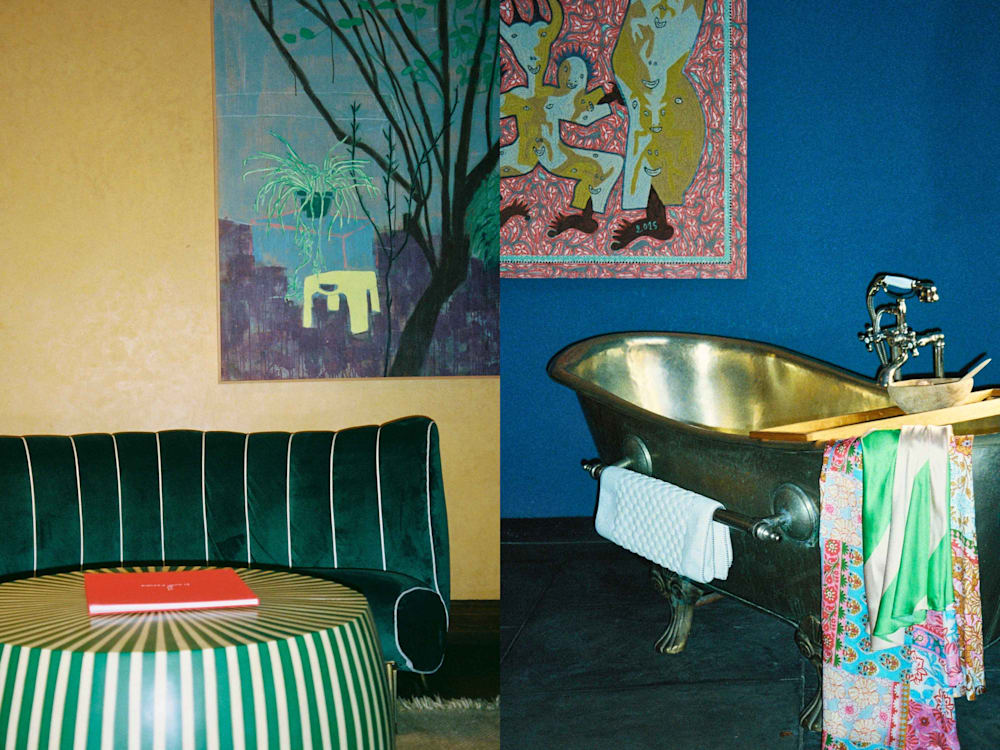
The collection is diverse and expansive. Yassine Balbzioui’s Spy Flower quickly becomes my favourite — a surreal scene of masked men planting, burying or possibly stealing a sunflower. Elsewhere, Hassan Hajjaj’s pop sensibilities take on the traditional in his photograph of Louis Vuitton babouches, and Rita Alaoui’s whimsical landscapes lean towards the edge of abstraction. I find Guy Tillim’s The Soldiers one of the most memorable works: a series of black-and-white photographs displayed on a scarlet red wall. Each of the 20 boys photographed, none older than 16, stare down the camera dressed for combat, their youthful vulnerability contrasted with their potential for violence.
In recent years, Marrakech has emerged as a global destination for artists and collectors, in no small part thanks to the efforts of Branson and El Fenn. Since opening her first London gallery in 1986, Branson has been a prominent figure in the art world. In 2005, she founded the Marrakech Biennale, which saw installations, panel discussions and literary salons hosted by El Fenn, and laid the groundwork for establishments like multidisciplinary space Dada and the 1-54 African Art Fair. Her dedication to the arts in Morocco has earned her the prestigious title of Officer of the Order of Ouissam Alaouite, awarded for significant contributions to the country’s cultural scene. Underscoring each endeavour is an unwavering commitment to the development of local talent, whether that be hotel staff, artisans, or artists who continue to shape the riad and breathe life into — and onto — its walls.
El Fenn and all its cultural offshoots have helped to establish Marrakech as a diverse and dynamic platform for the arts while fostering vibrant cultural exchanges. ‘The riad is a magnet for the adventurous creatives drawn in by Marrakech,’ Branson affirms, showing that nurturing creativity yields its own rewards. ‘Great art emerges from the fault lines where conservative thinking rubs up against new possibilities. Artists gather where space is affordable and once a critical mass of creatives come together, they encourage each other and hone their ideas. Marrakech is hitting that sweet spot.’ As for the next decade of El Fenn, Branson simply tells me to ‘watch this space’. If it’s anything like the last two, it’ll be a portrait worth sitting for.
Discover more Red City magic with our weekend guide to Marrakech