



Six years ago, in the grip of the pandemic, my brother-in-law received a parcel that, thrillingly, wasn’t groceries or PPE. It was a hardback copy of the newly released novel by Polly Samson, A Theatre for Dreamers, sent from his friend in Aberdeen on account of him being au fait with Greek islands, having holidayed there (on Paros, mostly) his entire life. She had read it and, wisely, decreed he must too (if you haven’t and are even the faintest Philhellene, please go and read it).
Even in normal times, it would have been the most transportive, captivating fiction. But during Covid, it had us all practically salivating — desperately, urgently longing for Greece. This is me during the average winter, when I will close my eyes on a grey London day and attempt to conjure the rays of Helios on my face. As autumn on the islands encroaches, I soak up every last drop of the season before it ends. Which is precisely why I devote considerable chunks of the summer to storing as much of ‘Greece’ as possible for the long winter ahead.
Last summer, I finally made it to Hydra, the island where Samson’s book is centred. It was made famous in the middle of the 20th century by the glamorous crowd that holidayed here, Aristotle Onassis, Jackie Kennedy and Grace Kelly all part of it. Then there was Leonard Cohen and what Lawrence Durrell calls the ‘cinema rag-tag-and-bobtail’, after films such as Boy on a Dolphin, starring Sophia Loren, and A Girl in Black were shot here in the Fifties. Samson herself was inspired by a photograph she had seen of Cohen and a group of people, including the Australian writer Charmian Clift, who had lived here in the Fifties and Sixties with her husband George Johnston. Decades on, the odd Rolling Stone, Nick Cave and Kate Moss are often spotted on holiday here, and it has never lost its appeal for artists, writers and other free spirits.
Long before it was a bohemian refuge, the island played a key part in the Greek war of independence from the Turks, supplying seamen and ships to the cause. When I read in a book later that Hydra is full of the descendants of these patriotic corsairs, I’m glad it’s not just me — I had been wondering why so many of the men had that buccaneering look to them, incredible moustaches, a faint scent of tobacco, and a certain trace of mischief in their eyes. I don’t think any wore a gold hoop earring, but I can’t be sure.
As my hydrofoil whizzes along the Saronic Gulf in early September, a little over an hour after departing Piraeus, Hydra comes into view. It’s far bigger than I anticipated — the fact that there are no cars and the main mode of transport is donkey made me mistakenly think it was tiny. But the main life on the island is concentrated around the harbour, with two slivers leading off from it in either direction, and neoclassical mansions stacked high up the hillsides above it. Other than that, there are isolated monasteries and the occasional deserted building, and beaches you need a boat to reach.
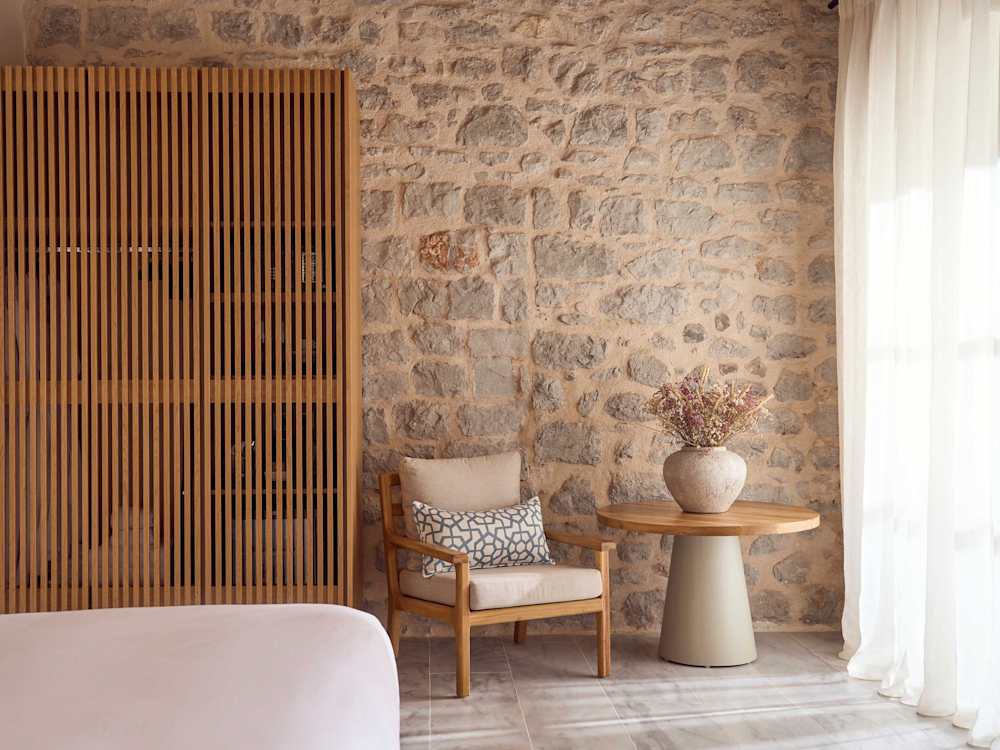
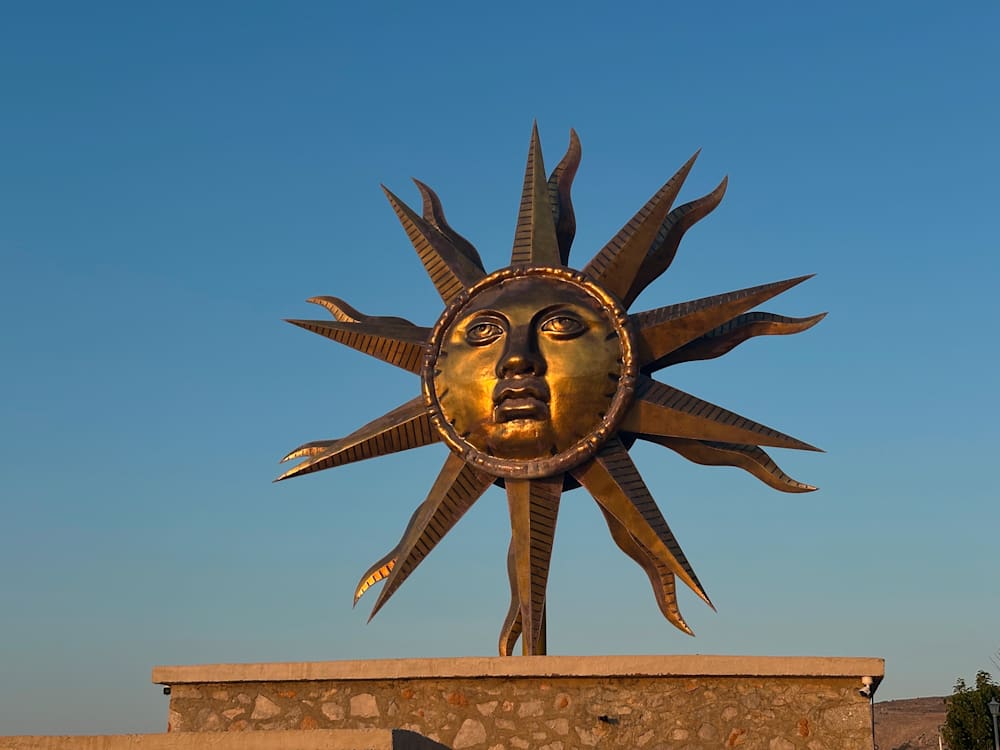
I’m met at the port by a sprightly, English-sounding chap in a pair of shorts — Arthur, the founder of Mandraki Beach Resort, who grabs my case and leads me past a row of donkeys along the bustling harbour and onto the house boat. The short journey takes us past the all-seeing, spinning Jeff Koons sculpture of the sun, Apollo, around to the hotel’s cove. The setting of Mandraki is perfection, on its own beach with an old-school taverna next door, its rooms and restaurant within a repurposed naval base and shipyard.
I settle in to my vast room — with double-height vaulted ceilings part of the original features — before taking a seat at one of the tables at the water’s edge for a lilac-tinted sunset. Piratical waiters serve me a sundowner, and I share a steak with some of the island’s wild cats for dinner (I’m thrilled, a couple of days later, to see a fellow nutcase roaming the island shaking a packet of Dreamies and giving them out to yet more strays).
The next morning, I board the shuttle boat into town to explore its scenic streets, harbourside shops and grand old Venetian houses, once belonging to the island’s great seafaring families. Long before Mykonos had become the jet-set’s Greek destination of choice, holidaymakers were coming to Hydra, especially well-heeled Athenians. Back then, Arthur later tells me, the harbour was lined with the most opulent jewellery boutiques, catering to those in search of finer gemstones than even the Greek capital could offer. There are still lots of jewellery shops in town, though the offering is a little more mainstream these days. Hydriot Elena Votsi’s contemporary designs are a favourite.
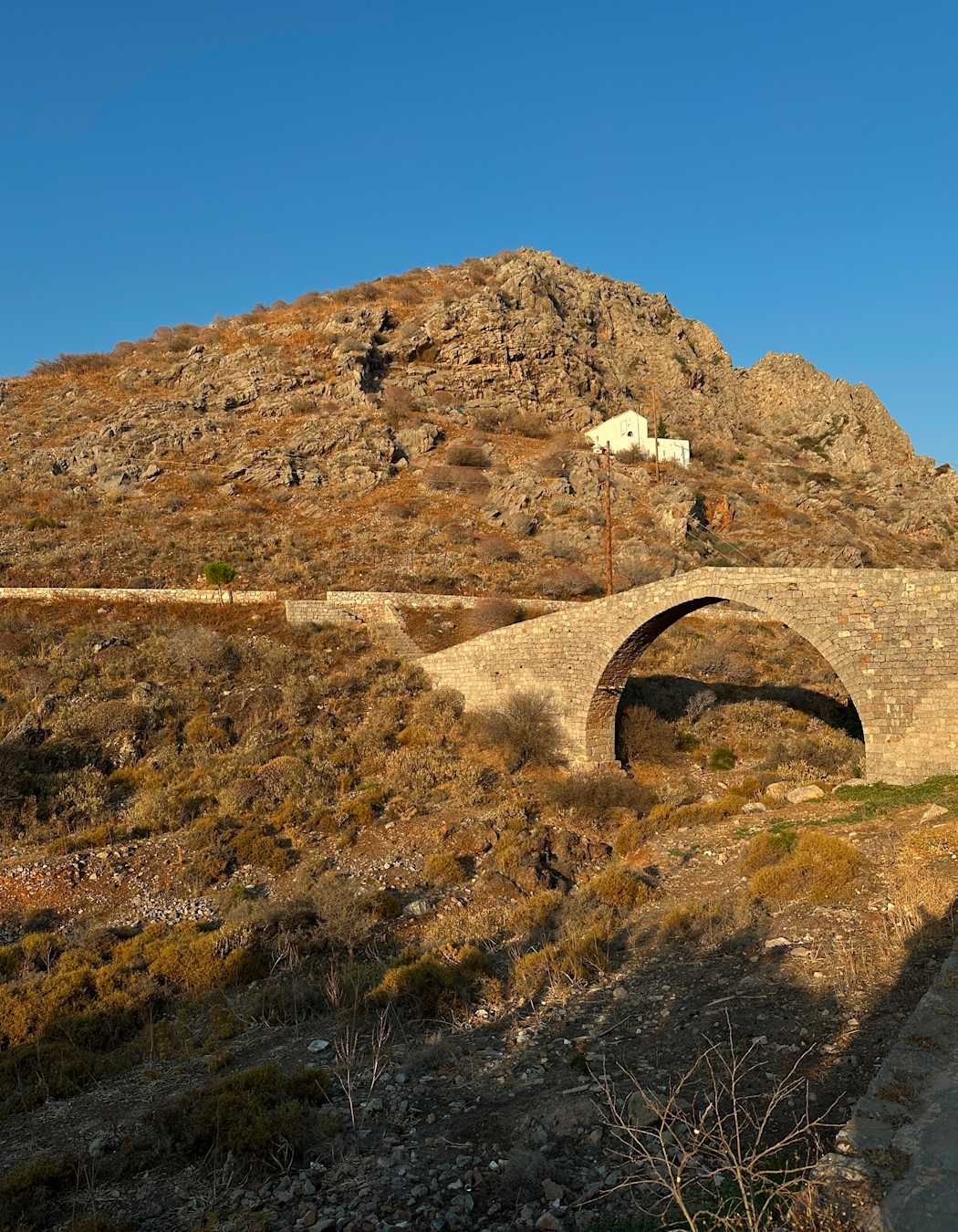
Despite the heat, I walk back to the hotel (it’s only around half an hour, but Greek-summer temperatures can waylay good intentions), passing the island’s old stone slaughterhouse, a gallery space for the Deste Foundation since 2008, and host of a new exhibition each summer. This is how the Koons installation came about, back in 2022. It isn’t the only inventive use of an abandoned space on the island. The Old Carpet Factory, in an 18th-century Venetian mansion built for the naval admiral and hero Anastasios Tsamados — later a weaving school and carpet workshop — is now a recording studio and art-residency space.
Hydra is famously where Leonard Cohen lived for much of the Sixties — it’s where he met the Marianne of his beautiful 1967 song — and so I can’t resist a pilgrimage, locating his house in the tangle of streets above the port. This is where he wrote the lyrics to Bird on a Wire, inspired by the first electricity and telephone cables installed outside his window, as civilisation and modern conveniences gradually arrived on Hydra. I pause for lunch at the Xeri Elia taverna, on a bougainvillea-shaded square, steps from the Clift-Johnston residence where Cohen stayed when he first came to the island.
Afterwards, I wind back round to the coast and pop my headphones in to play So Long, Marianne, followed by Hallelujah, as I sit on the bench dedicated to his memory. The bench bears the inscription: ‘He came so far for beauty…’ I’m joined by an unsuspecting Australian family and for a second wish I had a Nineties-style boombox for a communal moment — though I’m not entirely sure they appreciate the significance of this bench dedicated to a legend as they distractedly share a tube of Pringles.
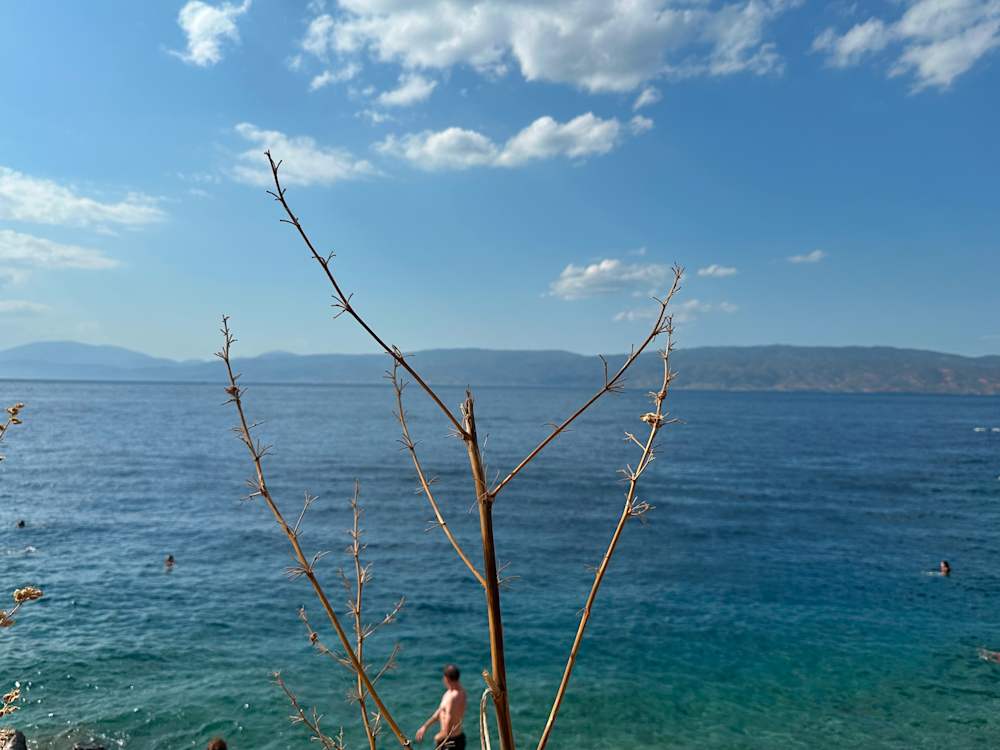
It’s always worth peering over the cliffs on Hydra, as more often than not you’ll be met with a surprise swimming spot or a cocktail bar clinging to the edge of the coast. After my emotional bench experience, I’m pleased to locate Hydronetta, where I gulp down ice-cold sparkling water as I treat my eyes to a view of the hazy Greek mainland. Just along from here, the aptly named Sunset Hydra is another spot made for sundowners. I pass a precarious set of steps clearly marked ‘Do not enter’ yet spy several people traversing them anyway, down to Avlaki Beach at the bottom. Leaning over the cannons below Admiral Pavlos Kountouriotis’s mansion, now a museum, I am greeted by a Slim Aarons shot of towels laid out on the rocks and swimmers cooling off in the water.
On my final evening on Hydra, I sit at a restaurant on the harbour, soaking it all in, watching the boats bobbing on the water and the donkeys heading home for the night. Before my ferry back to Athens the next day, I meet curator Wilhelmina at Mandraki’s gallery by its jetty, who tells me about the current exhibition of colourful works by the artist Luan Lamberty. Naturally, the artworks in the rooms are for sale as well. She tells me to speak to Dana the ceramicist in town, whose studio is in a charming old house by the port. I motion to the suitcase I have with me, and she tells me to just leave it by the dock. Apparently, she once bought a piece of jewellery and left it on a restaurant table, and it was still there when she returned four days later. ‘That’s the beauty of Hydra,’ she says.
For Arthur, the peace afforded by somewhere free of cars cannot be underestimated. ‘I’m selling the art of doing nothing,’ he tells me. He is encouraging of guests who barely want to leave the sunloungers he has set up along the shore. When he first came to the island in the Sixties, the boat from Athens took five hours. Even with the inevitable approach of modernity on Hydra, he still finds it a very restful place, helped along still by the lack of car engines.
The very name of this island sounds like an exhale. Although many might be tempted to pronounce it ‘Hii-dra’, it’s a long, luxuriant ‘Hee’, or, technically, ‘Eee’ in Greek (as in ‘Eeedra’). And that is what Hydra offers the summer crowds, even today. A relief, a respite, a pause from normal life. A breath of Aegean air to fill your lungs with until next season, when that finally rolls around.
Discover more heavenly Greek-island hotels, or explore Hydra’s equally glamorous Saronic sister Spetses