



More sparkling talents have passed through Paris than there are bubbles in a champagne flute, from novelists and cabaret stars to painters and instrumentalists. Part of the fun of staying in the city is hoping you’ll get a little possessed by their creative spirit and looking for clues to their inspiration. So, we’ve rounded up the stays where they lived, worked and played, plus a few more shaped by the capital’s contemporary art scene.
Couchez avec Smith as we experience our most cultural Parisian hotels.
Monsieur Aristide
For music-lovers
This boutique stay, set a fishnet-clad high kick away from the Moulin Rouge, is named after cabaret singer Aristide Bruant, best known as the enigmatic scarf- and hat-sporting man in Toulouse-Lautrec’s Ambassadeurs lithograph. The musical influence is clear here from the get-go: as you open the door there’s a vintage Wurlitzer jukebox to one side (‘it mostly works’, staff tell me) loaded with favourite tracks of owner Nicholas Saltiel, who heads up the Chapitre Six hotel group.
Then you notice a guitar casually propped up on a stack of music books, and the piano begging to be played; it often is, by talented staff or champagne-confident punters.
The culture hit: The small terrace tucked behind the hotel isn’t just a surprisingly peaceful Montmartre haven for cocktails or glasses of chartreuse. It also has a small stage for acoustic gigs, gentle cabaret performances and more.
The room for refined tastes: Any room that opens onto the garden hits a high note. We like the Junior Suite for its writing desk and items that make it feel a touch more erudite: a vintage globe, leather trunk, small library and chess set.
What to see nearby: If high kicks and corsets are a touch too frivolous, head to the Théâtre de la Manufacture des Abbesses, where works by contemporary playwrights skew a bit more serious. Take your eyes briefly off the stage at La Cigale to marvel at Adolphe Léon Willette’s painted ceiling; and Musée de la Vie Romantique celebrates literature that sells love with a capital ‘L’, largely that of George Sand, the Victorian novelist Amantine Lucile Aurore Dupin de Francueil, who used a male pen name to help her achieve success.
Salvia
For page-turners
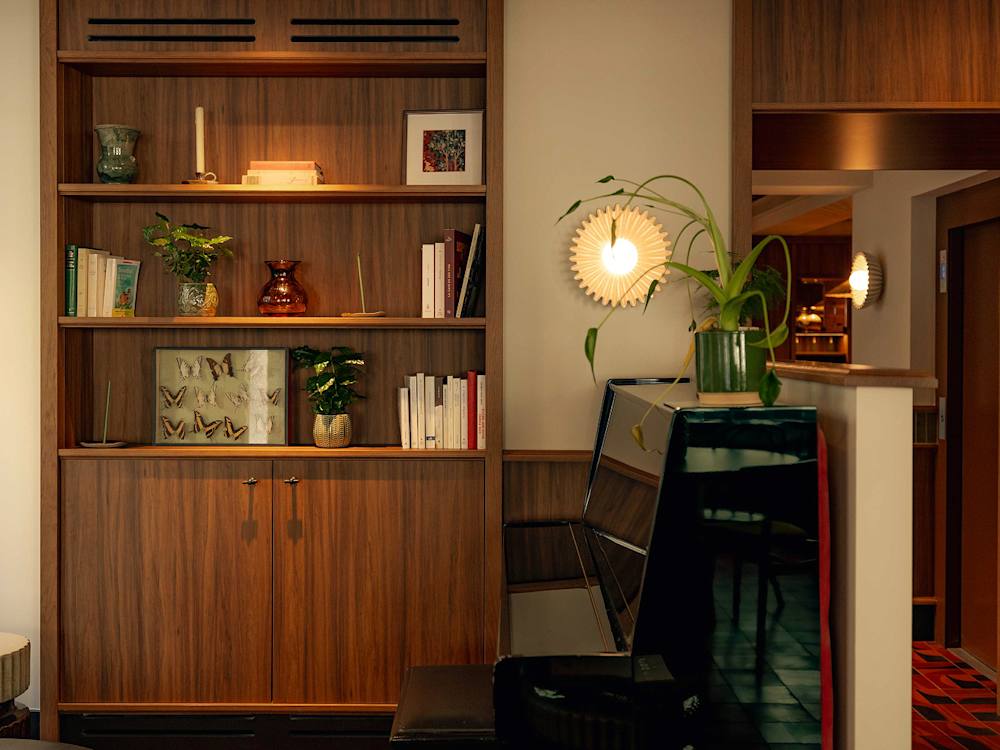
Salvia hotel is orbited by some of Paris’s most erudite institutions: the Sorbonne, the Panthéon, the Musée du Luxembourg… Stop by the café here and you’ll likely catch some stray intellectual thoughts — there are certainly enough people tapping away on Macbooks in the terracotta- and sage-hued space.
To inspire you, there are shelves piled with books dotted around (and a piano for when things get musical), and the hotel’s architect-designers Artefak added a ceiling mural with Fernand Léger-homaging female figures. And when you pay for your café crème, you might receive a thought-of-the-day note from a previous guest with your bill, which you can choose to carry on with your own snippet of wisdom.
The culture hit: Salvia’s literary neighbourhood has bookshops you could root around in for days. Shave some reading time off the search with the hotel’s ‘literary café’ experience. Order a coffee and staff will serve it with a surprise book selected from the Pedone bookshop on nearby Rue Soufflot. There’s a hot-chocolate version too, to instil a love of literature in little ones.
The room for refined tastes: The Prestige Suite, in a sweetly retro colourway of sage and coral, sits on the top floor of the hotel where sloping beamed ceilings give it a chic garret feel. It has an aspect to match any intellectuals’ lofty ambitions too, with views over the Sorbonne and Panthéon.
What to see nearby: Strung together like a line of captivating prose are noted bookshops, including The Red Wheelbarrow, Librairie de Cluny and Chantelivre (for kids’ books). Head north to the Left Bank to browse the bouquiniste (second-hand book-sellers) stalls running along the Seine and daydream about becoming one of famous bookshop Shakespeare and Company’s, ‘tumbleweeds’ (who sleep among the shelves for free if they read a book a day). Cinephiles are well-fed too, with historic spots for watching arthouse films: the Cinéma du Panthéon, Les 3 Luxembourg, Reflets Medicis and Le Champo.
Maison Proust Hotel & Spa
For antiquity appreciators
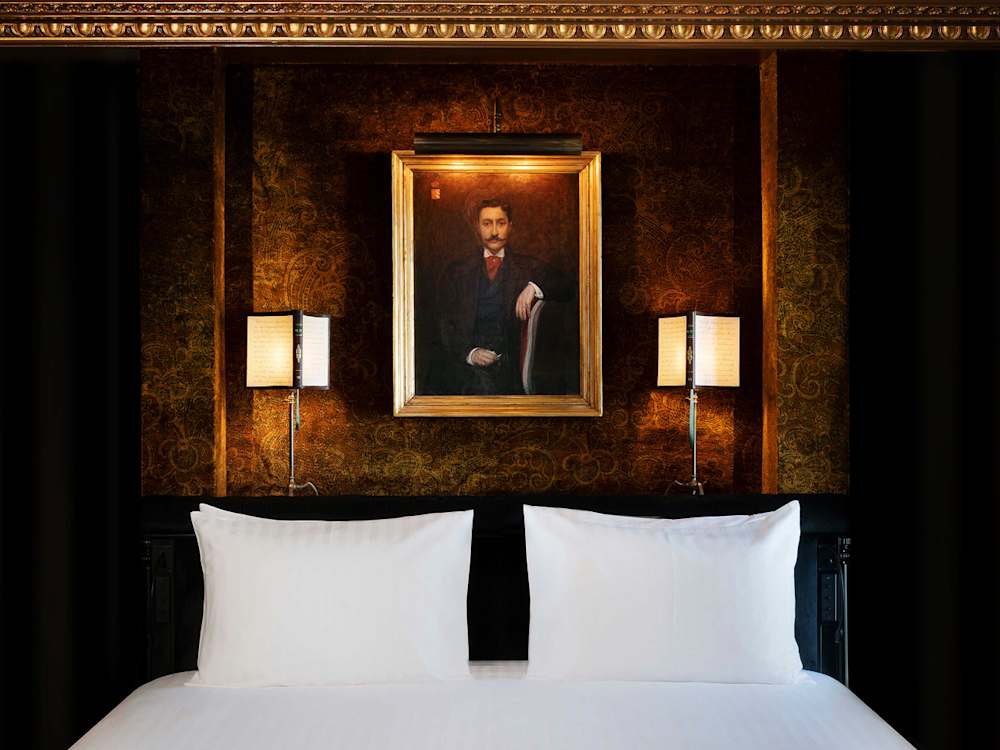
If you haven’t yet read the several thousand pages of Marcel Proust’s masterwork In Search of Lost Time, this hotel gives you an eloquent abridgement. Famed designer Jacques Garcia has taken inspiration from the lives of the French writer and his contemporaries, creating an overtly opulent 19th-century setting. The lounge and restaurant are lined with jewel-toned velvets, intricate carvings and tooled leather (incorporating Proustian motifs). And walls are hung with paintings of Proust’s aunt and of the hostesses of famous, historic literary salons, such as socialites of the day, Geneviève Straus and Madeleine Lemaire.
There are works by Anatole France, who inspired Proust, and letters written by France’s mistress, plus many leather-bound antique books in the rotunda library lounge, laid out under a starburst rendered in gold leaf on the ceiling, a nod to the Palais Garnier.
The culture hit: Behind glass on a library shelf is a rare literary treasure: an original 1914 edition of Swann’s Way, signed by Proust himself. And you’ll spy the man himself — a distant figure, painted into a scene on the mirrored walls of the concierge’s nook.
The room for refined tastes: Each hotel floor feels like a salon of its own, with fourth-floor rooms named after French painters, fifth-floor rooms named after writers and the sixth-floor dedicated to Proust — you can even spy passages from In Search of Lost Time printed on lampshades. Second Empire royal, La Princesse Matilde, whom Proust immortalised as Madame Verdurin in the book, has a Junior Suite named for her, which has oil paintings, books and a writing desk for your own musings.
What to see nearby: Leave the Belle Époque at the hotel for a more modern wave of artistic excellence, with events and panel discussions at Conscious Paris, white-walled gallery Forma and digital-art space Galerie Charlot. While on Rue Charlot, stop into Anti Public Library, a listening bar selling vintage comic books and photography tomes; and on Rue de Picardie, Empreintes is a collection of ateliers where you can pick up unique handicrafts.
Hôtel des Académies et des Arts
For paintbrush wielders
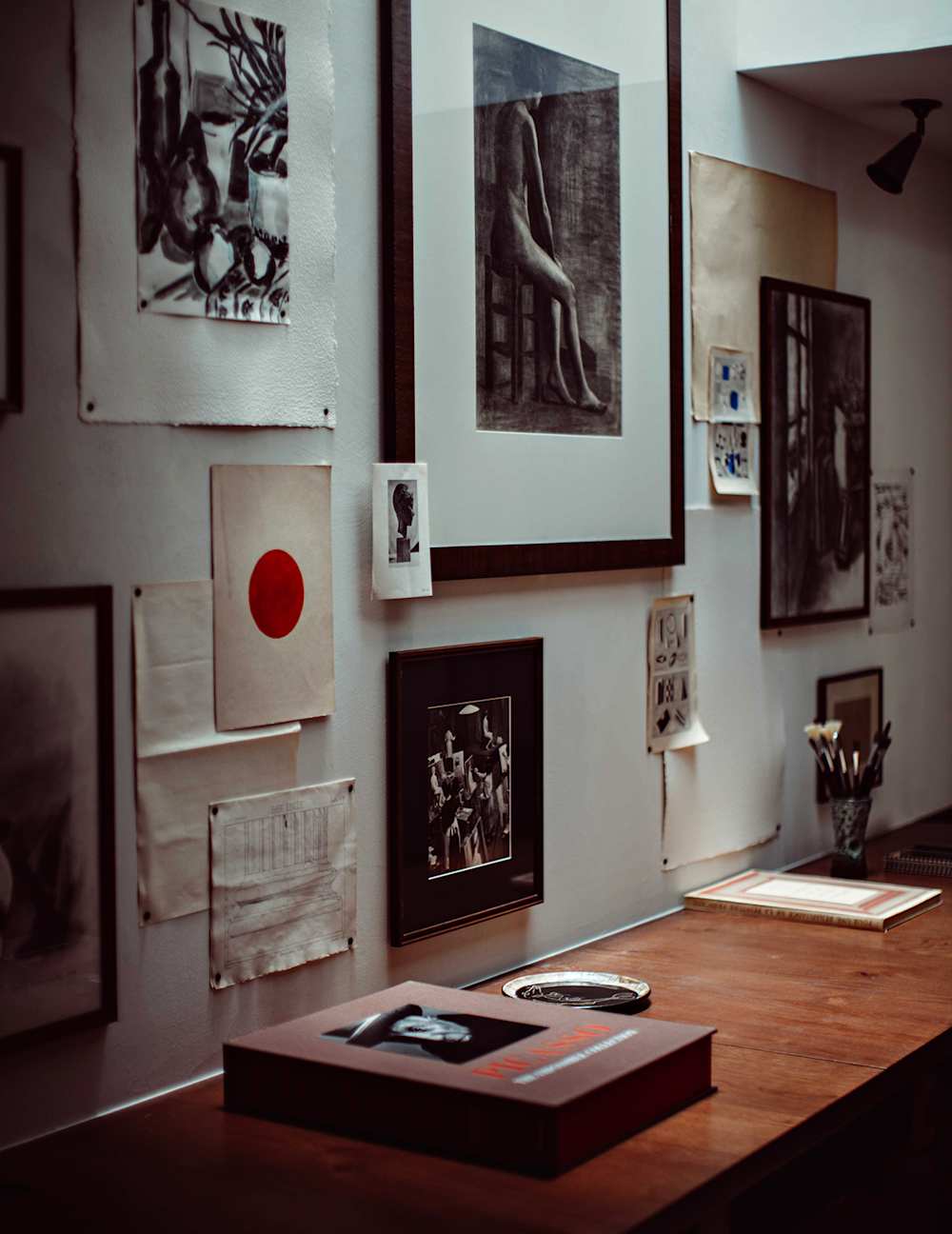
Rue de la Grande Chaumière in Montparnasse has an artistic legacy that supersedes the street’s size. Gauguin and Mucha had studios here and it’s home to The Académie de la Grande Chaumière, where practically a full deck of 19th- and 20th-century artists studied (Louise Bourgeois, Tamara de Lempicka, Marc Chagall, Alberto Giacometti, Joan Miró…). But you might feel its creative spirit most strongly at Hôtel des Academies et des Arts, where Amedeo Modigliani kept a studio on the top floor, and Japanese painter of the 1920s Léonard Tsuguharu Foujita once lived.
The hotel doubles up as a gallery and works by artists with a connection to the locality hang throughout, such as Charlotte Culot, Caroline Leseur, Valeria Sarto and Marie-Laure André-Novak. In the café, there’s a bohemian frisson of connection between like minds — especially when guests and visitors put brush to paper.
The culture hit: In the Café Atelier you can let your imagination fly at classes in painting, sketching, sculpture, photography and more, organised in collaboration with the Académie.
The room for refined tastes: Each room has a ceiling mural by Franck Lebraly, whose abstract shapes were inspired by Picasso and Orphism master Robert Delaunay. And there’s some frame-hanging space on the walls for you to judge how your own works might look on display (although getting an easel in might be a squeeze). We like the Superior with Terrace for the people-watching possibilities.
What to see nearby: L’Écume des Pages is a well-loved indie bookstore with a vast collection; you might recognise it as a backdrop in Michael Haneke film, Caché, and if you’re hankering for late-night lit, it opens till midnight. For conduits to self-expression, head to Maison Sennelier, purveyors of pigments, pastels, inks and more art supplies. The Eugène Delacroix Museum shows you how a master does it; and while legendary Café de Flore is within strolling distance, Modernist-loved hangout La Palette has a little extra cachet for featuring in Taylor Swift’s Begin Again video.
Hôtel Balzac
For lit sophistication and spa-ing
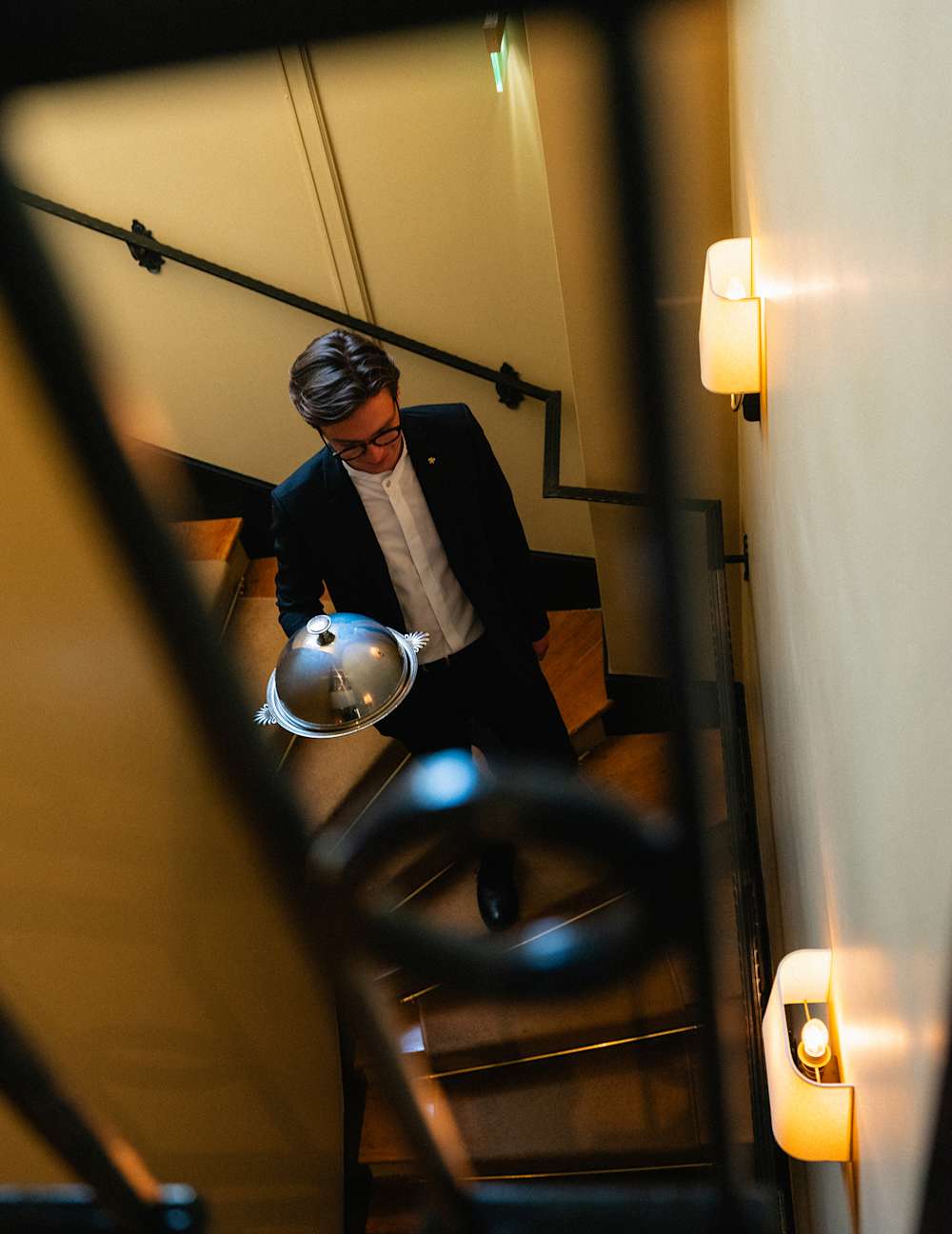
Set in a privileged position near the Champs-Élysées, Hôtel Balzac has quite the past life. It was built as a home for the director of the Paris Opera in the 1800s before the great French scribe Honoré de Balzac moved in with his countess wife. After his death, the building was demolished and rebuilt in Haussmannian style to become a champagne salon (chic, no?), until it was renovated in art deco style and became a luxury hotel.
While the literary influence is more of a benevolently ghostly presence, the hotel’s sophisticated feel might spark some flowery prose, especially if you’re putting your nose into the caviar and champagne menus.
The culture hit: Japanese-inspired wellness experiences to restore body and mind await at the Ikoi spa, with kobido massages, wakayagu (meaning ‘to look young’) facials, shiatsu and Zen rituals.
The room for refined tastes: The Paris Sky Suite has the Paris view, a snapshot of the Eiffel Tower. And it looks over Rue Lord Byron, another lit connection.
What to see nearby: Honour the French-Japanese fusion here, with visits to the dazzling couture collection at La Galerie Dior and the contemporary art at Palais de Tokyo.
Find more beret-good hotels in our full Paris collection
Hôtel Balzac Paris images by Mathis Jaulhac