


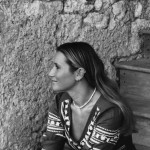
Wellness retreats span an ever-broadening spectrum, from fine-tuning your sleep patterns and recalibrating your diet to hooking yourself to IV vitamin drips and shocking your system with contrast therapy. And then there are places like Miraval Arizona Resort & Spa, where I find myself unburdening decades’ worth of bottled-up emotions to an attentive horse who listens, and doesn’t judge.
Cradled in the Santa Catalina Mountains on the burnt-amber outskirts of the Sonoran Desert, Miraval is built for mindful immersion. Time slips by without interference from digital devices, guided instead by expert healers who gently challenge then restore in sessions so varied you could be on an aerial-yoga platform at sunrise, tasting honey with the resident farmer between breakfast and lunch, journeying through the cosmos around a celestial campfire, then resetting your circadian rhythm in a yurt before bedtime. You could spend several weeks synchronising with a landscape long revered by Indigenous peoples, sampling the resort’s many paths to ‘life in balance’ and leave still wanting more.
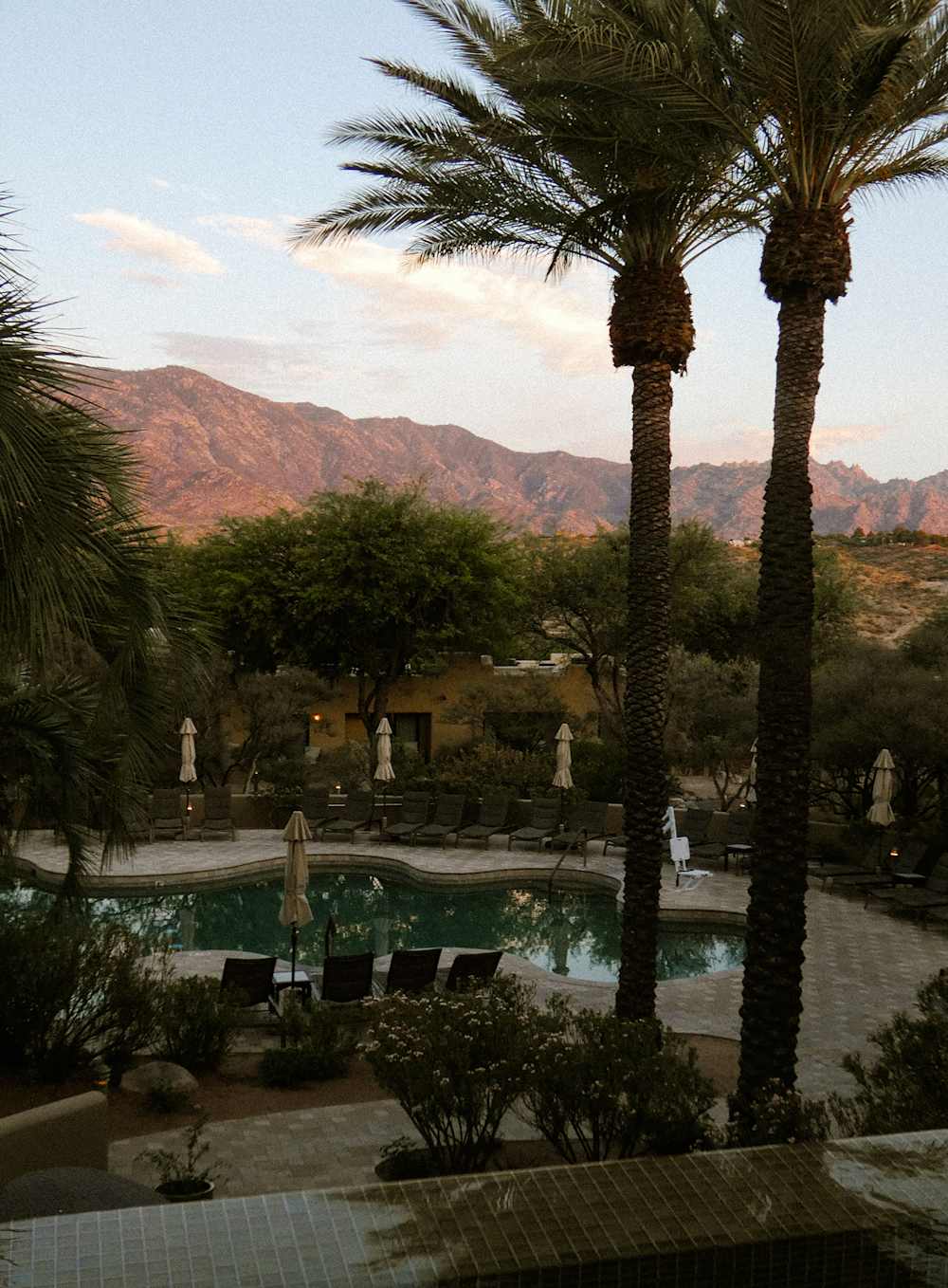
Miraval offers no shortage of ways to help you feel better, but I came with a clear intention (something the hotel team specifically asks you to set before arrival). Fresh from a ranch stay in Wyoming where I’d spent long, physically demanding days in the saddle, I’d booked this as a gentler follow-up. As a lifelong rider, I hadn’t travelled over 5,000 miles to perpetuate my saddle soreness, but to spend time with horses on the ground and connect with my favourite creatures in a different way. As someone who has long prioritised my physical wellbeing — often at the expense of my mental health — I was pleasantly surprised to learn that the real work here would have little to do with my body, and far more to do with my mind.
Equine therapy certainly exists elsewhere and is gaining traction even with traditional trainers, but nowhere is it practised quite like Miraval’s signature programme at Purple Sage Ranch — where decades of observation, intuition and trust between human and animal have shaped something far more nuanced than a single session or technique. The programme was established in 1995 by Wyatt Webb, a straight-talking former cowboy who recognised, long before it became mainstream, the value of working with horses as mirrors of human behaviour. His workshops — most notably It’s Not About the Horse — became legendary, drawing everyone from business leaders to Oprah, all seeking a more honest understanding of themselves. The premise was simple, if slightly disarming: horses don’t respond to who you think you are, but to who you are in the moment.
Today, that work is carried forward by Lucinda Vette, former lawyer turned horse whisperer, and a team of equine specialists who have refined, rather than repackaged, Webb’s approach. The fundamentals remain unchanged. There are no scripts, no forced interactions and no expectation that the horses will behave in a particular way. They are left to respond instinctively, which is precisely what makes the experience feel so exposing — and so effective.
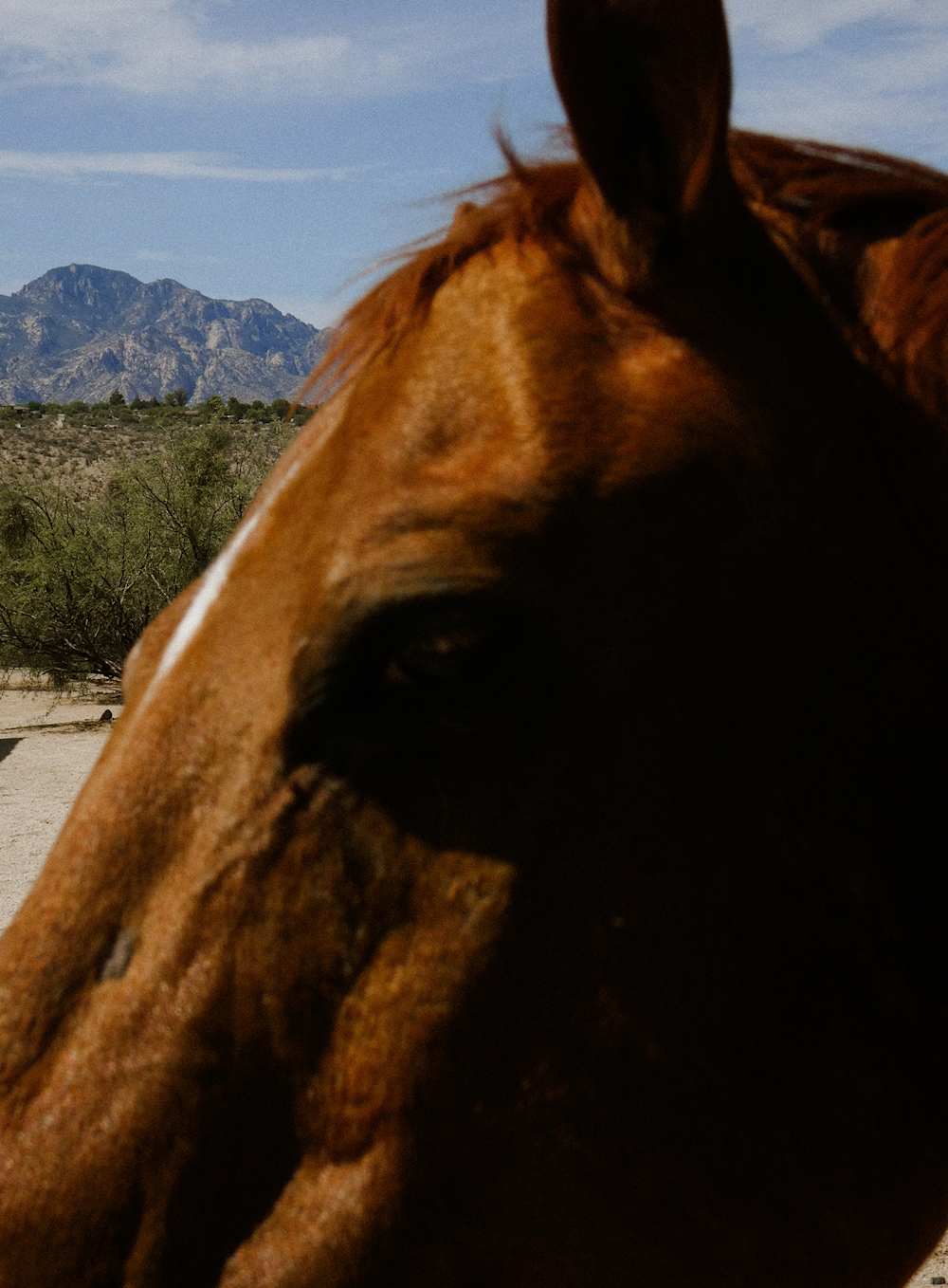
My own private session begins seated in the shade beside the stables with Kathryn, my incredibly calming equine facilitator with whom I immediately trust the deeper, darker parts of myself. She starts by asking about my history with horses. It’s a simple opening question, but one that seems to unlock more than expected. By the time we walk towards the herd in a mountain-ringed paddock, there’s a giant lump in my throat and I’m already fighting back tears.
Kathryn admits she has a horse in mind for me based on our initial discussion, which somehow covered everything from the loss of my childhood horse to my fractured family dynamics, and navigating life in my thirties as a single woman. Without revealing the horse in question — more often than not the horse she expects to choose someone, doesn’t — we wander through the herd, allowing horses to approach me at will or turn away if the energy isn’t matched. A few horse greetings in, a chestnut gelding called Bodee strides purposefully over, stops at my shoulder and calmly ushers every other horse out of my orbit. A flick of an ear here, a shift of his body there, and before long we’re standing alone together.
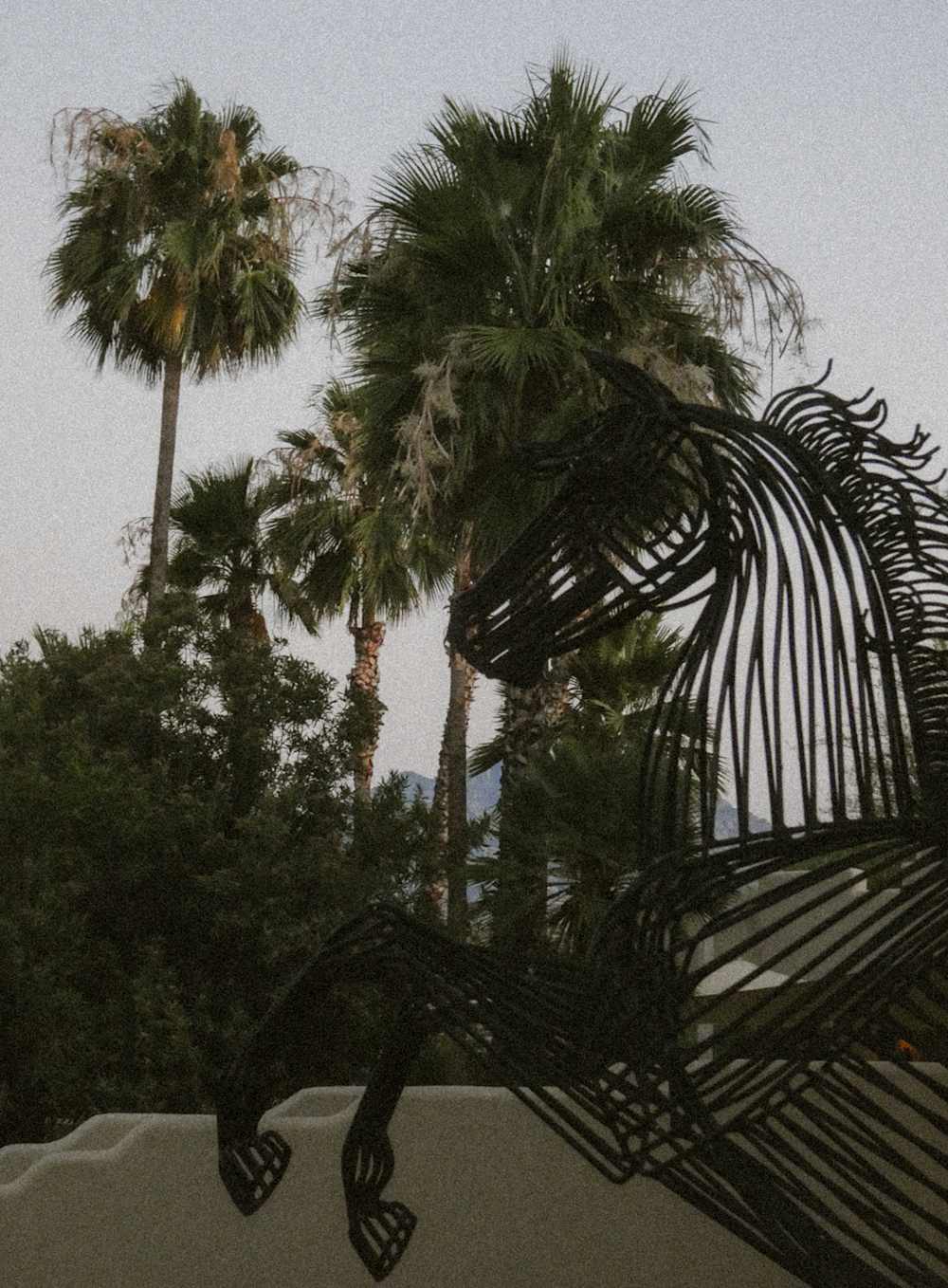
‘Well,’ smiles Kathryn. ‘That’s not the horse I was expecting.’ Only later does she explain why Bodee’s interest could be so telling. He’s the leader of the herd; the protector. When a mountain lion once prowled the ranch, he kept watch from the highest mound in the paddock hours after the threat had passed, ears pricked, refusing to abandon his post until he was satisfied everyone else was safe. As Bodee continues to keep me company, conversation comes far more easily than I expected. We begin to unpick my responsibilities — and at times, resentment — of being the eldest of four siblings, especially throughout my parents’ recent divorce, and the exhausting habit of being the dependable one in a family that’s struggled with addiction. Through it all, Bodee never leaves my side.
Kathryn wonders aloud whether he’s drawn to me because he recognises something familiar, another protector, or because he senses the opposite: someone who has spent so long looking after everyone else that she’s longing to be looked after herself. Neither of us pretends to know the answer. Perhaps it’s both.
That’s the fascinating thing about Miraval’s equine programme. The facilitators don’t claim the horses possess mystical powers or psychic abilities. Instead, they talk about awareness. Horses have spent some 55 million years evolving as prey animals, reading tiny shifts in energy and body language to stay alive and maintain healthy bonds within the herd. As a result, they’ve become remarkably good at noticing the gap between what people say and what they actually feel. ‘Allow the horse to see you,’ Kathryn encourages. It’s harder than it sounds.
My journey continues the following day during Miraval Arizona’s signature group equine experience. Led by facilitator Joni, we’re introduced to Bonnie, a gentle grey Clydesdale mare. One by one, we enter the arena to groom her, ask her to lift a hoof and simply share space with her. Around me, women speak candidly about bereavement, ageing parents, relationships and loneliness. Bonnie responds differently to each of us, sometimes stepping in, sometimes holding back, her reactions prompting questions from Joni to redirect any shifts in energy.
As riders, we’re often taught to focus on the task. The transition, the jump, the next movement. Here, the task is almost incidental; the relationship comes first. The horse asks nothing of you except honesty and vulnerability, and, in return, offers a perspective no human ever could.
And that’s what makes Miraval’s equine programme so remarkable — and accessible — whether you’ve spent a lifetime in stableyards or have never so much as fastened a riding hat. It isn’t teaching people about horses; it’s using horses to teach people about themselves.
FAQS
What is equine therapy?
Despite what the name might suggest, equine therapy isn’t therapy for horses, but therapy with them. At Miraval Arizona, the focus is on self-awareness rather than horsemanship. Horses are highly sensitive to body language and their surroundings, and their instinctive responses can help us recognise habits, emotions and relationship dynamics we might otherwise overlook.
What happens during an equine therapy session?
Depending on the experience you book, you might walk among the herd, groom a horse or practise leading one through simple exercises. Miraval’s equine specialists guide the interactions, encouraging you to observe the horse’s responses and reflect on your own emotions and behaviour. No two sessions are the same, largely because the horses have a say in the proceedings.
How long are sessions?
Miraval’s signature group equine experience is scheduled for two hours, allowing for transport time from the resort to Purple Sage Ranch. Private sessions can be more flexible; mine ran closer to three hours, with plenty to unpack. The duration depends on your headspace, energy levels and, crucially, the horses themselves. Their willingness to engage always takes priority, so sessions develop at a pace that suits both horse and human.
Do you need riding experience?
You don’t need riding experience for equine therapy. Most of Miraval’s sessions take place on the ground, with no riding involved. In fact, experienced riders may find that stepping out of the saddle offers an entirely new perspective on the animals they thought they knew so well.
Can beginners do it?
Absolutely. Previous experience with horses is neither necessary nor an advantage, as everyone starts on equal footing. Miraval’s equine specialists guide you every step of the way, with an emphasis on connection, curiosity and self-exploration rather than riding ability. Wear sturdy, closed-toe shoes and come with an open mind.
What makes Miraval’s programme different?
Miraval was something of a trailblazer in equine-assisted wellbeing. When addiction-treatment specialist Wyatt Webb introduced his signature equine experience in the mid-1990s, few luxury resorts were inviting guests to swap spa treatments for emotional encounters with horses. Three decades on, equine therapy is gaining ground elsewhere, drawing new devotees to resorts as far-flung as Nihi Sumba in Indonesia, but Miraval’s programme has a considerable head start.
It draws on decades of observation and an approach that puts the horses’ instincts and willingness to engage first. And then there’s the setting: ringed by the Santa Catalina Mountains, there’s a particular energy to this corner of the Sonoran Desert, a landscape of longstanding cultural and spiritual significance to Indigenous peoples. This lends another dimension to an already powerful experience.
Book a stay at Miraval Arizona, discover more alternative-wellness experiences or take a restorative night ride in Portugal’s wilds