



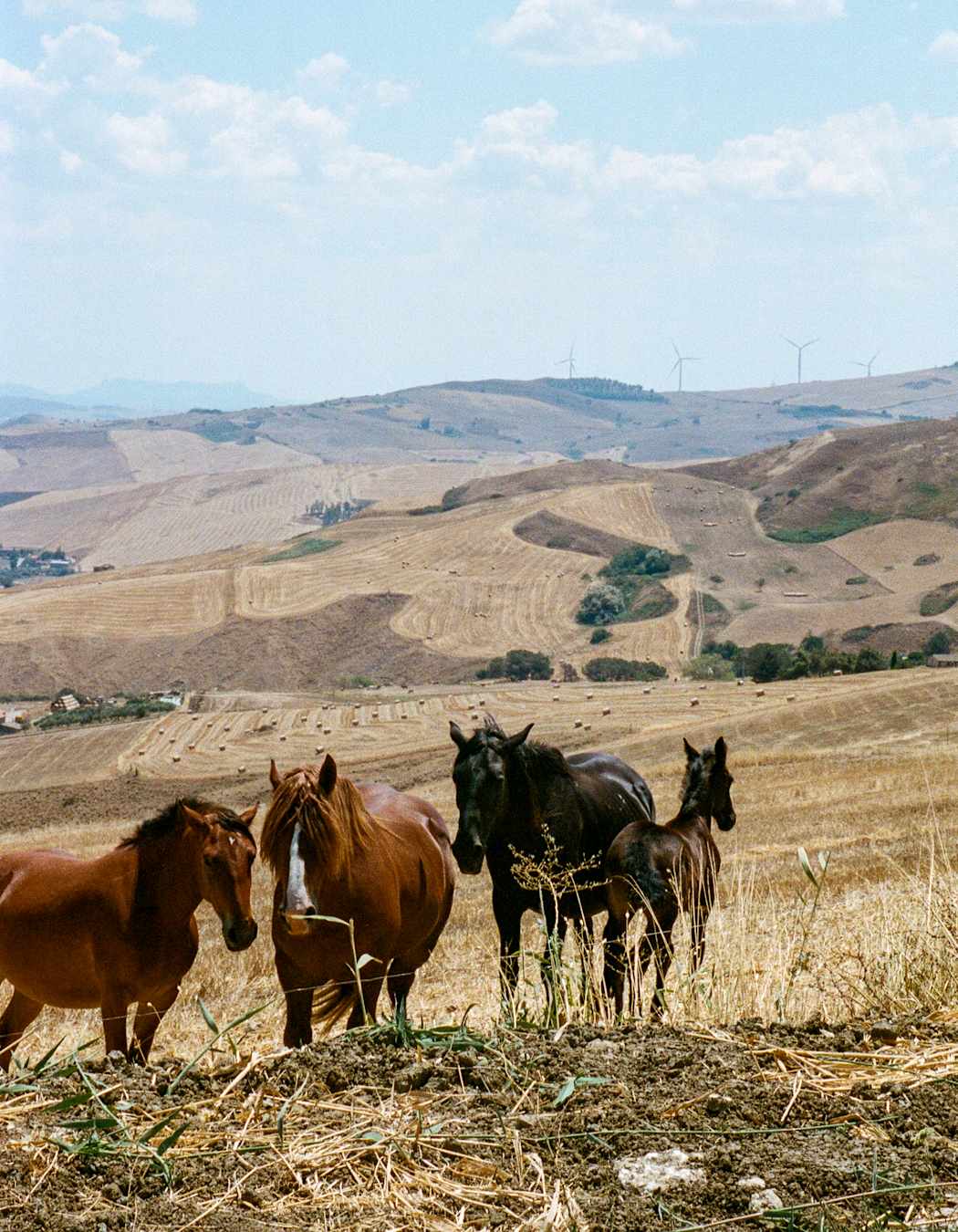
There’s something very comforting about the idea of permanence. Almost every civilisation we know of has conjured up a place where time stands still. The Greeks called it Elysium. The Egyptians had the Field of Reeds. The Celts dreamed of unending joy in the Otherworld. It’s the most human yearning there is: to wonder what it would be like to live in a world where the sun never sets. Staying power, that’s what we want — and I know where to find it. You’ll need a winged chariot — in my case, steered by the benevolent hand of British Airways — to carry you to Sicily. Then, you wind your way into the island’s central hills, where wheat fields cover almost every inch of the land, until you reach the monumental gates to Susafa.
I’m getting a little carried away, I know. In truth, I came to Sicily for more earthly matters: to sample the fruits of Susafa’s sustainable (and deeply self-sufficient) blueprint for living. But the history of this place, of a remote Sicilian community that did everything on its own, really does make the masseria seem like an island of Arcadian bliss. More importantly, my patchy knowledge of mythology tells me that where there’s enchanted land, sweet nectar tends to follow.
Sure enough, my arrival is met with an ambrosial offering: a glass of iced almond milk muddled with cherry jam. This pick-me-up is entirely homemade, having started life in Susafa’s groves and orchards. After breezing through check-in, I wander the courtyard garden, sipping and squinting, still startled by the brilliance of the sun bouncing off the pale stone. To my right is the old palmetto where wine was once pressed, now a bar with a walk-in cellar. Across the passageway is a cavernous granary, today Susafa’s restaurant. For a building destined for storage it seems gloriously over-engineered, with teardrop arches that wouldn’t look out of place in a monastery. Clearly, the people who built this didn’t do things by half measures.
There’s a sense of familial respect at Susafa, a recognition that our forebears knew their stuff. Take my suite, in the old calves’ stable, reached by way of a springy lawn shaded by cedars. Inside, it’s wonderfully cool, because these historic buildings were made to contend with long, dry summers. There’s a high ceiling with beams of Sicilian chestnut, solid stone walls to regulate the temperature and wooden shutters to screen the afternoon sun. The floor is terracotta, celebrated for its thermal properties since Roman times. This is a room built by generational knowledge.
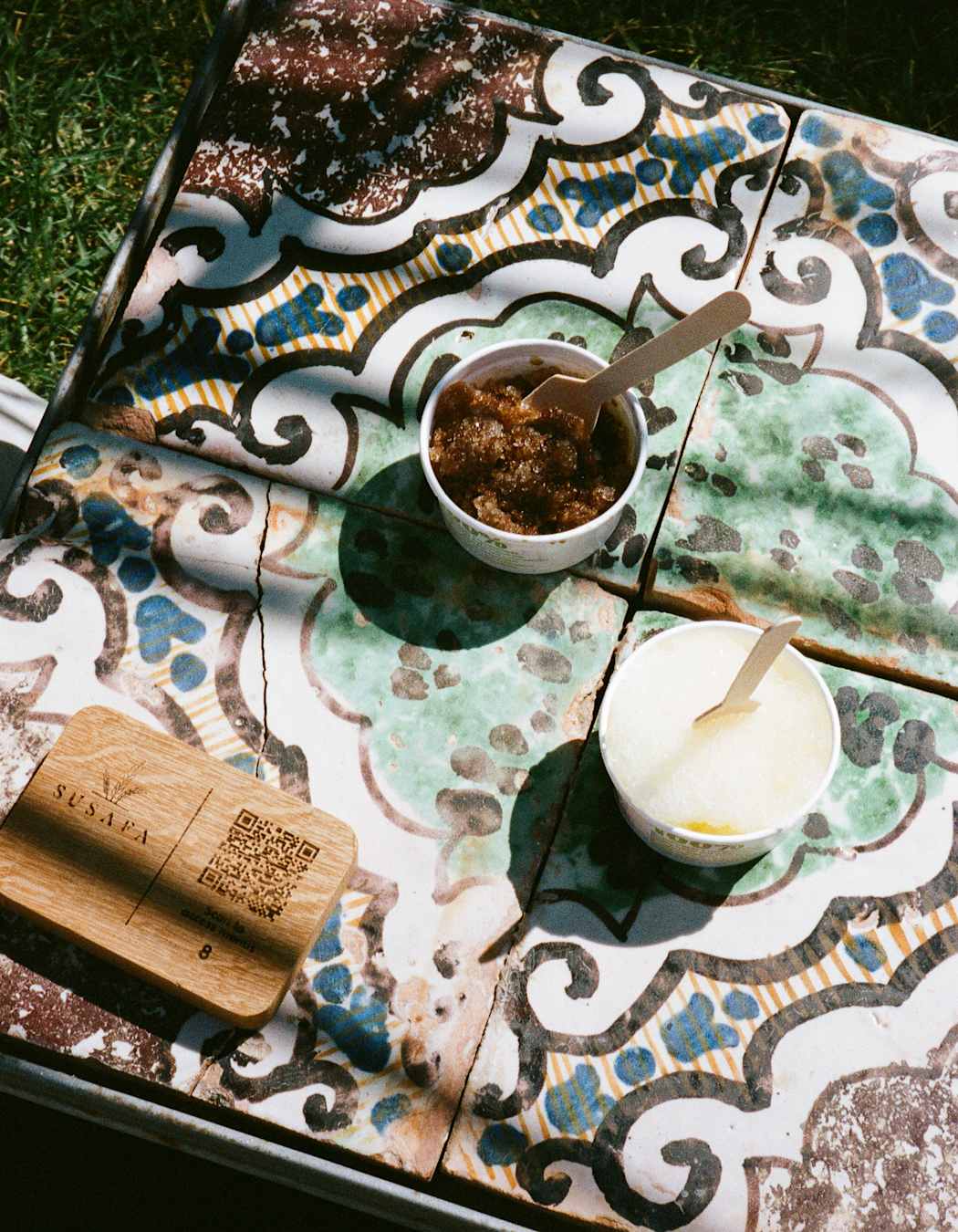
At Susafa, roots are everything. The estate has been in the hands of the Saeli-Rizzuto family since the mid-1800s, who’ve steered it through change and upheaval. Their tenure alone is impressive, but what makes Susafa special is the way they once lived. It wasn’t so much a farm as a village, where a whole community of families worked together with almost no intrusion from the outside world. They built their own houses, pulling the stone out of the ground themselves. They grew, harvested and cooked with their own crops. They made meats, cheeses, bread, biscuits, jams and olive oil. They were provider and protector both, sharing the bounty of the land, hunting in the hills and warding off bandits looking for an easy meal. So impressive was their know-how, that the inhabitants of the masseria came to be known by a phrase: ‘Sù sape fare’, or ‘they know how to do it’. Cut that down and you get ‘sù-sa-fa’.
Out in the gardens, I’m joined by fifth-generation owner Manfredi Rizzuto and his Weimaraner, Bruno. When Manfredi was a young boy, the masseria was a shadow of its former self and the groves, orchards and herb gardens had vanished, replaced by wheat monoculture. It seems time and modern methods had finally caught up with Susafa. But Manfredi has dedicated years to its rebirth; and season by season, the spirit of the old estate has blossomed around him, like new shoots coaxed from old seeds. ‘When I started all this, sustainability wasn’t yet a buzzword’, he tells me. ‘It was never for marketing or commercial reasons; it was a romantic vision to bring life back to this place and act as its ambassador. It was about nostalgia, tastes, smells, memories — that’s what sparked it’.
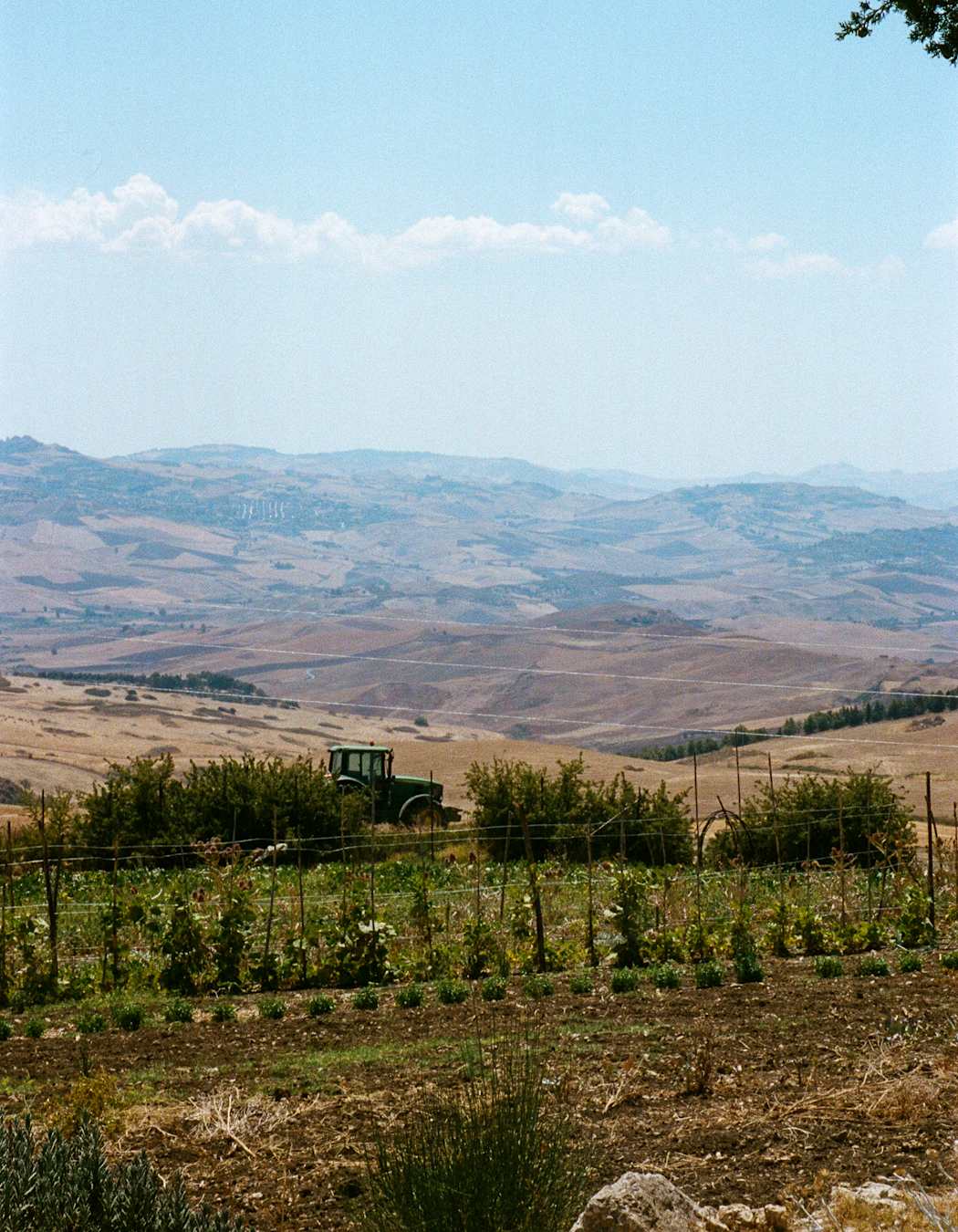
Working this magic took a lot more than waving a wand. Besides the vast renovation project, there was the question of replanting the land, and how that would tie in with the restaurant. ‘For years, I wanted to develop a Michelin-star-level place’, he says, ‘but many of the chefs working at that level don’t want to sacrifice on ingredients. So, you end up getting them from elsewhere. To me, that isn’t sustainable. The solution was to grow things here, to be truly seasonal, to cook with what we have — exactly as it was in the past.’
That phrase, ‘what we have’, is not to be taken lightly. When Manfredi directs me to the herb garden, it becomes clear that the plants are indigenous to this region of Sicily. Finding and cultivating these varieties involved painstaking research; you can’t just buy them at a garden centre. Was it worth the growing pains? ‘We find that indigenous varieties thrive with almost no intervention’, Manfredi affirms. ‘They’re much more resistant to the temperature and conditions. It gets very dry here in summer, no matter how much you irrigate, so the plants need to be able to respond to that by themselves.’ At Susafa, it seems ‘they know how to do it’ applies to all living things.
Manfredi hands me herbs plucked from the beds, exhorting me to savour their scent and texture. There’s wild oregano, sage, citrata mint, juniper, santolina, calendula, verbena and rosehip (used to make a wonderful marmalade, he says). But it’s the almonds that steal the show. It’s late in the season, so the trees hang heavy with their crop. Manfredi searches for the ones that are soft and plump — the best. Bruno the Weimaraner is way ahead of us, shredding husks and cracking shells between his teeth to get at the soft white flesh within. Sù sape fare, indeed.
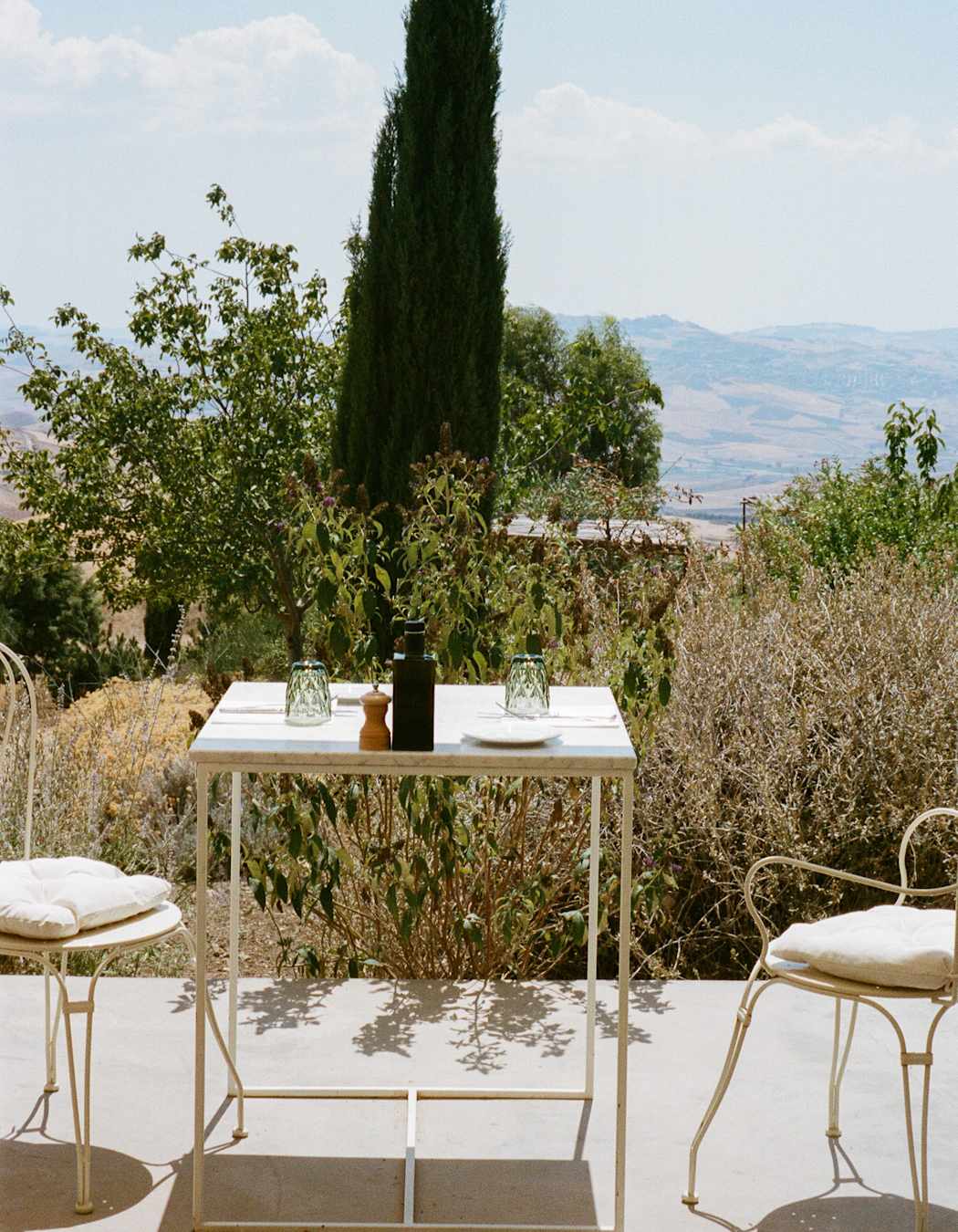
The remainder of my time at Susafa revolves around the end products of this Herculean effort. Manfredi might have talked about avoiding the star-chef route, but make no mistake, the food here is sublime. At dinner, the tasting menu I select seems to put the entire estate’s bounty to work — a whole constellation of cereals, vegetables, fruit, nuts and herbs make guest appearances. At breakfast, everything is homemade and hand-prepared, everything earns its place at the table. There isn’t endless variety but that’s the point: you won’t find anything that’s travelled further than Sicily’s coast — much less halfway around the world, shedding a succession of plastic costumes as it goes.
I sample a variety of Susafa’s organic olive oils, which are also used in the soap and shower products in the rooms. I turn gluttonous for gluten, bingeing on bread, pasta and gnocchi made with the estate’s own wheat, the same heritage variety that was planted here centuries ago. I join a cooking class led by exuberant chef Melissa, who provides an expert — and very animated — initiation into the art of making ricotta-filled cannoli, almond biscuits and cassata cakes. We produce such a prodigious quantity that I’m still eating them in the airport the next day. And you can go further, participating in Susafa’s ‘Let’s Sow the Future’ project by adopting a wheat field, tomato plant, olive tree or cherry tree. It’s a sound investment. When harvest time comes around, they’ll send you the spoils: 10 litres of olive oil, for instance, or 15 jars of homemade cherry jam.
It was Plato who said that ‘Sicilians build things like they will live forever and eat like they will die tomorrow’. Now, that was a bit before Susafa’s time; but having spent a mere 36 hours on these hallowed grounds, I think I know exactly what he meant. Since the Saeli-Rizzuto family took over the estate, mankind has gone electrical, then digital, now artificially intelligent. All the while, this masseria has held tight to its roots, providing two things that never lose their appeal: heartfelt home cooking and a beautiful place to lay your head.
Discover more delicious stays in Sicily
Photography by Hannah Dace