



‘For us, this was never just about hospitality — it was about giving new purpose to a place with memory, respecting its character while making it relevant for today’s travellers,’ says Luigi Caccamo, who owns Le Dune Piscinas in south-west Sardinia with his partner Marcella Tettoni. ‘Our hotel sits on the wild Costa Verde, far from Sardinia’s busier routes, among some of Europe’s tallest coastal dunes. It’s a landscape that asks for care, not crowds.’
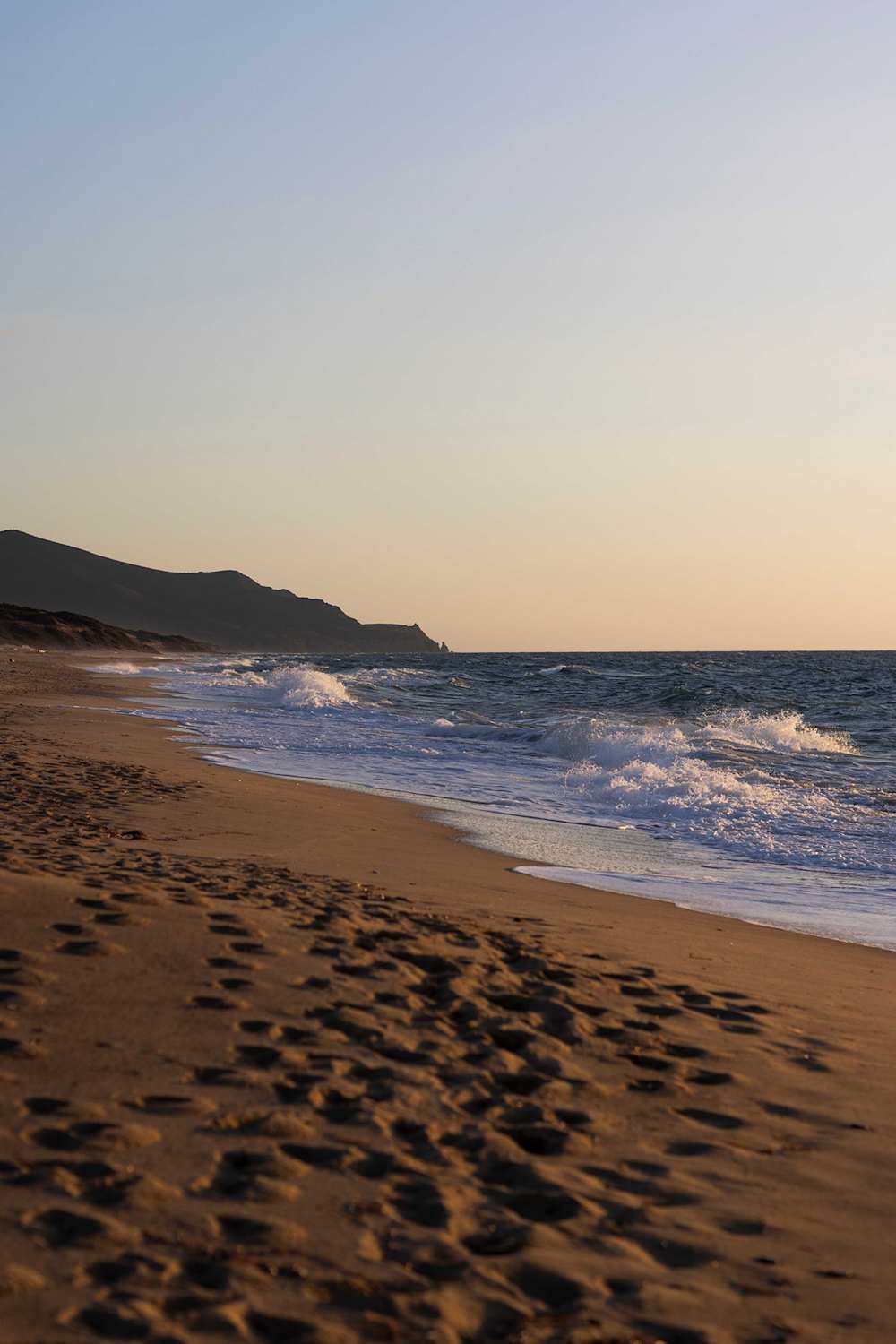
The landscape in question, known as Sardinia’s ‘little Sahara’, is a 47-kilometre stretch of otherworldly coastline in the Arbus municipality, where gorse shrubs, mastic trees, strawberry plants and ancient junipers form the vegetation that descends to the wind-sculpted sand dunes and the sea. The deer that inhabit the dunes can be glimpsed in the early morning and at sunset; come high summer, sea turtles nest on this unspoilt coast.
Le Dune Piscinas
Until the mid-20th century, this part of Sardinia was predominantly used for mining, with abandoned relics of the industry still dotting the landscape: rusting wagons on the shore and the Laveria Brassey (named for the old Etonian Englishman who used to own it, Lord Thomas Allnutt Brassey), whose once-grand columns are still visible on the drive in and out of Piscinas. Visitors can learn more about the local history by visiting the ghost town that now makes up Ingurtosu’s Unesco-protected, open-air mining museum.
On the way to Le Dune Piscinas, I pass through the abandoned mining site, the track becoming increasingly bumpy until I reach the shore. ‘The final stretch of road remains unpaved, reminding us that we are guests, not owners, in a place that can never be fully possessed,’ says Caccamo, who first visited the region as a tourist in the early Nineties. ‘We are stewarding a fragile, extraordinary place and welcoming a small number of guests who value its silence, nature and history.’
Le Dune Piscinas
The hotel was once a warehouse on the beach, located at the end of the railway built in 1875, where the lead and zinc ores would be transported before being shipped out by sea. After the mine was depleted, this building that stored the minerals became a summer resort and then a small hotel. Its current custodians took over in 2011. ‘The towering sand dunes [some as high as 60 metres], sculpted by the mistral wind, play a leading role. The philosophy of humility drives our approach to hospitality: we act as custodians, not conquerors,’ says Caccamo.
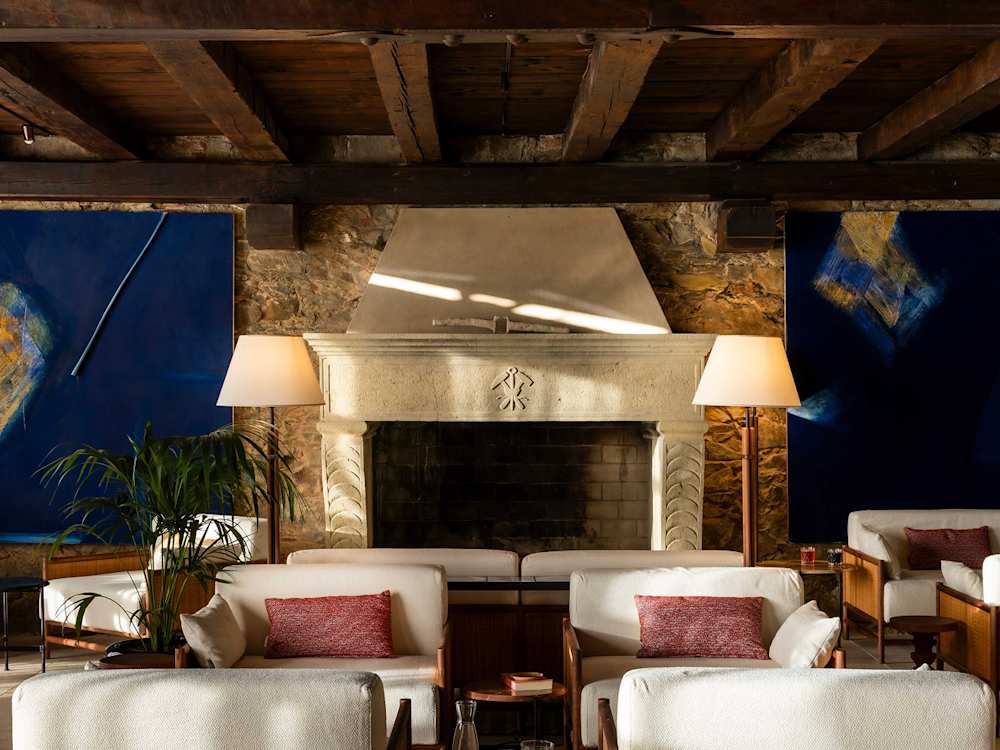
The renovations were carried out over three years, in close collaboration with Italy’s Ministry of Culture, to ensure the design was a celebration of heritage and the region’s mining history. ‘Traditional materials such as marble, basalt, wrought iron and Sardinian fabrics were combined with contemporary elements to create a space that feels both authentic and timeless,’ Caccamo tells me. ‘Throughout the hotel, there are subtle references to the past — from the entrance tunnel that once carried mining carts, to lighting and design details that reinterpret the tools and atmosphere of the mines.’
Le Dune Piscinas
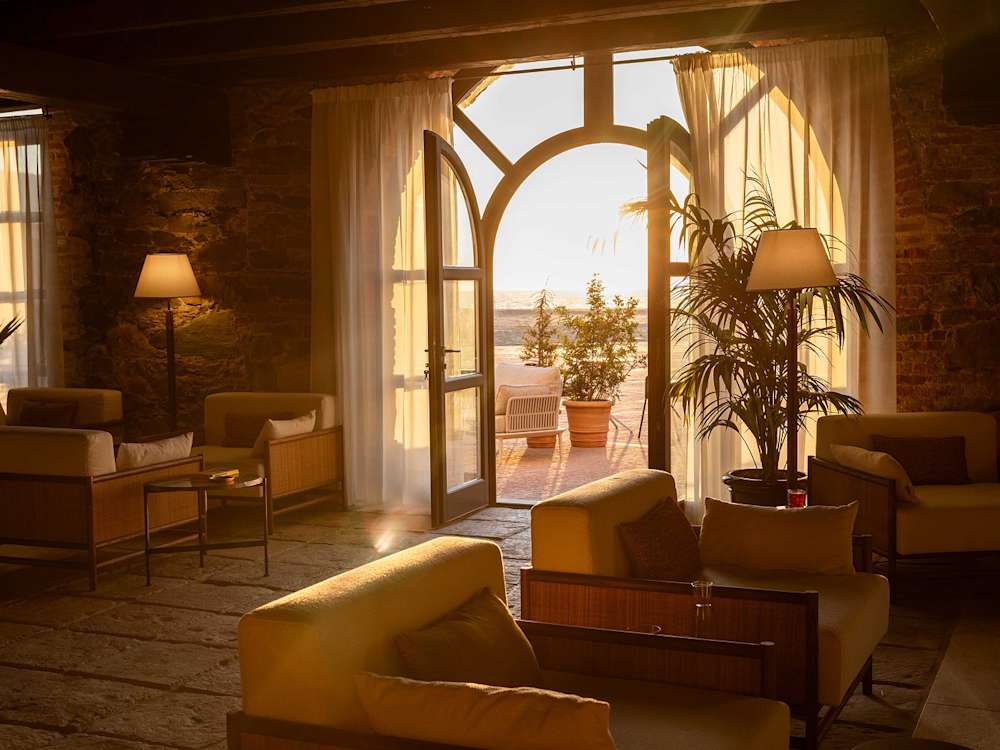
This balance between history and modernity is what the owners believe makes the architecture of Le Dune Piscinas special: ‘The thick stone walls and artisanal touches honour the history of the site; while large windows, open lounges and outdoor spaces connect guests seamlessly to the dunes and sea beyond.’ The couple’s hope is that Costa Verde thrives through slow, low-impact tourism. ‘We see Le Dune Piscinas as a pilot; a five-star eco-resort gently reviving a forgotten region, proving that mindful luxury is not only possible — it’s essential for Sardinia’s next chapter.’
A few hours’ drive north across the island is Gallicantu Stazzo Retreat, which was lovingly created by Marco Berio, a former pro golfer and manager of Costa Smeralda’s prestigious Pevero Golf Club. When he came across an old farmhouse in the ancient Gallura countryside, abandoned for half a century, he swapped the fairways for a building site and spent two years clearing it of thousands of plastic bottles, defunct appliances and other trash, a ‘period of discovery, hard work, introspection and a search for harmony — the mission was to do something for the soul.’
People have farmed this area of Sardinia for centuries, with traces of human settlements dating back to the Neolithic period. Phoenician merchants arrived to trade along the coast around the 8th century BC. During the Bronze Age, Gallura was part of the Nuragic civilisation, archaeological sites from which can be visited around the comune of Arzachena today. But Berio felt the region had been forgotten in recent years.
Gallicantu Stazzo Retreat
The site was chosen after long walks and drives in upper Gallura, and when he and his wife Raffaella found it, they ‘immediately understood the beauty and potential of this abandoned place’ near the village of Luogosanto. His goal was, he tells me, to ‘create a different kind of hospitality in the Sardinian hinterland, which many have always considered a less attractive part of an island famous only for its sea.’
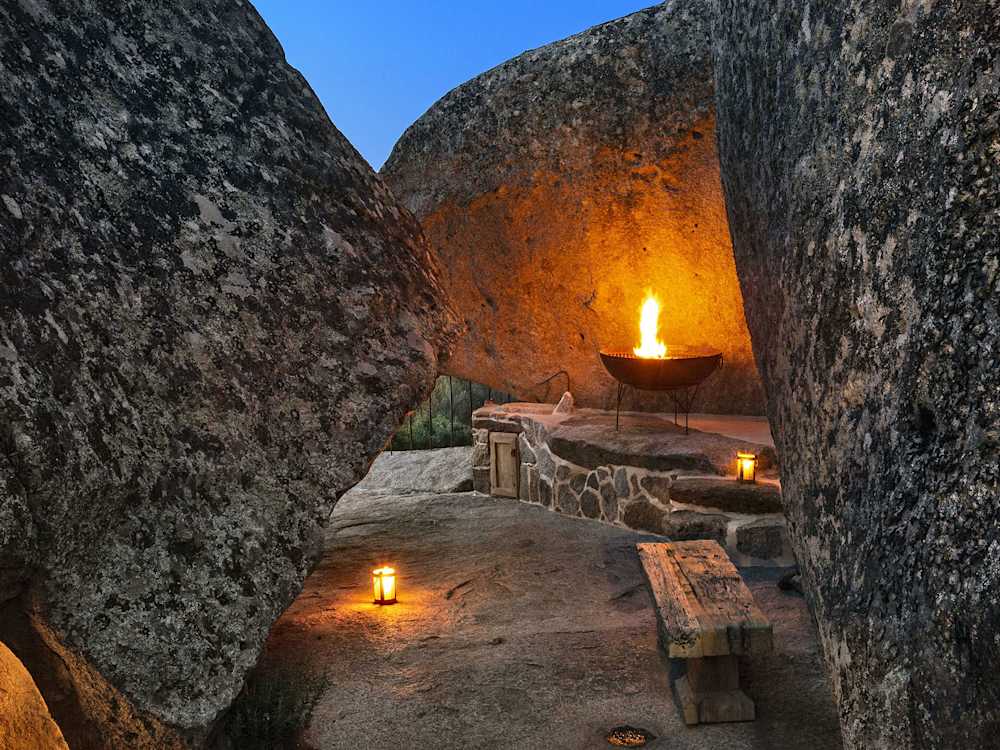
He soon set about restoring the original stone farmhouse (or stazzo), while also creating new outhouses — the result blends old and new seamlessly, with huge glossy panes of glass in the dining room and greenhouse somehow not looking out of place. At the heart of his nine-room hotel is a millennia-old olive tree, affectionately known as the King, under the shade of which guests can gather for aperitivi each evening. The former stables now house a wine cellar and small shop selling local wares. Throughout the woodland clearing and its environs, there are the curiously shaped giant granite boulders so common to this part of Sardinia; I half expect to see fairies flitting around. The Crown, so named for its resemblance to regal headgear, promises the best view of Corsica in the distance; the estate also features a rocky rhino, a 300-year-old cork tree, and a cave used for respite by shepherds for centuries.
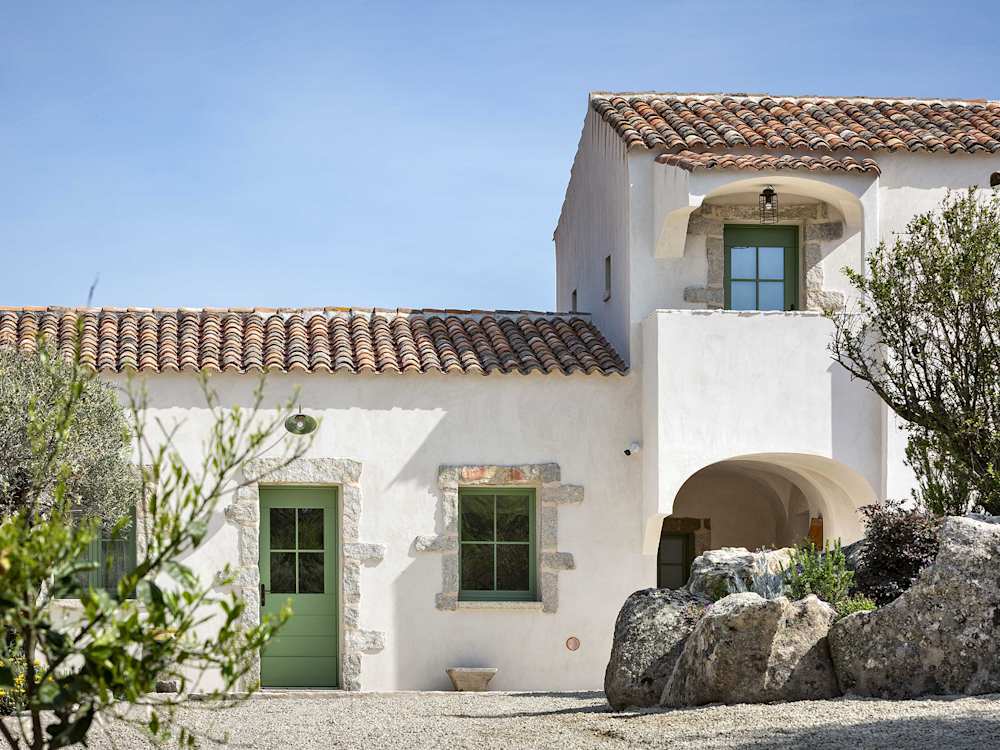
Gallicantu Stazzo Retreat
A romantic at heart, Berio saw the site as if it were a painter’s canvas, repurposing materials (iron, wood and stone) that had also come from ruins. The shutters, greenhouse and splashes of paintwork throughout the estate are a shade of sage green that reminds him of an olive leaf. He designed and built the wooden chairs set out in the clearing — with cushions that same shade of silvery green, of course — himself. Vegetables and herbs are grown without the use of chemicals in the kitchen garden, honey comes from their own hives, and the bespoke bath products in rooms are created using medicinal Sardinian plants.
For all their efficient heating and modern construction techniques, new builds can never capture the soul of a place in the way that a thoughtful restoration or expansion of an existing dwelling can. As Caccamo puts it, the hotel ‘becomes not just a place to stay, but a living homage to the land and the people who shaped it.’ As Sardinia’s summer crowds seek something beyond the glitz and glamour of the Costa Smeralda, these two hotels, in Gallura and Piscinas, offer a slice of the past, without foregoing the future.
See more of our Sardinia collection, or read another uplifting Revival Story from the South of England