



The great heatwave of May 2026? I have absolutely no memory of it. Not because I was rosé-soaked and sunstruck, but because I’d flown 7,000 miles south-west to Chilean Patagonia, just as the region was winding down for off-season. Temperatures had dropped to low single digits, and most hotels were shuttered for their annual five-month hibernation. With solo hiking deemed too dangerous at this time of year, anyone who wants to tackle the trails of Torres del Paine National Park must enlist a certified guide, while snow-blocked mountain passes render the iconic O Circuit completely off-limits.
I had been met with ‘You okay, hun?’ expressions from friends when I’d mentioned my plan to visit Chile at the tail-end of the austral autumn. Several couldn’t resist the pun: ‘It’ll be a bit, err, chilly, won’t it?’ Clearly, they hadn’t heard that ‘coolcations’ are all the rage: searches for cold-climate destinations have increased by 74% since last year, according to new data from Trip.com Group.
Even so — ski trips aside — flying towards winter feels a bit perverse for us Brits. After all, we spend all our time whingeing about the weather and the idea that holidays mean chasing the sun is deeply ingrained. Yet here I was stepping onto the Puerto Natales airstrip with a distinct shiver. My trip was on-trend, but was it wise?
Checking in to Explora Torres del Paine
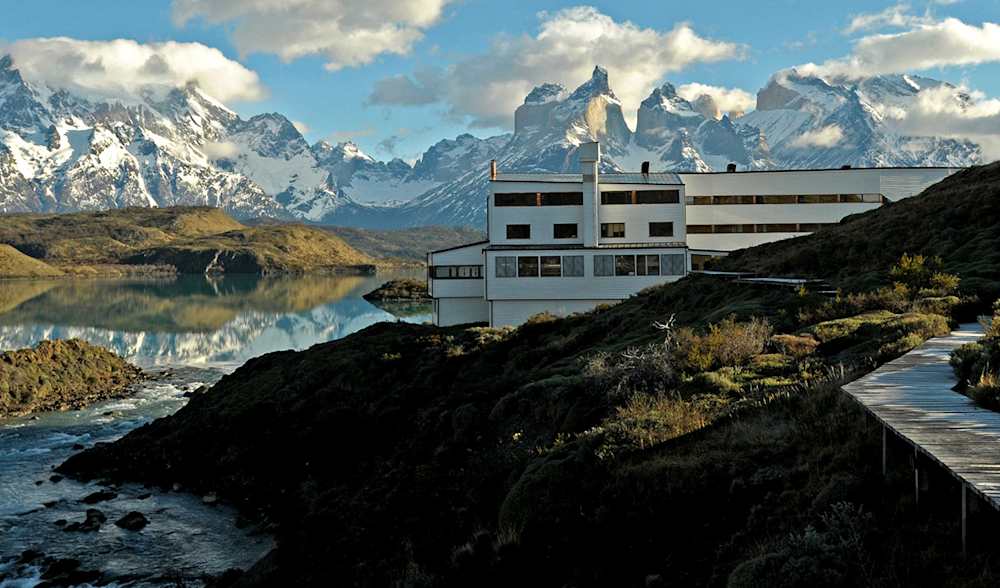
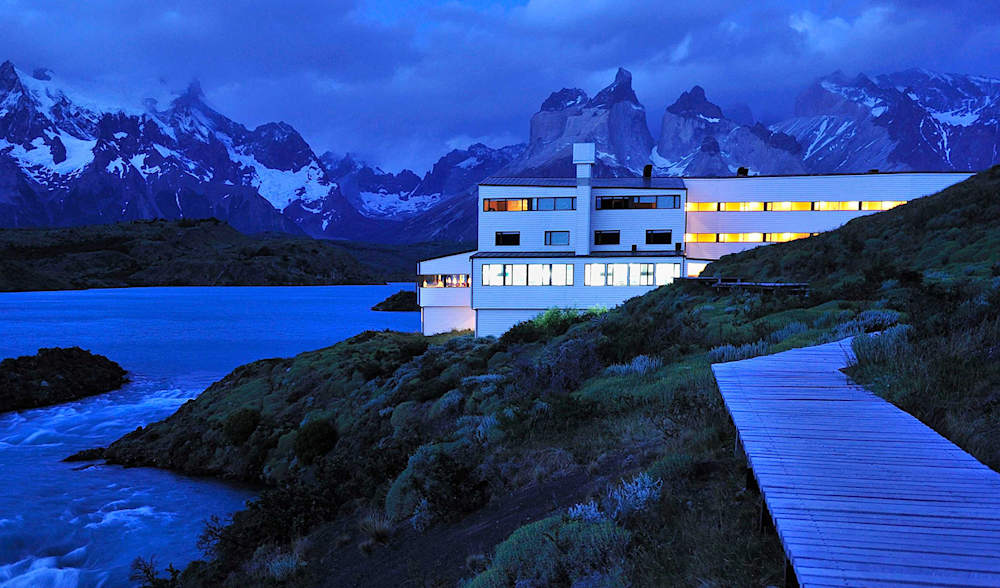
Autumn colours smoulder on the native beech trees; crimson and amber beacons leading us along the national park’s dirt roads. A month ago this foliage would’ve been at its fiery peak, but the woodland still sings in sharp contrast against the snow-mottled summits and glacial lakes; copper against silver. On the two-hour drive to our hotel, my husband and I pass a grand total of three cars.
It comes as a jolt, then, to find Explora Torres del Paine’s lobby unexpectedly busy. Everyone’s shrugging off fleeces, easing aching legs onto sofas and comparing notes from the day’s excursions. ‘All 49 guest rooms are fully booked,’ beams guest experience manager Nicolas. Just as I start to fret that my travel plans aren’t that original after all, he points out this is almost the sum total of people staying in the area right now, whereas in high season (November to March), thousands of visitors would be filling its many campsites and refugios. Monthly visitor numbers swell dramatically during these months. For the lucky few staying at Explora during off-season (May to September), however, the national park becomes more like a private estate.
With first-day-of-summer-camp enthusiasm, my husband and I dive into the lodge’s bulging ring-binder of excursions. There are almost 50 options, covering four different habitats. It’s an overwhelming variety to shortlist for our three-day stay, but there’s one thing I can’t miss — something large, grey, majestic and deeply emblematic of Patagonia. No, not a mountain: a puma.
Searching for ‘mountain ghosts’
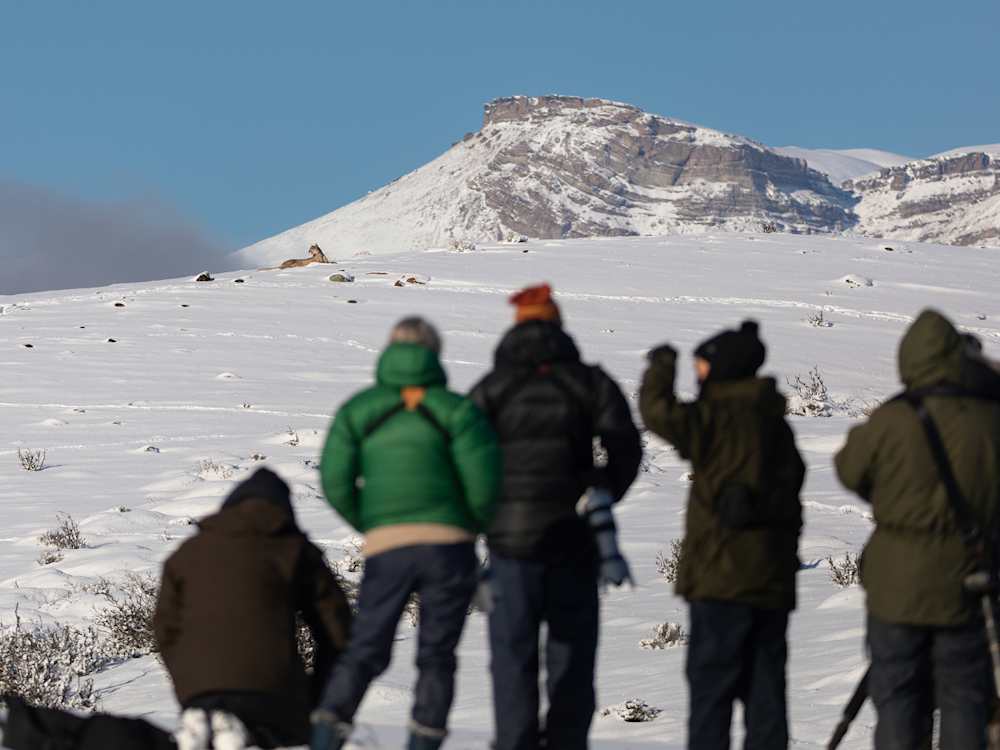
Image by Cristian Asun
Seeing these big cats has been on my bucket list ever since David Attenborough’s Dynasties II aired in 2022. Torres del Paine may have the densest population of these felines anywhere on Earth, but that means fewer than 200 individuals roaming across 561,600 acres. No wonder they’re known locally as ‘mountain ghosts’.
If anyone can find them, it’s local wildlife specialists and luxury-tour operators Magellania. Hopping into a 4×4 with naturalist Cristóbal, we head out on an hour’s drive north-east to Estancia Laguna Amarga, a former sheep ranch turned conservation reserve where Attenborough’s BBC crew captured their footage. The landscape unfurls into wide-open plains of golden tuft grass and thorny shrubs. This is the Patagonian Steppe — technically a desert, but herds of guanacos (a larger relative of llamas) provide plenty of food for the puma population.
‘It’s possible to see pumas here all year round, but autumn and winter give us more opportunities,’ Cristóbal explains, as we hop out onto a rocky outcrop and start scanning the terrain with binoculars. ‘Imagine when it’s super-hot: the puma’s going to shelter under a bush or a cave. Then how will we see them? It’s the same with the wind. We get gusts over 75 miles per hour in summertime and just like your cat at home, pumas don’t like to go out hunting in that.’ He adds that shorter daylight hours mean visitors don’t need to wake up at 3am (or stay out until 9pm) to catch these crepuscular predators in their most active twilight hours.
‘As well as looking, we need to listen,’ whispers Cristóbal. ‘Guanacos vocalise when they sense danger.’ Tell-tale bleating alarms would be a promising sign, but the herd we’re watching seem to be grazing contentedly. Next, we hike down to the lakeside, where ancient reefs called thrombolites are riven with puma-sized hiding holes. While they’re empty today, across the damp black sand, we find our first promising sign: paw prints. Even more excitingly, they’re running parallel to two sets of tiny, cub-sized tracks. Cristóbal says we must be on the trail of a puma named Escarcha, meaning frost, currently the estancia’s only nursing mother.
At the edge of the beach we lose the trail (‘That’s another thing about deep winter: snow lets us follow prints across the steppe,’ Cristóbal notes) and relocate to an area of black bush known to be a favoured hunting ground. It’s a veritable guanaco graveyard, with femurs, skulls and vertebrae strewn around, but no sign of anything living except a vulture circling high in the cloudless sky. Just when I’ve quietly given up hope, Cristóbal’s radio crackles. There’s a jubilant note in his colleague’s voice. Even with my pitiful Spanish I can recognise the words ‘rio’ and ‘rápido’.
We find the puma family on the banks of the Paine River. As Escarcha slinks along the opposite bank, looking for a safe place to cross, her pale silvery coat shimmers in the waning sunlight. It’s easy to see how she got her name. Behind her, a pair of cubs, around three months old, pounce and tumble around a fallen log. Beneath my binoculars, joyful tears are pooling.
A taste of the W Trek
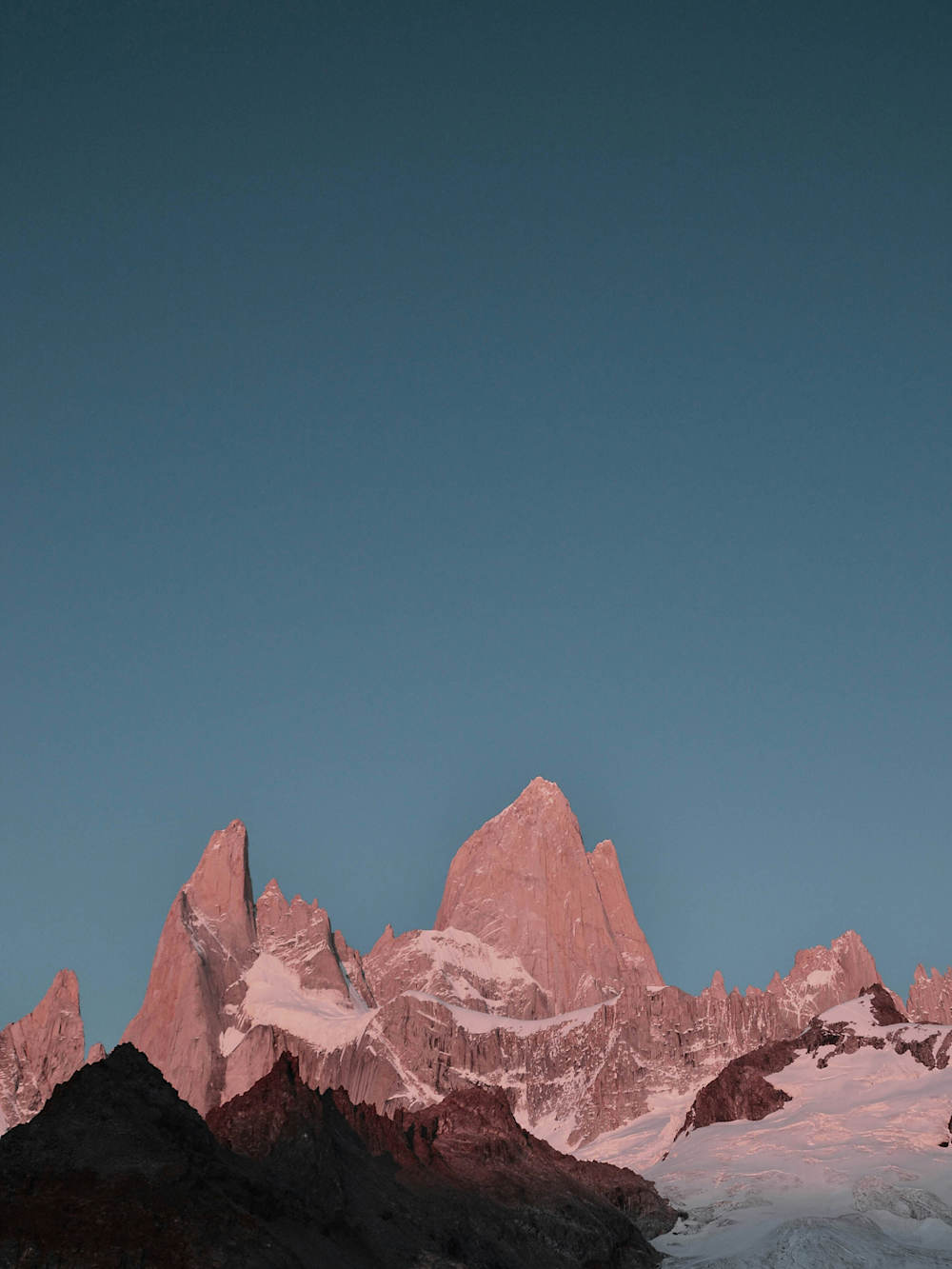
Back at Explora, in-house guide Javi decisively taps a finger on the map of the park that’s spread on the table between us and says, ‘It’s got to be the French Valley.’ He’s listened to our hiking criteria: challenging but not too steep, a mix of habitats, a glimpse of glaciers. He says this 11-mile route, one ‘stem’ of the famed W Trek, fits the bill. ‘In high season, the W gets super crowded, so I’d say maybe pick something lesser known,’ Javi says. ‘But you have to take advantage of being here at such a calm time.’
It’s still dark when we depart at 8.30am. Flashlights guide the captain of Explora’s motor launch across the Stygian gloom of Lake Pehoé. Sunrise arrives an hour later and it’s worth the wait: a sliver of light reveals the highest white-capped ridges, then turns the slopes rose-gold, before illuminating tawny undergrowth dotted with bright-yellow Calafate bushes. But we have to admire it on the trot: there’s only eight hours of daylight ahead.
As our route gently undulates through pre-Andean shrubland and dense beech forest, and curves around lakes, our conversations with Javi are just as sweeping, moving from the metaphysical (‘Can plants think?’) to the profane (‘Look, fox poop! You can tell from the berries.’). Paine, I learn, is pronounced ‘pie-nay’ and means ‘blue’ in the indigenous Tehuelche language. Aside from a woodpecker, a pygmy owl and a single Explora group in the distance, the trail seems to be ours alone. It’s hard to imagine it in January when up to 1,000 daily visitors bustle along it each day.
We cross a river, then clamber onto boulders in the French Valley. It’s a natural amphitheatre with several headline acts: Los Cuernos (the Horns), a multi-pronged massif, looms on one side; opposite is Cerro Paine Grande, the park’s tallest peak, with glaciers hanging off its sheer sides.
The latter steals the show when thunderous rumbling starts up, followed by cascades of snow spilling from its summit. The first boom almost makes Javi spill the Thermos of pumpkin soup he’s brought for lunch. ‘That was a big one!’ he cackles. ‘Avalanches happen in Torres del Paine year-round, but as we move into winter the frequency and the scale goes up.’
Back in Explora’s lounge, over Pisco sours laced with Calafate berries, I chat to my fellow off-peak enthusiasts. It turns out they’re mostly on specialist photography tours. Of course, this landscape is photogenic whatever the month — the hotel has views of the soaring Paine massif — but as one American snapper tells me, the summertime crowds and notorious winds kick up dust and spoil pictures. Shorter winter days bring low, diffuse light, extended golden hours and vivid sunsets. He points towards the windows. Reflected on Lake Pehoé’s mirror-like surface, the 8,000ft granite peaks appear as sharp as knives, slicing into neon bands of cloud.
Embracing cowboy culture
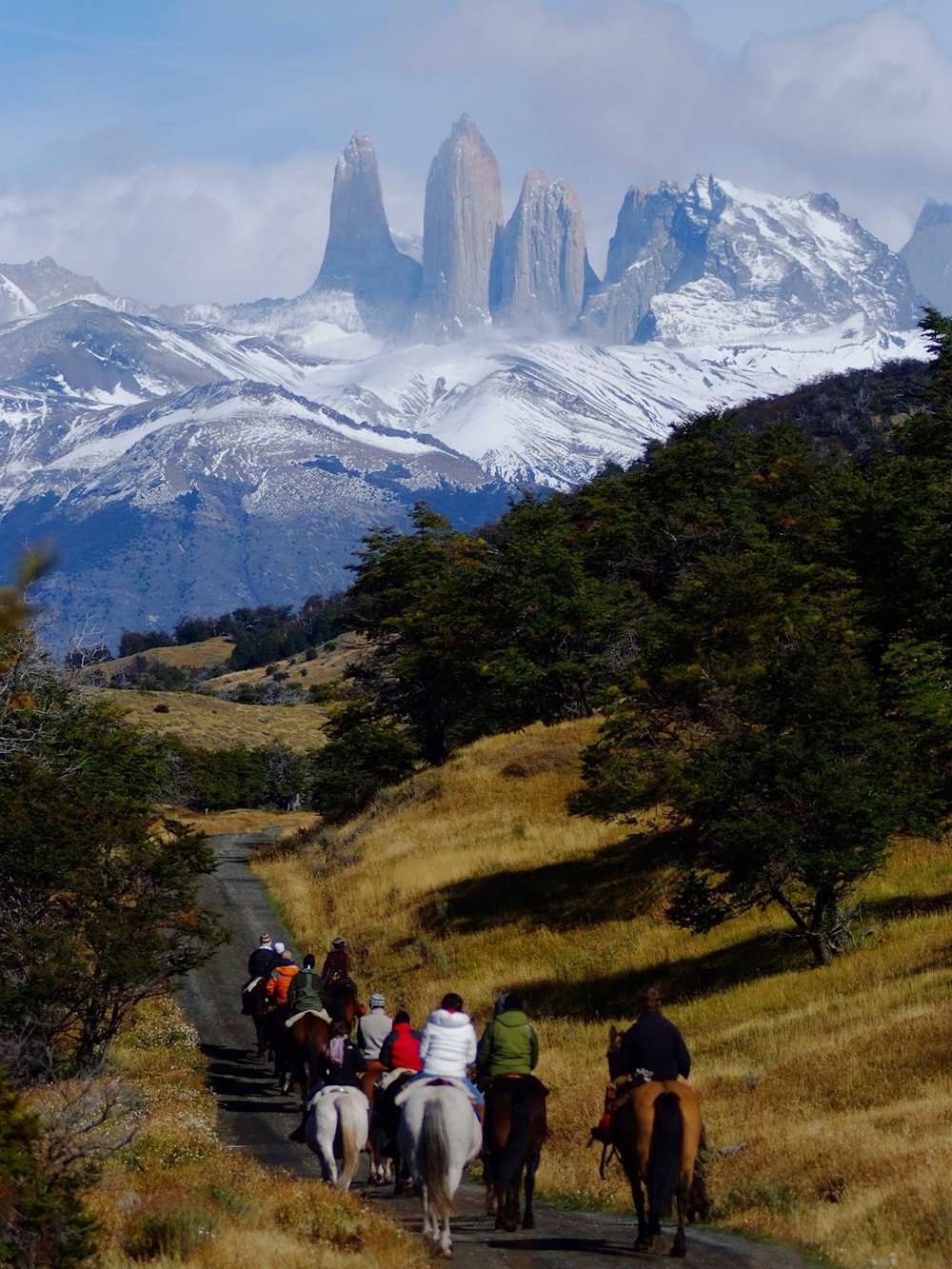
Patagonian winter isn’t all ‘bluebird days’. On our final morning, the weather turns; a chill mist seeping through the valleys. From Explora’s private stables we ride out into a Gothic film set, with tendrils of Spanish moss and lichen trailing from the linga branches, and frozen mud crackles beneath horseshoes. Pale-grey lagoon melds into sky, against reeds like streaks of rust. The screeches of Southern lapwings carry hauntingly across the marshes.
Leading the hack is a baqueano, the name for a kind of Patagonian cowboy renowned for their wayfinding and wilderness expertise. They don’t ride any old horses — their mounts are a hardy, thick-coated native breed called criollos. My mare, Décima, doesn’t hesitate when our route crosses straight through the lagoon. Icy water isn’t going to faze her. The same can’t be said for the gringo on her back; I flex the stirrups and pray it stays shallow (cold plunges aren’t my bag).
Décima’s chestnut flanks are insulated by a traditional recado saddle made from layers of blankets and sheepskins. We all need wrapping up on this cold day: after two hours, I’m squeezing my gloved hands into fists around the reins to stop my fingers going numb.
A wood-fired antique stove and whistling kettle are a welcome sight back at the stables. Herbal drink mate is mixed in a dried-out gourd and passed around; this caffeinated brew has long sustained baqueanos through harsh winters. As I take bitter, belly-warming sips, my mind drifts to pawprints pressed into black sand, coppery forest canopies and pin-drop-quiet plains. Near-empty trails might be the main selling point of off-peak Patagonia, but its magic, I now see, runs far deeper than that.
At a glance: how to enjoy Patagonia’s best-kept season
Temperature ranges in May–September: Expect 0–10°C (32–50°F) during the day, with overnight lows frequently dropping below freezing.
Travel time from Puerto Natales: The drive from the airfield to Explora Torres del Paine takes around two hours.
Guide requirements: From 1 May to 31 August, a CONAF-certified (Chile’s National Forestry Corporation) guide is mandatory on the park’s primary trail networks.
High season vs low season: With longer days and warmer weather, high season (December to February) is ideal for multi-day treks, solo hikes and camping — but be prepared for crowded trails and high-speed winds. Low season (May to September) offers an all-round calmer experience and is considered the best time for wildlife-watching and photography. Accommodation and services are more limited, with many lodges closing for winter.
Discover more of the hotels in our Chile collection, go on a ‘coolcation’ in Chilean Patagonia, or head over to Argentine Patagonia next