



The UK’s capital is an old soul, layered with stories down to its Roman foundations. Its hotels in particular — with their ebb and flow of guests and hidden-away happenings — have some of the wildest tales to tell, especially those housed in the grandest of former residences, frequented by the famous and high-spirited, or open to a select few. We’ve sought out London’s most legendary hotels and found a trio with often surprising, sometimes scandalous pasts.
THE PORTOBELLO HOTEL
Notting Hill
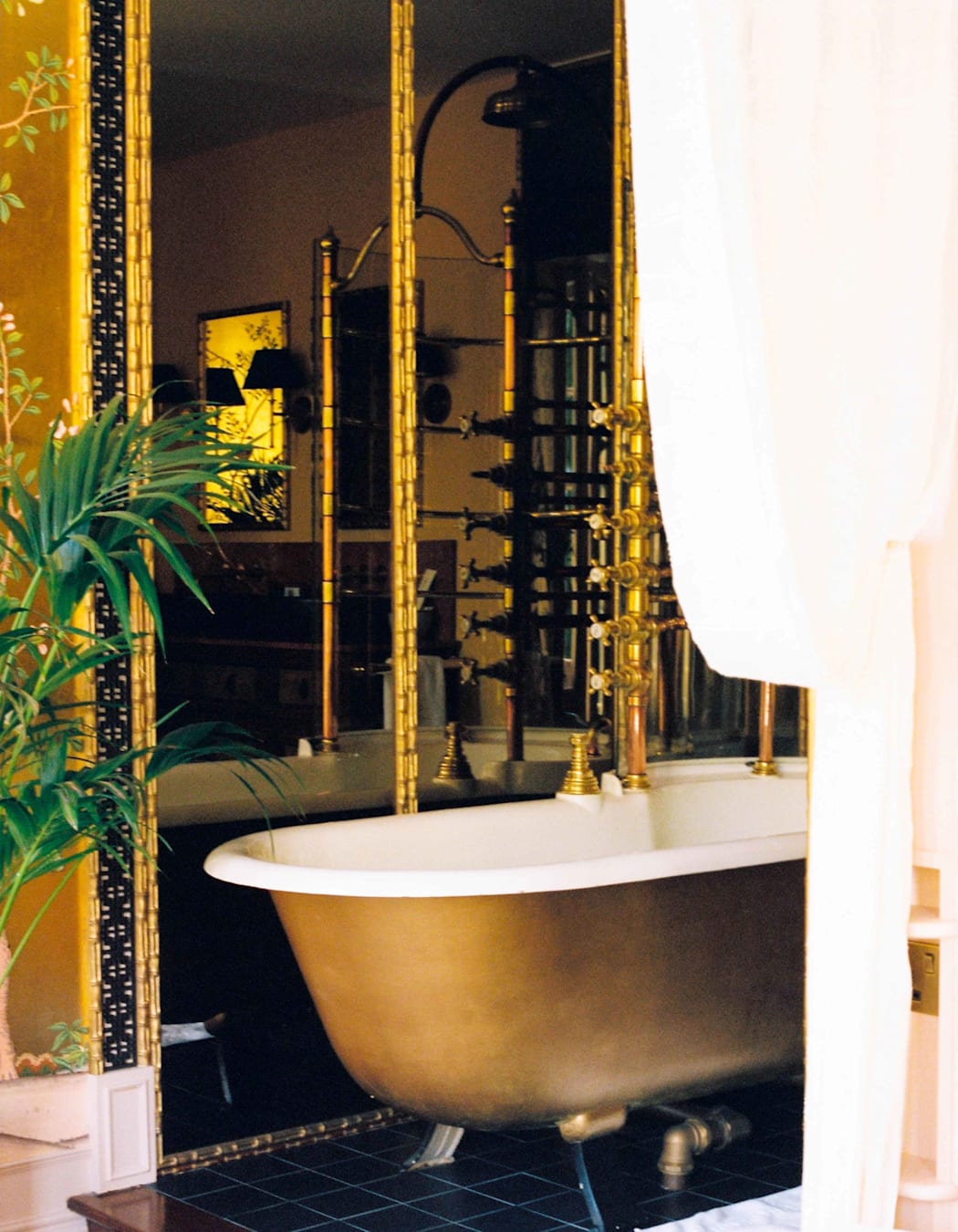
Set on Kensington’s Stanley Gardens, behind a prim neoclassical Victorian façade Richard Curtis fans will recognise, The Portobello Hotel looks more like a ‘send the children up to the nanny before serving tea’ sort than a sanctum for rock ’n’ roll casualties. But inside, walls scream with outlandish stories and the extrovert decor is inspired by Notting Hill’s time as a hive of bohemia. Its legends outstrip its modest 21-key size, but it’s this intimacy that seems to encourage guests to let their guard way down. The hotel’s genteel street was developed by indigo trader Charles Blake in 1853. He couldn’t possibly imagine that No 22 would become a stay ‘to serve the rock ’n’ roll fraternity’ (as a local newspaper put it) in 1971, but the building had eventful former lives, too: as a spy-training centre and Labour party headquarters. Then it found itself amid a cacophony of musical activity, close to Virgin Records, Rough Trade and Honest Jon’s offices; in caterwauling distance of Westbourne and Basing Street studios; and gig venues such as the Troubadour and Elgin.
Free-spirited entrepreneurs Tim and Cathy Herring founded the hotel, enlisting Julie Hodges — interior designer for Biba — to swathe rooms in hippie glamour (the Herrings’ famed Notting Hill restaurant Julie’s, still a much-loved local hangout, was named for her); while managing partner Johnny Ekperigin tailored service to those with louche tastes and extravagant funds, priding discretion above all. However, stories did leak out, like the 36 bottles of champagne Johnny Depp and Kate Moss allegedly filled Room 16’s bath tub with, only for a maid to unwittingly pull the plug. One hopes housekeeping were handsomely tipped, because the ‘Jules Verne Fantasy’ bath and shower — a brass ribcage of a contraption, said to bathe four at once — was also where Alice Cooper’s pet boa slept and was fed mice from the local pet shop. Another guest’s parrot cat-called locals in Cockney slang; and director Tim Burton reportedly flooded his floor, jumping from bed to bath — Disney footed his £2,000 bill for the damage.
There’s no room for an entourage, but check-ins have included the Sex Pistols, U2, Guns N’ Roses, and a cohort of Britpop bands; that is, after Damon Albarn was pouring pints behind the now-gone basement bar in 1988, where Siouxsie and the Banshees, Marc Almond, George Michael, Mick Hucknall, Seal, Naomi Campbell and the odd magician or escapologist might have sunk a drink next to you — but it’s always been the done thing not to blink an eye. Even David Bowie stayed under the radar, only ID’d by a thank-you card humbly signed ‘DB’.
The Rolling Stones drew more attention to themselves, Keith ‘borrowing’ a chair, later recognised in a photoshoot, which was swiftly returned, no questions asked; and Mick promising coffee to a fellow guest only to go socialising in the neighbourhood while they waited ‘forever’ for their breakfast. Robbie Williams was unsuccessful in his offer to buy the round bed in his room. Tina Turner was so taken with the hotel, she bought the house next door — sadly, the table she danced on and marked with her stilettos at Julie’s was stolen in 2015. Dan O’Bannon wrote the script for Alien here, the ‘chest-burster’ scene supposedly inspired by his claustrophobic, pink attic room. Van Morrison lived nearby, but would often check in for months at a time to pen songs; and Francis Ford Coppola used it as a writing retreat. You may hear ghostly keyboard tapping from a frustrated anonymous writer who left an unfinished manuscript in a room, though the spirit involved is more likely the honesty bar’s Portobello Road Distillery gin.
In 2014, the Curious Group’s Peter and Jessica Frankopan bought the hotel. Fans of storied stays, they also run the 17th-century Canal House in Amsterdam and L’Hôtel, Paris, where Oscar Wilde quipped he was dying beyond his means. The Frankopans’ redesign of The Portobello respected the hotel’s history — by that we mean it still looks like William Morris and Keith Richards went on a bender and rampaged through de Gournay and some antique shops — and its exotic murals, statement beds, and ample use of paintbox and pattern stir something in guests beyond aesthetics. Nowadays The Portobello is more refined than rakish — and less inclined to check in exotic animals — but it’s still decadent and discreet enough to ask for a lavish bubble bath, test outrageous requests and maybe size up that statement piece for your suitcase.
CHATEAU DENMARK
Soho
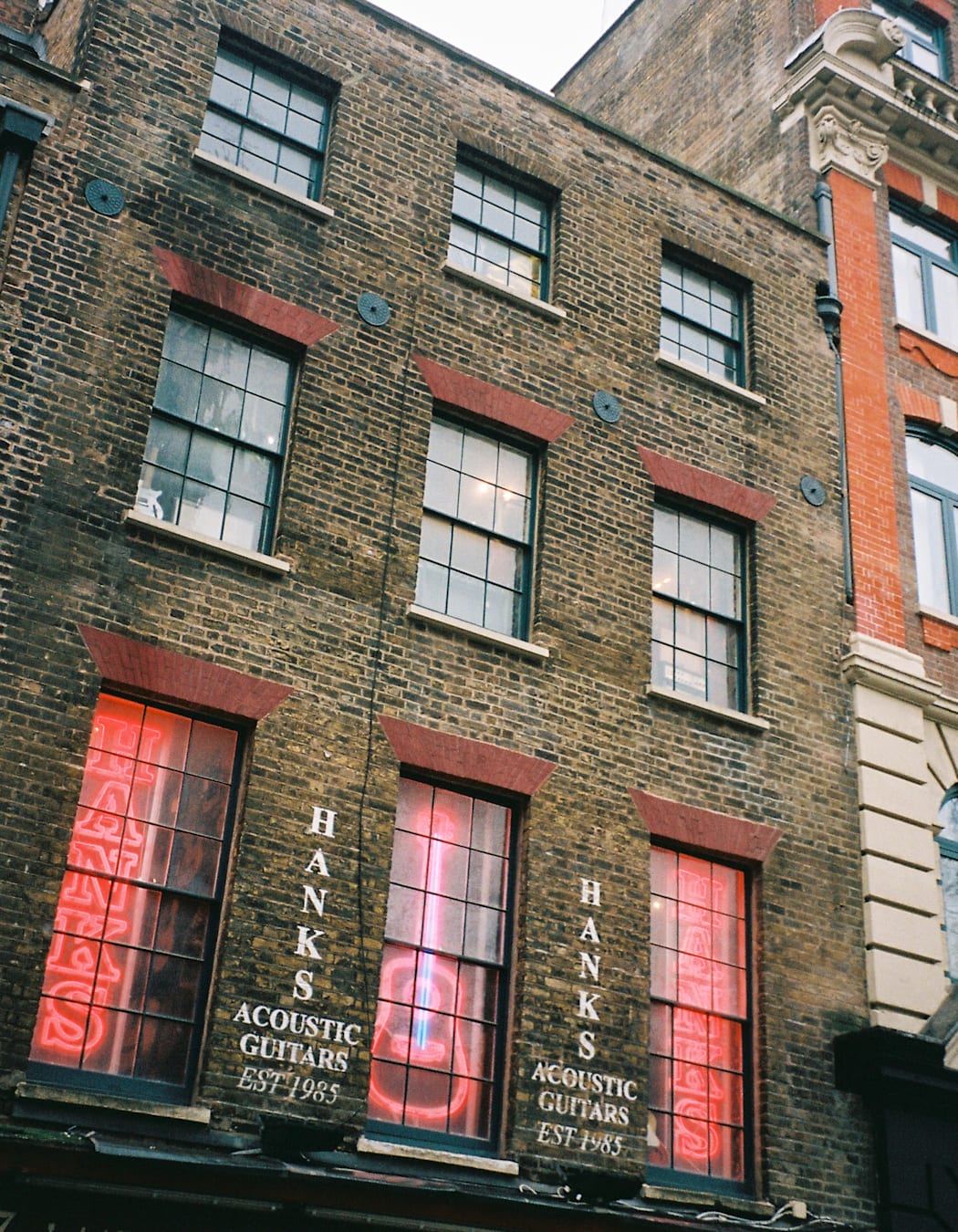
Rock stars (or aspiring ones) in need of somewhere to pass out should head to Chateau Denmark, a hotel with apartments, which isn’t just as central as can be, steps from Tottenham Court Road Tube station, but also occupies 16 buildings along and around Denmark Street, the capital’s musical nerve-centre throughout the 20th century. Its rooms and apartments embrace the surroundings’ urban glamour: some punk in attitude with spray-painted headboards and original artwork by Jamie Reid (designer of the Sex Pistols’ logo and the cover of their God Save the Queen single), while some rock a Retrofuturist or mod-Gothic look. They’re primed for a fun time, with DJ ports, mirrored ceilings and walls, neon signs or claw-foot bath tubs begging to be filled with ice and bottles. But what makes it so special is the chance to snooze amid centuries of landmark music moments.
Before the street’s Grade II-listed brickfronts were rattled by the Sex Pistols recording their Spunk bootleg, and young hopeful David Bowie — then David Jones, with his band The Lower Third — lived in a converted ambulance parked outside La Giaconda café at No 9 (now home to the hotel’s Townhouse Apartments and a Flat Iron restaurant), it welcomed misfits and trouble-makers from the very start, when Denmark Street was part of the grounds of still-standing St Giles in the Fields church. Highwayman Claude Duval was swarmed by female admirers on his way to the gallows, hundreds of years before Britain’s biggest bands attracted crowds of fans; and there have been inventors and visits from Casanova and Karl Marx over the years too.
At No 4, the Kray twins learnt how to tapdance. It’s now home to Chateau Denmark’s Lofthouse Apartments and Regent Sounds, a tiny studio where The Rolling Stones recorded their debut album. It was cheap and lo-fi, insulated with egg cartons, but witnessed stratospheric recordings by Bowie, Elton John (who started his career as an office boy at No 5), The Who, Tom Jones and more; but it’s also where The Jimi Hendrix Experience were booted out for being too noisy. When Abbey Road Studios was booked up, Paul McCartney recorded Sgt. Pepper’s Fixing a Hole here, during which a man claiming to be Jesus knocked on the door; the Beatle invited him in for tea, not wanting to potentially risk upsetting the Saviour. At No 5, the New Musical Express (NME) magazine launched in 1952, creating the first ever top-10 chart, while No 6 was home to the design studio Hipgnosis, known for creating Pink Floyd’s Dark Side of the Moon album cover, and artwork for Zeppelin, Black Sabbath, T Rex and many more.
A rowdier bunch lived next door: behind No 6 is a heritage artisans’ workshop that Malcolm McLaren rented for the Sex Pistols in 1975. The band were notorious for riotous rehearsals and partying, and Johnny Rotten scrawled cartoons over its antique walls, now ironically preserved by English Heritage, which Rotten himself, unsurprisingly, finds ‘a joke’. The I Am Anarchy apartment is Chateau Denmark’s most unique, with Rotten’s drawings intact, plus a replica of Steve Jones’ Gibson Les Paul and an original Vivienne Westwood rug. When they moved out, the tenancy went to a band on the other end of the musical spectrum: a young Bananarama. Music publishers Box & Cox who gave the world I’ve Got a Lovely Bunch of Coconuts were at No 7; just one of the many successes of the street’s years as Tin Pan Alley (1911–1992), which gave us wildly diverse ditties, from The Lambeth Walk to Try a Little Tenderness, to theme tunes, hymns and ad jingles. Later, the building was home to gangster Ronnie Knight’s Tin Pan Alley Club, where Primal Scream would hang out alongside the proprietor’s wife Barbara Windsor and shadier sorts.
Across the road in numbers 21–26 there are more apartments and yet more stories to tell. Way-before-their-time ‘Digital jukebox’ company Cerberus invented a music-downloading platform in 1994, seven years before Apple launched iTunes; and Acid Jazz Records launched in the 1980s, signing the Brand New Heavies, D* Influence and Jamiroquai. Former owner of most of the instrument shops on the street, Cliff Cooper, unsuccessfully tried to sell Tina Turner a nuclear bunker; and in Shaldon Mansions, history was made when The Beatles helped to found Northern Songs publishing, ensuring fairer royalties for songwriters.
Denmark Street has witnessed many musical landscape shifts since the 17th century, when the marching song Lilliburlero (a tune so popular, it was credited with dethroning King James II) was penned by resident Lord Thomas Wharton — the street’s first brush with songwriting greatness. There may be fewer instrument shops and studios these days, but it still strikes a chord with music lovers, then adds an audacious riff, especially with the Chateau’s roster of gig and DJ nights, which involve talents from guitar shops Wunjo, Hank’s and No.Tom, lively collabs and party nights; and all you need back in your room (well-stocked bars, a top-tier Void and Artcoustic sound-system) to keep the mood turned up to 11.
DEAN STREET TOWNHOUSE
Soho

Dean Street Townhouse seems demure, but Soho’s sauce has rubbed off on it over the years. In the 1920s, it was where the Vanderbilts, Rothschilds and Mountbattens would scandalously mix with Noël Coward, Virginia Woolf, TS Eliot, George Orwell, Francis Bacon, Lucian Freud and more, all members of the Gargoyle Club, which occupied the hotel’s top three floors. But centuries before the club introduced a policy of offering the ‘deserving artistic poor’ cheaper membership fees in order to ensure a lively bohemian feel, the address was where high and low fortunes collided. King Charles II’s mistress Nell Gwynne kept a house here in the 17th century; in the 1960s she was dubiously honoured by having the on-site strip club named after her, perhaps the reason her ghost hangs mournfully around, accompanied by a waft of gardenia scent.
It was a home to viscounts and baronets then became a printing works; the floors’ ability to withstand heavy equipment one of the reasons why the club’s founder David Tennant (no relation to the Dr Who actor) found the building fit — it would endure even the most rowdy dance crowds. Tennant, and his actress wife Hermione Baddeley, were products of a post-World War I burst of cultural and sexual freedom — him the son of Lord Glenconner, with much disposable fortune and a love of fast living (a trained pilot, he broke the track record at Brooklands and won gold thrice for the British bobsleigh team in Canada); her upwardly mobile and socially vibrant; both the epitome of the era’s Bright Young Things.
No expense was spared on the club: there were gilded ceilings, an antique-filled Tudor-style room, indoor fountain, rooftop garden, Moorish ballroom, moveable stage and showpiece brass-and-steel staircase, designed by the French artist Matisse, whose works The Red Room and The Studio and Quai St Michel also hung in the club, both sold to Tennant for the low sum of £600 (estimated to be worth hundreds of millions today). It was also Matisse’s idea to buy mirrors from a derelict château and line the walls with the glass…a mosaic effect patrons found pleasant until they’d had too much gin. The investment paid off, with more than 300 figures from the arts, literature and society riding the tiny death-trap lift up to attend the launch and join up for four guineas a year (around £1,700 in today’s money; membership for Dean Street Townhouse is from a comparably reasonable £1,300 annually).
Come evening you’d find guests openly enjoying opium or cocaine, clinching with paramours of either sex in a corner; poet oracles reading aloud; Tallulah Bankhead flirting outrageously; Prince Edward jitterbugging; Somerset Maugham, John Betjeman and Graham Greene drunkenly ping-ponging book ideas off one another; and Matt Pritchard — Tennant’s mysticism guru — preaching alternative philosophies. This raffish rabble attracted shadier characters too, including double agents for MI6 and the KGB, and supporters of National Socialism who fell on the wrong side of history hard post-World War II. The club closed at the start of the war, with Tennant lamenting, ‘We shall never be laughing inside the Gargoyle again’, but the show went on, with the owner sending himself cases of wine from its cellar to his posting at Blaise Castle, and parties and readings being held as bombs fell around 69 Dean Street. After the war, the crowd shifted, but stayed wild: Dylan Thomas would steal both his host’s clothing and wine from fellow guests, which he drank from his shoe (an ineffective thievery, as there was often a hole in it); Fred Astaire brought Hollywood sparkle; and Lucian Freud began dating David and Hermione’s daughter in between bouts of gambling, being hit on by Jean Paul Sartre and getting inebriated with friend Francis Bacon. In 1952, with the club’s popularity waning, Tennant sold it for £5,000.
Throughout the 1960s and 1970s it was a stripclub by day, then became The Comedy Store in the 1980s, which launched the careers of French and Saunders, Rik Mayall and Alexei Sayle, among others; and what’s now the kitchen for the house’s elegant restaurant had a goth makeover (plus performances from Robert Smith, Nick Cave and other gloomsters) as the Batcave nightclub. How fitting that a club for the ‘tieless class’ has brought Tennant’s vision of ‘somewhere the Sitwells would feel at ease and not perfectly at ease’ full circle in Dean Street Townhouse, which opened in 2009. Most outrageousness is kept safely under lock and key these days, but there are still cocktail-driven nights (and spirits, shakers and other kit in each room for all-nighters), guests who check in for months at a time to enjoy Soho’s frenetic fun, and great boundary-crossing company.
Uncover the stories of the legendary hotels in LA or lean into London’s nightlife scene with our pick of the capital’s best hotel bars