



I’m halfway through a sunrise yoga session at Our Habitas Namibia and my attention is wavering. As much as the instructor’s gentle flow sequence is exactly what my body needs after yesterday’s 10-hour flight, the insane backdrop makes it hard to ‘lower my gaze’. Giraffes strut across the grassy bushveld, looking as tiny and delicate as porcelain ornaments from our open-air hilltop deck. Frenzied squawking drifts up from a thicket of acacia trees. Baboons, perhaps. Sneaking an eye open, I spy a hyena lolloping away from the scene. The next thing to snag my attention, however, doesn’t come from the game reserve below but instead the nearby kitchen hut: the aroma of spices. Come on, focus, breathe. But now some elephantine rumbles are emanating from my stomach and all I can think about is breakfast.
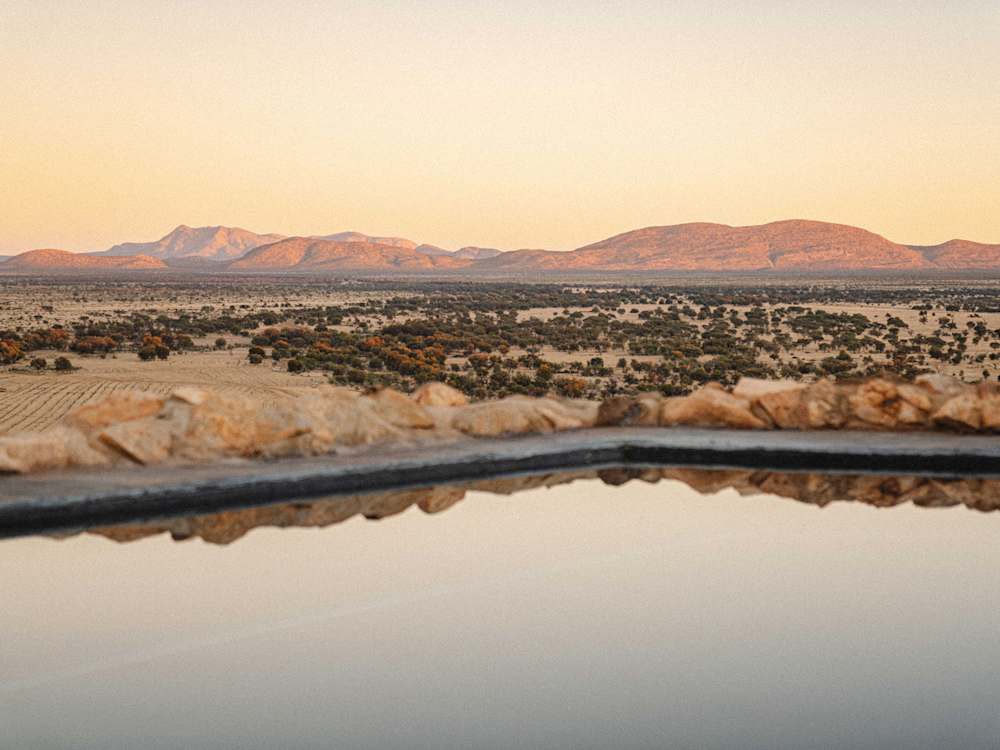
Wildlife-related distractions are to be expected in a yoga class with 360-degree savannah views. Food, on the other hand? That’s typically been an afterthought in safari camps. At Our Habitas, however, we survey the daily set menu with almost as much excitement as spotting the resident pride of lions. Their rustic-yet-refined meals might start with maize chips dipped in chilli jam or brinjal (aubergine) flatbread with crispy sweetcorn. For my omnivorous companion Dr Smith, there’s a novel line-up of local game — kudu carpaccio, pepper-crusted oryx sirloin, eland filet with roasted vegetables — before homemade desserts spiked with bushveld botanicals, like camelthorn tiramisu and rooibos panna cotta. As for that smoky, spicy scent from breakfast time: that was Kapana, a much-loved Namibian blend of coriander, paprika, chilli flakes, thyme and more. While it’s traditionally rubbed onto grilled meat, in this case it gave a kick to our baked eggs.
Our Habitas isn’t alone in deciding meals on safari can offer more than mere sustenance between Big Five sightings. Across sub-Saharan Africa, a growing number of camps are flexing their foodie credentials. Sure, immersive dining experiences have always been part of luxury safaris — I’ll never forget my first bush breakfast in Kenya, the guide laying out cake and coffee on the bonnet of the Land Rover while rhinos grazed nearby, but the focus was on the setting rather than stand-out cuisine. Conjuring imported ingredients and Western haute cuisine in the wilderness was the badge of honour for ambitious in-house chefs. Happily, though, they’re now showcasing more of their own heirloom produce and beloved national recipes. After all, smoked salmon has no place in the middle of the savannah.
‘There’s a strong move towards using more regional ingredients,’ observes Simeon Nghipandwa, Resident Chef at Namibia desert camp Wilderness Little Kulala. He reels off some of the country’s seasonal staples: Omajova mushrooms, which grow on termite mounds after the first rains; aloe-plant flowers; ombidi (wild spinach); marula-nut oil. He’s gently introduced many of these into Little Kulala’s menus, including chicken potjie, a spicy stew slow-cooked in a cast-iron pot, with oshigali (cowpea purée) and a drizzle of marula-nut oil. While a couple of their local delicacies, like mopane worms, ‘may be a little too adventurous for some palates’, he acknowledges with a laugh, the message they’re getting from guests is clear: ‘They want to experience the country through its food, not just its landscapes. This is important because it strengthens local economies and helps preserve culinary heritage.’
A safari may well be your first brush with regional African cuisine. Take my trip to Matetsi Victoria Falls a few years ago — while it was the promise of bush walks, sunset river cruises past hippo pods and seeing one of the seven wonders of the world that spurred my visit, the tastiness of Zimbabwean cuisine was an unexpected win. Its emphasis on wholesome grains like millet and rapoko, fresh wild guava and loquat, and earthy roots such as taro and sweet potato means veggies like me are well catered for. As the lodge’s Executive Chef Mxolisi Alton Ndiweni points out, creative meat-free cooking is crucial for Zimbabwean villagers since ‘protein’s traditionally reserved for important occasions, as livestock are considered part of a family’s wealth’. One of his favourite childhood dishes was his grandmother’s nhopi, a pumpkin-and-maize porridge with goat’s milk and crushed, roasted peanuts for a moreish salty-sweet hit. These days, he’s giving local produce a more globally inspired, elevated spin. The fruit of the baobab trees that grow in the hotel grounds, for example, is turned into ice-creams and salad dressings.
Many next-gen safari chefs are taking a similar fusion-fare approach to strike a winning balance with guests. Across the border in Botswana, the waterlilies that flourish across the Okavango Delta wetlands play a starring role in Wilderness Vumbura Plains’ signature tswii pasta recipe, their stalks pounded into a sauce that’s swirled through homemade rigatoni. At nearby Wilderness Mombo, stand-out dishes include a salad of morogo (akin to spinach), dressed with buttermilk-like madila; and bush tacos stuffed with seswaa (pounded beef). A little further east in Botswana’s Mababe Depression, Wilderness Mokete turns biltong (cured, air-dried game meat) and pap (corn meal) into arancini-esque balls, served with a chilli-and-veg relish called chakalaka.
Rustling up delicious food in such settings inevitably comes with challenges, though. Little Kulala’s location among towering sand dunes in the world’s oldest desert, the Namib, means Chef Simeon’s team must grapple with extreme heat, floods and drought. No wonder Namibian cuisine is ‘hardy, highly seasonal, deeply dependent on rainfall. Crops are grown during the rainy months, then dried for preservation,’ he says.
At Matetsi Victoria Falls, it’s a similar story. ‘Our biggest challenge remains the consistency, quality, and availability of protein and fresh produce,’ says Chef Mxolisi, prompting the lodge to plant its own herb-and-vegetable garden. Asilia Africa has made waves with its very own vertical, solar-powered, hydroponic farm in the heart of the Maasai Mara, which guests from neighbouring Naboisho Camp can tour with the resident chef to pick herbs and taste fresh greens. Wilderness Destinations actively lends a hand to community farms near its Botswanan camps, whether it’s drilling boreholes or sourcing tractors, and buys up produce from local, sustainable food start-ups like Diyoveya Honey, a co-operative led by farmers-turned-beekeepers. Then of course there are the animal-related hazards; monkeys and hyenas have been known to thieve ingredients from Naboisho Camp’s kitchen.

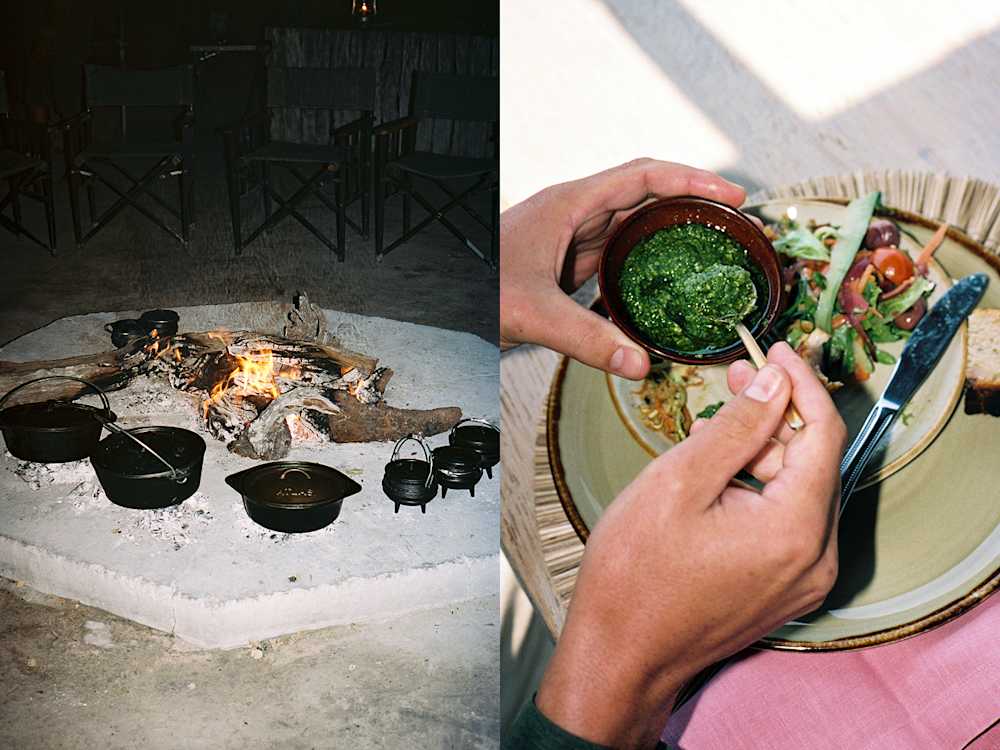
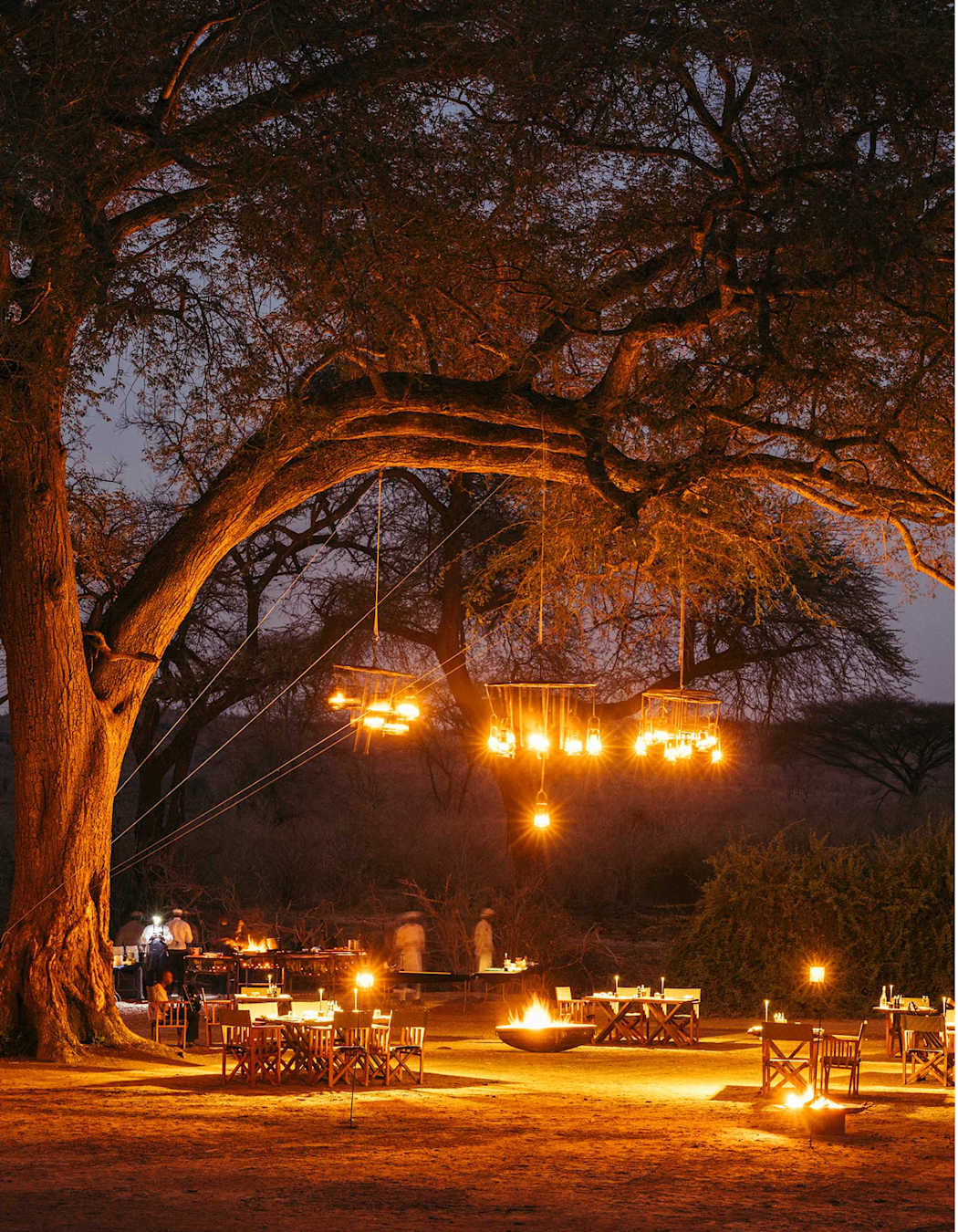
Culinary culture is, of course, as much about how you cook as what you cook. Cue the revival of open-fire gatherings — known as ‘braai’ in Afrikaans — at properties like Wilderness Little Kulala and Our Habitas Namibia. Imagine game meat, vegetables and boerewors (a spiced, spiral-shaped sausage) smoking over the flames while resident guides share ancestral stories and music, before everyone tucks into the feast at a lantern-strung communal table under the stars.
So while wildlife thrills are still the main reason most people will journey to Africa’s remote camps, for live-to-eat types like me, it seems like the one shortcoming of a safari holiday is finally being addressed. I left Our Habitas Namibia with my khaki safari shorts feeling a little tighter and the recipe for the ginger-and-pumpkin-seed ice-cream stored in my phone alongside photographs of giraffes, elephants and rhinos — creatures that seemed to spend most of their time eating, too.
Discover more culinary-focused destinations, or see our full safari collection