



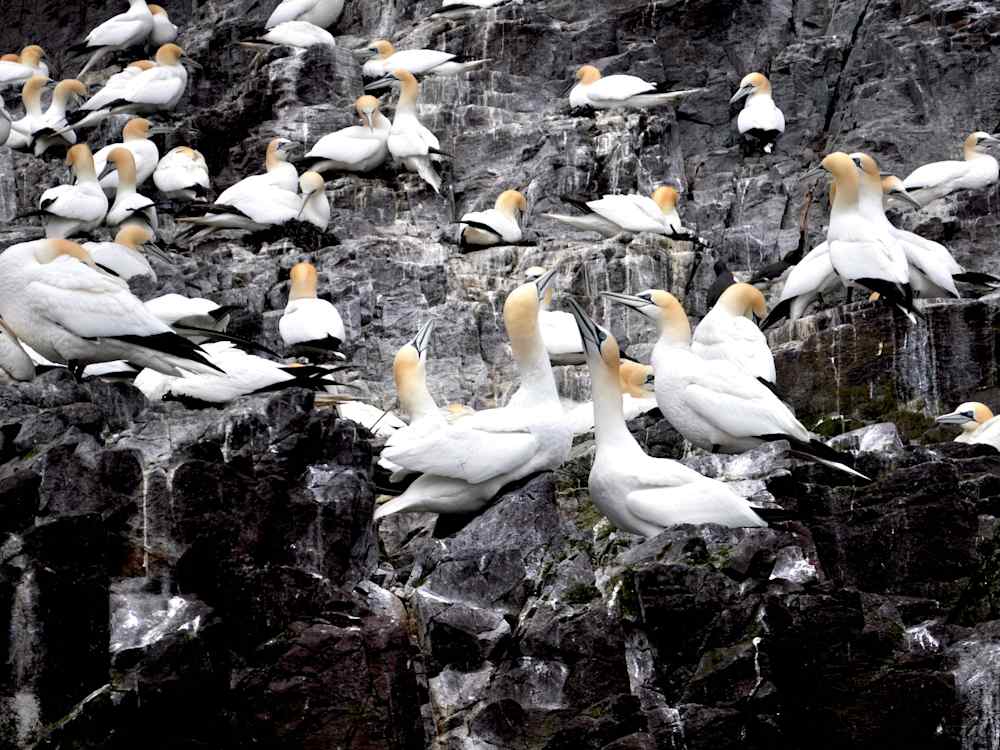
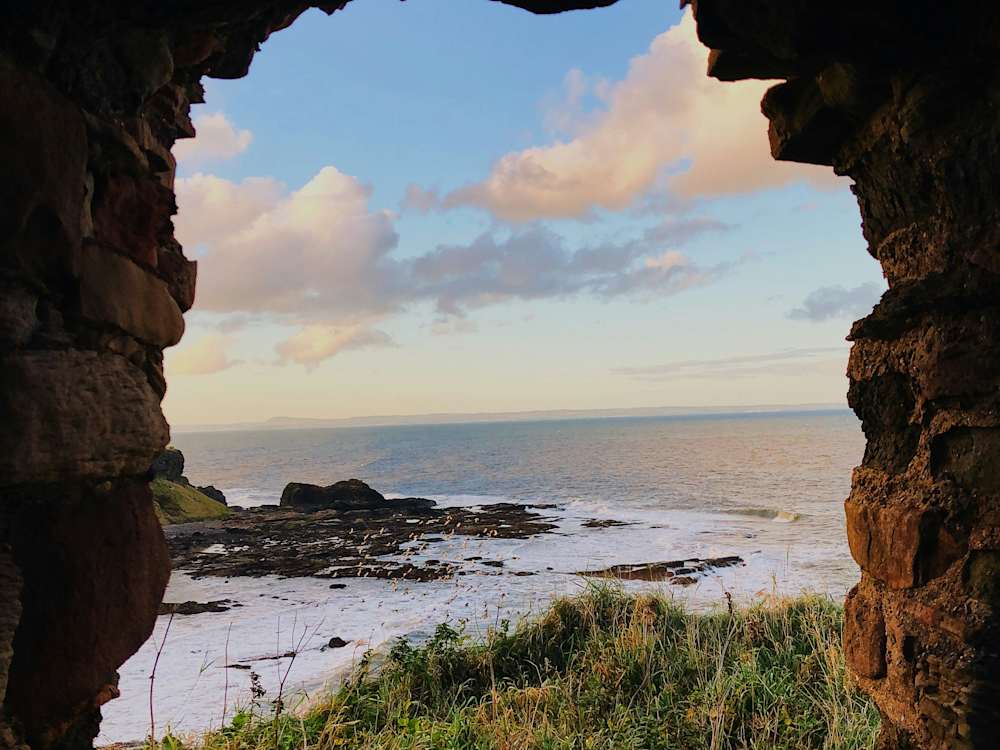
It is 10pm in North Berwick, Scotland, and the light is only just beginning to dim. I’m sitting on a stone wall that borders a sandy beach, overlooking the North Sea. Look east and the next piece of land is Copenhagen; adjust your angle a few degrees north and Norway lays ahead. The wind that was calm earlier this afternoon has picked up pace and is causing the pink wildflowers that grow from the dunes to dance. Three miles out to the sea rises the solid bulk of Bass Rock, the last remnants of an ancient volcano, now capped white with the world’s largest colony of Northern Gannets who roost there during breeding season. The dwindling sunlight races across its flat top, spotlighting its anaemic, craggy cliffs and the outline of a ruined chapel. Beyond it is the sky, a huge, sweeping expanse of Saltire blue.
There are few places in the world that do a landscape or skyline as artfully as Scotland. Mr Smith and I have been travelling to this stretch of the country every June for the past few years. Our lives have changed considerably since our first visit in 2021 — we now have a little Smith in tow — but the summer solstice in this part of the world remains the same.
The days at this time of the year are some of the longest on the British Isles, with skies that never truly darken. We come for the empty beaches, the fresh calamari and waters that on a sunny day look like the Caribbean but feel very much like Scotland. There’s mind-bending scenery, dramatic cliffs and wide sandy shores, but it’s all just a 25-minute train ride from central Edinburgh.
The city is where any exploration of East Lothian should begin. Edinburgh is the best-looking city in the UK; to visit Scotland without paying a visit is nothing short of criminal. For elegance and high-level hospitality Gleneagles Townhouse is the place to stay. The former home to the Earl of Dalhousie and the Bank of Scotland, it’s the stately, cosmopolitan sister to the famed original Gleneagles in Perthshire. The building itself might have historical gravitas, but there’s zero stuffiness within; instead, you’ll find a rooftop bar from which to admire the city, a high-tech wellness studio and a dramatically decorated restaurant.

As Edinburgh old-timers, Mr Smith and I now have favourites we return to each time we visit: Thomas J. Walls for coffee and Guinness cake; Valvona & Crolla for Italian and Scottish deli treats; The Palmerston for its weekly set lunch of the very best local ingredients; and a rifle through the rails at renowned Edinburgh vintage store Armstrongs (there are four across the city, but the Grassmarket flagship is my favourite).
A blustery walk up Calton Hill is always essential, as is a trip to the increasingly buzzy area of Leith. There, brunch is best at Ardfern, where the hash browns have become the stuff of legend. After a mandatory trip to Argonaut Books and an amble along the Water of Leith, we head to Malt & Hops, an 18th-century, no-gimmicks pub with steamy windows and whisky jugs that hang from the ceiling, set on The Shore, a revamped part of Old Leith.
After a night or two in Edinburgh, we board the train to North Berwick — a traditional, pretty seaside town with a growing foodie scene. It’s been a popular holiday spot among the Scots since the 19th century, thanks to its unspoilt sandy bays. Today, it’s steadily attracting a new crowd, pulled in by hotspots such as Steampunk Coffee — a roastery in an industrial setting with a terrace where our little Smith can charge about — and, five minutes’ walk away, Bostock Bakery’s superlatively good pastries (the star of the show is its signature ‘escargot’: a spiral croissant ‘shell’ woven with a chocolate and pistachio paste. A second outpost in East Linton has proved just as popular. Over in North Berwick, a visit to Lobster Shack, a low-key eatery by the harbour, is another tradition for us — the calamari is truly the best I’ve ever had; and five miles to the west sits Gullane, home to Michelin-starred chef Tom Kitchin’s pub with rooms, The Bonnie Badger. This hideaway brings with it the best of city living, with sleek, sophisticated decor, a sheltered courtyard and a warm welcome.

Although having a toddler makes it difficult to laze on the beach, we go every day regardless. We watch the tide roll in and out at North Berwick, as it trickles into rock pools, and we fill little Smith’s bucket with shells and look for faces in pebbles. The adults in our group embrace the calmer waters and paddleboard around the bay (some with more success than others). There are so many beautiful, golden bays on this part of the coast, it seems almost unreasonable; Seacliff is popular with surfers and dogwalkers, offering excellent views of the ruins of Tantallon Castle and Bass Rock. For more seclusion, seek out the winding woodland path, flanked by sea-buckthorn hedges, that leads to Tyninghame Beach, also known as Ravensheugh Sands.
Yellowcraig cove is better known and looks out onto the 1885 lighthouse on Fidra Island, which was built in 1885 and is thought to have been the inspiration for Robert Louis Stevenson’s Treasure Island. Of all the places I’ve travelled to, this coastline offers a rare form of calm — skies expand here, and the weather shifts suddenly. It’s elemental and grounding. Get up early for a walk along any of these bays, and you’ll hear no human sounds, just the call of birds and crashing of waves. One morning, we wake for a beach crawl, walking along the John Muir Way through Haugh Road Beach and Quarrel Sands. We clamber up a steep path to Drift, a coffee house with spectacular views of the sea and Bass Rock. Formed of six old shipping containers, it sits on the clifftop with huge glass windows, spotlighting the coastal panoramas. Everything is homemade, from its pastries to its brunch and lunch offerings. On a sunny day, the colour of the sky and the sea are so vivid that you could be looking out at Greece. It’s only the carrot cake, bacon butties and big mugs of tea that make it feel indisputably Scottish.
There is little to do on the East Lothian coastline other than to eat, walk and enjoy the beach, all part of its restorative charm. There are a few boutiques where you can find souvenirs with longevity. Head to Dukes of West Barns for beautifully made homewares, jewellery and art, alongside a gallery showcasing the work of contemporary Scottish talents. It also has a bistro, offering local produce in a relaxed environment. In North Berwick, NØRDEN brings together Scandi treasures from ceramics to skincare products, and I find it impossible to leave Time & Tide without buying one of its locally made candles.
If you do one thing — aside from eating and beaching — take a boat trip from North Berwick out to Bass Rock. We sailed out over choppy waves to this small, rugged island. Little Smith couldn’t believe what he was seeing — everywhere you look there are scenic eyefuls: the coastline in the distance; the jumping, foaming Firth of Forth; and, of course, Bass Rock itself. Seals lay out on its lower ledges and puffins gather on the cliff shelves overhead. Above them, the gannet colony occupies nearly every inch of the rock. They swoop overhead, diving beak-first into the sea for food, their imposing two-metre wing spans shadowy on the water. The noise is incredible; wallflowers these birds are not. They cackle and call out to the point where conversation is almost pointless; David Attenborough called this ‘one of the wildlife wonders of the world’. The boat slowly circles the rock, then we head back to North Berwick. As we dock in the harbour, a group of teenagers are jumping off the coast’s rocky outcrops nearby — it’s Scotland in the summer, and the night is still young.