



It was Einstein who famously observed that insanity is doing the same thing over again and expecting different results. While that’s true for most things, it’s certainly not when it comes to travel. In my experience, returning to a city multiple times feels less like insanity and more like dating, a two-way tango of continual discovery.
So, let me tell you about my new beau, and all the unsung corners I’ve unlocked since we’ve been going steady. You may have already met, in fact. Copenhagen? Yeah, the one with the colourful canalside houses, green spires and stellar eye for design. It’s a city with layers. Though unlike your typical relationship, peeling them back needn’t take hours on the therapy couch. In this case, all you’ll need is two wheels, one weekend, and an extra-special place to stay. Luckily, we know just the spot.
Housed in a former ballroom, Park Lane Copenhagen is a relative newcomer to the city’s hotel scene. After a meticulous renovation overseen by design studio &Tempel, the interiors of this storied building pay homage to its glamorous past while embracing sleek, Scandinavian design — a neutral palette of cream and taupe is punched up with restored chandeliers, brass accents, herringbone floors and intricate stuccoes. But it’s the hotel’s location that gives Park Lane its edge, perched in the affluent suburb of Hellerup, the gateway to Copenhagen’s culture-packed North.
Few tourists make it this far, which is, let’s face it, quite appealing. But that’s not the only reason the North has me smitten, for it’s here where you’ll find the city’s best beaches, era-defining Modernist architecture, a regal deer park and much more besides. The best way to explore it all? By bicycle, naturally. So, cancel that Uber and hop on one of Park Lane’s polished cruiser bikes; after all, nothing tests a new romance — or your knowledge of a city — like a two-wheeled adventure.
MANSIONS AND OTHER MARVELS
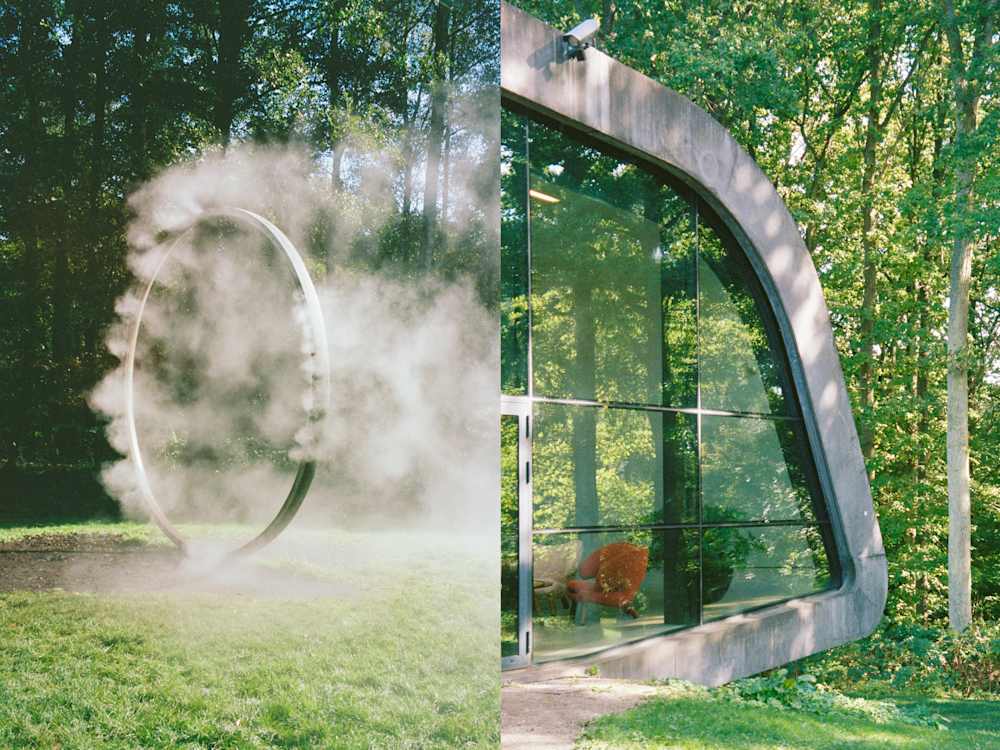
Ordrupgaard
Consider the first leg of the journey a warm-up. You only need to stroll your bicycle a few metres over to the idyllic Øregaard Park (the adjacent green space from which Park Lane gets its name) and you’ll have reached your first destination: Øregaard Museum. Its whimsical setting is worth a stop alone, but venture inside and you’ll also find a comprehensive display of Danish art from the 19th and 20th centuries.
Then it’s back on the saddle, to spin inland through Gentofte, past its million-kroner mansions and 18th-century Bernstorff Castle, with its historic rose gardens. Continue on to Ordrupgaard, a museum complex and art park. Copenhagen’s gallery scene is undeniably rich, but this lesser-known spot may be one of its best. The collection includes work from French and Danish masters, from Renoir and Manet to Copenhagen’s native son, Vilhelm Hammershøi. Alongside this, you’ll find a rotating programme of contemporary exhibitions and a captivating collection of outdoor sculpture. Built around a three-winged country mansion, the museum is an architectural marvel, too, with striking additions by Zaha Hadid and Norwegian design studio Snøhetta.
They’re not the only big-name designers to be found here, either. The site is also home to the house of Finn Juhl, a founding father of Scandinavian design best known for his organic, Modernist furniture. Take a tour of his enviable former home (which feels like walking into an Architectural Digest spread) then stop for coffee and cake at Ordrupgaard’s Café Mondrup to fuel up for the next leg.
ANIMAL ENCOUNTERS AND AMUSEMENT PARKS
With your art itch scratched, head east along Klampenborgvej until you reach the red gate of Jægersborg Deer Park, a Unesco-listed heritage site home to ancient oak trees, a Baroque hunting lodge and more than 2,000 deer. But before you delve into that natural arena, another type of wild awaits… Cycle just 500 metres into the park and you’ll spot Pjerrot, the Danish clown whose white face is on the sign for Bakken amusement park, actually the world’s oldest, dating back to 1583, when entertainers capitalised on a natural spring that drew thirsty city-dwellers. It’s free to enter, and though it’s rougher around the edges than Tivoli, its low-fi thrills and old-school attractions have a vintage charm. Don’t miss a ride on the Rutschebanen, a rickety wooden rollercoaster that’s been thrilling locals for nearly a century.
Back in the deer park, the route gets hillier (by Danish standards, at least) as you head north. You’ll find yourself sharing the road with hundreds of free-roaming deer: red, fallow and sika. These are the direct descendants of animals raised for the royal hunt of King Christian V — a pastime that didn’t end well for him, as he sustained fatal injuries when he was kicked by a deer he’d cornered. The royal tradition was continued by his grandson, who built the elegant Hermitage Palace specifically for lavish, post-chase banquets. The palace is open for tours during the summer season and hosts talks and events throughout the year.
COLD PLUNGES AND COASTAL COMFORTS
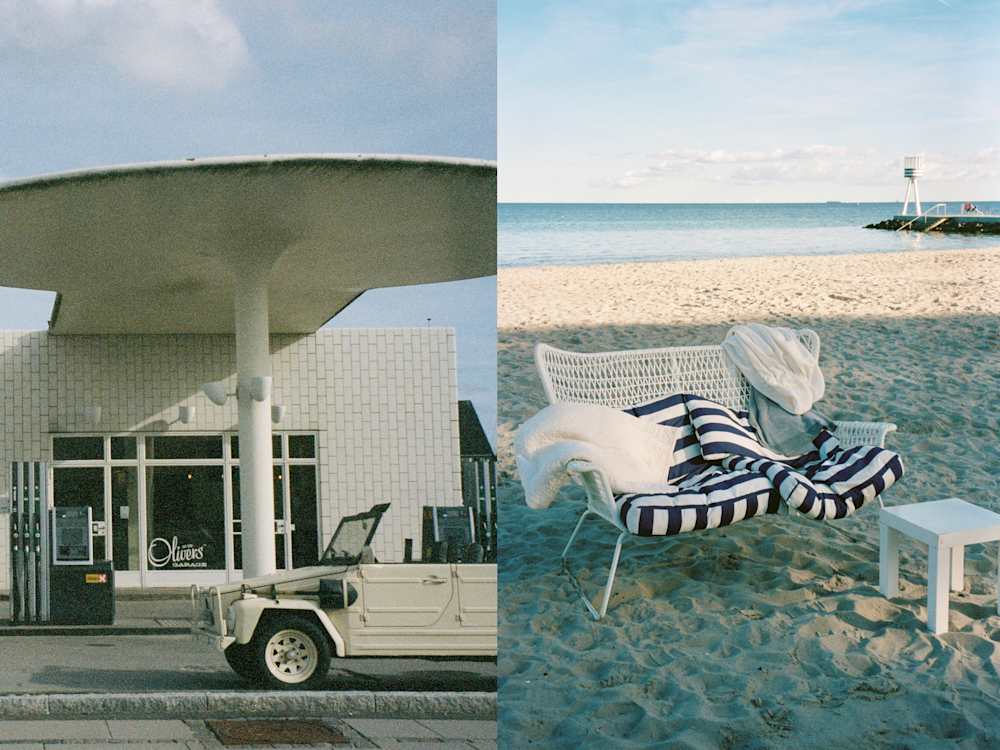
Skovshoved Petrol Station and Bellevue Beach
The last leg of our northern tour takes us back down Klampenborgvej’s coastal stretch, a route that’s been defined by the Modernist visions of Danish architect Arne Jacobsen. You’ll find the first of his projects at Bellevue Beach, a sandy stretch with volleyball, wooden decks and beachside kiosks. Here, a young Jacobsen gained widespread recognition after winning a competition to design everything from the iconic lifeguard towers to the changing rooms. Over time, those blue-striped towers have become key landmarks, watching over bathers as they plunge into the icy Øresund. Hold your breath and join them — it’s easier once you’re in. If you’re lucky, you may just catch a glimpse of local celeb Mads Mikkelsen rocking up for his morning dip.
In following years, Jacobsen was tasked with designing the rest of the area — known today as the ‘White City’ thanks to its minimalist, milky façades. It includes the Bellevue Theatre and the Bellavista housing estate, both bold interpretations of functionalism, drawing inspiration from Le Corbusier and the German Bauhaus school. Stop at Wulff & Konstali, a cool café housed in Jacobsen’s 1936 theatre; opt for a traditional Danish dining experience at the historic, thatched Den Gule Cottage; or hop onto a sofa for a toe-in-sand tipple at PLB Strandcafé.
The journey back to Hellerup is a fast, glorious ride fuelled by fresh sea air. Look out for the Søholm Row Houses, another Jacobsen masterwork, and the Charlottenlund Fort, a coastal defence structure turned popular park. Though the grand finale of this Modernist tour has to be Skovshoved Petrol Station — yes, a petrol station, a protected one at that. It’s a mandatory stop, not only for its ‘mushroom’-style architecture, Meissner tiles and retro clock; but also for the unexpected treat that lies inside. Namely, an ice-cream parlour selling organic scoops by Vebbestrup Flødeis.
BALLROOMS AND BATHS FOR TWO
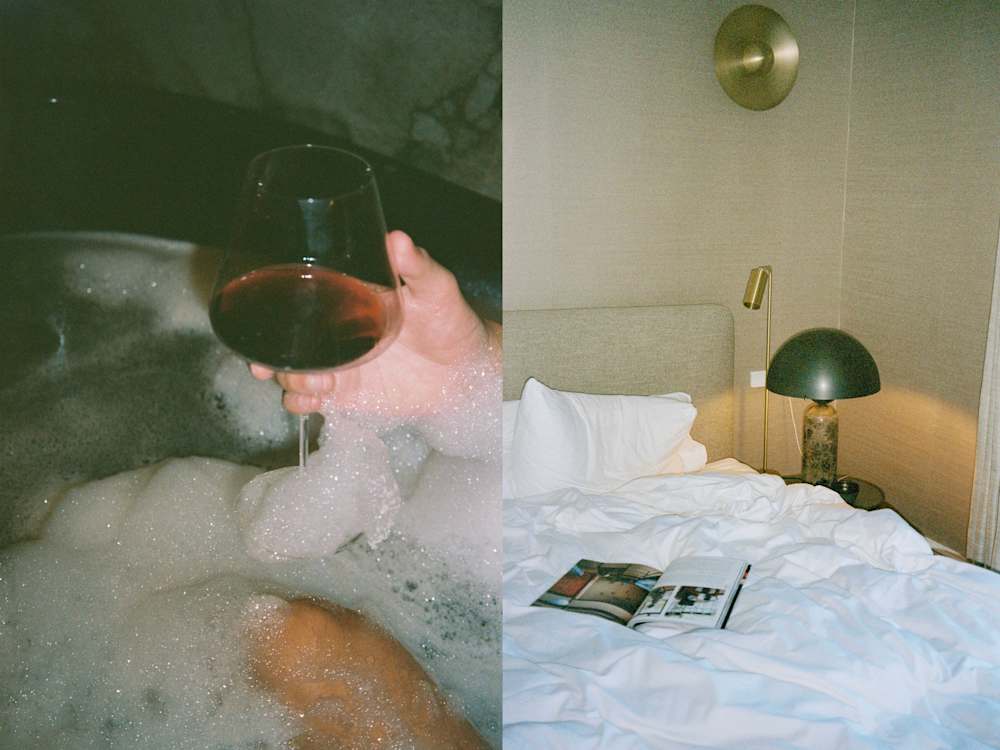
Park Lane Copenhagen
After a busy day outdoors, returning to the warmth of Park Lane Copenhagen is a welcome luxury. Most suites come with Antonio Lupi bath tubs big enough for two and perfect for soothing sore quads. And if an aperitivo from the minibar doesn’t immediately restore you, the hotel’s in-room wellness programme might. You can order gadgets like Infrared sauna blankets, LED face masks, compression boots, or even request an in-room IV to get you to your post-pedal prime.
While you’re recovering, Chef Tom Fransson will be prepping dinner downstairs at Restaurant 2900, where local ingredients and Nordic cooking techniques inform his international menu. When you’re ready, head down to enjoy the extensive wine list, refuel on plates of beef carpaccio, hamachi ceviche or rigatoni alla vodka, or — on Fridays — sink into one of the bar’s velvet sofas for a hip-swinging evening of live jazz. This, I’ve discovered, may well be the secret to a long-lasting romance: striking the balance between wild adventures and cosy nights in.
TOP TIPS FOR CYCLING
Level up Serious cyclists can extend the route from Jægersborg Deer Park to Helsingør by taking coastal Cycle Route 9. This detour takes you into the area known as the Danish Riviera, and packs in serious cultural rewards. Stop at the Karen Blixen Museum, the childhood home of the author of Out of Africa; and push on to the Louisiana Museum of Modern Art for its mid-century architecture, internationally celebrated art programme, and views of the Øresund Sound. Finally, finish your marathon ride in Helsingør, where you can explore Kronborg Castle, the Renaissance fortress known worldwide as Elsinore from Shakespeare’s Hamlet.
Follow the wind Copenhagen may be flat, but the wind can be brutal, especially along the coast. To avoid a painful pedal, check its direction before you leave and switch up your route accordingly; ideally, you want that tailwind working for you. The prevailing direction is westerly for most of the year, but on the rare occasions of easterly gusts, consider renting an e-bike.
Know the rules Danes are typically a calm, collected and conflict-adverse bunch. That is, until you cut them off in a cycle lane. So, learn the rules before you go; keep to the right, extend your arm to signal turns and raise your hand to let others know when you’re stopping.
Dress for the weather The Danish weather is a mercurial beast and prone to dramatic mood swings; one minute, you’ll be topping up with factor 50 and the next you’ll be reaching for your raincoat. Make sure you pack for all possible eventualities. As the locals say: ‘there’s no such thing as bad weather, only bad clothing.’
First time in the Danish capital? Read our weekend guide to Copenhagen, or see more of our hotels in the slick Scandi city
All images by Stephanie Gavan