



If your next weekend-break criterion reads ‘somewhere a bit different’, well, that description barely does justice to Georgia‘s capital Tbilisi. This sui generis city exists in its own microclimate; its unorthodox cuisine resists comparison to its European, Asian and Middle Eastern neighbours; and even Georgia’s language (and alphabet) is in a linguistic family all its own.
Why visit? The first clue is in the name: Tbilisi means ‘hot springs’. Its natural sulphur baths are an essential detox, especially the morning after wild nights sampling the city’s subversive techno clubs. And if that’s not your scene, hedonism is never far away in the land where the world’s favourite mood lubricant, wine, is said to have been invented.
Here’s our guide to 48 hours in Tbilisi…
FRIDAY: MORNING
Nearly all international flights arrive at Tbilisi Airport (TBS) before 6am. From there, it’s a 30-minute drive to the city. Bolt is Tbilisi’s leading taxi app, with journeys into town costing around 30 GEL (less than £10), and without the need to haggle.
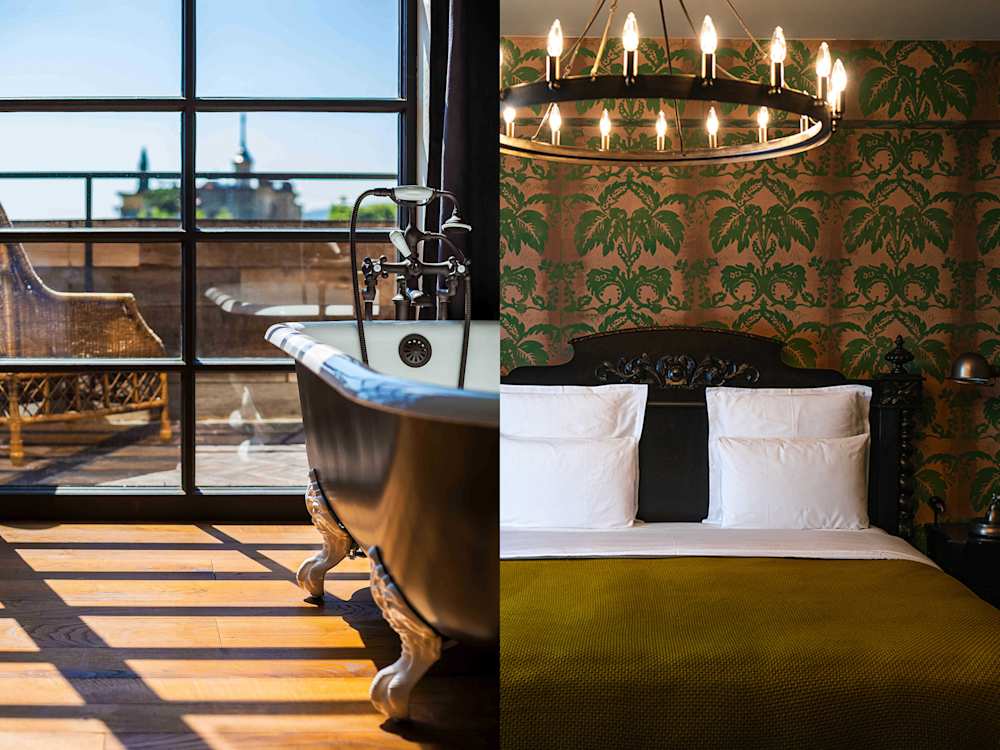
When it comes to where to stay in Tbilisi, Communal Hotels, with their dark-toned hallways and retro details, have two exceptionally good-value outposts: Communal Hotel Sololaki, in a quiet, up-and-coming neighbourhood to the west of the Old Town; and Communal Hotel Plekhanovi, close to the city’s best nightclubs (including Bassiani).
In the boho Vera district, former Soviet printing press Stamba Hotel is now a fashion-forward hub whose upper floors have been dramatically stripped out to create an exposed-concrete lobby with doors leading off into an art gallery, bookstore, much-lauded restaurant and a pastel-pink, Miami-style bar. It has a sister stay around the corner, too: Rooms Hotel Tbilisi.
Breakfast typically starts at 9am in Tbilisi (although it’s 8am at Stamba). In Vera, Kikodze is an all-day spot with a growing reputation for one of the city’s best breakfasts (check-out the homemade vanilla buns). In Plekhanovi, head to Fabrika, a former sewing factory turned uber-cool co-working space and food court, where buzzy café Londa does excellent syrniki (soft-cheese pancakes) with fig jam and sour cream. In Sololaki, seek out Chaduna, in what was once the front room of a crumbling townhouse, for steaming bowls of chirbuli (Georgian shakshuka) and inventive bruschetta.
FRIDAY: AFTERNOON
Make your way towards Liberty Square to find your bearings and then head across the undulating Bridge of Peace into Rike Park, with its tube-like Exhibition Hall. Tbilisi stretches along a river valley with often surprising shifts in elevation, so avoid unnecessary uphill meandering by catching the Mother of Georgia Tramway (actually a cable car) up to the eponymous statue and nearby Narikala Fortress.
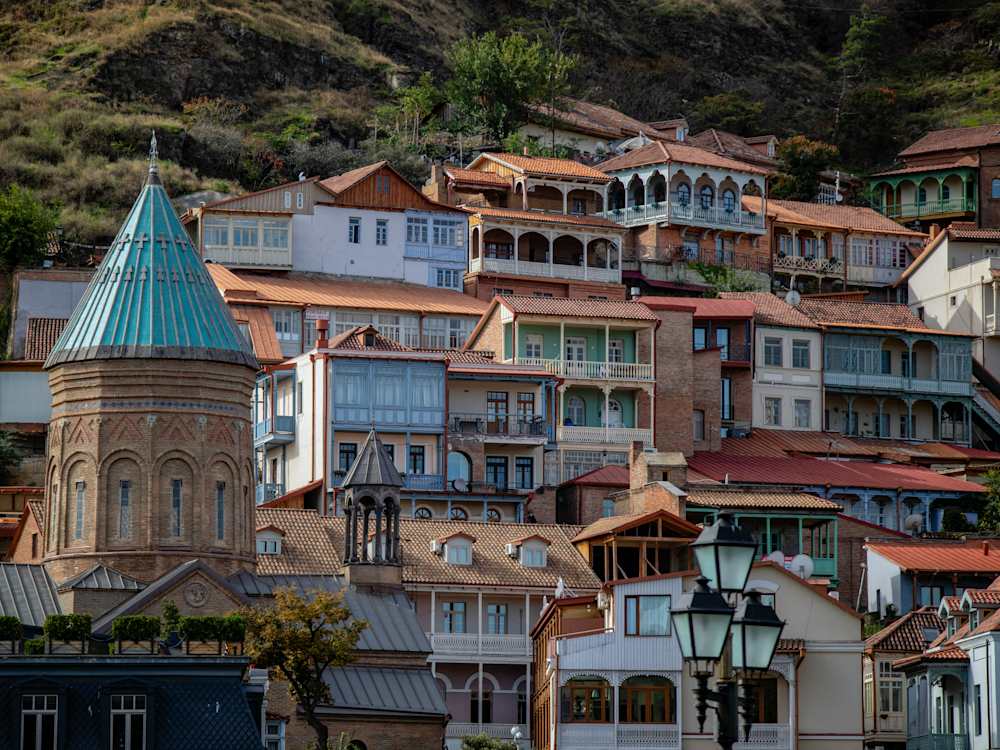
After taking in bird’s-eye views of the city, enter the Botanical Gardens (a cost of 5 GEL) and make your way downhill past waterfalls and across scenic bridges to the most attractive corner of Tbilisi’s Old Town, home to the Leghvtakhevi gorge, over which hangs a cascade of ornate, photogenic balconies. Here you’ll also spot the street-level domes of the famous subterranean sulphur baths.
If you haven’t already made a reservation for a steamy session at one via your hotel, now might be the time to stop in and book. At the mosaic-fronted Chreli Abano sulphur bath, a private room is 200 GEL for one hour. Hammam-style scrubbing is an extra 30 GEL, paid in cash.
For lunch, head to nearby Sololaki, whose flaking façades, weathered Art Nouveau balconies and vine-draped stairwells amount to an aesthetic best described as ‘mournful romance’. In one such courtyard garden, behind cultural landmark the Writers’ House, is Littera, which serves dishes such as shrimp kharcho (a sweet-savoury soup) with polenta, and trout tartare with spicy ajika sauce and pickled flowers. Another exclusive dining spot, Iasamani specialises in inventive Georgian cuisine and has a members’ club vibe on the ground floor of an unassuming townhouse.
FRIDAY: EVENING
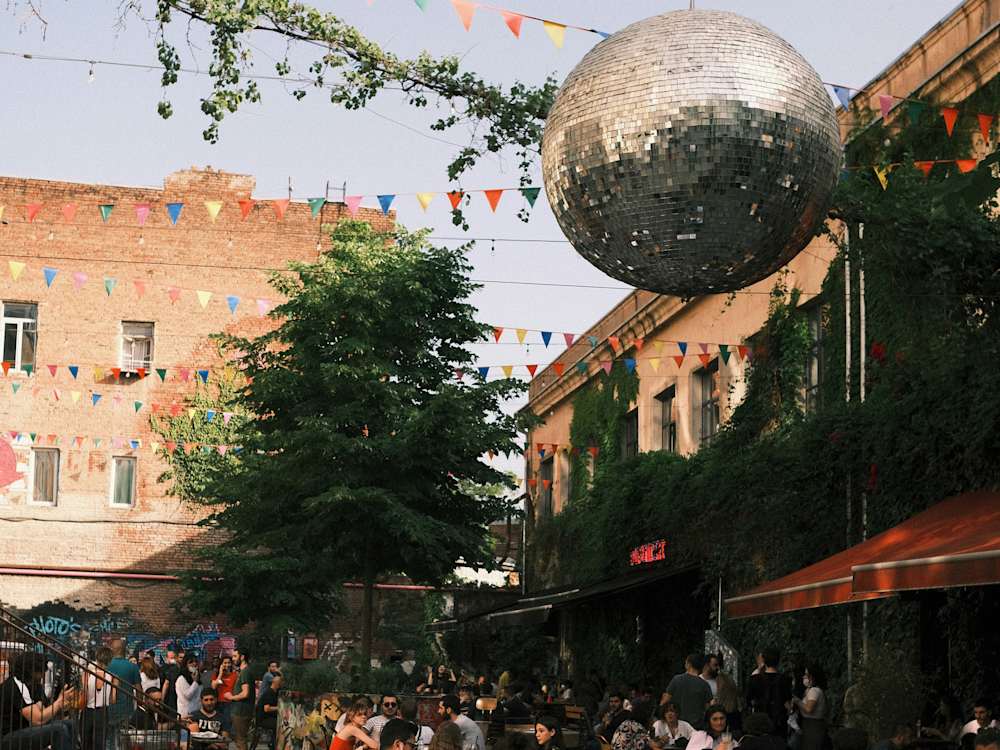
If you’re weighing up going dancing on Friday or Saturday night (or both), it’s useful to know that at clubs like Bassiani, TES and Left Bank, Fridays are more eclectic, local and intimate, whereas Saturdays tend to run later and attract a more international crowd. If you’re new to the scene, Left Bank on a Friday night could be the perfect primer thanks to its more relaxed door policy and artsy, community-minded clientele.
Vera, particularly Merab Kostava Street and the surrounding neighbourhood, has a lively concentration of pre-dinner or pre-clubbing bars. Pink Bar at Stamba Hotel attracts a well-heeled creative crowd, buzzy Lolita serves pizza and cocktails to mostly 20- and 30-somethings, and Mozaika is a playful, split-level space very welcoming to LGBTQ+ visitors.
Don’t forget to eat, too — aside from saving you from shots of potent chacha, Georgian cuisine is an experience all its own. Where to start? Well, Georgia’s two national dishes are khinkali, a hearty dumpling filled with meat or vegetables, eaten by clasping the doughy top-knot, nibbling a hole in its bottom and sucking out the broth; and khachapuri, a bread boat filled with molten cheese, often with an added egg, whose crusts are torn and dipped into the middle.
You’ll find both on the menu, along with other tastebud-twisting wonders, at Ethno Tsiskvili, one of Tbilisi’s most authentic Georgian restaurants, a 15-minute drive north along the river from Vera. Or, in Vera itself is Keto and Kote, which offers a more modern take on Georgian classics in a candlelit setting. Or there’s Weller, across the river at Communal Hotel Plekhanovi, serving some of the city’s best Middle Eastern mezze.
SATURDAY: MORNING
Morning, fuzzy head. It may be wise to keep things simple today with breakfast at the hotel. The saltiness of imeruli cheese and the slightly smoky puri flatbread — day-starting staples here — should do wonders for the hangover.
Now’s time for your sulphur-bath session in the Old Town (be sure to book in advance). The private rooms at Chreli Abano Sulfur Bath & Spa have their own hot and cold pools fed by nutrient-rich waters, as well as a sauna and a marble slab for your body scrub. You’ll no doubt emerge renewed, so why not treat yourself to a surprisingly tasty wine-flavoured ice-cream, sold by many Old Town street vendors.
SATURDAY: AFTERNOON
Head to the open-air Dry Bridge flea market to sift through its Soviet-era curios. Next door to this is Dedaena Park whose lawns, sculpture gardens and cafés make for a peaceful afternoon. The nearby National Gallery, while not extensive, does feature a handful of works by Pirosmani, Georgia’s beloved self‑taught painter whose fans included Picasso. You’ll see his work homaged in murals around the city.
If you’re feeling adventurous for lunch, head to Barbarestan, whose menu consists only of dishes from the 19th-century cookbook of Barbare Jorjadze, a pioneering female writer and Georgia’s first recipe-book author. The restaurant’s interior is a faithful recreation of the period and the food — lovingly presented by knowledgeable waiters — is like nothing this visitor has ever tasted.
SATURDAY: EVENING
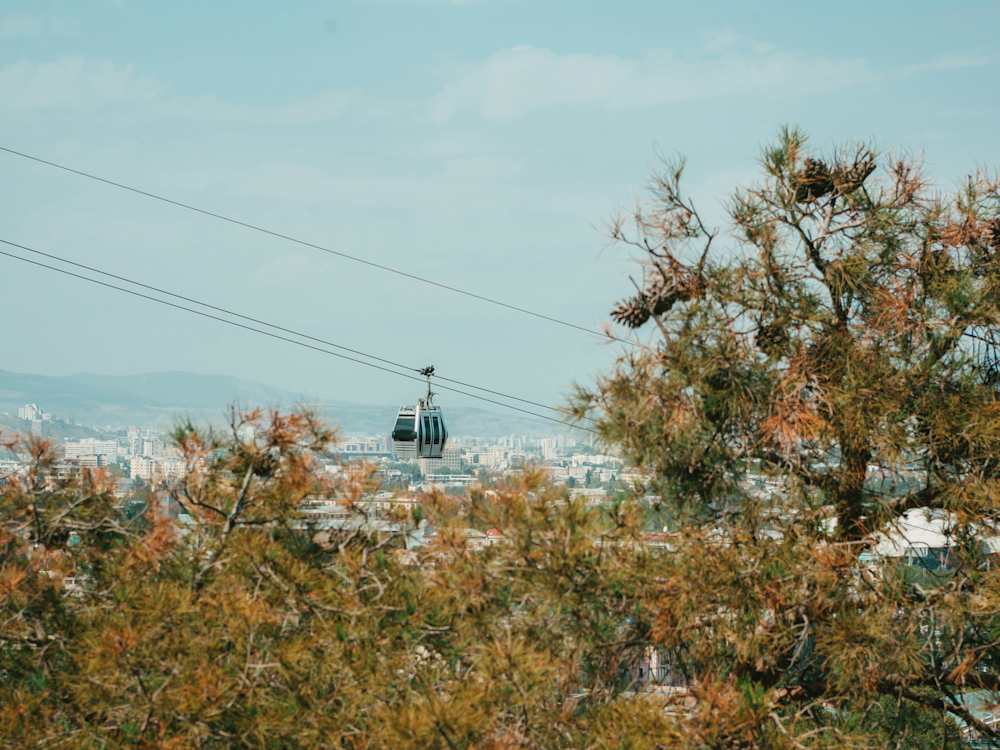
By now you’ll have noticed the red-and-white Soviet-era TV Tower looming over the city from its perch up on the Mtatsminda plateau. It’s not alone up there. Take the Mtatsminda Park cable car from the station on Shota Rustaveli Avenue, or ascend via the funicular on Daniel Chonqadze Street (on the border of Sololaki and Vera). At the top you’ll find a leafy, 1930s leisure park complete with amusements, fairground rides, bars and restaurants, and the most sweeping views of the city and beyond.
A great place to eat is the restaurant at the upper-level funicular station called, imaginatively, Funicular, serving better-than-you’d-expect Georgian fare on its view-toting terrace. Or, just near the foot of the funicular, Madre is a low-lit Basque restaurant serving inventive tapas — for quite fascinating historic and cultural reasons, Georgians and Basques consider themselves kindred spirits.
So, Tbilisian nightlife. As well as purveyors of some of the world’s fiercest techno, event organisers at Bassiani — particularly those of monthly queer night, Horoom — also have a political sideline championing the rights of LGBTQ+ clubbers in what is an otherwise conservative country. Located in a disused swimming pool in the bowels of the Soviet-built national stadium, the club protects its community with a notoriously strict door policy.
TES Club, housed in a repurposed thermal-power station, and Khidi, in an industrial space beneath a bridge, are both also very welcoming spaces for LGBTQ+ partygoers — if maze-like layouts, charming brutalist concrete and exposed steel girders can be described as ‘welcoming’.
SUNDAY: MORNING
If you have energy first thing Sunday, hop over to Vera where there are fashion boutiques, French bakeries, wine bars and breakfast spots dotted along the winding Mikheil Zandukeli Street. Make your first stop Hello Breakfast, which serves towering piles of waffles and croissants stuffed with homemade jam, cream cheese, fresh fruit and pistachio. Or pick up a loaf of additive-free bread at Au Ble d’Or bakery.
SUNDAY AFTERNOON
Elsewhere in Vera, there’s Pulp, an excellent coffee shop with sweet and savoury pastries; Auditoria, a cool bookshop and wine bar with a tiny but even cooler record shop next door; Objects, a homeware and architecture studio; and Giorgibistve (17 Mikheil Zandukeli Street), a bar and restaurant in a ramshackle triangular courtyard. And if you’ve been enjoying pairing Georgia’s qvevri wines with your meals, stop in at the elegant, low-key Sulico wine bar — its 130-plus list of natural wines is the most extensive in Tbilisi.
At the end of Mikheil Zandukeli Street behind what is surely one of the world’s most ornate McDonald’s is Muhudo, basically a low-ceilinged shack serving some of Tbilisi’s best falafel. The economics dissertation exploring this contrast will have to wait, even if the International School of Business is also just nearby.
Talking of academia, across the river in Plekhanovi is Georgia’s Art Palace, a remarkable mansion blending neo-gothic and Islamic revival styles and housing a collection of everything from modernist paintings to Persian miniatures. Not for casual art historians, this is seriously highbrow stuff.
SUNDAY: EVENING
Artist and director Rezo Gabriadze’s wry, melancholy marionette shows became a rare example of creative independence during the Soviet era. Catch a live performance at the Old Town’s tiny Gabriadze Theatre (book in advance; shows at 4pm and 7pm). Or simply admire the theatre’s whimsical leaning clock tower, hand-built by the puppet master himself.
For dinner, some say Shemomechama serves the best khinkali in the city. Otherwise, excellent pizza is available alongside Georgian craft beers at Farina, or for more formal, late-night eating and drinking in an attractive outdoor space, try Honoré, a block away from Communal Hotel Plekhanovi.
NEED TO KNOW
Transport There’s a very punctual metro in Tbilisi, although it could do with some modernisation. There are stops connecting Rustaveli Avenue with Liberty Square and Avlabari (which is close to the Bridge of Peace). Even more convenient and similarly inexpensive are Bolt taxis, which tend to arrive in under five minutes to wherever you are and at whatever time, 24/7.
When to go Spring and autumn are the optimum times for exploring Tbilisi, when the weather is clement and the crowds fewer. Come October, the Tbilisoba festival celebrates both the harvest with plentiful displays of flowers and fruits, and the history and culture of the city, with dances in traditional costume, food stalls and concerts till late.
What to buy Bring home a bottle of saperavi wine, Georgia’s staple table red, available pretty much everywhere — although the folk at Vino Underground in Sololaki can help you choose. Georgians are big into dried fruits, and you can taste and fill bags of the stuff at Khurjini in the Old Town. Organic cosmetics live side by side with craft vegan products and ethically sourced jewellery at Kenkra, Planty and Gremi, respectively, in Vera.
Good to know Don’t stride out onto Tbilisi’s zebra crossings expecting vehicles to stop for you. And when there are no obvious places to cross, especially on the city’s major six-lane thoroughfares, it’s usually because there’s a subway passage nearby.
To get to know Tbilisi and beyond better, see our full collection of hotels in Georgia