


In contrast to Tokyo’s futuristic skyscrapers, neon lights and bustling avenues dotted with glossy designer flagships, Kyoto puts history on display at every turn — it’s a living museum of torii gates, temples and wooden facades. But beyond the preserved shrines, towering bamboo forests and old tea houses, the ancient imperial capital quietly moves forward.
The culinary landscape reflects the pull of the past, inviting travellers to savour traditional, multi-course kaiseki meals, shōjin ryōri (seasonal vegetarian cuisine), soba noodles and charcoal-grilled yakitori. Alongside, the coffee and cocktail scenes continue to evolve, and a new generation is extending the legacy of kōgei (traditional artisan crafts) and art forms such as kintsugi (‘golden joinery’).
Though you could devote all your attention to sightseeing, the best trips to Kyoto tap into the city’s deep cultural legacy while also embracing its restful pace with plenty of restorative spa time. Here’s how to do it all in a weekend…
FRIDAY AFTERNOON
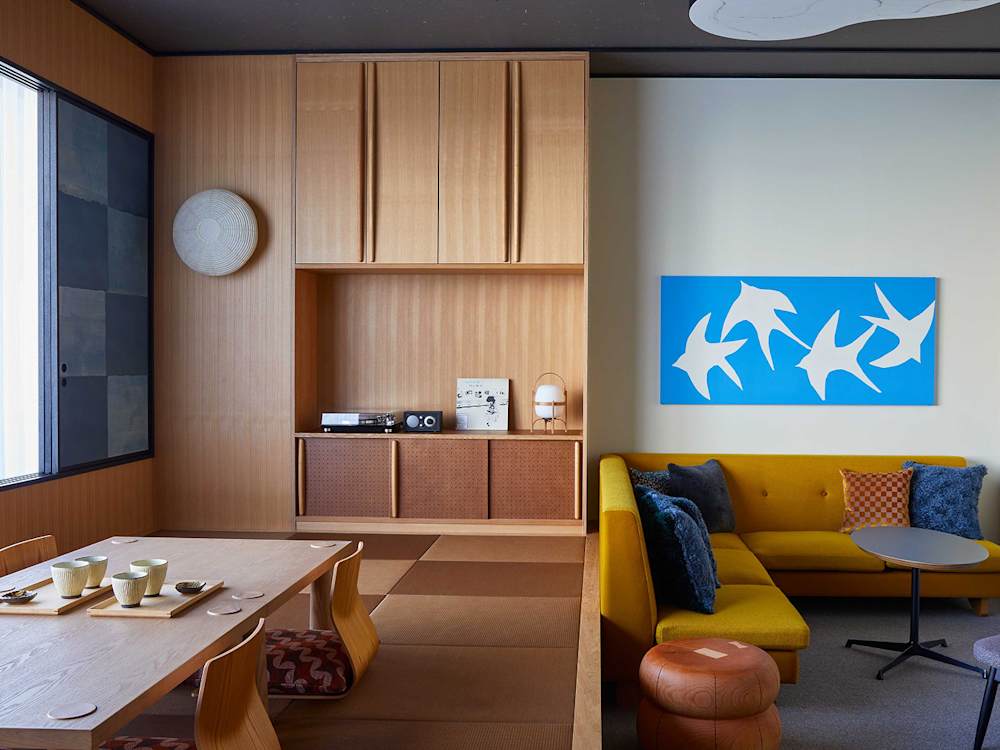
Ace Hotel Kyoto
Most travellers bound for Kyoto will take the two-hour, high-speed Shinkansen train from Tokyo and arrive at Kyoto Station. Since trains depart frequently, it’s easy to have a leisurely breakfast before boarding the train and arriving in the early afternoon.
Hop on a quick metro to Ace Hotel Kyoto — a cool, contemporary base in the middle of the action. Occupying the former central post office in Nakagyo Ward, the 213-key retreat is filled with Japanese art, including a huge textile piece created by Kagoshima-based, community-supporting organisation Shōbu Gakuen, and large custom ceramic pots by Kazunori Hamana are on display. It’s part of an integrated retail complex for access to chic boutiques like 1LDK and Maison Kitsuné Kyoto ShinPuhKan.
When hunger pangs hit, walk over to Nishiki Market. Often referred to as ‘Kyoto’s kitchen’, it’s bursting with vendors selling fresh produce, sushi, tempura, unagi, tamago and more. You can also browse chopsticks, ceramics and ceremonial-grade matcha to bring back home.
FRIDAY EVENING
For dinner, Saryo Tesshinis an intimate, 13-counter-seat restaurant elevating soba to an art form, using the ancient pseudocereal to make buckwheat tea and the tenderest noodles around. The setting is crowned by a large gold‑leaf painting of tigers and rabbits, creating a luxurious atmosphere for warm and cold soba paired with sake.
If you’re thirsty for a nightcap, head to Scotch & Branch — a speakeasy concealed behind a telephone booth — for Japanese whisky and cocktails, or Piopiko at Ace Hotel Kyoto for mezcal margaritas infused with the flavours of Kyoto, such as yuzu and roasted local tea. When it’s time to call it a night, settle into your retro room, draw yourself a bath and turn on a record before snoozing.
SATURDAY MORNING
Start your day with a Japanese breakfast of grilled fish, pickled vegetables, rice and miso soup at Ace Hotel Kyoto’s Kōsa, helmed by American chef Katy Cole. If you need a quick caffeine jolt, grab a latte as you head out from the first Stumptown Coffee Roasters in Japan. Alternatively, roasted nut mochas and baked treats are available at Here Kyoto, just a few blocks away.
Hop on the metro to Arashiyama, a well-preserved district (read: tourist darling) on the western outskirts of the city. Backed by the mountains and crossed by the Ōi River, it’s a scenic area for sightseeing, most famous for its towering bamboo groves and Tenryu-ji Temple. Venture off the beaten path to less-frequented sites, such as Jōjakkōji Temple for contemplation and Okochi Sanso Garden for matcha and sweets.
Bustling main street Nagatsuji-dori is awash with dango (sweet rice dumplings on skewers), senbei (rice crackers), soft-service ice-cream and roasted sweet potatoes. If you’re wearing comfy shoes, cross the Togetsukyo Bridge to Mount Arashiyama — there are several hiking trails to enjoy, ranging from 30 minutes to see wild macaques at the Monkey Park Iwatayama, to 2.5 hours for more panoramic views.
SATURDAY AFTERNOON
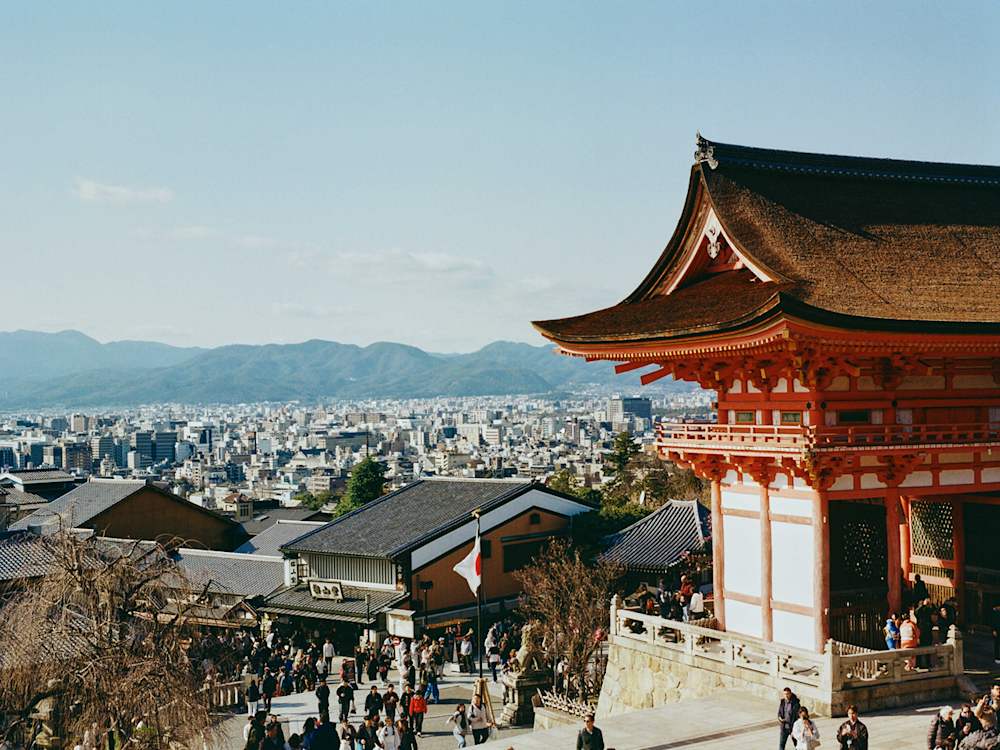
Kiyomizu-dera Temple
Kyoto boasts thousands of worship sites, and Kiyomizu-dera Temple is without question one of its most iconic. Situated on Mount Otowa — technically a hill, making it manageable for travellers averse to really hoofing it — this Buddhist place of worship dates back 1,200 years. It offers sweeping views of the city, and its vibrant orange pagoda is framed by the surrounding trees that change hue with the seasons.
Beyond the busy tourist sites, Kyoto’s laidback pace is part of what makes it such a blissful weekend escape. Rest comes in many forms: sitting under a maple tree on temple grounds, wandering along the river, and indulging in some rejuvenating rituals. Banyan Tree Higashiyama Kyoto is a dreamy destination for an afternoon of pampering: the property takes an eight-pronged approach to wellness, emphasising rest, grounding and connection. Its superb spa facilities include onsen baths fed by natural hot springs, steam saunas and treatments inspired by nature and Eastern healing practices. Extend the blissful sense of stillness after an essential-oil massage with a quiet stroll through the serene bamboo groves.
SATURDAY EVENING
A pleasant 20-minute walk away from Banyan Tree sits Six Senses Kyoto, a halcyon retreat in historic Higashiyama. Should you feel like doubling down on rest and relaxation, the wellness facilities here are some of the most thoughtful and extensive in the city. The spa features bathhouses, bespoke treatments, a Watsu pool for hydrotherapy, a biohacking lounge (take that, jet lag!), and an Alchemy Bar for mixing up DIY tinctures with seasonal ingredients grown in the garden.
If your itinerary precludes a second round of soaks and scrubs, bookmark it for next time and instead head straight to Sushi Oga Higashiyama, the second location of the well-regarded Osaka omakase spot. It’s tucked behind Sekki, the hotel’s signature eatery that celebrates micro-seasons; sushi-master Chef Sakai, who mans the 10-seat counter, treats diners to a specially curated multi-course menu. Just down the hall, jewel-box bar Nine Tails serves Japanese whisky and craft cocktails.
SUNDAY MORNING
Wake up early to beat the crowds at Fushimi Inari-taisha, one of Kyoto’s most striking landmarks. Start with an espresso and fresh-baked goods at Vermillion Cafe before tackling the main event: ascending the four-kilometre path lined with hundreds of vermilion-hued torii gates that winds up Mount Inari. The payoff at the summit? A sense of accomplishment and a moment of stillness, with sweeping vistas over the city and surrounding forests.
For a modern alternative to temple- and shrine-hopping, pre-book timed-entry tickets to TeamLab Biovortex Kyoto, an enormous exhibition filled with high-definition interactive installations. Highlights include Morphing Continuum, a swirling vortex of bubbles, and Infinite Crystal World, a three-dimensional light sculpture.
SUNDAY AFTERNOON
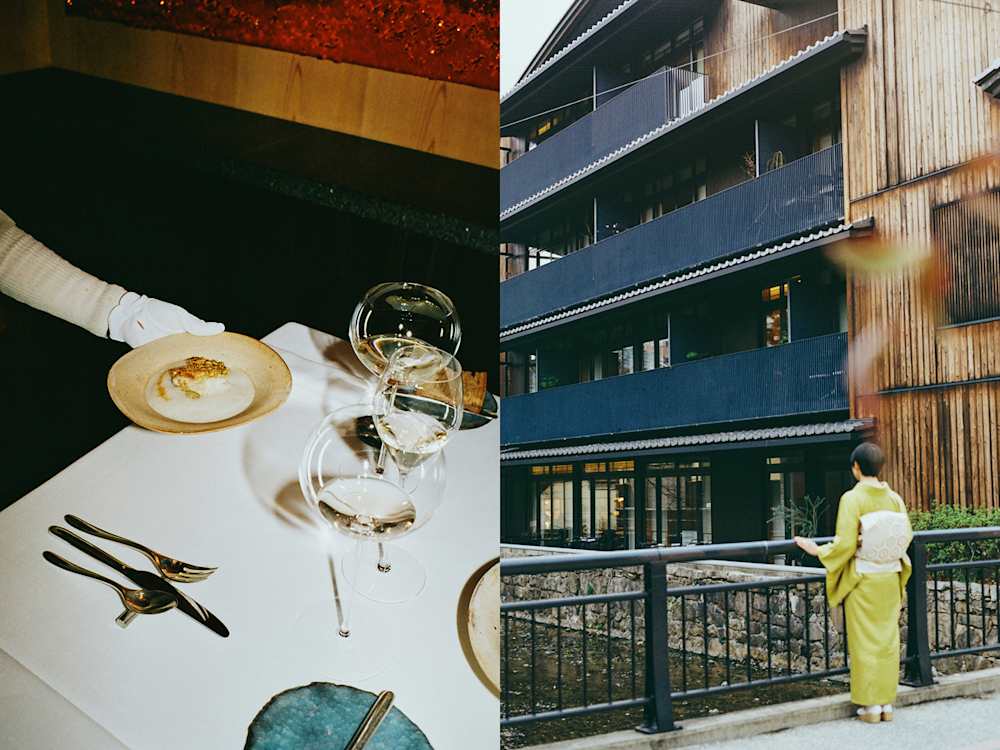
The Shinmonzen
The popular Gion district immerses you in Edo-era charm, with its traditional wooden machiya houses, teahouses and kimono-clad geikos. While it’s easy to spend hours wandering around the area, having a loose game plan never hurts. The streets of Shirakawa, Shinmonzen and Hanami-koji are prime for discovering traditional Japanese crafts, including textiles, lacquerware, and ceramics. For even more culture and photo opportunities, visit Kenninji, Kyoto’s oldest Zen Buddhist temple. Admire the impressive dragon murals in the main hall, find a moment of quiet in the Zen garden, and experience a traditional tea ceremony on the temple grounds.
For lunch, make a reservation at Gion Unagi Kawatou to taste crispy, Kansai-style grilled eel, paired with sake. The interior of the restaurant resembles a traditional inn with floor seating, tables and private rooms flanking a tranquil courtyard.
Nestled alongside the Shirakawa River in Gion, The Shinmonzen hotel is a modern take on a traditional ryokan, whose sleek design comes courtesy of celebrated Japanese architect Tadao Ando and an impressive contemporary-art collection (Damien Hirst and Louise Bourgeois pieces adorn the interiors). Even if you’re not staying at the nine-key boutique hideaway, both the terrace and the dining room of the Jean‑Georges Vongerichten restaurant are lovely spots for afternoon tea, complete with handcrafted seasonal sweets and savoury finger sandwiches.
SUNDAY EVENING
Kinkaku-ji Temple is beautiful at any time of day, but especially at the day’s end when the low-hanging sun hits its golden exterior, creating a glimmering reflection over the pond. When dusk sets in, meander over to Aman Kyoto, a serene retreat of stone pathways, forests, hot springs and pavilions. At its Taka-An restaurant, guests can enjoy exquisite kaiseki cuisine, which spotlights seasonal ingredients such as snow crab in the winter and Kyoto Hirai beef in early spring. Or opt for local dishes at the Living Pavilion, where the garden terrace provides a nature-shrouded alfresco setting in warmer months; the fire-warmed interiors are cosy for when the temperature drops. Both dining destinations require advanced reservations.
NEED TO KNOW
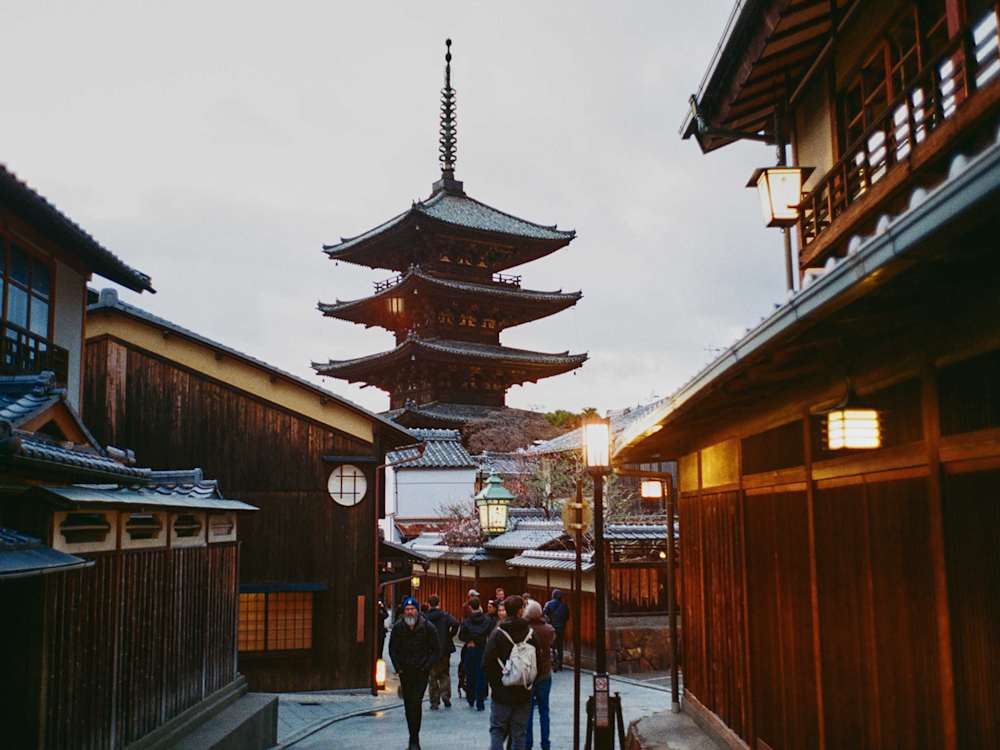
Gion
Transport Most international travellers bound for Kyoto fly into Tokyo — either Haneda Airport (HND) or Narita Airport (NRT) — and take the two-hour Shinkansen bullet train. Jetsetters coming from other parts of Asia will find it more efficient to fly into Kansai International Airport (KIX) in Osaka and hop on a JR train or local transit.
Getting around Kyoto is easily walkable and has a reliable metro system, laid out in a grid to help travellers reach different parts of the city. The bus network fills in the gaps, serving major tourist areas. Taxis are readily available, too.
When to go Autumn is the perfect time to visit Kyoto for pleasant temperatures and colourful foliage. Winter has a quiet charm, with the occasional snow flurry creating a magical atmosphere. Early spring is for exploring at a leisurely pace and avoiding the crowds. Cherry blossoms are a huge draw across Japan, but especially in Kyoto, attracting millions to the city in early April, when the sakura are typically in full bloom. Golden Week (the Japanese holiday period that covers Shōwa Day, Constitution Day, Greenery Day and Children’s Day), which lasts from late April to early May, tends to be incredibly busy. Summer is hot and humid, making it better suited for spa days than sightseeing.
What to buy Kyoto is a haven for creativity and craftsmanship. From Kiyomizu‑yaki ceramic bowls and sake sets to stone teapots, lacquerware boxes and kimonos, the city brims with handcrafted treasures. It’s also a terrific place to pick up calligraphy brushes, ink and paper. For edible gifts to bring home to friends and family, stock up on Japanese wagashi candy boxes and ceremonial-grade matcha.
Good to know If you’re spending a few nights in Tokyo beforehand, ask your hotel concierge to ship your luggage directly to your next destination via Yamato. It costs between JPY1,500 and JPY4,700 per suitcase and only takes one day to travel between the two cities, allowing you to ride the Shinkansen hands-free and hit the ground running when you arrive in Kyoto.
Exploring more of Japan? See our 48-hour guide to Tokyo
Additional photography by Tetsuo Kashiwada