


Let us introduce you to the world’s most exciting hotel chefs as we guide you through the gourmet getaway spots we’re hungering for…
WHO’S IN THE KITCHEN?
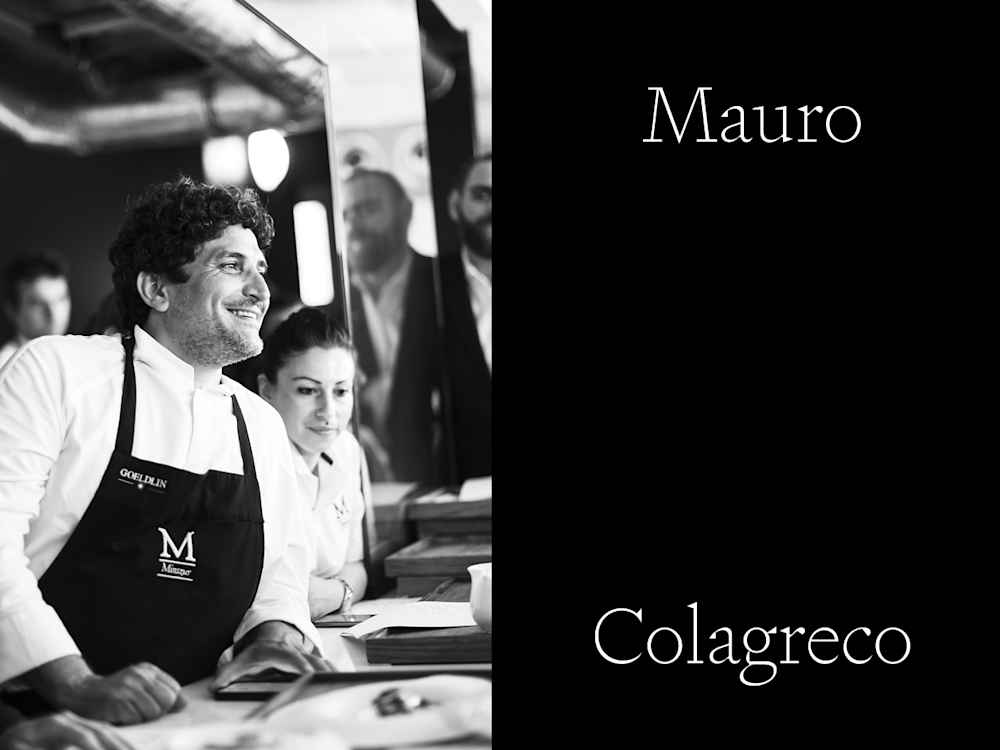
His warm, relaxed demeanour might belie it, but Argentinian-born Mauro Colagreco is, simply put, one of the world’s most accomplished chefs. He established Mirazur in Menton, France, a picturesque town by the Italian border; and in 2019, he achieved three Michelin stars with Mirazur coming first in The World’s 50 Best Restaurants. His take on French Riviera cuisine has all the precision and technique of the most regarded French kitchens, and today the restaurant has a biodynamic vegetable garden and a menu focused on the expression of nature.
He’s since opened restaurants in Paris, London, Tokyo, Hong Kong, Palm Beach and Buenos Aires; but his Bangkok location Côte — inside Capella hotel — is his first restaurant to gain two Michelin stars. Head Chef Davide Garavaglia — who spent six years at Mirazur — applies the Colagreco ethos with impressive vitality.
WHAT’S COOKING?
At Côte, Garavaglia has finessed Mirazur’s Mediterranean cuisine, combining local produce and spices, with seafood from Brittany, pigeon from Anjou and more French proteins. Papayas grow in Mirazur’s garden, but tropical fruits feature more on Côte’s menu (see the hamachi tartare with caviar and raw red papaya). Sometimes Garavaglia’s Milanese background is more pronounced, as per his pasta with a hint of Thai flavour: trofie with langoustine and black sesame. Or his flavours are Français, as evidenced in his pigeon breast served with rose and turnip. There are tightly seasonal offerings, too, like a citrus menu in February and a tomato menu in the summer.
RECIPE FOR SUCCESS
Colagreco was recognised by Unesco with a Goodwill Ambassador for Biodiversity title in 2022. His restaurants reflect this personal responsibility, and in 2023, he was made a Knight of the Legion of Honour, became vice-president of the Relais & Châteaux Association, and lectured at Harvard University on how the cosmos influences cuisine. In 2026, he has four new openings, including his Italian debut in Lake Como’s Edition Hotel. This year Mirazur also celebrates its 20th anniversary with a menu collaboration with Ferran Adrià, running from 1 April to 17 May.
A man of relentless passion and drive, Colagreco sat down with us to discuss how Côte captures his vision and what makes the Bangkok outpost so special.
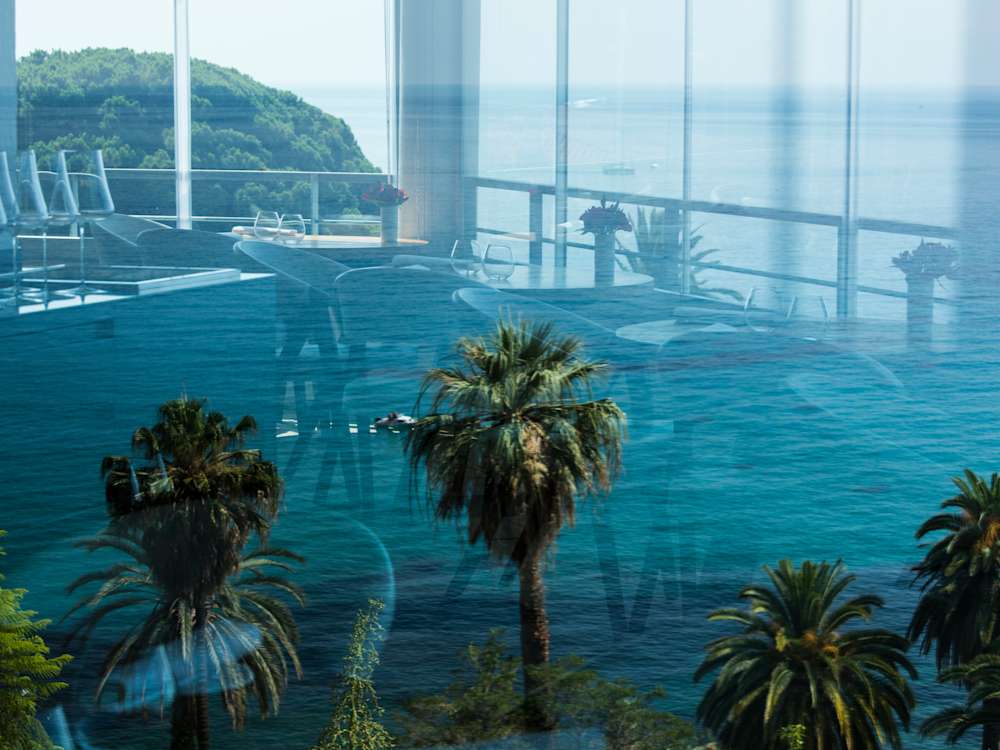
Mirazur restaurant
Mirazur is rooted in the Mediterranean landscape — how does cooking at Capella Bangkok change the way you perceive place and seasonality?
When the opportunity arose to create a restaurant concept for the Capella group in Bangkok, I didn’t hesitate for a moment. It was a fantastic project, and I was immediately excited to get involved. Launching a concept in Thailand held a special significance for me: it’s a country I find deeply inspiring, rich in ancient cultural traditions and breathtaking landscapes.
Opening a restaurant in Bangkok represented both a challenge and an exciting adventure. Every new project feels like a blank page to me. It’s an exercise I know well, because it’s how I built my own signature when I arrived at Mirazur, where everything was new and to be learned. Being Argentine, of Italian origin, having studied in France, and ultimately creating my own restaurant on the French Riviera — at the border between France and Italy — gave me the drive to forge my own path. I had to start from scratch to truly understand the richness of the region and develop cuisine based on the local products. This foundational approach later allowed me to develop other projects following the same philosophy.
You built everything at Mirazur from scratch — how did you begin in Bangkok?
At every new destination, the process is similar: I arrive without knowing the local producers, fishermen or artisans. The first step is always to build a community, explore the surroundings and establish meaningful connections. This phase of discovery is essential and forms the foundation of every project. It deeply fuels my creativity.
Bangkok, with its vibrant culture and access to extraordinary ingredients, offered me the chance to fully immerse myself in this process again. It’s a city that inspires freedom and curiosity. I was also pleasantly surprised to find striking similarities with the French Riviera: a strong connection to the aquatic world, a prominent presence of vegetation, and an exotic, almost paradisiacal character. These are places where one naturally feels happy to create and to welcome guests.
At Côte, how do Thailand’s climate, produce and seasons shape your dishes?
As at Mirazur, the plant world occupies a central place in our approach. The Thai climate, generous and diverse, allows us to work with an incredible variety of native plants, flowers and herbs, which naturally influence the composition of the dishes. These elements serve as the starting point for a living cuisine, guided by local seasons and the cycles of nature.
Through this botanical palette, we share the Franco-Italian culinary DNA of the French Riviera, reinterpreted with creativity and sensitivity to engage in a dialogue with Thai products and terroir. It is not about transplanting a cuisine, but rather about letting it evolve while respecting the identity of the place and highlighting local resources at their peak.
What guiding philosophy connects Mirazur, Côte, and your other restaurants?
More than a strictly biodynamic philosophy, it is above all a holistic vision that I have built over time. It has been nourished by the discovery of nature-respecting practices such as permaculture, biodynamics and soil regeneration. This approach also has its roots in a very direct relationship with the land, which I inherited from my family history.
I grew up watching my father cultivate his garden and grow his own tomatoes. He was not a farmer and lived in the city, yet he found immense joy in these weekend activities, being in contact with the earth. He also took us on trips to places chosen for their natural beauty. These experiences shaped my sensitivity and my perspective on the living world from a very early age.
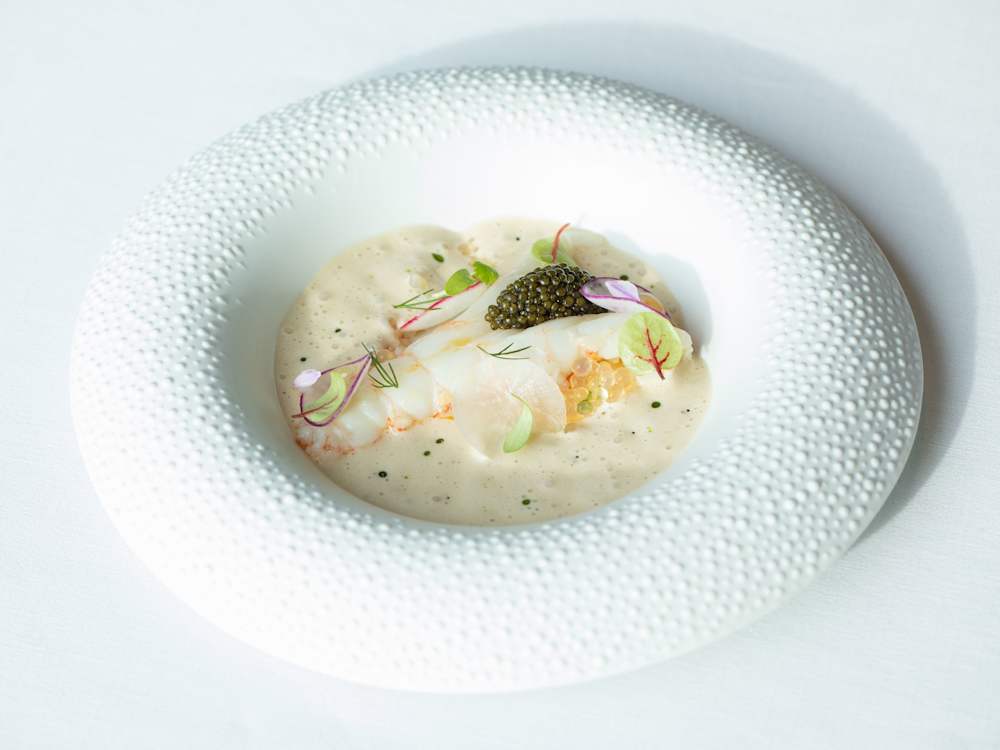
Côte restaurant
What helped deepen this understanding beyond what you learned growing up?
A key moment in this awareness occurred during [the pandemic] lockdown. I had the unique opportunity to be literally ‘locked outside’ in my garden. This daily immersion allowed me to work alongside our gardeners and closely observe the invisible forces that govern life. I realised how deeply interconnected and interdependent all living things are. I began to perceive Earth as a living being, part of a larger system, connected to natural cycles and the stars. It was through this concrete experience, in the very beds of my garden, that I truly understood the biodynamic approach — not only as a theory but as a living practice that guides work with the land and the seasons.
At the same time, I was reading a lot and the true turning point was The One-Straw Revolution by Masanobu Fukuoka. Reading it was a profound awakening. It reshaped the way I understand agriculture, nature and ultimately my role as a cook. Fukuoka’s philosophy is not about controlling nature, but about listening to it, observing its rhythms and intervening only when absolutely necessary. That way of thinking became the foundation of my approach.
This understanding is not new: throughout history, all civilisations have explored these connections in various forms, as evidenced by ancient agricultural calendars. It’s an insight that shaped human life for millennia, before largely being forgotten over the past century. That is why I am convinced that, whatever the city or context — even in a dense and dynamic environment like Bangkok — this message of reconnecting with nature is universal. As chefs, our role is to reconnect food to its origin and remind people that we are fully part of nature. There will be no future for humanity without respect for what nourishes us, without respect for life itself.
How have your travels influenced your approach to cooking and hospitality?
I’ve always been curious and open-minded, driven by the desire to discover something new every day. This curiosity lies at the heart of my motivation and my ongoing learning process. Travel is a tremendous opportunity — not only to expand our tastes and skills, but also to nourish our values, sensitivity, empathy and sense of hospitality. It allows us to learn from different cultures, landscapes and ways of life, and to question our own practices.
What drew you to Asian cities like Hong Kong and Bangkok?
The Asian culinary scene is particularly dynamic and fascinating, extremely rich in terms of techniques, flavours and diversity. It’s a field of endless exploration: from refined cuisine to street food, every experience offers a new lesson. I was struck by the spirit of the people here — their joy in eating out, their openness to discovery and their curiosity for different types of restaurants. In Bangkok, as in other major Asian cities, I was surprised to see how much people know about and appreciate various cuisines, and how willing they are to immerse themselves in new culinary experiences.
I feel at home in Asia. The local culture places food at the heart of social life, and people know how to enjoy life through this simple, universal pleasure. It’s this approach, where food is both sharing and connection, that inspires me. The opportunity to collaborate with Capella Hotels, renowned for its authenticity and deep culture of hospitality, was therefore a natural and inspiring motivation for me.
ANSWERS À LA MINUTE
Is there a Thai ingredient that’s made a permanent mark on your cooking?
Marigold! In Thailand, marigolds carry a powerful symbolism: they’re associated with good fortune, protection and celebration, and are omnipresent in temples, rituals and everyday offerings. They embody a deep connection between nature, spirituality and daily life.
You’ve been tasked with creating an in-flight menu. What’s on there?
Two years ago, I created a menu for Air France First Class. If I were to do it again, I would draw from some of the dishes I made back then that were particularly well received. To start, lobster in citrus vinaigrette; for the main dish, roasted poultry with yellow zucchini, fennel and kumquat salad, in a saffron and lemon sauce; and to finish, saffron cream with almond foam and orange sorbet
You’ve snuck some minis onto the plane. What cocktail are you making?
I always enjoy making a Mezcalita (mezcal and hibiscus water).
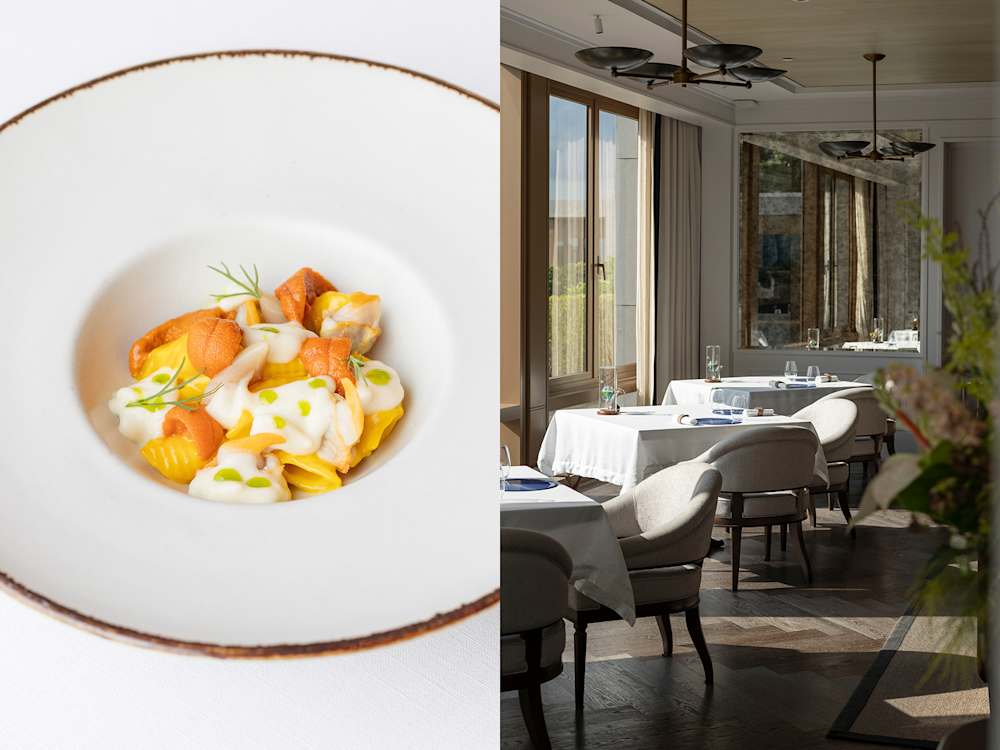
Côte restaurant
What’s the first thing you do when you arrive at a hotel?
I open the minibar!
Room service — what are you ordering?
I’d definitely go for a club sandwich… Especially when I’m staying at Capella Bangkok, because it’s particularly delicious; free-range chicken breast, bacon, fried egg, tomato, lettuce and mayonnaise, served with salad and skinny fries.
You can hop to three countries for breakfast, lunch and dinner — where are you going?
Breakfast at a local market, Saphan 2 Market on Chan Road, near Capella. I really enjoy the stuffed vegetables there. Lunch at Restaurant Sühring, an exceptional fine-dining experience. The two brothers [who own it] have managed to truly make the terroir their own, with great finesse and precision. And dinner at Samrub Samrub Thai, my best gastronomic experience of Thai cuisine. The different traditional preparations — executed to perfection and combined with an absolute mastery of wild herbs and local spices — are truly moving.
What’s your go-to comfort dish in Bangkok?
When I arrive in Bangkok, I always like to eat lemongrass soup.
Room for more: get stuck into the rest of our Yes, Chef series, then savour our culinary collection