


The rumblings of boisterous Englishmen isn’t something I expect to hear on my flight from Madrid to Bilbão, where I’ll be checking into the peaceful Hotel Nafarrola, a Bay of Biscay-facing farmhouse run by brothers Josu and Gaizka. I assume it’s a stag do and don’t give it further thought — that is until I land, and see signs declaring ‘UEFA Europa League final’ everywhere. Whoops.
My chatty taxi driver is the first (of many) to ask if I’m here to see the game as he whisks me out of the city to the countryside’s coastal hills. Unsure whether to be flattered that he thinks I’m a footie fan, I admit I’m here for something more wholesome: to learn more about — and get my teeth into — Hotel Nafarrola’s food scene.
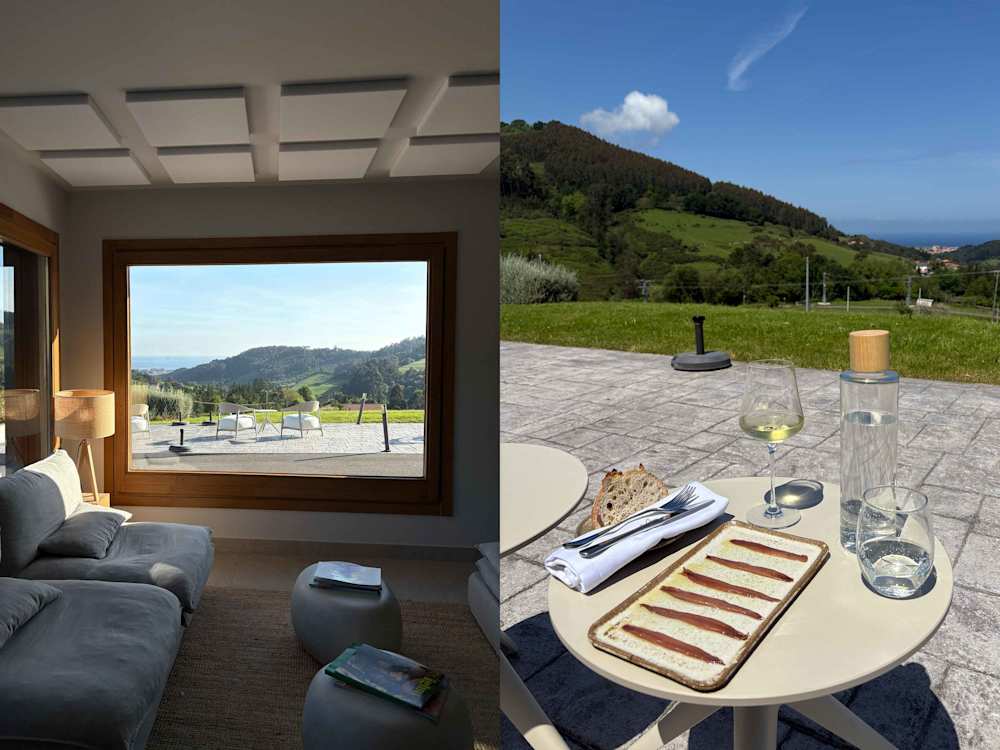
Once inside the hotel’s living-room-like reception, the coast comes into full view — a huge picture window frames the dip of pine-carpeted hills rolling down to the terracotta-topped town of Bermeo, backdropped by the blue blur of sea and sky. The valley glows in the sunshine, so after check-in, waiter Mikel whisks me to the terrace as plates of salt-cured anchovies, freshly baked bread and jewel-toned jamón appear. ‘We like to eat here,’ he tells me — it turns out Nafarrola and I have a lot in common.
I’d had grand gastronomic plans for my stay, but a last-minute change meant my tuna-cooking class with owner Josu, where I would learn about preparing Bermeo’s claim-to-fame fish in seasonal recipes — a tuna tartare and typical marmitako stew — is swapped for a private txakoli wine tasting. However, any disappointment I feel is soon remedied by a row of pours from the cellar lined up like lipstick shades. As well as the type of wine, txakoli refers to the rural houses that offered ramblers a rustic drink and snack, and one translation of this Euskadi word is ‘made for home’.
Hotel Nafarrola nods to this hospitable tradition with its tasting menu’s amuse bouche: a glass of traditional red paired with a walnut-and-cheese-layered cracker (more on this later). The brothers plan to craft their own Basque wines in a few years’ time from the fruits of their just-planted vineyards. After getting to know the local pours, I’ll definitely be returning then, if I can wait that long. I’ll also be back for a take-two with the cooking class, plus more of many hotel-run culinary workshops, such as a tour of a small-scale anchovy factory, where they hand-prepare and cure each salty ribbon, or a trip to a nearby cheese-making dairy.
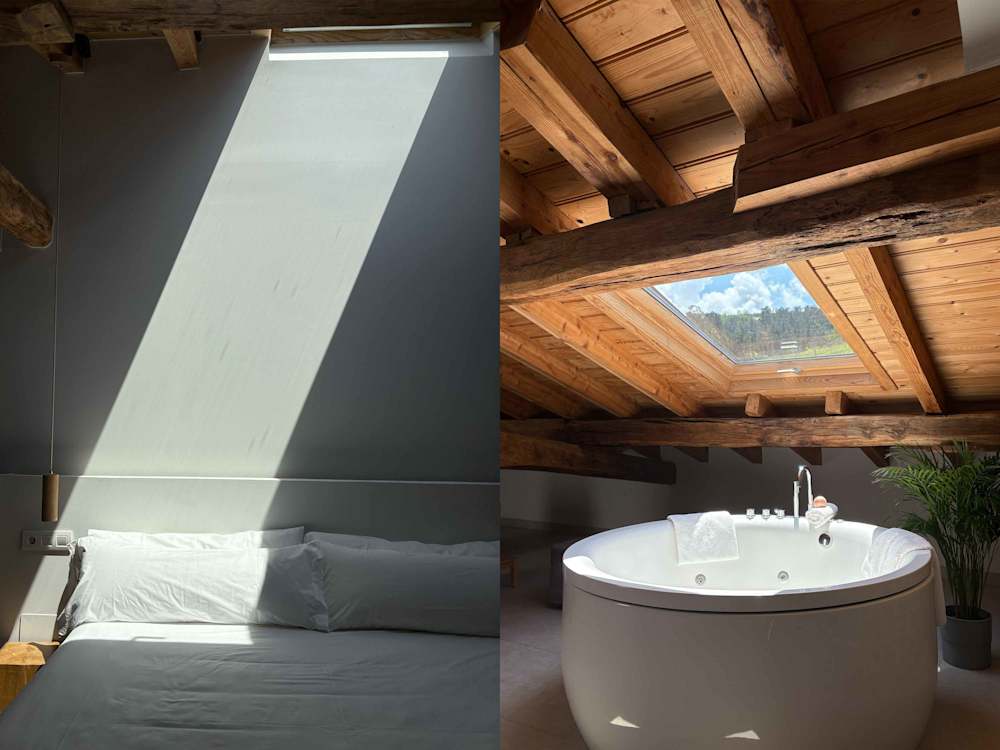
Instead of a tasting-induced snooze in my Junior Suite, which beckons with its vineyard-gazing bed and whirlpool tub, I opt for fresh air, strolling downhill to Bermeo. I sit on its sea wall with my walk-reward ice-cream, watching people fish and dogs paddle in the turquoise water. Earlier, sommelier Zorion introduced me to a coastal-grown txakoli made from salt-crusted Hondarribi Zuri grapes; similarly, the sea breeze infuses my fruity gelato with a saline touch, and I realise how integral this setting is to Bermeo’s culinary culture and flavour profiles.
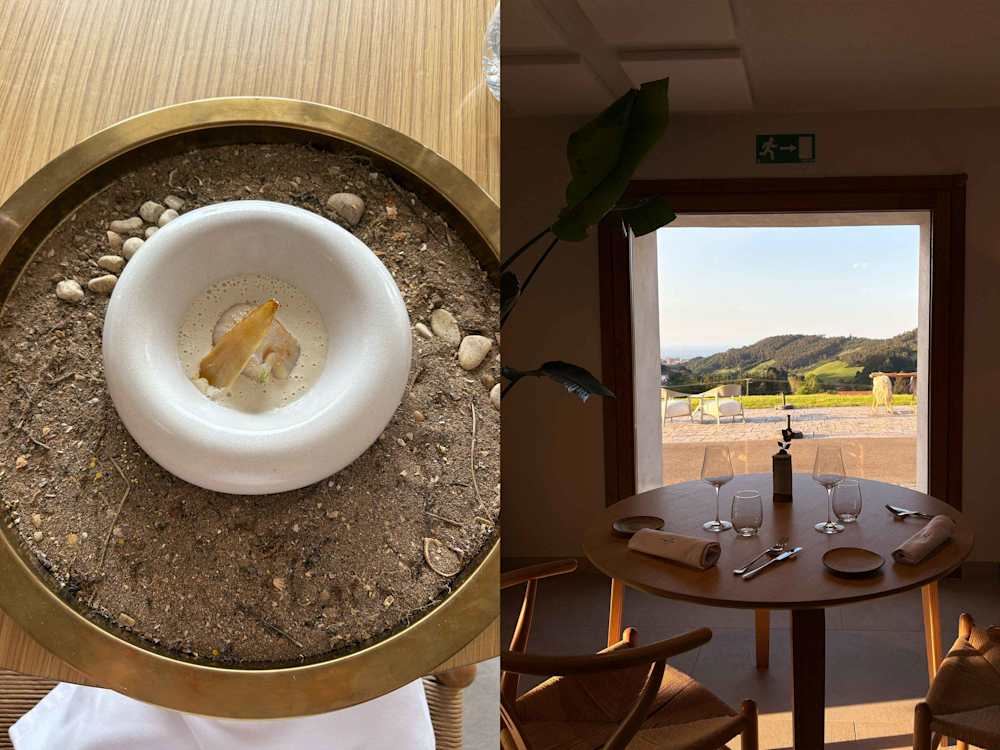
I have the hotel’s restaurant, Rola, all to myself at dinner. I nab a front-row table overlooking that panorama — its sunset-to-dusk colour changes compete with owner-chef Gaizka’s hyper-local dishes for my attention. View-admiring is hungry work, and I tuck into ham-veiled leek croquetas, grilled sea bass and a tart made with apples plucked from the grounds. Service is relaxed: not inattentive, more ‘what’s the rush?’
I come from a food-loving (gluttonous) family that often plans our next meal while in the middle of one, so I don’t bat an eyelid when the breakfast menu is dropped off during dinner. Hoping my metabolism will triple its usual speed overnight, I tick off pan con tomate with jamón, natural yoghurt, homemade apple juice, pain au chocolat and coffee.
This wholesome spread is welcome fuel the next morning as Josu maps out a hiking route to take me past some of their suppliers, so I can understand just how local everything is. But first, I detour to nearby potter Vicente Alcaide’s workshop, where he hand-throws all of Rola’s ceramics, before I zig-zag across the hillside on a culinary walkabout through some of their fruit and vegetable, meat and egg producers. Turns out ‘local’ means walking distance.
I ascend cow-grazed Katillotxu hill, spying slivers of the estuary through the pine forest, and weave down to seaside town Mundaka, where I settle on a whitewashed terrace with a cold caña and some pintxos. My peace is disturbed by the familiar baritones of football-goers: ‘Imagine booking a holiday to Bilbão months ago and then all of us meatheads turn up!’ I can’t help but crack a smile. Later, back in Nafarrola’s soft-hued and herbal-scented embrace, I drift off under skylight-framed constellations.
By this point, I’m rather smitten — stuffed, too — but I have a feeling I’ve saved the best for last: Rola’s lunchtime tasting menu. We begin at the restaurant’s entrance, the first stop on this transportive tour, where Josu talks me through the region’s history and the hotel’s 19th-century foundations to set the scene. The meal is a love letter to Basque landscapes, traditions and people, and each course represents a story or feeling. The whole experience is fun, polished but unpretentious, and free from the usual formality of fine dining.
I’m spoiled with a flurry of bites: an anchovy lounging over a ripple of txakoli-infused butter on a corn cracker; a glossy slick of Pedro Ximénez caramel over pâté; seasonal teardrop peas that visually and texturally pop against a light cod mousse. But the fourth course is a personal highlight: a butter-soft scallop with a silky fennel purée. It’s an edible encapsulation of my hike, inspired by the point where river and forest meet, and Vicente Alcaide’s Scandi-style plate sits on a tray of trail-foraged earth.
A trio of pine, bay leaf and eucalyptus ice-creams promises to make you feel like ‘you’ve fallen down face-first in the forest’; the penultimate course is a tribute to the name ‘Nafarrola’ — ‘Nafarr’ meaning from Navarra and ‘ola’, a wood cabin — which pairs local and Navarran cheeses with apple sauce made using fruit from the hotel’s orchards.
The sixth course is an homage to the brothers’ parents, grandparents and ancestors, and to local customs. Josu boils a cube of Bermeo tuna in saltwater (a traditional method, and a childhood memory for him and brother Gaizka), which is served in a net handwoven by the town’s fisherwomen. Through touches like this, the brothers preserve and evolve the community’s legacy.
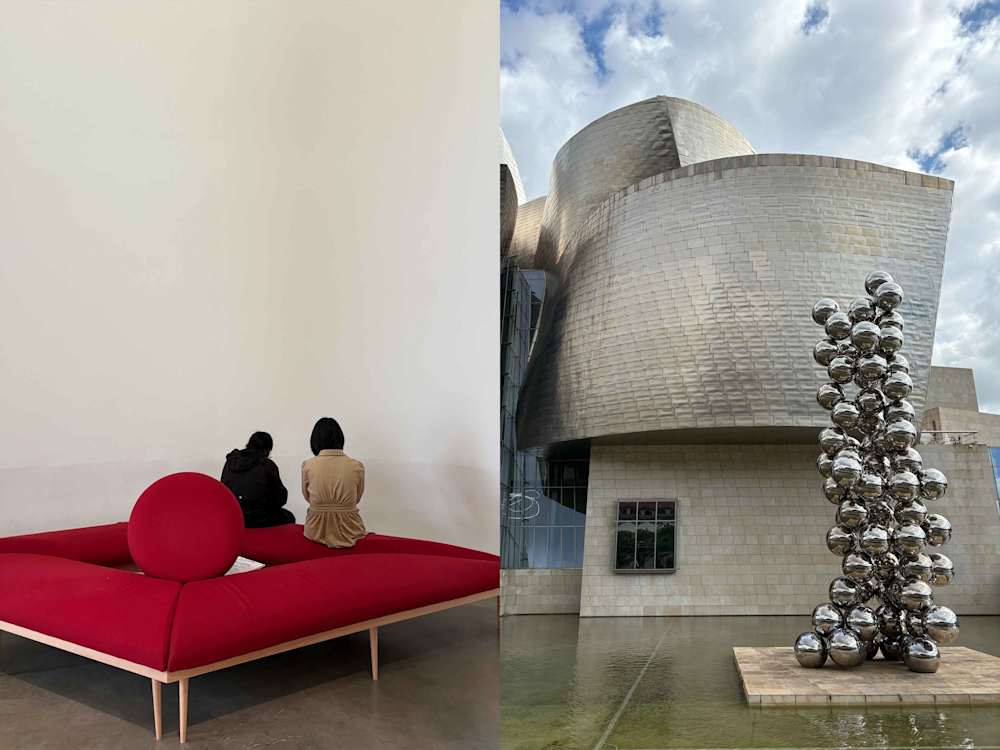
After my body-and-soul-nurturing feast, Josu and his family are also heading into Bilbão and kindly drop me off at the Guggenheim. Frank Gehry’s metallic architecture and the accompanying crowds feel far removed from my idyllic sojourn, but various artworks are reminiscent of Nafarrola. A warm-hued Rothko that looks like the forest’s striped trail markers; a Willem de Kooning canvas with pastoral blues, greens and yellows; Helen Frankenthaler’s sage painting, as verdant as Rola’s herbal digestif. But the most striking (and comical) reminder is not the odd flash of a Spurs shirt, but a light installation that displays the phrase ‘I can’t eat’. Oh, but I can — and thanks to Hotel Nafarrola, I have, very well indeed.
Find your next tastebud-tempting stay in the Basque Country with our full collection