



It’s not often that people get excited about Wiltshire. As a Dorset native, I firmly bat for the home team, but have always appreciated this neighbouring county to the north; visiting its stately homes with my parents as a reluctant teen and then willing young adult, Stourhead (famously used as a filming location for the 2005 adaptation of Pride & Prejudice) and Lacock Abbey among them. We would also visit Salisbury, its only city, home to one of the most impressive cathedrals in Britain and the tallest spire in the country. Inside its halls are one of the four remaining books of the Magna Carta. But I had never given its food scene much thought — until now.
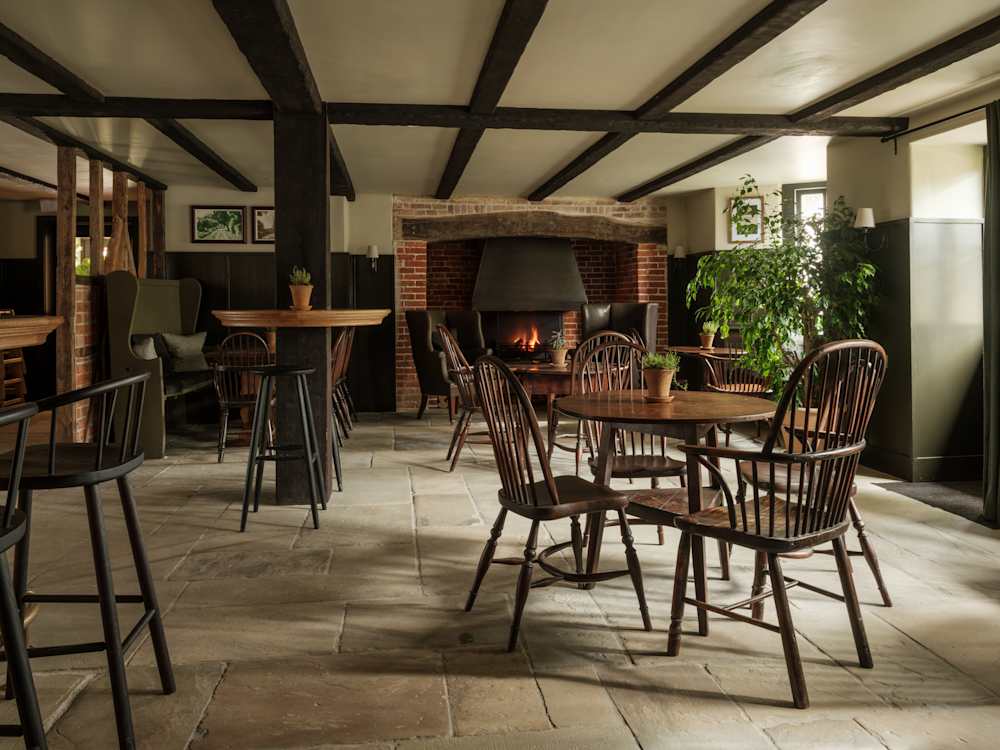
The Great Bustard
As with the Cotswolds (which the county’s northern reaches fall into) and indeed England, Wiltshire is absurdly pretty, especially as the villages are draped with Britain in Bloom regalia in midsummer, when I visit. And like the Cotswolds and Somerset, there are destination restaurants that are worthy of a pilgrimage, such as Pythouse Kitchen Garden (and its Green Michelin Star), Lucknam Park’s Restaurant Hywel Jones and The Dining Room at Whatley Manor. But it also triumphs in the pub-with-rooms category — humble, low-key places excelling at the simple but sometimes elusive art of good food and drink.
On this most recent trip, I stayed at The Great Bustard on the Great Durnford Estate, a short drive from Salisbury. Happily for the locals, this once boarded-up village pub has been brought back to life, retaining a corner that even the grumpiest bar-propper will be hard pressed to dislike. A glossy new conservatory wing has been added, too, but even the villagers have warmed to it. There are sheep roaming in the fields next door, where much of the farm’s products — pecan whisky, ewe’s curd, blackberry jam and a line of bath products among them — are made.
A pizzaiolo has been drafted in to create pizzas with ingredients expertly sourced from Italy, but the rest of the menu, by talented young chef Jordan Taylor, will tempt even the most committed away from the dough. It’s always hard to steer me, a complex-carb enthusiast, away from Italian cuisine, but I’m rewarded for my efforts with bream ceviche, served with radish and smoked crème fraîche, and Cornish monkfish with turnips, gnocchi and olive-oil sabayon. My friend feasts on a heritage-tomato tart with burrata, basil and olives, followed by Great Durnford Estate lamb with braised baby gem and petits pois. I recently spent four days in Barcelona with this same friend, where she took a grand total of seven photographs, so I’m surprised to see her papping her plate — but then, the creations coming off the pass are worthy of a snap.
The bar stays high at breakfast, where all the usual suspects are on the menu, with a few elevated options: estate mushrooms on toast with ewe’s curd and onion jam; buttermilk pancakes with peach and nectarine compote and pistachio; confit-duck potato rösti with duck egg and pickled-walnut ketchup. My granola arrives garnished with giant blackberries and indigo-hued flower petals; almost too pretty to eat.
That day, as the food show had to go on, I called by The Grosvenor Arms in Hindon for lunch after a stroll through part of the Fonthill Estate. This is the kind of pub Anglophile dreams are made of, with lots of cosy nooks and crannies and a beer garden with white wrought-iron chairs and red-and-white-striped seat cushions making it even more attractive on this sunny solstice weekend. The menu has a subsection devoted to ‘pub bangers’: classics executed flawlessly, alongside more modern staples such as charred hispi cabbage and watermelon salad.
My next stop was The Bradley Hare on the Duke of Somerset’s estate in Maiden Bradley, close to the Somerset border — as well as exploring Wiltshire, you’ll be able to cross over to Frome and Bruton from here. There are lots of walking trails you can set off on, a village church, parts of which date back to the 12th century, and a farm shop. I spot an unmanned (unless you count the robots) milk-dispensing station, where you can tap your bank card in exchange for some fresh dairy products (with the option to upgrade to a milkshake) in a Sylvanian Families x 2025 mash-up.
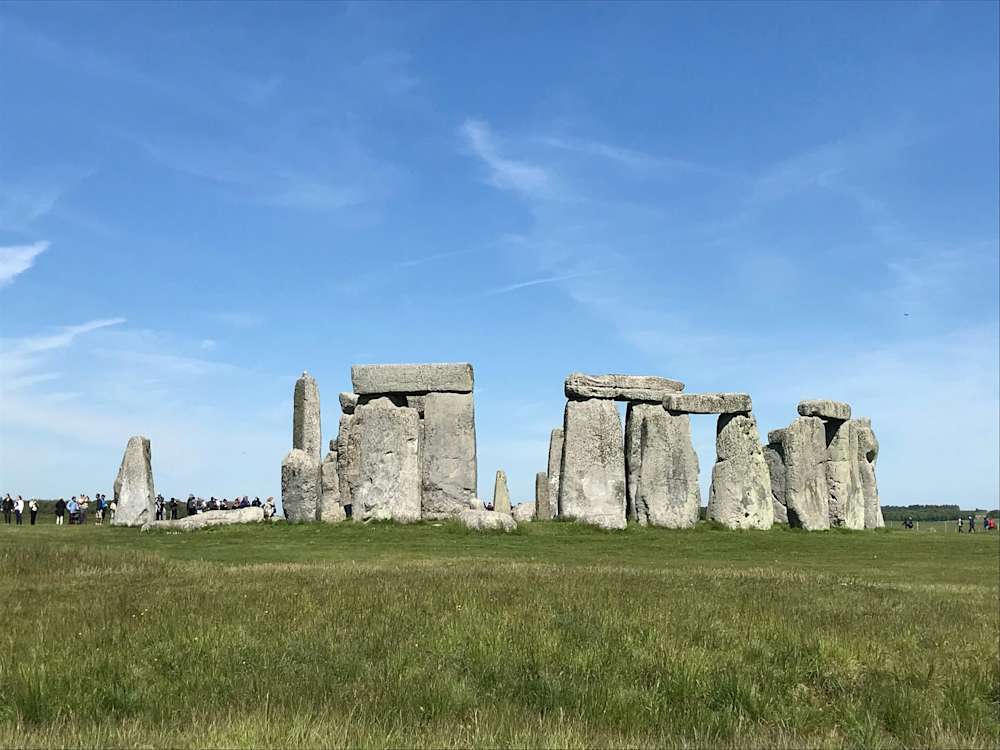
Stonehenge
Hotel bathrooms these days tend to be high-gloss affairs with gleaming chrome everywhere you look and slick back-lit mirrors, so it felt nostalgic to see the old-fashioned burnished-brass bathroom fixtures here. That night, after apéritifs in the genteel English garden, we dined on burrata with pea, mint and broad beans; cured trout with mustard and cucumber; aubergine schnitzel with chard, whipped ricotta and yellow courgettes; and rib-eye with mustard leaves and bone-marrow butter.
Wiltshire is home to two tourist-attraction big-hitters: ancient Stonehenge and Longleat Safari Park. As it was the summer solstice that weekend, I avoided Stonehenge, in case I ended up spending the longest day of the year stuck in a pagan traffic jam on the A303. But at Longleat, I went on safari without setting foot on a plane, thanks to that exclusively British trope: the eccentric aristocrat who loves assembling exotic animals on his acreage. Since the 1960s, various incarnations of the Marquess of Bath have been slowly expanding the Longleat menagerie, starting with lions and growing to include koalas, hyenas, giraffes, zebras, seals, tigers and gorillas. There are also camels, who must’ve sensed my kindred Middle Eastern DNA as they flocked to congregate around my car until they were rounded up by a park ranger; and monkeys with a penchant for windscreen-wipers (luckily, mine survived). The great manor at the estate’s heart was completed in 1570 and holds untold treasures, from sculptures that could sell for tens of millions to late 18th-century French ceramics worth £2,000 a plate.
That day, as if I needed any further calorie intake at all, I had a lunch date at The Bath Arms at Longleat, sister stay to The Beckford Arms in Fonthill Gifford and The Lord Poulett Arms over in Somerset. This is pub perfection, masterminded by Charlie Luxton, who has created a simple but sublime group of pubs with rooms. No fuss or frills, just excellent food, charming beer gardens, snug corners for over-indulging in and comfortable rooms to retire to if you literally cannot move after your meal. We enjoy spectacularly friendly service as we eat a lunch of asparagus with whipped goat’s curd; mackerel with pickled fennel, apple and leek; grilled tuna steaks with a wedge salad, buttermilk dressing and chimichurri; and ricotta sponge with raspberry and clotted-cream ice-cream. Charlie’s wife Chloë is similarly good at championing British things — she created the Bramley line of bath products, which uses homegrown ingredients and is made right here in Wiltshire. On the way there, we passed through the village of Horningsham where a Postman Pat-alike was doing his rounds in his little red van and there was an impossibly quaint schoolhouse. I had to check I was in the right century.
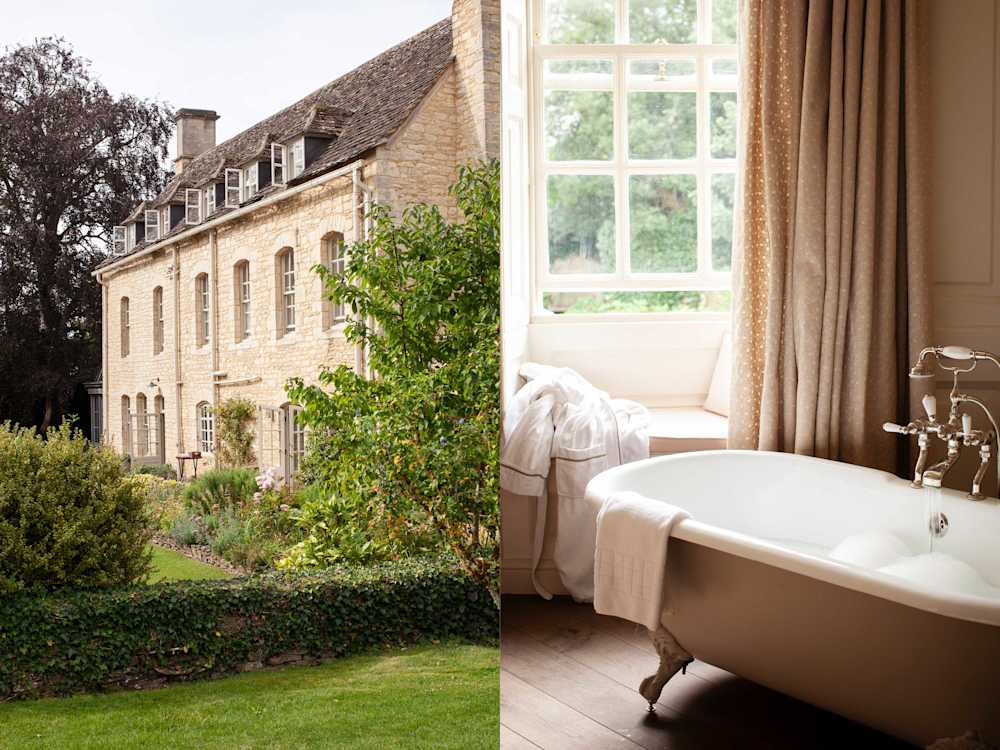
The Rectory Hotel
Further north into the Cotswolds, there are photogenic villages such as Castle Combe and Slaughterford, and market towns like Corsham, Malmesbury and Bradford-on-Avon to discover. At The Rectory Hotel in Crudwell, near Malmesbury, regular supper clubs are held to herald the season changes. Call in for a lunch of ricotta agnolotti with wild-garlic pesto or sea-bass with mojo verde and pink-fir potatoes in the glasshouse, or out in the grounds if the weather’s playing nicely.
A 10-minute drive south in the heart of the market town of Malmesbury, The Old Bell may look quintessentially British, but its current custodians are Texan. They’ve taken on this Grade I-listed building — quite possibly the oldest hotel in England, constructed in about 1220, next door to the remains of an abbey and on the site of a castle — and coaxed it into the current century with patterned wallpapers and velvet sofas, ensuring appropriate period details such as fireplaces and four-poster beds are intact.
Dorset will always win out for me, because I love the coast, not just because I’m stubbornly loyal to my home county. But beyond Stonehenge in Wiltshire, there are the countless gourmand-pleasing pubs and restaurants, villages that even I have to concede are even prettier and several scenic driving routes, not least the A303, which passes by the mighty monolith itself on its way south-west; plus, we share (with Hampshire) the photogenic landscape of Cranborne Chase. Whether there’s an equinox or not, Wiltshire is always worthy of another visit.
See all of our Wiltshire hotels, or discover more of England’s scenic South West
The Great Bustard photo by Dave Watts
The Rectory Hotel photos by Katie Longley