



Let us introduce you to the world’s most exciting hotel chefs as we guide you through the gourmet getaway spots we’re hungering for…
WHO’S IN THE KITCHEN?
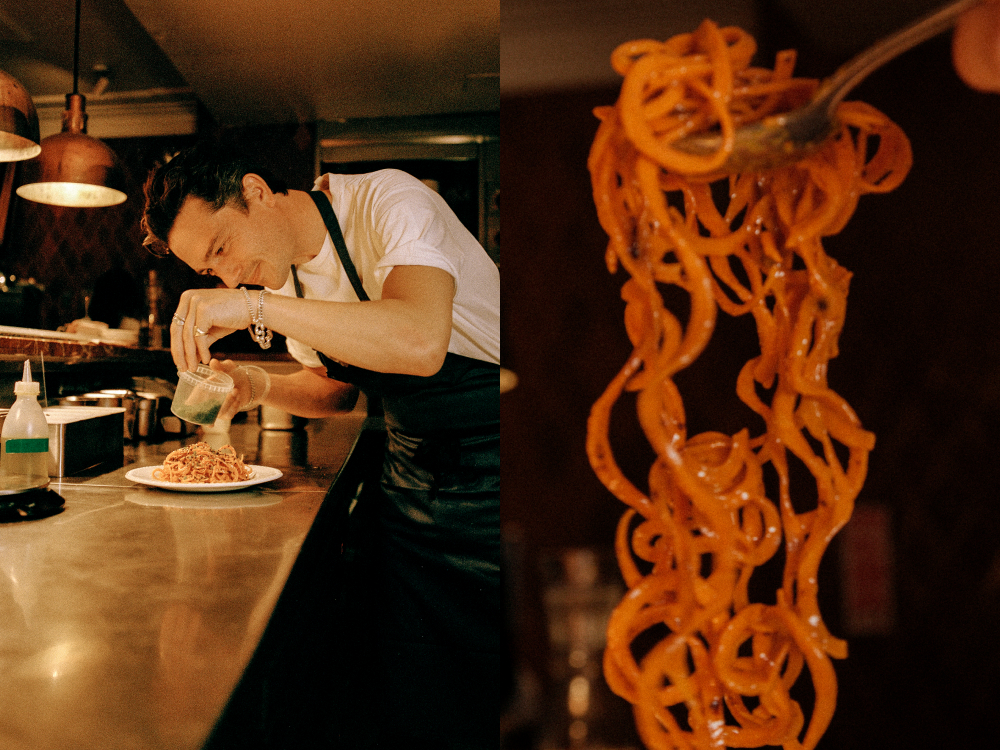
Chef Jackson Boxer lacks an ‘off’ switch. Since opening his first restaurant at just 23, his culinary ventures have spanned Notting Hill eatery Orasay (now in its new incarnation, Dove), the restaurants at Experimental Group hideaways Henrietta hotel and Cowley Manor, a brunch spot in hallowed department store Selfridges, and a revamped dive bar in Soho. Oh, he’s also a father of four.
Perhaps his seemingly unlimited energy and drive spring from his talented family: his grandmother is legendary cookbook author Arabella Boxer; his grandfather was the founding editor of The Sunday Times Magazine; his father runs beloved Vauxhall deli Italo; and brother Frank opened an eponymous, infamous café-bar on a carpark rooftop in Peckham. There’s no ‘nepo’ to Boxer, though — just pure ambition, an ethical approach to business and a deep love for what he does.
WHAT’S COOKING?
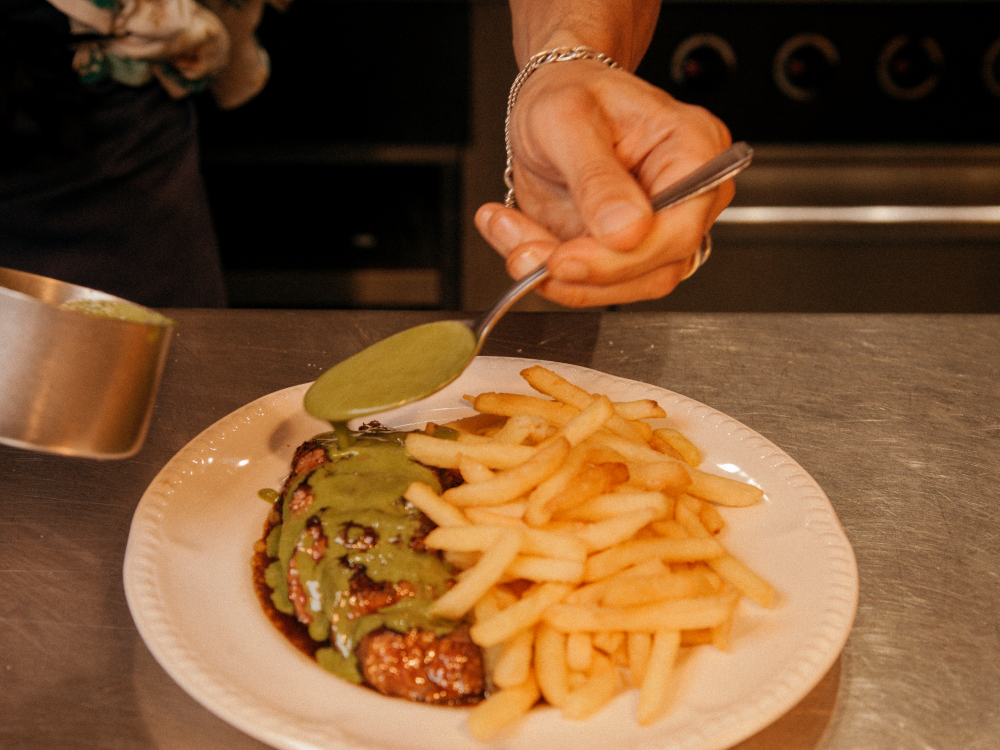
Boxer’s Brunswick House restaurant grew from a pop-up into a more permanent post, serving clever eats such as pork with cherries and mint, and monkfish in satay butter with grapefruit. Orasay had a poetic Hebridean bent to its menu, inspired by Boxer’s childhood holidays; Henri cherry-picks his Parisian favourites (the steak frites — recipe below — is très bien); while Cowley’s food is British-leaning. Those lucky enough to score one of Dove’s 10 daily burgers (per service) will have a memorable mouthful of aged rib-cap from HG Walter, finished with gorgonzola and onion.
RECIPE FOR SUCCESS
Boxer didn’t intend to go into cookery (he first tried running a gallery then writing for a magazine), but as a teen came under the tutelage of OBE-holding, New Zealand chef Margot Henderson while working at London institution St John’s. From there, he leapt into restaurant ownership and hasn’t slowed down. He’s since navigated the devastating impact the pandemic had on hospitality, piled on more projects, and — with his deep respect for kitchen camaraderie and a democratic approach to dining — he’s become a figurehead in the industry.
Can you take us back to the moment, dish or experience that made you first fall in love with cooking?
I was very lucky to be brought up being fed very delicious food. Everything was simple — a lot of it grown by my grandmother. We didn’t really eat meat, so [we had] lots of vegetables, soups, stews and salads. I didn’t appreciate how lucky I was at the time. It was only later, when I hit adolescence and started to figure out how to pursue my own way in the world, that I understood how remarkably I’d been blessed with so much beauty and love in my upbringing, and how drawn I was to finding my own way of expressing that.

You’ve said the communality of food inspires you — how do you foster and maintain a convivial ambience in your restaurants?
I think there are two parts to this. When I say the communality of food, I mean that food is a great area to work in. I hesitate to call it an industry, but it’s certainly a field of culture, albeit a somewhat soft one. I think compared to other jobs which place a certain amount of creativity and integrity at the centre of their practice, food is a rather jolly and convivial one.
To work in — or even run — a small restaurant is not to find yourself in aggressive competition with your peers, but to be broadly admiring of all of them. But also, restaurants are about companionship, and to have a job which is fundamentally preoccupied with communicating love through the medium of food — so that our guests can share in that together — continues to be a source of deep pleasure for me.
Brunswick House, your first restaurant, opened when you were just 24. What advice do you have for young, ambitious chefs looking to make a start in the industry?
Work hard. Be kind. Don’t think about yourself too much. Try to put everyone else first. Nothing achieved on your own is as rewarding as success shared with a team. It took me about 10 years to figure this out, and I had to learn some of it somewhat tortuously. I feel like perhaps it’s easier said than understood, internalised and practiced, but I think it’s a solid code, nevertheless.
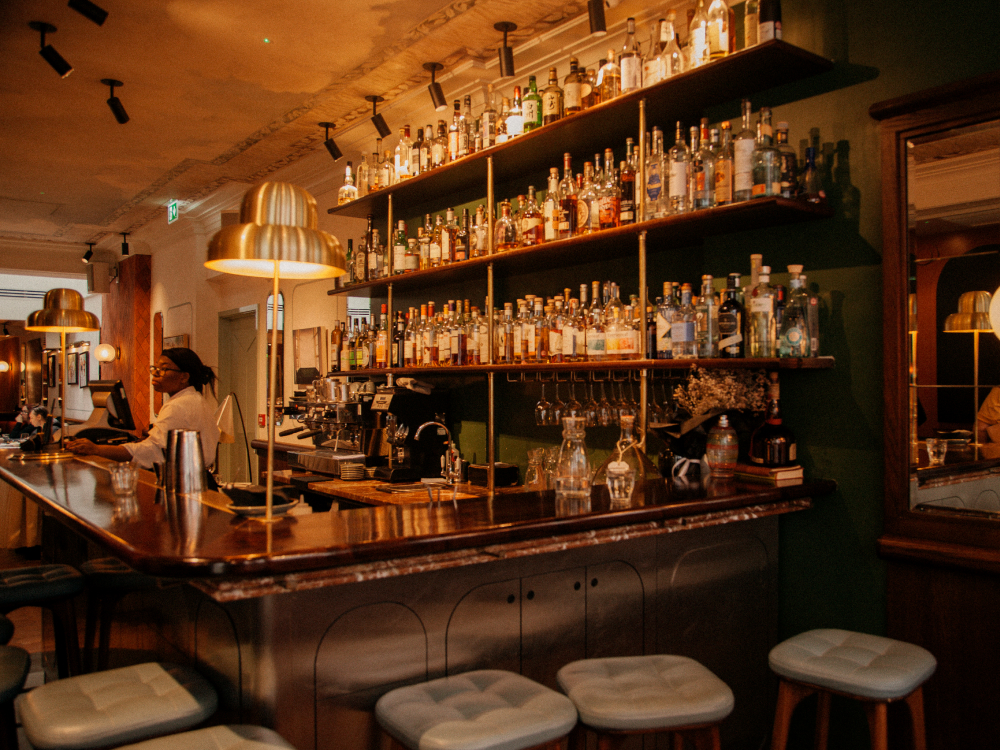
With many of your restaurants based in central London, Cowley Manor in Cheltenham is a bucolic change of scene. What have you most enjoyed about working in the countryside and how has this change informed your cooking?
It’s nice being able to grow herbs and vegetables a few steps from the kitchen door! And to go out and pick wild things in the woods at a moment’s notice. [I also like] the light, and the weather is so much more enjoyably appreciated outside of London. I feel a lot calmer at Cowley than I do in my London kitchens, and I think that’s apparent from the ease and comfort of the cooking done there.
You also own Below Stone Nest bar in Soho. What’s the secret to creating a great selection of stomach-lining eats, compared to a fine-dining menu?
I think the secret is to remember that people go to bars to drink. While they may want food, they certainly don’t want anything that’s going to ask too many questions of them. Below Stone Nest is interesting because we’re in an old crypt, with very little power and next to no ventilation due to the historic nature of the building, so we have to get very creative in how we give people that satisfying hit of ‘drinking food’, without the ability to grill or fry.

If we dropped into the Henrietta kitchen mid-service, what would we experience?
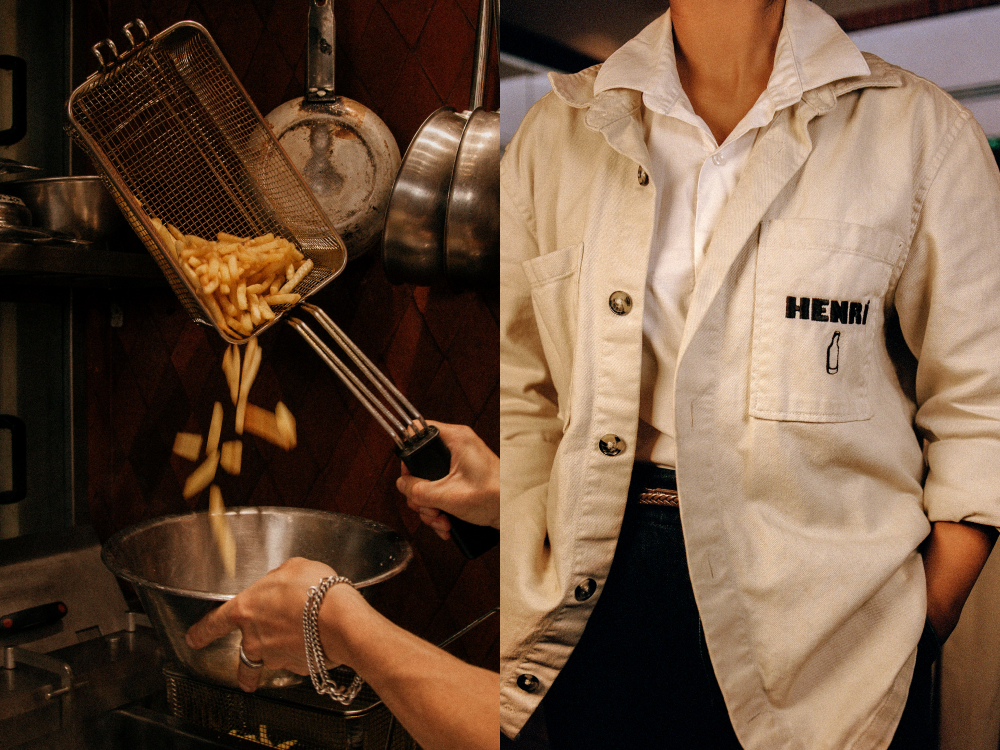
Vast quantities of butter. The use of butter with liberal abandon is not unique to French cuisine, but it’s in French cuisine that it reaches its apotheosis. For me, Henri was an excuse to push that as far as possible. I love butter. I think good butter is one of the most naturally delicious, pleasurable and seductively perfect things I can imagine eating. I will happily eat good butter on its own, like cheese.
How do your different restaurants express different sides of you creatively?
I try to invest an equal amount of myself in each of my kitchens. Nevertheless, Brunswick House is the one of which I’m most proud. [It’s] the most distinct, unusual and unique, with the greatest sense of magic and love in its bones. It’s also the one that has grown and evolved with me the most, and I feel deeply and inextricably linked to it. It’s a very special place, with a very special team, and I’m immensely proud of it, despite the fact its South London posting gives it perhaps a slightly lower profile than my other kitchens.
With location and cost constraints to consider, how do you run a restaurant sustainably in London?
It depends if you mean environmentally, economically, politically or socially sustainable. All are aspects of sustainability, and all are often in conflict, annoyingly! The short answer is: you make it work. You stick to your values, try not exploit anyone, try not to leave the world worse off than how you found it. I still believe that’s possible, and I still believe that’s sufficient.
Your process of making a dish is collaborative with the kitchen team — can you tell us how you go about creating from conception to practice?
We’re all just playing about with food together. I’m very receptive to any ideas my team has that they’d like to explore. We often sit down and think about what would be fun to cook and what we’re trying to say by taking that approach. It then becomes my job to draw that conversation out into a dish that is both coherent and achievable within the context of the rest of the menu, and the kitchen set-up. Often my team will have a brilliant idea, which is wildly impractical and over-elaborate. My job then becomes getting to the heart of what made that idea exciting and editing it down to its most pure and effective expression, so that it can shine among every other bold and foolhardy idea we’ve had — while not knocking the kitchen off the rails every time somebody orders one.

What’s the best advice you’ve received from the culinary talents in your family?
I’m ashamed to say I’ve never been very good at listening to advice. Hence why I have had to learn everything the hard way. Be kind — my grandmother told me that when she thought I was getting a little puffed up from my early successes. She was absolutely right.
What ingredient have we all been sleeping on?
I’m always dazzled that fruit is just something that grows on a tree. An English apple, freshly picked, is one of the most delicious things I can ever imagine eating — it’s crisp, sharp, cool, crunchy, sweet, sour, fragrant, juicy… and [there are] so many different types, shapes, colours, sizes.
Orasay’s menu was inspired by childhood holidays in the Western isles of Scotland, you’ve devised Parisian cuisine at Henri and a more British lean at Cowley Manor. Which cuisine are you itching to try your hand at next?
I’m a Londoner. I cook the food I grew up eating. I learnt to cook in London, but I learnt to eat in Paris. There is very little technical difference between English and French food, just a shift on emphasis. Henri is me cooking Parisian food as an Englishman, and Orasay was me cooking Scottish food as a Parisian. However, I feel Brunswick is my most ‘London’ restaurant and probably why I feel most at home there.
You’ve had incredible travel-related experiences: picking Longjing tea in Hangzhou, touring legendary Hong Kong restaurants and developing dishes for Kenyan lodge El Karama. What’s the most elaborate adventure you’ve undertaken in search of a meal?
I rarely enjoy travelling a great distance for one specific restaurant — it’s almost impossible for anywhere to live up to that kind of expectation. I did, however, accept a job to cook in Sydney, purely for the opportunity to eat at [lauded wood-fired cooking restaurant] Ester, which was absolutely one of the greatest pleasures of my life; I’d do it again in a heartbeat.
Where are your favourite under-the-radar places to eat in London?
Planque [modern British restaurant in Haggerston], Quality Wines [Mediterranean-inspired dishes in Farringdon] and Dalla [Italian wine bar in Hackney].

You describe yourself as a dreamer — are there any big dreams you’ve had on the backburner which you’re eager to put into action?
I’m a dreamer in the sense that I believe a better, happier and more equitable world is possible. I’m also a dreamer in the sense that I haven’t got the first clue as to how that could happen.
With such a wide style of eateries under your belt and many career ups, downs and surprises, what about cookery still excites you?
Food only stops being exciting when you’re full. The trick is not to eat too much or too often — then it never gets dull.
ANSWERS À LA MINUTE
You can hop to three countries for breakfast, lunch and dinner — where are you going?
For breakfast, the dim-sum halls of Hong Kong; lunch at one of the old-fashioned trattorias in Bologna; and dinner in Paris, which I think is one of the most exciting and dynamic food cities in the world right now, with some of the greatest produce passing through it and a seemingly ceaseless churn of interesting young chefs finding and honing their voices there.
You’ve been tasked with creating an in-flight menu. What’s on there?
Soup. Given the constraints of airplane kitchens, it’s very hard to do anything well up there; however, soup (the practicalities of service aside) just needs to be gently heated and properly seasoned. The only good in-flight food I’ve ever had was the noodle soup they serve in Cathay Pacific’s business class. I hate feeling full on flights; I want to hit the ground running. So, soup.
What’s the first thing you do when you check into a hotel?
Open all the windows and turn off the heating and air-conditioning, which I loathe.
Room service: what are you ordering?
I’ve never had a good room-service experience with hot food (besides at Cowley Manor, naturally), so I’d stick to caviar, which is unlikely to lose too much of itself in the journey from kitchen to bedside.
Which dish instantly transports you home?
Toasted bread, cold butter, black tea — my domestic staples.
Which dish from your travels do you wish you’d created?
I never wish I’d created other dishes; that’s not a concept which has meaning for me. Food is food; we’re all singing the same notes — it’s the meaning you put into them that counts.
What’s your guilty-pleasure holiday treat?
Crisps and ice-cream for breakfast, lunch and dinner.
Favourite restaurant for blowing the budget?
I never walk into a restaurant with a budget in mind, but equally, I almost never eat in egregiously expensive restaurants.
Where and what did you last eat that really surprised you?
Oreade, the fine-dining restaurant at Monteverdi in Tuscany. Riccardo Bacciottini did a fantastic job of synthesising the specifics of [Tuscan cuisine] with his intelligent and judicious use of more progressive, contemporary techniques. An excellent meal.
Room for more: get stuck into the rest of our Yes, Chef series, savour our culinary collection and get to know Boxer better