



Let us introduce you to the world’s most exciting hotel chefs as we guide you through the gourmet getaway spots we’re hungering for…
WHO’S IN THE KITCHEN?
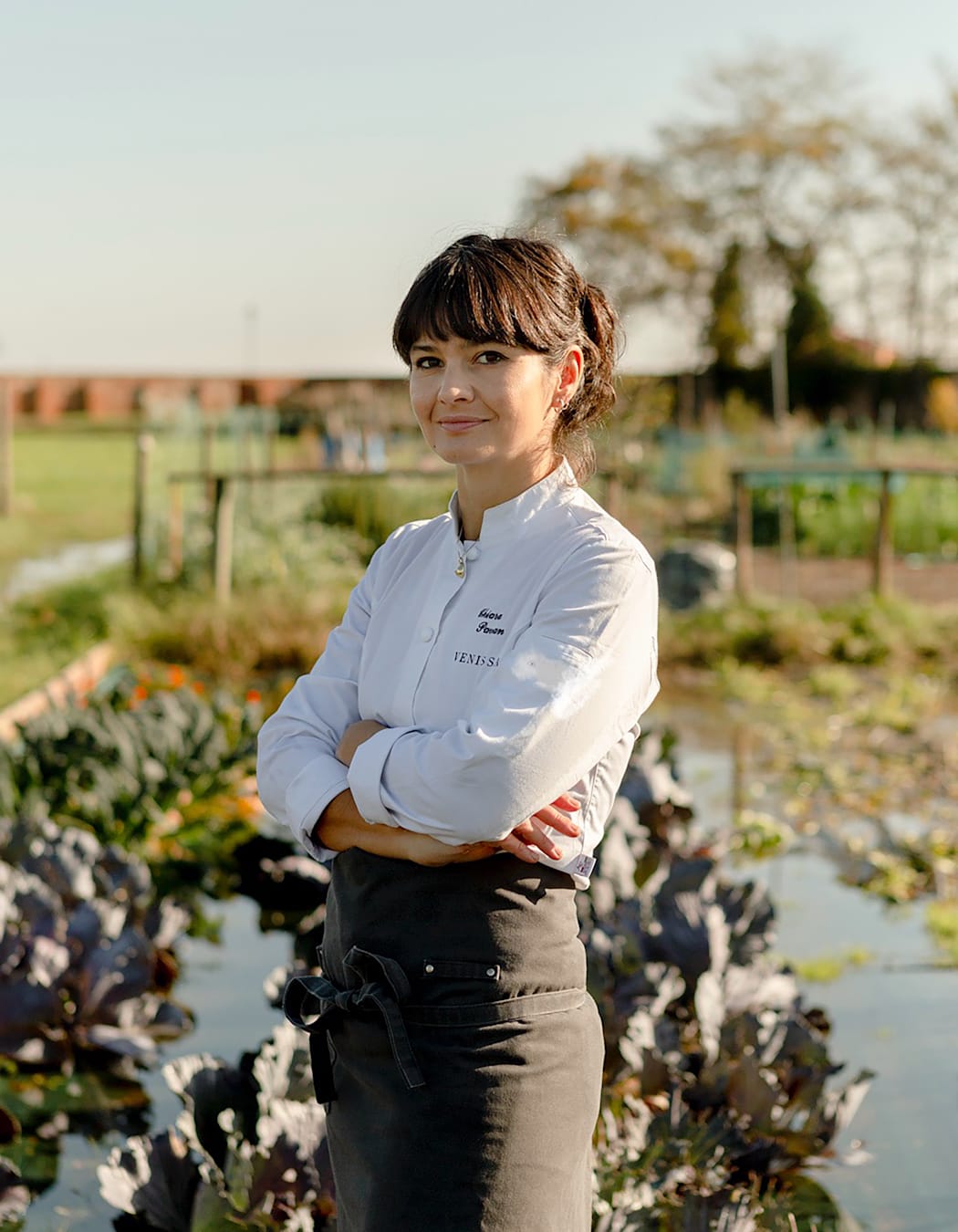
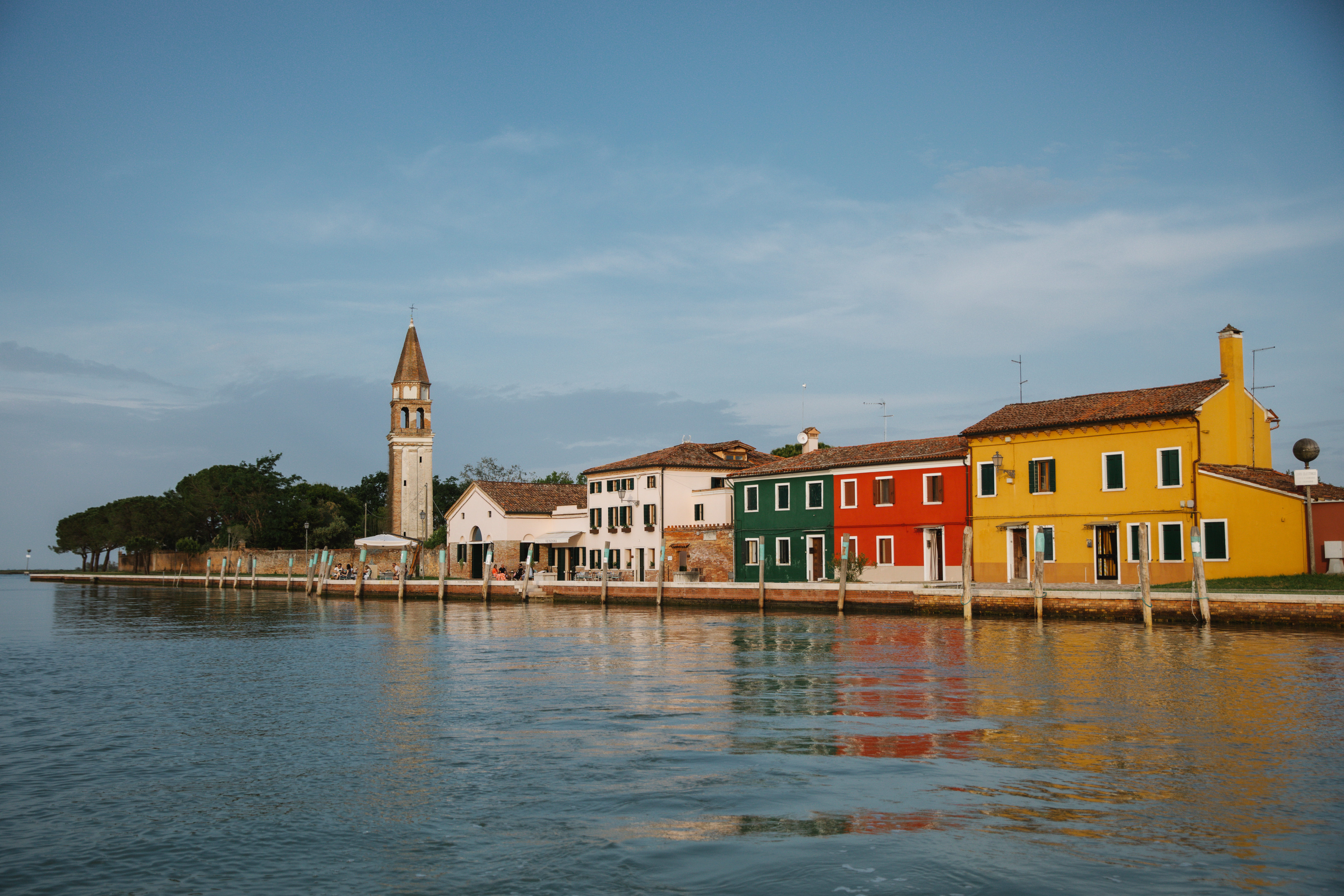
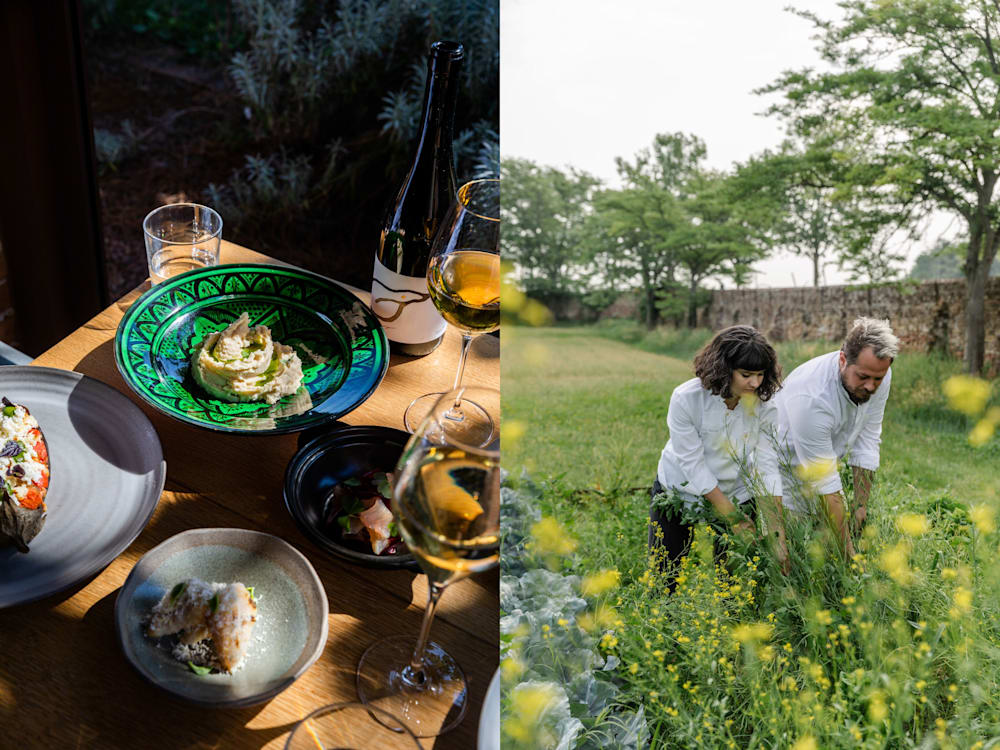
It’s unsurprising that Veronese chef Chiara Pavan specialised in philosophy of science at university — she’s a talent whose approach to dining is methodical and innovative, and she’s working where she’s needed most. As a passionate advocate for what she’s dubbed ‘environmental cuisine’, she’s made the restaurant at Venissa hotel — alongside co-head chef and partner Francesco Brutto — a bastion of sustainable eating and a delicious way to engage people with the preservation of the Venetian lagoon’s biodiversity and the city’s cultural heritage.
WHAT’S COOKING?
Pavan makes a persuasive case for going plant-based — there’s no meat on the menu, just a few fish dishes using only invasive species that are harmful to the lagoon’s ecosystem, and vegetable-forward dishes made from produce grown with ancient seed strains native to the region. This could be the Venetian castraure artichoke in risotto with egg and black garlic; cypress-infused spaghetti with Dorona grape; or eel with truffle and porcini.
RECIPE FOR SUCCESS
Venissa’s ethical tasting menus have earned its restaurant both a Michelin Star and Michelin Green Star, and Pavan has been lauded by magazines such as Forbes Italia, Elle Spain, Gambero Rosso and Identità Golose for her approach to food waste and influential practices. She honed her cookery style at restaurants across Europe, including Da Caino in Maremma and season-swayed eatery Zum Löwen in Alto Adige, but Venissa’s Mazzorbo island setting, with its own fruitful kitchen garden, very much suits her tastes.
You’ve described your cookery as political and radical — how so?
We care a lot about sustainability, so we decided to focus on vegetables and not serve meat — our menus are mostly plant-based. For example, our seven-course tasting menus have maybe just two fish courses; the others are vegetarian or vegan. We also don’t use a lot of dairy products. Going meat-free was a choice we made four years ago; now, I’m not sure it was the best choice, because maybe it’s better to use less meat, but sourced from sustainable farms, and avoid overfishing. But we made this choice, so currently we use just vegetables and a little bit of fish.
We’ve also done deep research into how we can best work with leftovers; for example, we use leftover sourdough for making pasta or some desserts, or stale bread becomes a soy sauce (without any soy beans). We grow most of the vegetables we use in our kitchen garden, and we care a lot about environmental topics; we decided to give each guest cards explaining our ideas at the beginning of each meal. So, this is how we try to be radical and political.
How has the restaurant industry evolved over the course of your career, and what improvements could still be made?
The restaurant industry has evolved a lot over the past few years, especially regarding staff, who are more difficult to find, and we’ve also found that some ingredients aren’t readily available. So one aspect is social, the other is environmental.
[As for] the availability of ingredients, we live in Venice, which is a climate-change hotspot; there’s a blue-crab invasion and the fish we used to find [in the lagoon] aren’t there anymore, so questions about sustainability are coming up. I’ve even participated in a University of Venice round-table discussion about hospitality, gastronomy and sustainability, because the restaurant industry plays a big part. Europe is also going through a [cost of living] crisis; many people now can’t afford a Michelin-star meal, so we have to think about that too; some restaurants won’t be able to survive. Who can stay in the market has to be prepared to compete.
What drew you to working at Venissa?
Eight years ago they asked me to manage the kitchen here, and so I did! I found it interesting and stimulating, and I started receiving awards for my work, so I was motivated to continue my research in this environment.
Sustainability is a huge focus at Venissa — how do you think the restaurant industry in general could operate more sustainably?
By following the rules given by the authorities — say, the EU. Part of the Life Climate Smart Chefs project is to write rules for creating sustainable menus, so [restaurants] following those or taking part in that project could help.
To be more sustainable, you’ve created dishes using heritage plant breeds, pickle flowers that grow too soon for pollination season and more. How do you think eco-friendly practices will shape how we eat in future?
Last year we started using more of Venice’s invasive species. The philosophy behind it is not to fight the invasion, but to use species which are abundant in our sea; so we find those which are alien to the ecosystem and put them on our menu.
[The future] depends on politics and who will be in power in 10 years. The big problem is cutting down on intensive livestock farming. We’re trying to influence things at a cultural level, but it comes back to politics. Maybe there will be more plant-based food. But I was invited to a restaurant in Turkey two days ago and out of six courses served, five were meat. So it varies by country too.
There’s a wave of plant-based dining throughout Europe, but then people are used to eating meat because livestock farming is supported by the government. Maybe fine-dining restaurants in Europe will have more plant-based dining eventually; in 50 years, insect [proteins] maybe… but we don’t know, it depends on politics.
What would be your idea of a romantic meal beyond your restaurant?
Eating in my campervan, with candles — for me, that’s very romantic! I don’t really eat at home; I always eat at restaurants or at Venissa. On days off I tend to dine out or go somewhere in the campervan; I’ve travelled through Italy in it, France, Croatia… everywhere.
As part of your livelihood relies on tourism, what’s your opinion of Venice limiting visitors?
The [city council] aren’t really trying to limit the numbers. This summer they asked [tourists] to pay a tax to enter Venice; but it was nothing, like €5 — I don’t agree with this kind of solution. I think the heart of the problem is allowing people to turn their houses into short-term lets; another issue is a lot of licences being issued for new bars and restaurants, in Venice and throughout Italy. These places don’t necessarily offer good food or support the local economy. I think limiting the presence [of tourists] is a good idea.
What do you think can be done to keep Venice’s culture alive?
Venice doesn’t have enough services for people living here, but it has a lot of culture for sure. Actually, Venice has a fun gastronomic scene — [there’s a] movement of people who enjoy cooking together; who create special events for cooks and people who live here. And we have a lot of natural-wine bars. We are quite lucky as a city. Maybe a food festival could be interesting!
Which of your travels has influenced your cookery the most?
I travel a lot, so there isn’t just one place that’s influenced me. I think that every time my husband (Venissa co-head chef Francesco Brutto) and I travel we take inspiration from the place we’ve visited. I eat a lot when I’m abroad!
I’m in love with Thai cuisine — many Thai dishes, especially pad Thai, are among my favourites, but I don’t really cook [that style of] food. I’m always happy to travel there. I recently ate at Thai restaurant Kiln in London; I found it very fun — it was my favourite restaurant there.
Which one ingredient could you not live without and what’s your favourite way to use it?
Olive oil. I couldn’t cook or eat fish without olive oil — it changes everything. And I use it in every pasta I make. It’s very Italian: every creative dish we make has [some kind of] aromatic olive oil. And I produce a little bit too, I have a small mill in Puglia.
Which emerging food trends are you most excited about?
Simple food will become more and more on-trend. I’m not sure about plant-based food though; on Instagram and social media, I’ve noticed a trend of simple food using animal protein.
ANSWERS À LA MINUTE
You can hop to three countries for breakfast, lunch and dinner — where are you going?
Breakfast would be at either Mérito or Demo in Lima, Peru; for lunch I would go to Kiln in London again; for dinner, I would go to three-Michelin-star-holding Italian restaurant Uliassi in Senigallia.
If you could revamp plane food into something more exciting, how would you go about that?
It’s very hard! I was invited to do so once by a restaurant in Milan Malpensa airport. I think I would go for vegetarian meals — everyone can eat vegetarian — maybe a simple tagine.
You’ve snuck some minis onto the plane – what cocktail are you making?
I like a gin and tonic.
Room service – what are you ordering?
Just a simple salad.
Which dish instantly transports you home?
Pasta aglio, olio e peperoncino (pasta with garlic, olive oil and chilli).
What’s your guilty-pleasure holiday treat?
On holiday I don’t have any guilty pleasures, I allow myself everything. My guilty pleasure at home is avocado, because I try not to eat food that’s imported from the other side of the world. Now you can grow them in Sicily, it’s not so bad.
What’s your favourite dish on Venissa’s restaurant menu?
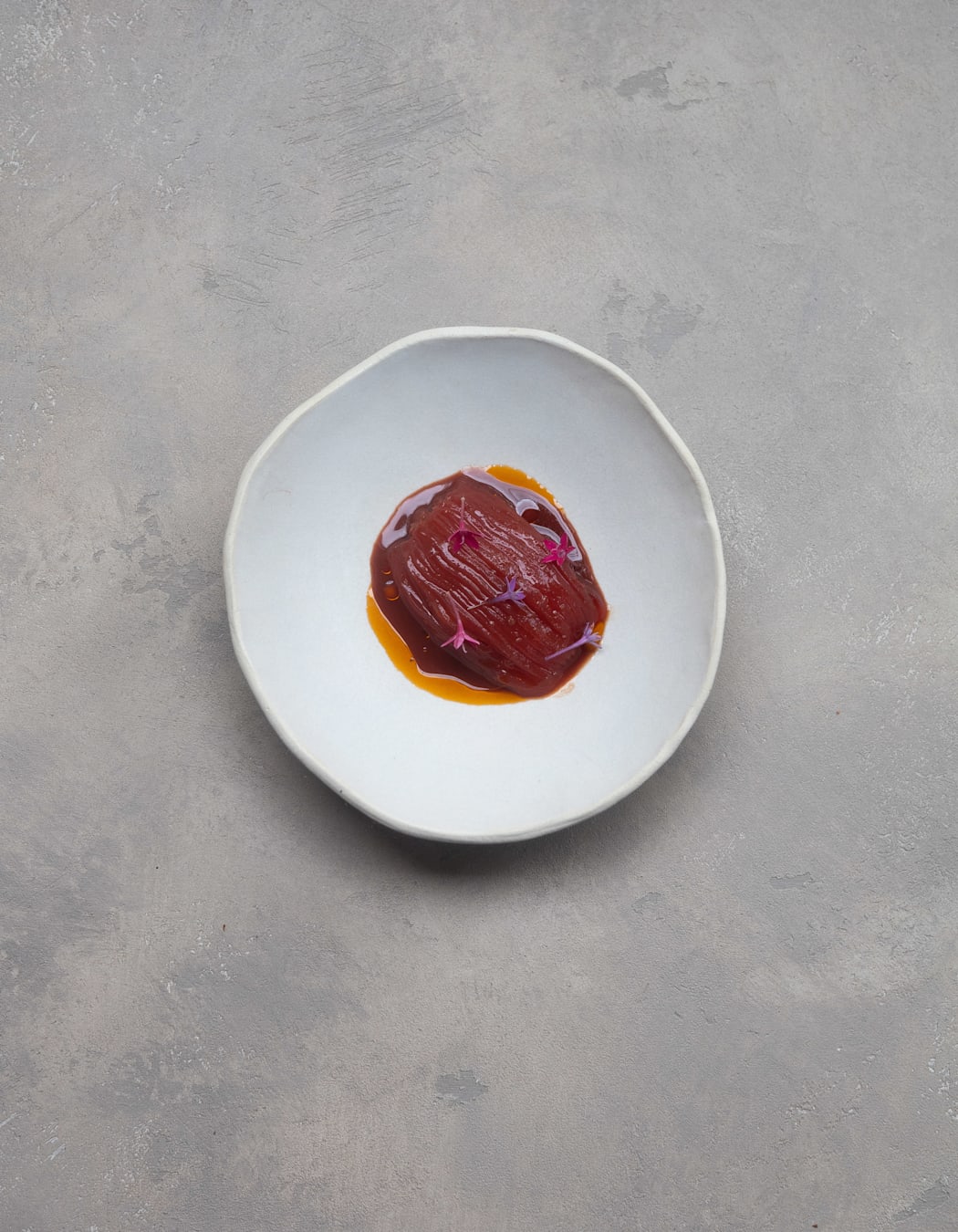
A dish with tomato, rhubarb and a savoury garlic custard.
TIME TO SERVE
Learn how to make Chiara Pavan’s simple, elegant vegetarian main.
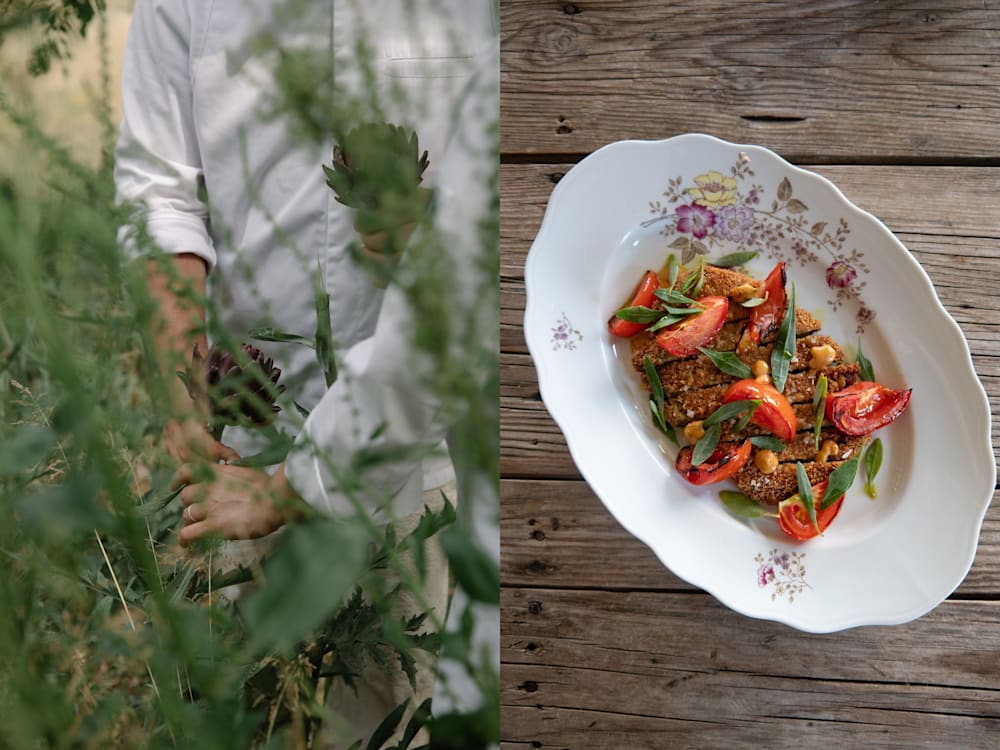
Aubergine cutlet
Serves two
Ingredients
– 1 aubergine
– 2 eggs
– Plain flour
– Breadcrumbs to taste
– Oil for frying
To cook the aubergine
Wash the aubergine and fry it whole; when it’s golden brown, place it in an oven preheated to 170°C for 20 minutes. Take it out and let it drain on a baking tray under a weight for half a day.
When ready, dip the aubergine in the flour, then the egg, then breadcrumbs, and repeat. Add the oil to a pan, and when it’s hot add the aubergine in it. When the cutlet’s crisp and golden, remove it with a skimmer and place it on absorbent paper.
To serve
Slice the aubergine into strips, drizzle with basil oil and top with grilled tomato slices.
Bon appetit!
For more tasty content, get stuck into our interviews with star chefs