



Shame Studios doesn’t deal in quiet interiors. Its rugs are bold, political and deliberately attention-grabbing — using colour, pattern and symbolism to explore themes of identity, activism and social change.
Meaningful collaborations add further substance to the studio’s stylish statement rugs — including Pride collaborations with Human Dignity Trust, Mr & Mrs Smith’s charity partner, who challenges discriminatory laws against LGBTQ+ people across the world; and Furnishing Futures, who imbues social housing for domestic-abuse victims with warm, welcoming design.
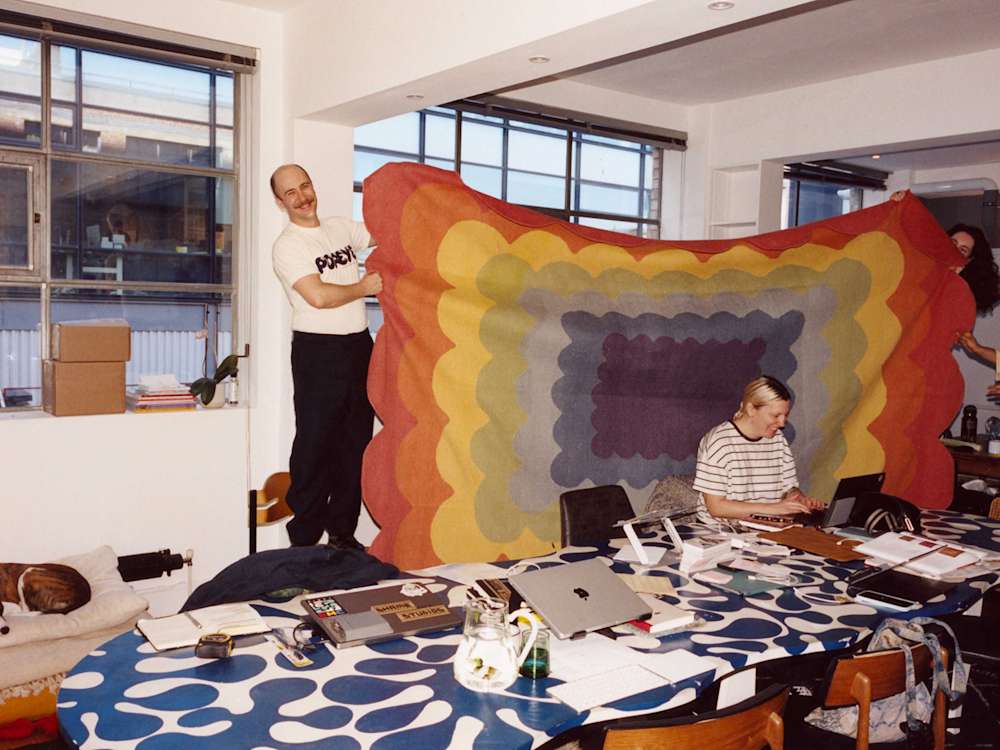
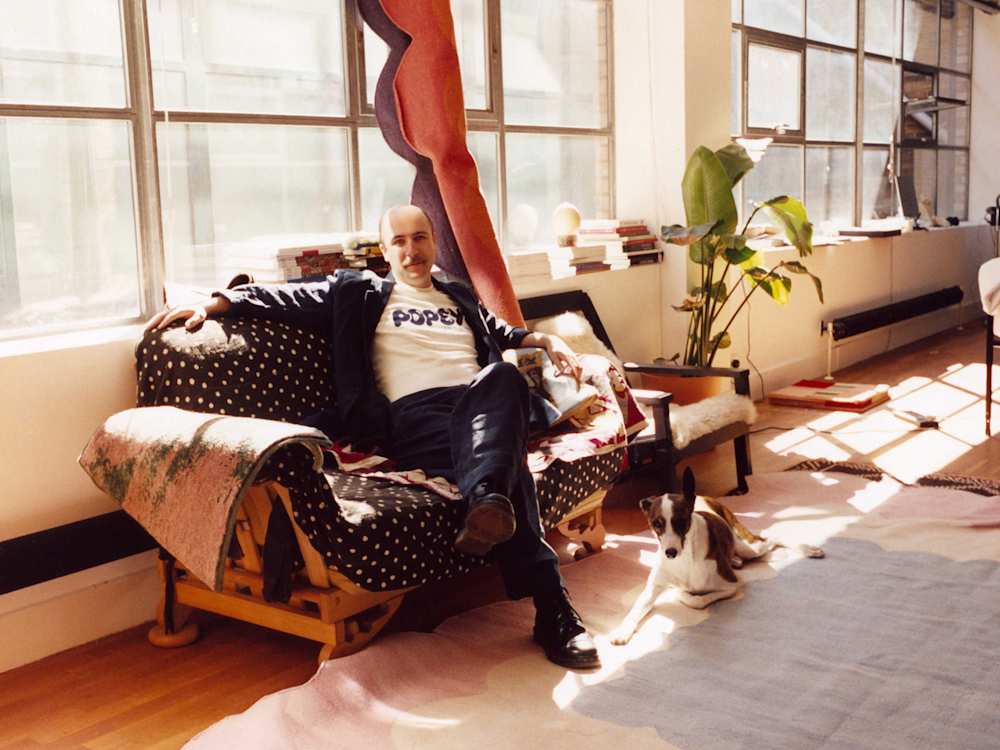
Director and founder Hector Coombs also ensures the craftspeople who help create Shame’s almost-too-cool-to-step-on wares are treated with fairness and respect. Working alongside NGO Label STEP, he and his team help protect weavers’ rights and monitor working conditions globally.
You have to admire Coombs’ love of the craft, too; from using techniques that predate written history to experimenting with AI when it was an emerging technology. As Shame Studios teams up again with Human Dignity Trust for this year’s Pride release, we talk with Coombs about his creative process, symbols of hope and how art can be a force for change.
Tell us about your craft background and how you started Shame Studios. Is there a story behind the name?
I always wanted to be a fine artist when I was young but found the process to be a very lonely one. I found a job at Christopher Farr [a luxury textile, wallpaper and rug studio] when I was in my early 20s and what started out as some graft to pay the bills turned into a lifelong passion. I found the communal nature of the work to be very rewarding, and the scale of the pieces was exciting.
When Shame Studios started, the idea was to have a brand that could be an umbrella for lots of people’s creativity, from the weavers to the clients and our design collaborators, so using my own name was right out. It needed to be catchy and inspiring and challenging. Shame Studios felt like a daily reminder to be careful when it came to our production and consumption practices but to be brave when it came to our self-expression and design language. To question where shame is appropriate and inappropriate in our work.
You collaborated with Smith’s charity partner Human Dignity Trust for Pride in 2025, and again this year. How did that partnership come about?
We were playing about with some designs and not really thinking that much about it. We had a scalloped design and we couldn’t work out [the colour], so we ended up dropping a rainbow colourway into it and it just worked. My business partner Nathália Gregores and I looked at each other with a lot of joy and exclaimed, ‘Have we just designed a Pride collection?’ We loved that idea, so we started to look at appropriate charities to work with, as a Pride collection with no beneficiaries seemed a bit mercenary and shallow.
We came across the Human Dignity Trust and the fact that a lot of their work is in developing economies, and just how incredibly incisive and pragmatic their activism is, using the courts to overturn laws that criminalise people based on their sexual orientation or gender identity. This collection will directly support their work and we’re incredibly proud of that.
Currently, 65 countries have jurisdictions which criminalise private, same-sex, consensual sexual activity. All of them criminalise men and 41 criminalise women. It’s a shocking state of affairs and a dear hope of Shame Studios that this situation will improve in the near future.
For your 2025 Pride collection, each rug was named after an LGBTQ+ icon — Harvey Milk, Marsha P. Johnson and Dora Richter. How did you decide who to honour?
They’re all people who risked and sacrificed for the right to be oneself. Harvey, Marsha and Dora all stood at the absolute cutting edge of brave acceptance and knew they needed to take it a step further — that we all deserve to be free to be ourselves. Whether you’re queer or not, you enjoy the freedoms that they earned for you. Of course, there are so many people to choose from, but these somehow felt comfortable together, and would make a dream dinner party, actually.
You work with other ethical/charitable organisations including Furnishing Futures and NGO Label STEP. How do you decide who is best aligned with your values?
We like to work with organisations that feel relevant to our industry and our work. Human Dignity Trust is a great fit because they work in countries where we have weavers; Furnishing Futures offered a wonderful opportunity to impact the lives of people in the UK who are recovering from abusive relationships, which can often be so corrosive to self-worth. A rug is such a luxurious item, and we hope that these objects can be talismanic of being valued as a person.
Label STEP and organisations like it are [imperative], I feel, if you are working in a low-resource setting, to ensure that you [make a] positive impact on the communities you work with and avoid operating in a damaging or exploitative manner. We’re also members of an organisation called United in Design, who we’ve done a couple of small projects with in the past. They focus on promoting diversity in the interior-design industry. It would be really nice to do a larger-scale project with them in the future.
Your ‘Roots’ collection takes its names from aliases chosen by Furnishing Futures clients. How did designing in response to real women’s stories, rather than visual inspiration, change the way you worked?
We always work in quite an unselfconscious and intuitive way, so we didn’t set out to approach Roots [any differently]. I guess we are quite used to working conceptually and discovering the feelings that are present in our work, or trying to find ways to imbue the pieces with a sense of emotion. The general feeling we wanted to capture was one of hopefulness, growth and freedom, so we worked a lot with organic motifs that seemed emblematic of transcendence.
The other part of our brief — to create trauma-informed design that could work with many different tastes and in many different homes — was probably more of break from our usual way of working. We generally give ourselves the leeway to be highly specific in our designs and not worry too much if they will be for everyone or just for one very specific person or project.
You’ve said that the beautiful thing about creating a carpet is that people from different countries and cultures come together in the process. To what extent do you believe that art can help to bring about real change in the world?
It feels important to be hopeful, now more than ever. I do believe that art has the power to transform for the better — and for the worse. I hope that positive, inclusive, progressive art has the capacity and vitality to overcome the more regressive and hateful creators out there.
I do think travel helps, where you develop some empathy and meet people in different places and circumstances, which generally seems to have a positive effect on most people.
Are there any ancient craft traditions around the world which you feel are at risk and must be preserved?
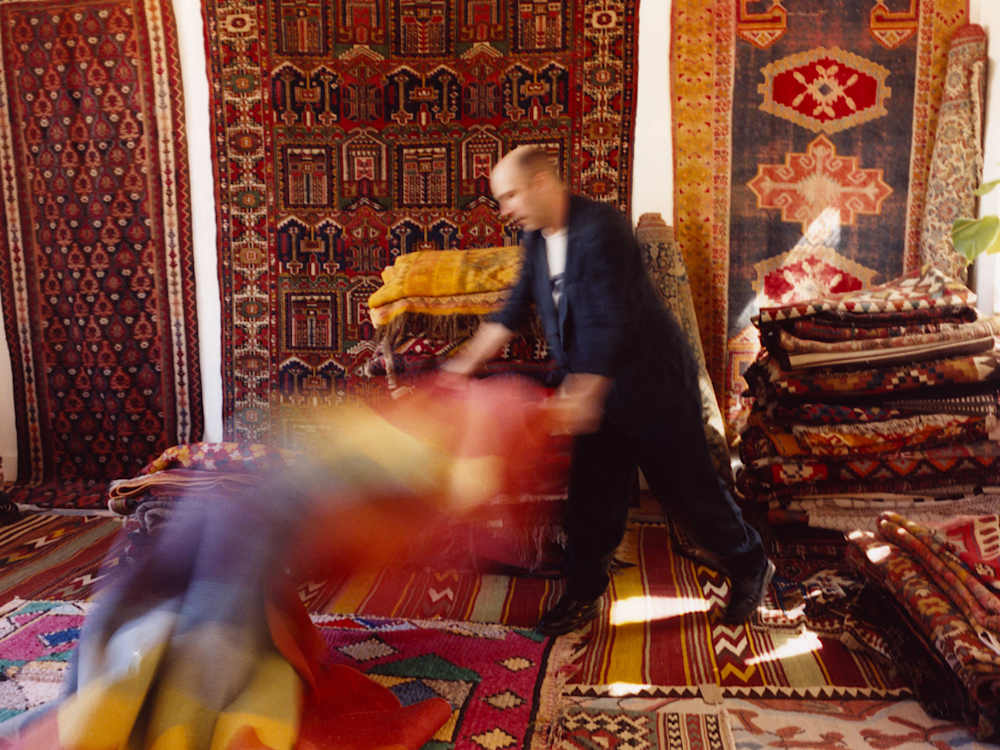
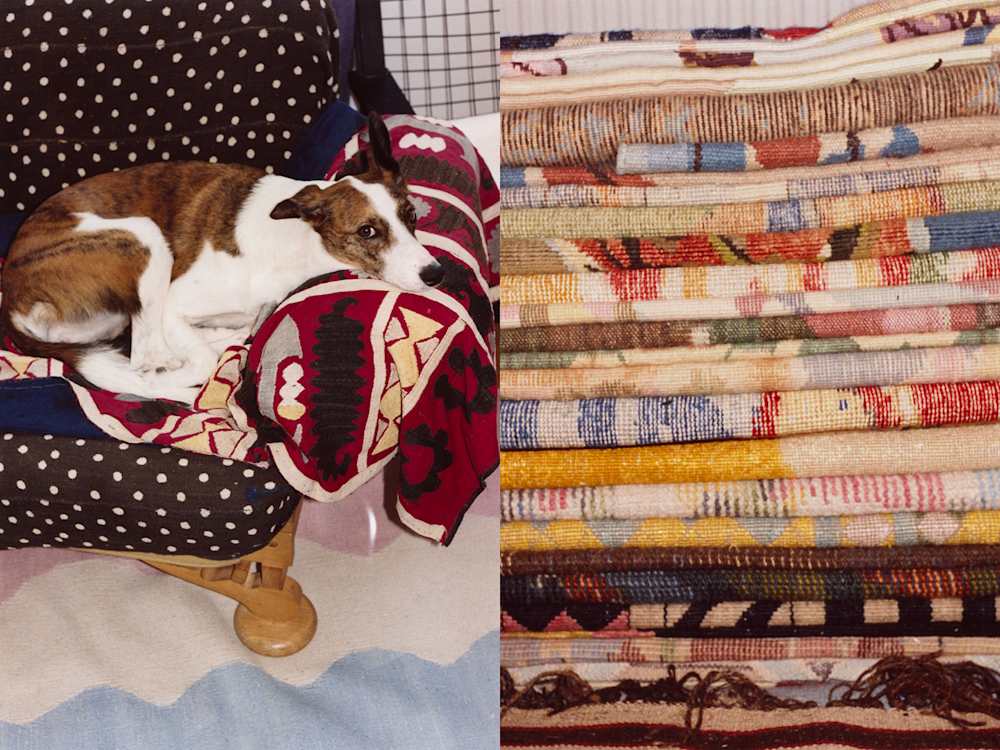
Handweaving is a craft that is terribly under threat globally. The expertise and the locations where traditionally woven carpets are made are all shrinking and disappearing. It’s an incredible thing that today textiles are still being woven that use techniques that are 2,000 years old. You’re truly holding a piece of history in your hand when you touch a hand-knotted rug or a Kilim, and you can still see this [style of] weaving being done in person in Morocco, Turkey, India, Egypt, Azerbaijan… so it can feel like a thriving craft. But every year there are fewer and fewer people finding it financially rewarding to engage with this craft. It’s our job as a studio to try and elevate it so that the financial resources and cultural cachet that attach to it are enough to attract new people.
It’s also a great time to visit the weavers in these incredible locations and learn about the craft and see if you can catch the same magic that inspired me to make it my life. The more people understand the effort that goes into these textiles and the soul they are imbued with, the more likely it is to return from the precipice and thrive.
You experimented with AI-generated design back in 2019 before it became mainstream, calling the results ‘a game of Chinese whispers between human and machine’. What are your thoughts on AI playing a part in craft today?
I think it’s an interesting technology — I think it appealed to me personally when the training data was smaller. Now it feels like the stuff I encounter is mostly an output of lowest-common-denominator stuff, based on the broadest sample size of humanity who use the Internet.
It’s clearly going to have a part to play in craft in the future, but my worry is that through reliance on AI, we are failing to exercise the parts of our brain bound up with creativity and original thought. It will be interesting to see how things develop but like many other people I feel some degree of fear at the ramifications of the technology. It’s moved a lot, lot faster than I ever could have imagined back in 2019.
What’s coming up next for Shame Studios?
We just launched a collection with Cesca Dvorak, an incredible designer. We’ve created some fantastic rugs with her, and the collection is a celebration of contradictions: delicate yet rebellious, folksy but progressive. That just launched last week, and we’re excited to see what the world thinks of it.
Learn about Human Dignity Trust’s mission and Legacy of Love initiative, and explore more of Shame Studio’s designs