



It’s a mystery to me why Jane Austen — born 250 years ago this 16 December — doesn’t look more smug in her portraits. Not because of her literary successes, but her real estate ones. One of Austen’s six brothers owned a series of properties in enviable London postcodes, with space for the Hampshire-based author to stay whenever she fancied popping up to town. Knightsbridge, Covent Garden, Marylebone — all of these central crashpads were at her gloved fingertips.
This modern-day writer has no such luck. As an ex-Londoner turned country mouse, I’ve lately been lamenting my lack of well-placed, property-owning relatives on trips back to the Big Smoke. Of course, there’s no shortage of glamorous hotels in town, but the idea of feeling like a tourist in my old stamping-ground brings out Caroline Bingley levels of snobbery in me. Bellboys, reception desks and earnest concierges? No thanks, guv’nor. I mean, I didn’t put in all those years of overpriced flatshares, sluggish commutes and heightened cortisol levels to get lumped in with the wide-eyed first-timers.
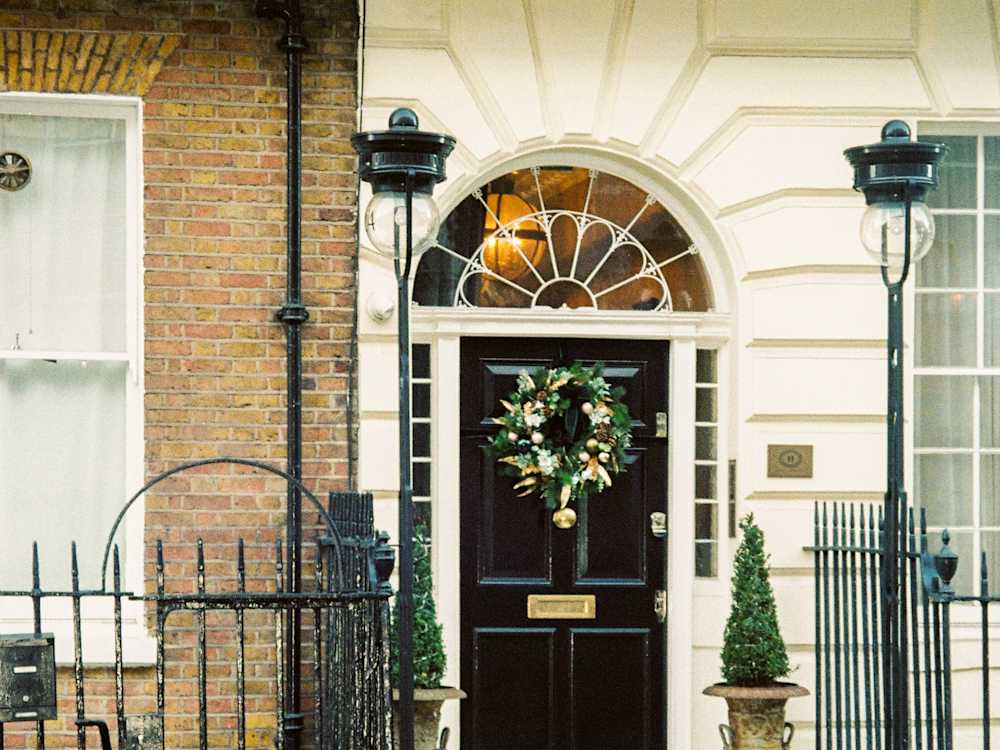
Luckily, I’ve found a solution: London’s least hotel-ish luxury hotel. Henry’s Townhouse, a six-bedroom Georgian residence with the poshest of postcodes (W1), once owned by that aforementioned Austen bro, no less.
I emerge from Paddington Station on one of those fine-weathered days when the city’s showing off its most genteel side: trees shedding leaves in sleepy squares, stucco terraces posing as prettily as porcelain-skinned society ladies beneath a periwinkle blue sky. It’s meant to be a 15-minute stroll to Henry’s (yes, we’re already on first-name terms), but adopting my head-down, elbows-out city speedwalk, it takes me 10. What can I say — old habits die hard.
In fact, I nearly charge right past the building, so discreet is its members’ club-worthy signage; only a brass plaque the size of a snuff box displays the name. Otherwise, the wrought-iron railings and large sash windows camouflage perfectly with its neighbours. It may as well say ‘IYKYK’ on the door.
After a ring of the bell, I’m greeted by name — they’ve been expecting me; Dr Smith is already upstairs — along with the scent of fresh lilacs and roses drifting from a ballroom-worthy bouquet in the chequerboard-tiled hallway. Naturally, Henry’s doesn’t have a lobby; that would be so… impersonal. Instead, I’m whisked past a nattily striped reception room, a pint-sized roof terrace and a velvet-decked snug, up the tipsily tilting staircase. ‘Your boyfriend is already in James,’ the concierge announces. Um, excuse me? ‘Your room — it’s called James, after one of the brothers. All our rooms are named for different Austen family members,’ he clarifies. Aha, so this is the stern-looking, bewhiskered chap in black frock coat whose portrait miniature is dangling from my key.
As promised, Dr Smith awaits, springing up politely from the sofa as I enter, like a latter-day Mr Darcy. Was that even a slight bow? Now I’m no romantic novelist, but here’s a tip for a seductive weekend away, dear reader: check in separately to your long-term Significant Other. It adds a delightful frisson, as if this were some clandestine tête-à-tête. Dr Smith and I had only parted ways that morning before starting work, yet somehow this hotel-room reunion makes us momentarily as bashful and novel to one another as on a first (chaperoned) date. We waste no time leaping into the four-poster bed, disregarding the disapproving gazes of various oil-painted ancestors. Suddenly this period drama feels more Bridgerton bodice-ripper than Austen’s elegant social satire.

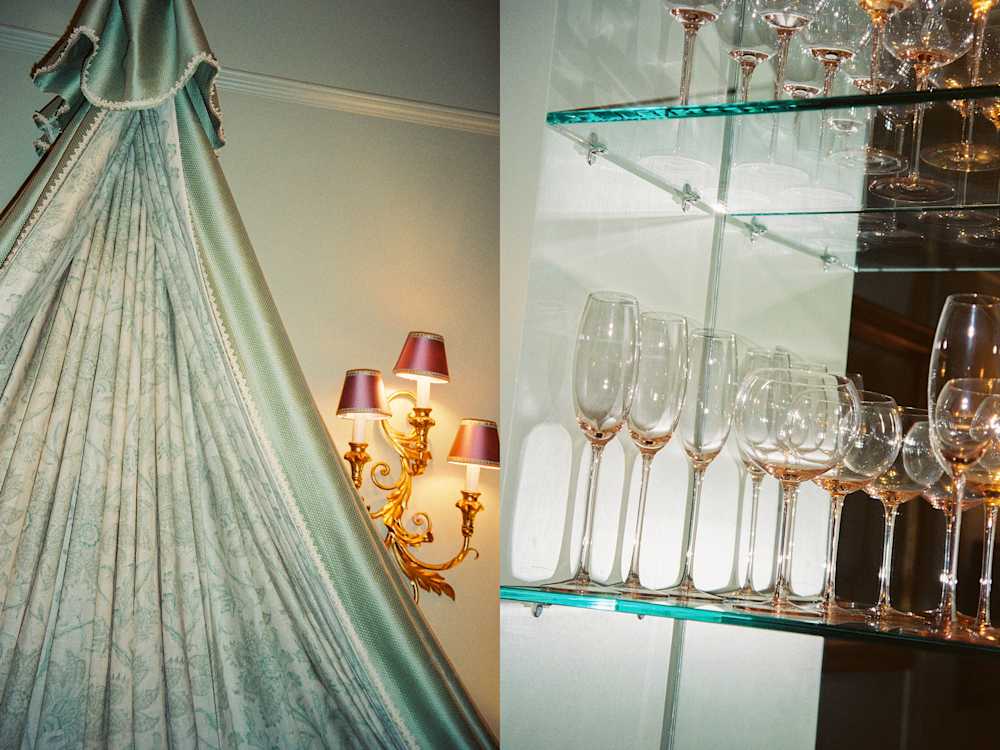
True to the room’s masculine moniker, it’s decked in sturdy, British shades of mustard and moss green, and Jamesian props such as riding boots and a chess set. Mod cons are tastefully concealed: the TV inside a bespoke mahogany cabinet, the sink set in an antique chest-of-drawers. When we head downstairs later, a glimpse of the suite dubbed Cassandra reveals an altogether more prettified, pastel hideaway. There’s an Austen sibling to suit every taste, it seems.
Getting ready for a night out in the big city, I feel as giddy as Lydia Bennet attending an officers’ ball. It might be Jane’s birthday, but the event in question is our very own engagement party, and Henry’s, like any host worth his salt, treats us to a glass of champagne to kick off the celebrations.
Sipping these in ‘Jane’s Reading Room’, which is delectably dressed in shades of lilac and pistachio, we compare notes on the rakish details and writerly flourishes we’ve spotted around the house. A grandfather clock has been turned into a chest for storing keys, and the fire-exit sign has been hand-painted onto wood instead of that nasty, modern plastic stuff. The occasional contemporary landscape or bit of azulejo tiling wink from among the period pieces, stopping the interiors from veering too much into fusty, time-capsule territory. Supremely unstuffy staff help pull this off, too, striking the balance between warmly personable and diligent. Think genial Mr Bingley rather than snobby Lady Catherine de Bourgh.

Next morning, after a slight struggle with the door buzzer at 2am (there’s a pull-push knack to opening the door, it turns out, which was challenging after all those engagement-party toasts), sunlight spills between the velvet-swagged curtains onto rumpled linens. The townhouse hums with a slow, graceful rhythm, making it hard to believe the hellish thoroughfare of Oxford Street is only two blocks away.
Speaking of hellish, a pounding headache stalks me down to the subterranean pantry where breakfast is served at a communal kitchen table. Thankfully, the other guests have already finished, leaving us to nurse our hangovers between the homey comfort of the Aga and an impressive spread of fresh fruit and pastries.
I give a Mrs Bennet-worthy sigh while devouring some perfectly cooked poached eggs: ‘If only we had more time to stay in today and savour these surroundings, Dr Smith, instead of more social engagements to attend.’ He points out that I’ve always said it’s a waste of precious London time to stay put inside the hotel. I frown into my flat white at his irritatingly good memory and sniff: ‘Yes, but that was before Henry’s.’
Where else to celebrate Jane Austen this Christmas
LONDON
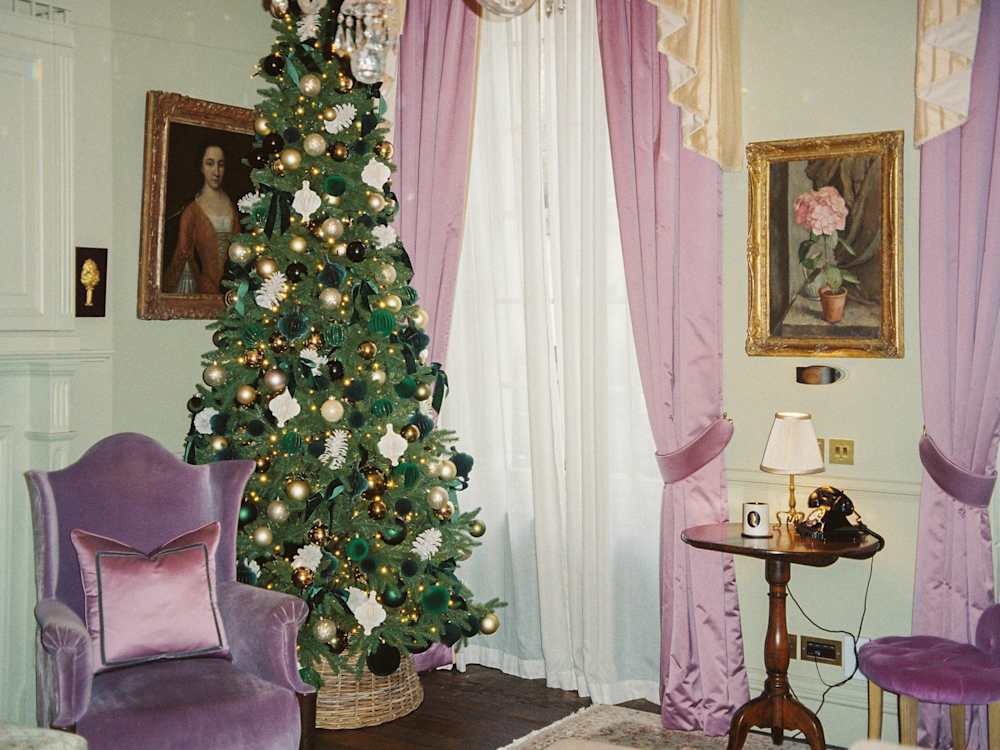
The Christmas decorations always go big at One Aldwych just off the North Bank of the River Thames, but this year they’re especially fitting, since they’ve been crafted in honour of Jane Austen’s 250th birthday. The giant tree at the centre of the lobby bar is adorned with manuscripts and silhouettes — look closely to spot your favourite character, along with the author herself. The intricate silhouettes were cut by high-society portrait artist Charles Burns, especially for this year’s decorations.
Order a Gin Austen or Dark and Darcy at the bar, or book a literary walking tour with historian Dr Matthew Green, whose lively revelations are shared at the sites of old coffeehouses frequented by Dryden, De Quincy and co, in between visits to sordid ‘jelly’ houses and assorted Austen landmarks, including her green plaque at 10 Henrietta Street. He’ll also take you to the church where Lydia Bennet and Mr Wickham eloped (St Clement’s in the City of London) and the Theatre Royal Drury Lane, which features in Sense and Sensibility. And for an especially festive Sunday morning, book the Bollinger brunch — on select days, Burns will be working the room, cutting out miniature silhouettes of diners.
Caroline Lewis, Senior Associate Editor
DERBYSHIRE
There have been many adaptations of Jane Austen works over the decades, but none can ever live up to the BBC’s 1995 version of Pride and Prejudice, and not just because of a young Colin Firth and that lake scene. In that series, Mr Darcy’s residence Pemberley was actually Chatsworth — the grandest stately home in northern England, naturally. At the edge of the estate and also owned by the noble Devonshires, The Cavendish Hotel by Baslow is a former coaching inn that has been reimagined by interior designer Nicola Harding and the Countess of Burlington, Laura Cavendish. Or eschew tradition and book a treehouse at Wildhive Callow Hall; a Victorian Gothic manor at the southern reaches of the Peak District, with stilted cabins set in the woods. Both are perfectly placed for roaming around ‘Pemberley’ in search of your own damp Darcy.
CL
BATH
Jane Austen spent most of her life in Hampshire but lived in the fashionable spa resort of Bath between 1801 and 1806, setting two of her novels — Persuasion and Northanger Abbey — there. The stateliest stay in the city is undoubtedly The Royal Crescent Hotel & Spa, fit for a society ball and any budding literary heroine. Bonnets at the ready: guests can explore the filming locations used in various adaptations of Austen novels with local guide Fred Mawer, along with the church where Austen’s parents were married and where her father is buried; and visit the city’s Jane Austen Centre. Bridgerton — modern-day contender to the Austen throne — is also filmed in Bath.
CL
Discover the literary hotels of Paris, or read about another London hotel with history