



Everyone experiences a vampire era at least once. Mine began in my teens, with Buffy the Vampire Slayer. Some, true to form, prefer to make it eternal. As soon as the temperature drops, my corner of the internet becomes saturated in supernatural content: flickering candles in crumbling castles, ethereally styled women wandering through mossy forests, and Instagram reels putting fictional men (and monsters, of late) on a moodily lit pedestal, declaring, ‘Not a 400-year-old vampire setting my standards too high.’ With this year’s releases of Dracula: A Love Tale and Guillermo del Toro’s Frankenstein, we’ve entered another full-blown vampiric-gothic revival — and where better to go to the dark side than in Romania?
But while most travellers come here chasing Dracula’s shadow, I found myself drawn to something far more alive: the ceramics of Horezu, the misty hiking trails of the Carpathian Mountains and the folkloric villages that inspired William Blacker’s Along the Enchanted Way. Here are five reasons to follow the still just as enchanting path through rural Romania — garlic optional; extra suitcase space for broken-in boots and fragile souvenirs, encouraged.
Get to know revived Saxon villages
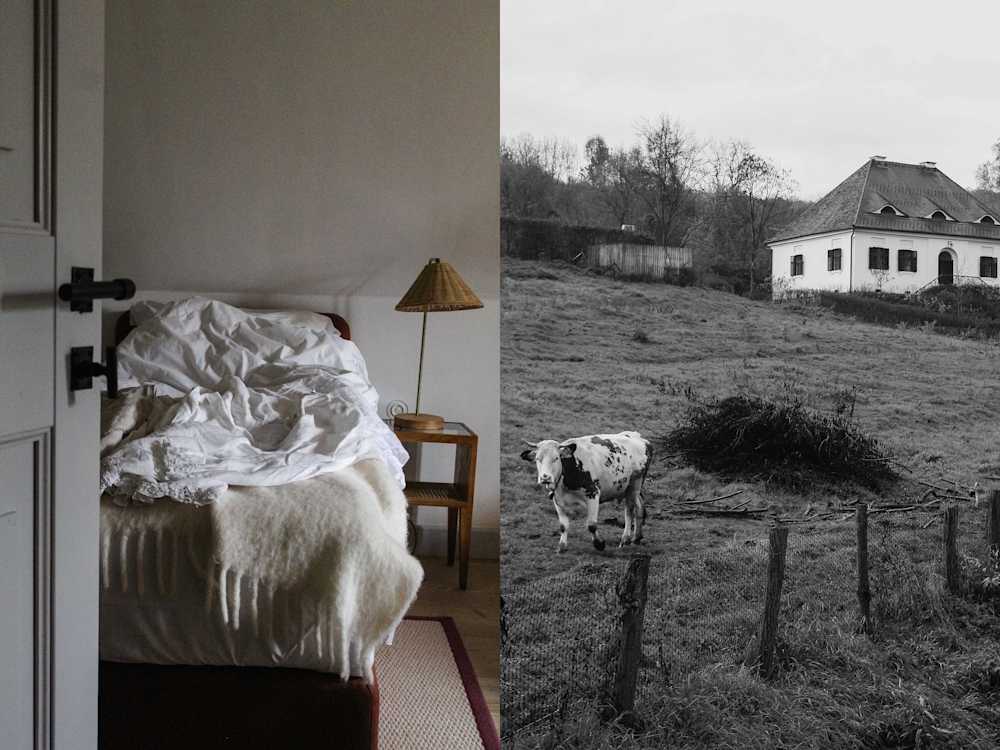
Bethlen Estates
In Transylvania’s Saxon heartlands, traditional villages are being painstakingly repaired, repainted and quietly reoccupied. Countryside hideaway Bethlen Estates and the village of Criș are practically one and the same, where the legacy of Count Miklós Bethlen endures in every beam and brick. After returning to Romania (having escaped communism in Austria) to find his ancestral castle in ruins, the Count began a lifelong mission to bring the surrounding village back from neglect — rebuilding homes, setting up scholarships, and securing Unesco protection for the estate.
His family continues that work today, acquiring abandoned cottages, barns and granaries and giving them new life. The Caretaker’s House wears its age well; its lime-plastered walls and oak lintels restored by local hands. The Corner Barn now beds guests beneath honeyed timbers, while the old Schoolhouse, long claimed by the elements, is being revived as a restaurant and wellness space where the original brickwork and vaulted ceilings remain proudly visible.
Across the valley in Copsamare, something similar is unfolding. When Italian couple Giovanna and Paolo Bassetti first arrived in the mid-2000s, the village was a patchwork of walls with peeling paint and half-collapsed roofs. Working with local builders, they began restoring the Saxon houses one by one, keeping their steep tiled roofs, carved doors and pastel façades intact while adapting them for modern use and, eventually, overnight visitors at Copsamare Guesthouses. Their work sparked a quiet renaissance: neighbours who once sold old furniture began repainting and reusing it, and more families followed, adding a still-being-written chapter to the village’s long story.
In the Saxon settlement of Viscri, even royalty joined the revival. When King Charles (then the Prince of Wales) bought an 18th-century farmhouse here, he set out to show how old buildings could have new purpose. Through his patronage of the Mihai Eminescu Trust, he helped fund the repair of lime-washed exteriors, shingled roofs and carved wooden gates, training local craftspeople along the way. The house now serves as a conservation centre, where workshops on tile-making and woodcarving keep heritage skills alive through future generations.
Wander where the wilderness still has bite
Romania’s wilderness remains vast and utterly unspoiled, as though no one told it the rest of Europe moved into another era. The Carpathian Mountains rise in folds of old-growth forest so ancient they make fairytales feel like recent history, and free-roaming residents include bears, wolves and lynx. In recent years, conservation initiatives spearheaded by WWF Romania and Rewilding Europe have begun to protect these habitats on a grand scale — part of an ambition to make the Southern Carpathians a Romanian Yellowstone of sorts (bison have already been successfully reintroduced to the Țarcu Mountains).
The Via Transilvanica trail snakes across this lost-to-time landscape, winding through wildflower meadows, fortress-topped villages and misty pine valleys. Along the way, Bethlen Estates and Copsamare Guesthouses offer hikers a soft landing between stretches of the trail, welcoming weary walkers into wood-smoke-scented warmth, tiled Romanian stoves always aglow within. These trails aren’t just for navigating on foot, either — they can also be explored by horse, with both hotels able to arrange rides on steeds from nearby stables. It’s a way of travelling that feels lifted from another century: clip-clopping through flower-filled meadows and coppery forest paths much as rural folk once did (and still do), watching the landscape shift with the seasons. However you choose to get around, Romania’s wild heart beats steadily beneath it all.
See how heritage crafts are being kept alive
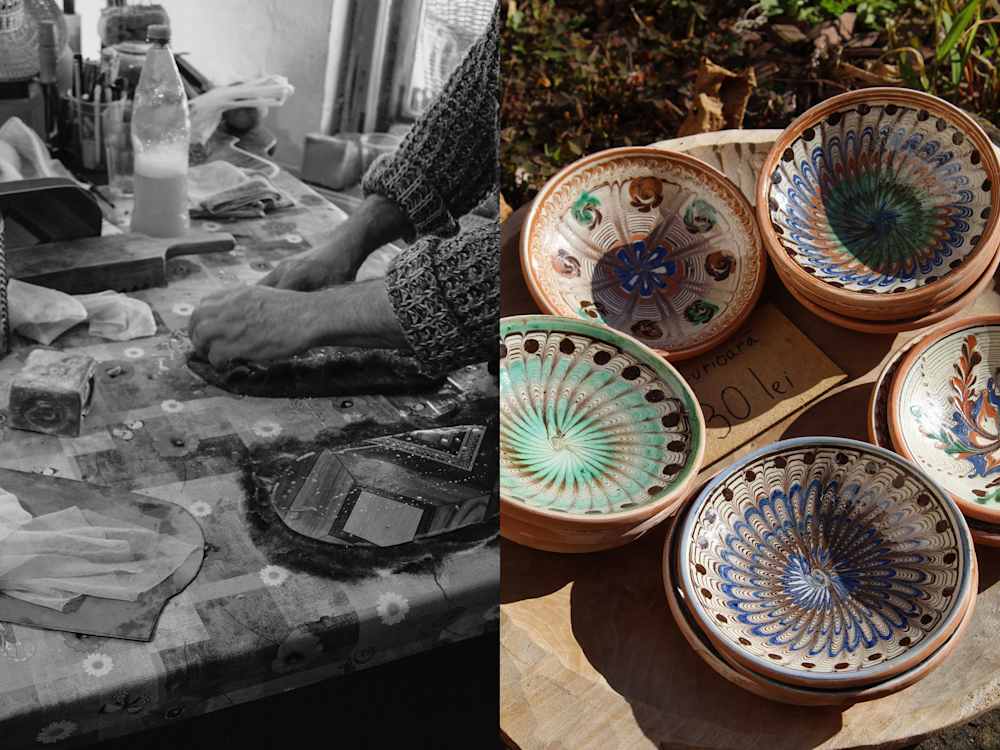
Traditional felt slipper making / Horezu pottery
Romania’s creativity runs as deep as its forests, rooted in handiwork and a longstanding craft heritage. In Saxon villages like Copsamare, the past isn’t preserved behind glass — it’s woven, carved and fired into everyday life. Giovanna of Copsamare Guesthouses fell in love with local artistry and furnished each of the stay’s rooms with woven wall-hangings, cushions embroidered with geometric patterns and floral motifs, painted tiles depicting pastoral scenes, and antique wooden pieces — all sourced from Romanian makers and local flea markets.
Guests can step beyond the threshold to meet the people still shaping these traditions. In the village, shoemaker Ilie shapes thick felt into soft slippers, using soap and hot water to mould his good-for-the-sole creations. Nearby in Mălâncrav, weaver Maria works her loom the way her grandmother did, sending shuttles of colour — carmine, ochre, cream, all made using natural dyes — through sturdy homespun yarn to create cushion covers, rugs, bags and blouses spun with passed-down family patterns. Across the Romanian countryside, looms are still commonplace in homes and glassblowers follow ancient Roman techniques in studios that have stood for hundreds of years.
Further afield, pottery villages like Horezu and Corund reveal another side of Romania’s artistry. In Horezu — whose craft heritage is recognised by Unesco — potters still sit at kick-wheels, shaping local clay into bowls and plates before painting them with the fine-tipped horns and goose feathers — tools that have been used for centuries. This results in signature swirling greens, blues and russets that ripple like peacock feathers or fan out like sun rays, often centred around the Horezu rooster, a symbol of strength and good fortune.
Try traditional food where it’s been sown
Meals in rural Romania feel less like a menu and more a continuation of the land beneath your feet. At both Copsamare Guesthouses and Bethlen Estates, what’s served depends on what has been ripened, foraged or preserved that week. Even in the depths of autumn (nearing winter), gardens brim with herbs, rhubarb and orchard fruit; hives hum nearby, their honey and pollen stirred into breakfasts of stewed apples and plums with homemade granola and tart rhubarb compote. At Copsamare, the lemonade you’ll sip on arrival (and consequently, throughout your stay) changes with the season, flavoured with syrups made from elderflower or wild berries plucked from the hedgerows.
Over at Bethlen, guests gather outdoors for fish soup cooked slowly over bubbling cauldrons and fire, followed by soft cheeses, chutneys and, if you’re lucky, rákóczi túrós: a Hungarian curd cheesecake topped with meringue and apricot jam. This isn’t ‘farm-to-table’; it’s simply the natural order of things here — food that reflects both the place and the patience of those who tend and cultivate the ingredients.
Discover heaps of history, with a hint of the supernatural
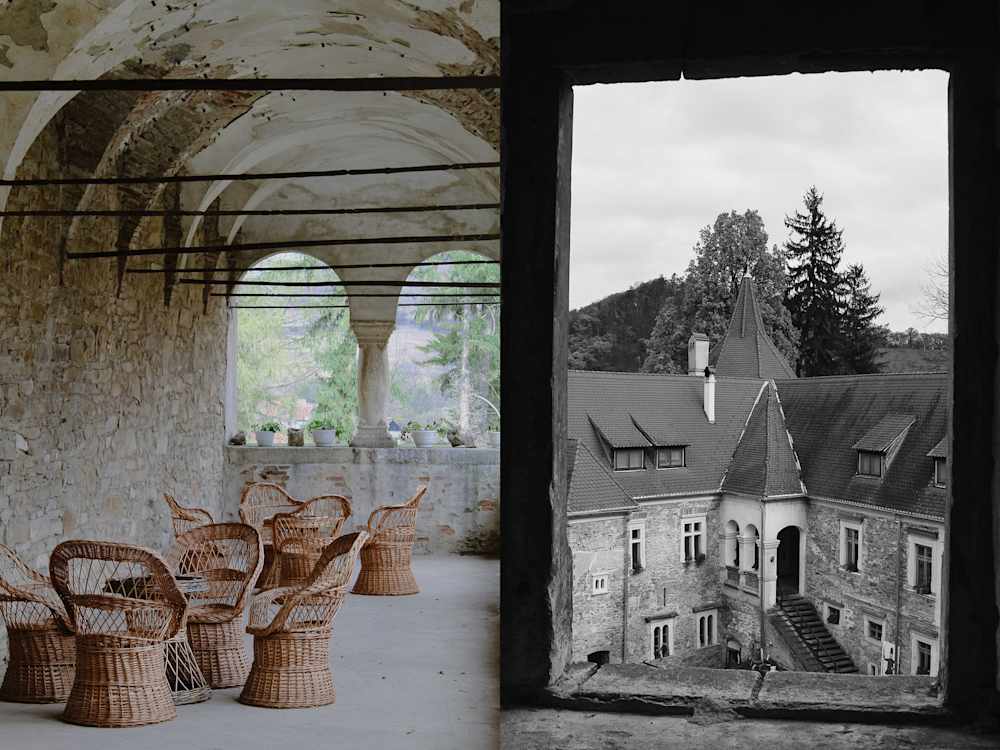
Bethlen Castle
Transylvania’s fortresses and castles may have inspired centuries of ghost stories, but the real enchantment lies in their craftsmanship, not their curses. Around Copsamare, the spire of a fortified church — one of hundreds scattered across southern Transylvania — rises above the rooftops; while nearby Biertan, the region’s oldest Unesco site, guards its treasures behind walls built thick enough to withstand far more than folklore. Once you’ve passed its ingenious lock mechanism (a 15th-century feat of engineering with 19 bolts), you’ll find a carved wooden altar illuminated by candles.
At nearby Alma village, lunches of homecooked stews and jam-stuffed pancakes can be taken against the weathered stone of its fortified walls. At Sighișoara, cobbled streets climb toward the house where Vlad the Impaler was born — the very figure whose legend Bram Stoker later stitched into the tale of Dracula, giving the notorious bloodsucker a Transylvanian address for all eternity.
And then there’s Bethlen Castle in Criș, a true relic of Renaissance Transylvania and the ancestral heart of Bethlen Estates. First mentioned in manuscripts dating back to 1305, it was built as a fortified residence long before anyone dreamed of capes and fangs. Today, guests can walk its courtyard and climb its towers on private tours, exploring stone stairways still etched with family crests as meticulous restoration work brings the castle back to life. After all, immortality is the aim, is it not?
Get your teeth into our full collection of hotels in Romania
Thanks to her nomadic childhood in the Far East, Chloe Frost-Smith‘s first travel memories are filled with tuk-tuks, water buffalo, and paddy fields. Happiest when barefoot or on horseback, Chloe is a country girl at heart and often daydreams about ranch life in the American West. She’s currently based in Edinburgh as a travel writer and editor, road-tripping around the Highlands with her faithful hound Humphrey.
All photographs by the author