



While International Women’s Day brings hope with rousing social-media messages, call-outs to champions and a spotlight on women’s issues, 24 hours isn’t enough to dig into solutions. A luxury hotel might not seem a starting point for change, but with global placements amid remote communities, assimilation into the locale and a stream of guests eager to become authentically involved, hotels’ partnerships with women-forward initiatives have made an impact.
From building girls’ confidence through cricket in Sri Lanka to safari camps emancipating women through craft and a Nepalese stay where women literally reach new heights, these are the hotels making a difference year-round.
Asilia Camps and Lodges, Kenya
Supporting the Maa Beadwork Project
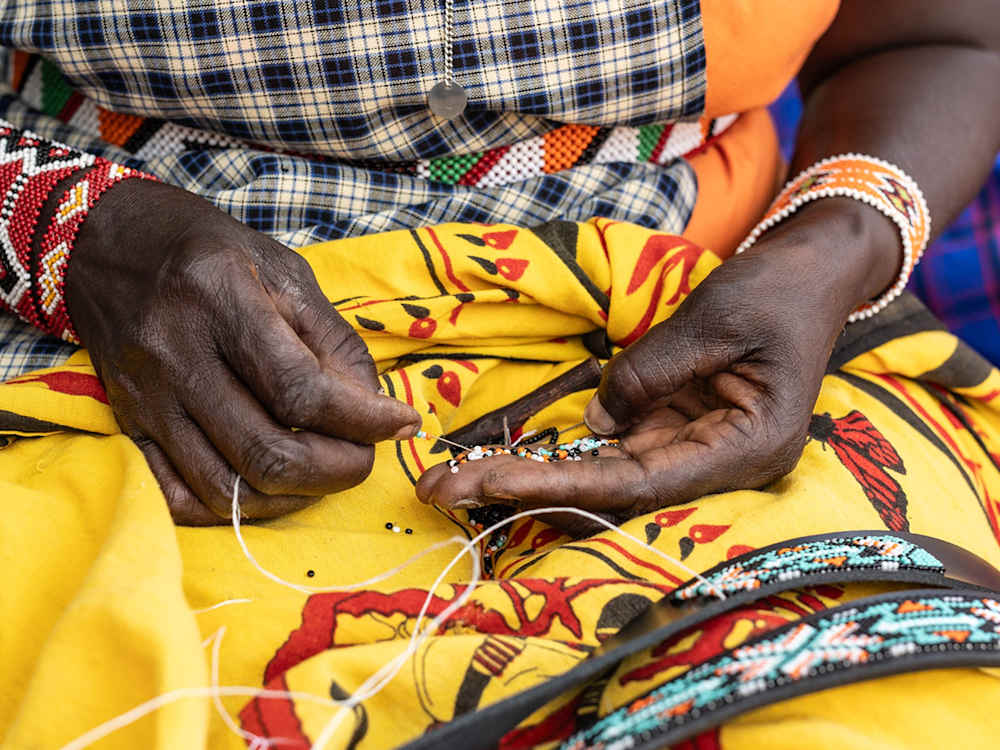
Asilia Africa’s camps and lodges in Kenya showcase local women’s superlative crafting skills, helping them to gain economic stability by selling to guests through the hotel. We spoke to Asilia’s Managing Director Matt Starkey, and Maa Trust’s Head of Communications Carolyne Mutisya about their partnership.
How did the connection to the Maa Beadwork projects come about?
The vision of Ron Beaton, the former owner of one of Asilia’s founding camps, Rekero, helped to found The Maa Trust — he laid the groundwork for important conservation partnerships. His son continues his legacy, working closely with Asilia. Maa Beadwork emerged through our CEO Dr Crystal Mogensen’s PhD research. She realised women were excluded from the income streams of land-lease payments, guiding roles and camp employment. Maa Beadwork was created so women could participate in the conservation economy. Initially, the model was to connect artisans to tourists through camps; the project was then brought in-house to strengthen training and market positioning. Today, 500 women are supported with raw materials, structured training and marketing channels that let them reach broader markets at fairer prices.
Asilia has supported this work since 2011. It goes beyond purchasing and selling, to arranging guest visits to the trust headquarters, where visitors can meet artisans and participate in beadwork sessions. Asilia’s a part of the Maa Trust story — historically, programmatically and in shared commitment to conservation and community empowerment.
How have these initiatives changed the lives of women in the region?
Maa’s artisans want less physically demanding lives, for their daughters to access education and their families’ living conditions to improve. With this income, women buy gas cylinders for cooking, instead of collecting firewood — a task that involves walking through wildlife areas. This shift improves health, frees up time and supports conservation. Women are also investing in rainwater-harvesting tanks, so they don’t need to walk long distances for water, leaving time for work, and wildlife undisturbed.
Education is another concern. Daughters often marry young, but mothers can support their education with their own income — a subtle but significant shift, signalling long-term generational change. Women are also co-investing in livestock, strengthening overall financial security. In these ways, Maa increases income and reshapes daily life, reducing environmental strain, and creating opportunities for the next generation.
How are women supported to gain financial independence?
Beadwork provides income beyond traditional activities that’s not dependent on livestock or the seasons. Women receive technical craftsmanship and financial-literacy training, and are connected to microfinance institutions. Money is sent directly to artisan’s mobile accounts, ensuring transparency and protecting earnings, particularly for women facing literacy barriers or household pressures. The trust also develops partnerships beyond camps, including collaborations with designers. Financial independence isn’t a single outcome, but a layered process.
Which locally made goods can be purchased?
Jewellery is very popular, some contemporary, inspired by Maasai patterns, some faithful to ceremonial forms. Women also make homewares, pet accessories, belts and bags. Artisans take on custom work and collaborative projects, too, including large-scale installations and beadwork murals. A mobile shop is also being introduced, so artisans can engage with guests in-camp. The most direct way to show support is by purchasing products from the gift shop or donating.
Kasbah du Toubkal, Morocco
Supporting the Education For All initiative
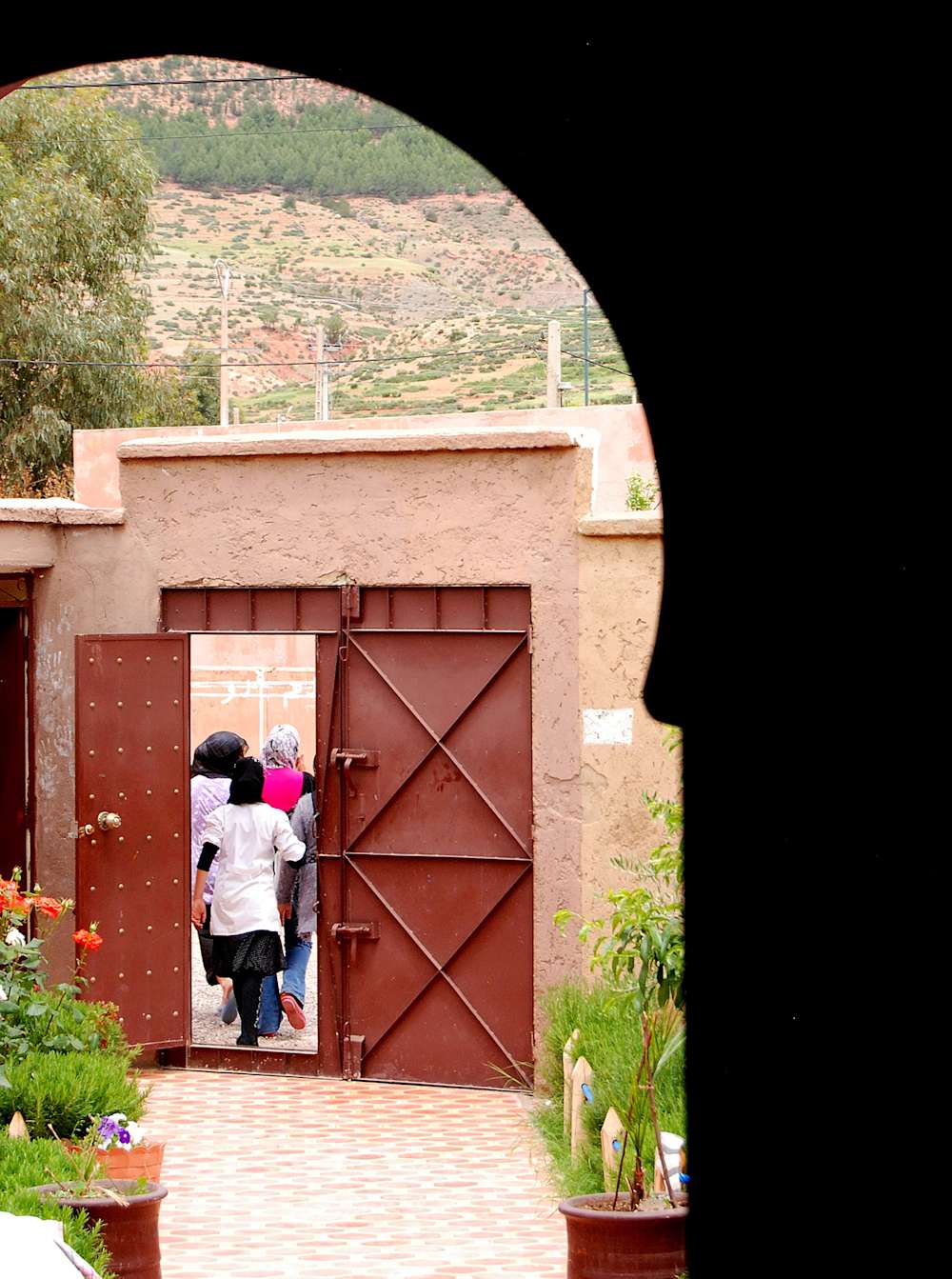
Mike and Chris McHugo (and local partner Hajj Maurice), founders of Atlas Mountain stay Kasbah du Toubkal, have helped to redress social imbalance in local communities by opening boarding schools for Berber girls, founding NGO Education For All (EFA), which has helped hundreds of young women. We asked Mike McHugo to tell us more.
How did you come to co-found Education For All?
We were already doing community work in the local area of Imlil and I was lucky to meet John Wood from Room to Read (a non-profit building libraries in underprivileged areas). I thought we could do more, so with others in the tourist industry in Marrakech (such as Maryk Stroosnijder and Cees van den Berg of riads Azzar and Siwan) we founded EFA, which grew to provide six boarding houses for around 200 girls offering them a college education. Girls in Morocco’s isolated rural areas — the Atlas Mountains in particular — have great difficulties when it comes to accessing secondary education.
Why is this initiative so important for the girls living in the region?
Many girls in the local villages don’t get educated beyond primary school — secondary schools can be very far away, so travelling daily isn’t easy. Also, parents need to have a high degree of trust that their daughters will be well looked after and monitored. EFA’s house mothers — well-respected women, often local — provide a safe, supportive learning environment in our boarding houses.
How has this initiative changed the lives of girls living in the region?
Many of the girls EFA supports come from families where their mothers never had the chance to attend school — some married as young as 12. Education changes that trajectory. When a girl is educated, she postpones marriage, has fewer children, earns an income and becomes an independent role model in her community.
This far, EFA’s supported 400 girls, with 283 attending university (four who’ve achieved scholarships); the average baccalaureate pass rate is 91 per cent, and its provided 62,540 nights in boarding houses. These numbers are increasing as new houses and destinations are added, plus structures to help disabled children. We also support other projects that further girls’ education as EFA fundraising permits.
Mashatu Euphorbia Villas, Botswana
Supporting the Tsatsi le Etla Basketry and Balthani Women’s Groups
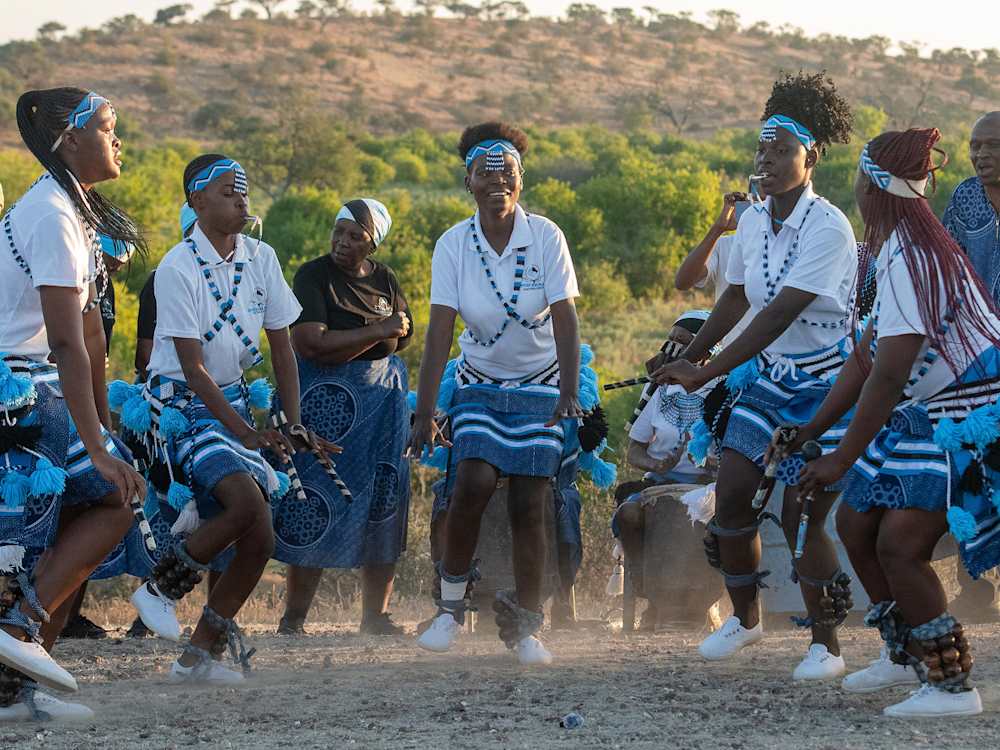
Deep in mopane woodland in Botswana’s wilds, Mashatu Euphorbia’s villas look like giant seed pods. It’s indicative of the craft the hotel supports in its surroundings, having partnered with local weavers to support their talents, as Joint-Managing Director Wendy Du Toit tells us.
How did the partnership with these local women’s crafting groups come about?
It came from the strong relationship Mashatu already had with communities surrounding the reserve, supporting projects through Village Development Committees (VDCs) and women’s clubs. Basket-weaving is a traditional art in Botswana and is particularly strong in the nearby Bobirwa District.
How does the hotel draw awareness to these initiatives?
The woven products made by these groups are for sale in Euphorbia’s shop and four other boutiques within the reserve. Most employees are from these communities; they’re great for promoting awareness and driving sales.
Other initiatives promoted through sales in our shops include books by local female writers and handmade jewellery. We also support local seamstresses and women’s dance and choir groups, who come into Mashatu on occasion for special performances, immersing guests in the authenticity and heritage of Botswana.
How have these initiatives changed the lives of the local women?
Our communities are in a remote area, far from markets. Sales generated through our partnerships enable them to make items for remuneration and help showcase their work to an international market. We’re very proud of the weaving produced by the talents in these groups. We support these partnerships, alongside others, which create opportunities for growth and development — not only financially, but by encouraging self-worth for women in our communities. We will continue to do so into the future.
How can guests interact respectfully with these communities during their stay?
Guests can join a community visit, accompanied by a guide and tracker, to experience local life and culture; 50 per cent of the fee is donated to the VDCs, further helping community projects. And guests can support the Tuli Conservation Trust.
Shinta Mani Mustang, Nepal
Supporting the Pasang Lhamu Foundation
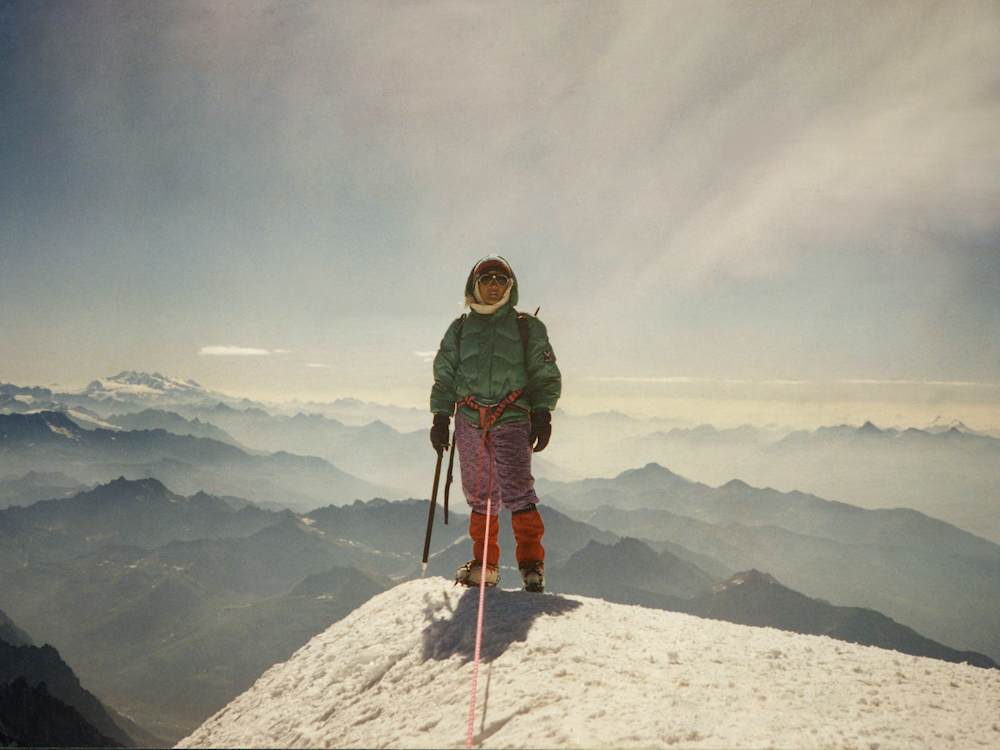
Nepali Sherpa Pasang Lhamu really was a woman on top, becoming the first female in Nepal to climb Everest. Shinta Mani Mustang — a stay with its head in the clouds, amid the mountains — encourages similar dreams in local women, working with a foundation set up in her memory. We spoke with CEO, Namgyal Sherpa about its goals and achievements.
How did the partnership with Pasang Lhamu Foundation come about?
Pasang Lhamu Foundation was established in memory of our mother, who was the first Nepalese woman to summit Everest on April 22, 1993 — a historic achievement that challenged societal stereotypes and inspired a new generation. Created to honour her legacy, the foundation improves the wellbeing of marginalised communities in the remote Himalayan regions.
Our partnership is deeply personal, but also grounded in shared values. In Lower Mustang, where economic opportunities can be limited, we believe tourism should create meaningful and direct benefits for local communities. The foundation’s work in education, leadership development and vocational training aligns closely with our philosophy of regenerative hospitality. Together, we aim to create pathways for women and children, through access to education, skills and long-term opportunity.
How does Shinta Mani draw awareness to the foundation’s work?
We see ourselves as both a platform and an amplifier. Through storytelling, guest engagement and thoughtful in-resort touchpoints, we introduce our guests to the foundation’s mission and impact. We also offer curated talks and optional experiences that connect travellers with local initiatives. Hosting a global audience allows us to bridge international support with grassroots impact in a way that feels authentic, transparent and meaningful.
Which other programmes in Nepal does the hotel support?
We support a range of initiatives focused on long-term empowerment: vocational training for women in hospitality, entrepreneurship and small business development, and mentorship programmes for young women from remote regions. Importantly, we also create employment opportunities within the hotel itself, and the majority of our team is local. This ensures that the benefits of tourism remain within the community. It’s not just about financial support — it’s about building confidence, independence and sustainable livelihoods.
We remain committed to honouring our mother’s legacy. We support those who dream big and hope to play a small role in their journey. More than 30 years ago, she showed that courage and determination can turn seemingly impossible goals into reality — we aim to instil that same belief in the next generation.
How has the foundation’s work changed the lives of women in the region?
It’s created tangible economic independence for women who had limited access to employment. Beyond income, it’s fostered confidence and leadership. Women who participate in programmes often become role models in their villages, supporting their families’ education and inspiring younger girls to pursue opportunities. In remote Himalayan regions, these shifts are transformative.
How can guests respectfully support the local community during their stay?
Many experiences are community-led. We immersed ourselves in the region and built relationships with remarkable local individuals, such as an 11th-generation Amchi (healer), whose knowledge is a part of our wellness offerings; and Ms Kamala, a respected leader in Marpha village, who hosts guests for lunch. These community members are at the heart of the guest experience. Their knowledge, stories and hospitality shape how travellers understand the region. In this way, guests become part of the community too.
Tekanda Lodge, Sri Lanka
Supporting girls cricket and education through the Tekanda Foundation
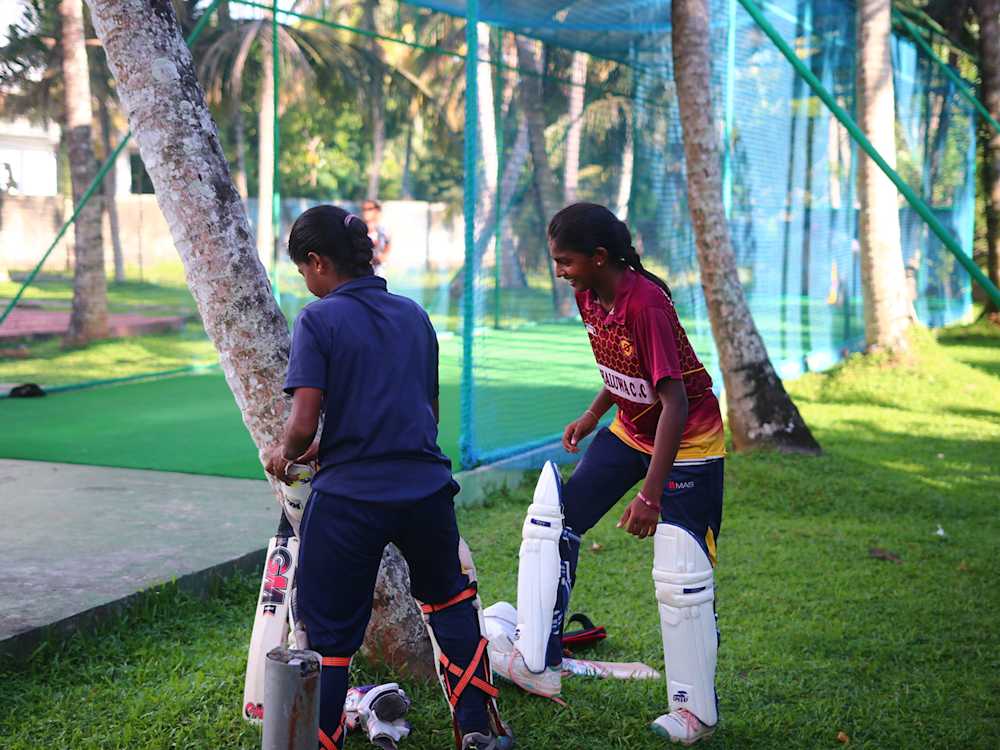
Charlie and Richard Pembroke turned an abandoned plantation into sustainably run Tekanda Lodge — but their charitable Tekanda Foundation goes further still making the ‘gentleman’s game’ more women-friendly for sports-mad local girls.
How did the idea for The Tekanda Girls Cricket Academy come about?
Before opening Tekanda Lodge, Charlie was a housemistress at Marlborough College, and I was a part-time sports coach, starting its Girls Cricket programme in 2016 — one of the first in the UK. I became heavily involved in establishing cricket as a mainstream school sport. Our second daughter Rosie played since she was young but it wasn’t easy for her back in 2010/11 when the girls game was still quite embryonic. In 2022, when we saw how limited opportunities still were for girls to play in rural Sri Lanka compared to the boys, it seemed an obvious programme to start.
The Girls Cricket Program is an extension of the principal aim of the Tekanda Foundation, to provide educational, vocational and recreational opportunities for women and children from rural communities in the region. Charlie’s also a teacher, so creating an education centre, in addition to the day-to-day running of a hotel, was a natural step.
How does Tekanda Lodge draw awareness to the initiative?
We try our best to keep Tekanda Lodge and the foundation separate, and never try to over-promote the foundation’s work to guests, but we’re happy to facilitate visits for guests that request it, and some long-lasting relationships have developed between guests and the foundation as a result. But they are standalone projects with different management teams and we’re conscious of never feeling like the hotel is benefitting from the existence of the foundation, even if the foundation benefits from the hotel.
How has the academy improved the lives of girls in the region?
The Girls Cricket Programme is one of many that we run at the centre, which was named Gamata Athak (‘a hand to the village’ in Sinhala) by locals. It provides courses for more than 400 women and children a week, ranging from Tamil, English and IT to traditional dance, commercial cooking, dress-making and entrepreneurship.
The cricket programme is about providing a safe, collegiate recreational space for girls between seven and 18, allowing them to develop their interpersonal skills. For the most ambitious it is a path into representative cricket. We started three years ago with 15 girls who had never played cricket. We now train more than 100 girls on a weekly basis and five of the original in-take are now playing for Galle District Under 19s and one is playing for Southern Province Under 19s.
How has the foundation helped local women find work?
Our centre is a partnership with the well-established Sri Lankan charity The Foundation of Goodness. They developed a framework to provide rural communities with the skills to narrow the rural-urban skills divide. They’ve been generous enough to allow our foundation to use their template and so we run several six-month courses focusing on allowing women to access micro-business opportunities for themselves and entry-level roles in the tourism sector, such as hotel kitchens. Several of our graduates now either run their own business catering for the local community or work in hospitality — one of our assistant chefs at Tekanda Lodge is a graduate of Gamata Athak.
What are your hopes for the future of Sri Lanka’s rural female communities?
The foundation isn’t about impressing Western values on these communities. We’ve seen first-hand that Western societies have much to learn from their rural counterparts in Sri Lanka. It’s about making opportunities available to those communities to broaden their life choices. To be honest the community stated it best themselves: it’s about providing ‘a hand to the village’.
Rosewood Hotels
Empowering women through the Rise to the Table initiative
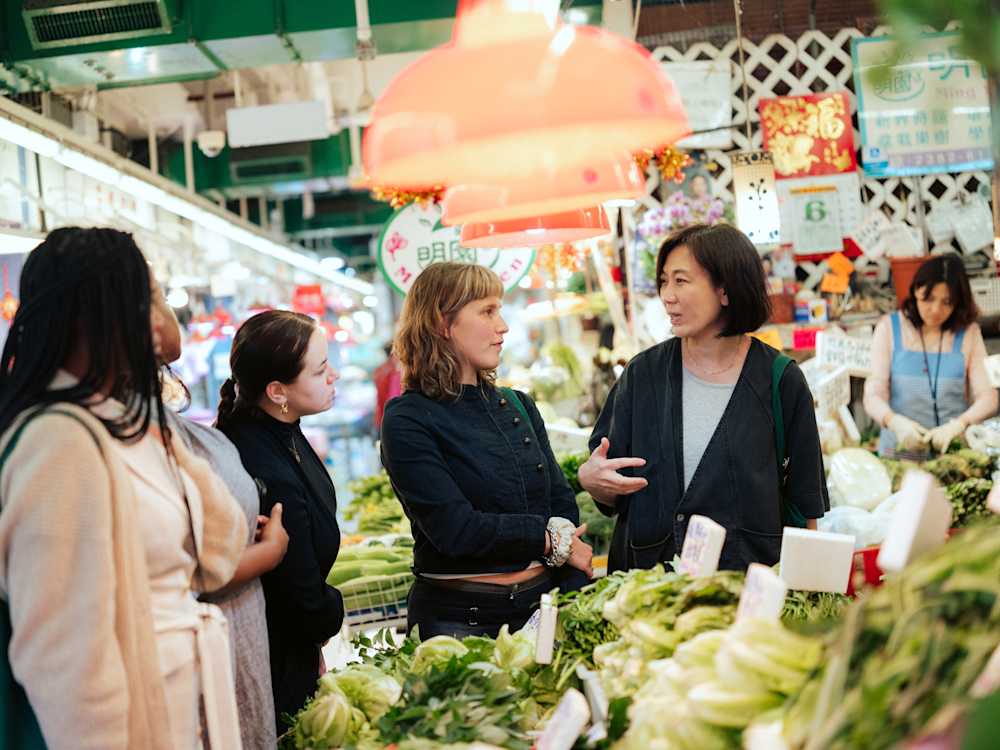
Rise to the Table is the Rosewood Hotel Group and Rosewood Foundation‘s initiative to empower women, but the driving ambition behind it is that it will itself rise into an industry-shifting cultural platform. Its aim is to nurture rising female leaders who are carving out a career in hospitality, and foster a culture of camaraderie and access to opportunity that leads to real change and a new guard of female leadership. We spoke with Mehvesh Mumtaz Ahmed, Rosewood’s Global Vice President of Impact and Sustainability, about the programme, its goals and how they’ll be achieved.
Tell us how the Rosewood Foundation’s Rise to the Table initiative came about?
Rise to The Table was born out of Rosewood’s commitment to creating a future where people and place enrich one another. We see extraordinarily talented women hitting invisible ceilings — not because of a lack of talent or ambition, but access: to sponsors, to strategic skills, to safe spaces. A program like Rise to the Table puts real resources on the line, building structures that enable underrepresented women to lead.
How did you ensure the programme would be most impactful for the women taking it?
When we designed the programme, our priority was impact — both in the short and long term. The programme combines a one-week residency with a year of one-on-one mentorship, alongside leadership training focused on real-world skills. What sets it apart is access: each mentee is hand-matched with a senior Rosewood professional, equipping them with the skills, confidence and connections to advance their careers.
How do you hope participants will use what they’ve learnt to redefine the future of hospitality?
By strengthening their leadership qualities and expanding their networks, we hope they’ll help shape a more inclusive and supportive hospitality industry where women and underrepresented professionals are encouraged to grow, take up space and open doors for others along the way.
Which areas of hospitality have improved for women in the past few years?
In recent years, we’ve seen encouraging progress, particularly with more women stepping into senior leadership roles — CEOs, general managers, and other executive positions.
At Rosewood there’s strong gender representation at all levels, especially in our global Executive Leadership Team, which is almost 50 per cent female, featuring incredible women: CEO Sonia Cheng, who has led the group’s global expansion; Chief Brand Officer Joanna Gunn, who oversees brand, marketing and communications on a global scale; and Jenni Benzaquen, who drives the growth of our residential business worldwide.
There is still work to do, but the direction is positive. We must keep pushing for gender balance because there is no justifiable reason for it to be missing. We must ask questions, build support systems, and champion visibility.
For more supportive stays, see our full collection of Earth- and community-kind hotels