



It’s that time again: when the sun finally breaks through winter’s grey blanket to dapple the Venetian lagoon, and the art world descends upon La Serenissima’s historic rive for the Venice Biennale, running this year until November 22. This, the festival’s 61st edition, arrived under unusual and tragic circumstances. When Koyo Kouoh, the first African woman to be named artistic director of the Biennale, sadly passed away last year, the festival was forced to navigate an unprecedented challenge. With the support of Kouoh’s family, her vision was realised by a team of her close collaborators.
Her chosen theme, In Minor Keys, seeks to explore themes of quiet resistance, sensory experience and emotional connections, focusing on marginalised voices and non-linear narratives. ‘If, in music, the minor keys are often associated with strangeness, melancholy and sorrow, here their joy, solace, hope and transcendence manifest as well,’ said Kouoh’s team in their curatorial statement. And this year’s Biennale has strangeness and solace in abundance. So, grab your tote bag and slip into your most comfortable Tabis: these are our top picks from this year’s utterly bonkers Venice Biennale.
The Giardini
For sacred objects, climate-change protests and fake babies
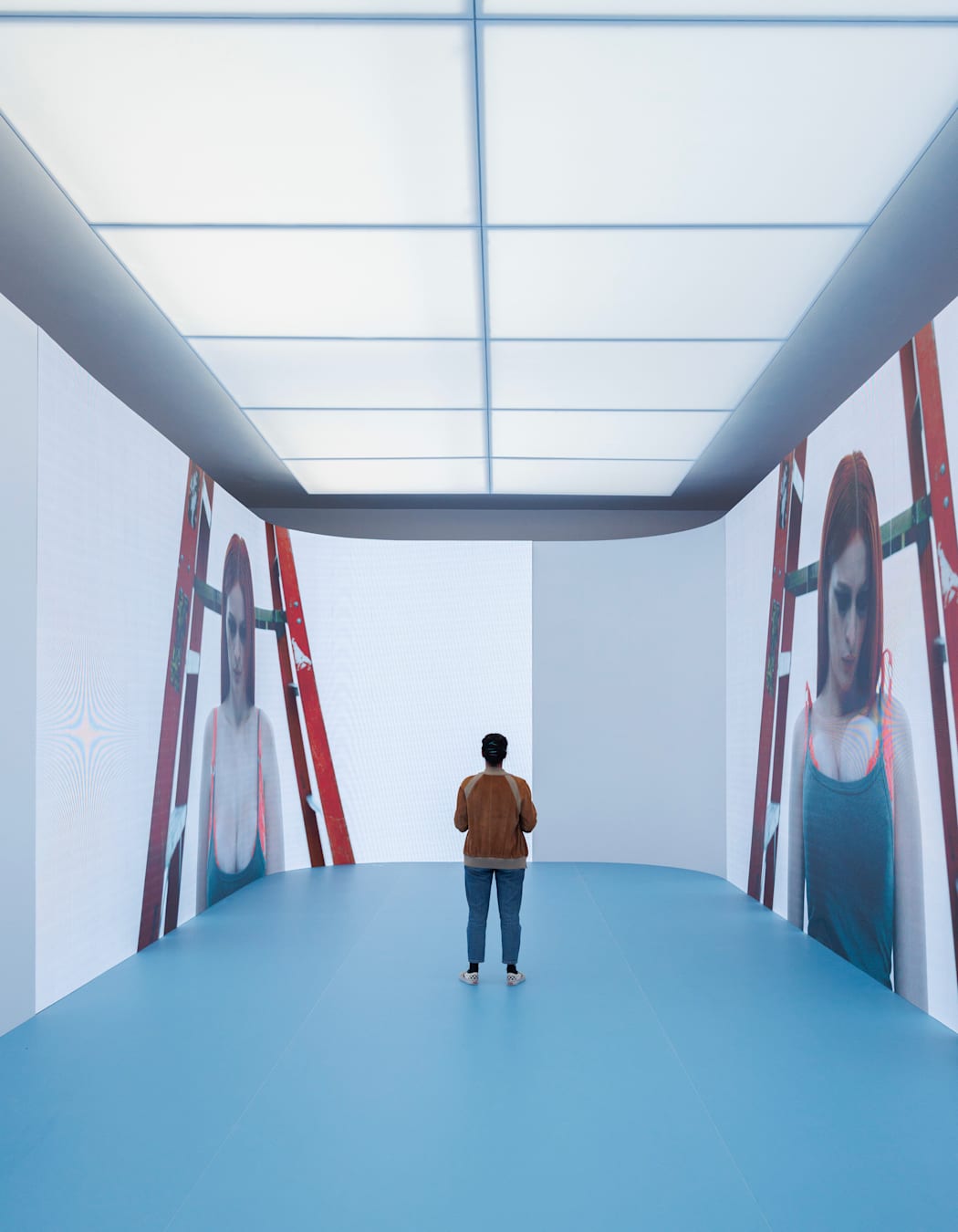
Maja Malou Lyse at the Danish Pavilion — photo by Jacopo Salvi
The central themed exhibition of the Biennale takes place each year in the Giardini. This year, there’s a significant curatorial focus on shrines and how they function within human-centric, spiritual or communal artistic practices. These shrines manifest in bold, bright sculptures, most notably that of New Orleans artist Big Chief Demond Melancon, which guards the entrance to the central pavilion and looks a little like Big Bird in drag. Sabian Baumann’s ghostly drawings set symbols of transformation and hope against more dystopian details — an apt metaphor for life in 2026 — and Sohrab Hura’s series of pastel paintings, Things Felt But Not Quite Expressed, depicts tender moments from daily life that feel diaristic and intimate.
Out of the 30 permanent national pavilions within the Giardini, there are two clear crowd-pleasers, both with long — but worth-standing-in — queues. The first is the Danish pavilion, represented this year by Maja Malou Lyse (the youngest artist, in fact, to ever represent the Scandinavian nation). Her thought-provoking ‘bimbo sci-fi’ film, set in a futuristic sperm bank, explores the power of images and poses a radical question: could porn be the unlikely hero of the global fertility crisis? The second is Seaworld Venice at the Austrian pavilion, which artist Florentina Holzinger has transformed into an abject waterpark-slash-sewage-treatment-plant where a troupe of naked performers do doughnuts on jet-skis and hang upside down from a hoisted bronze bell, using their bodies to strike the sides like a clapper. It’s quite the spectacle — a visceral commentary on climate change and power — but certainly not for the faint of heart.
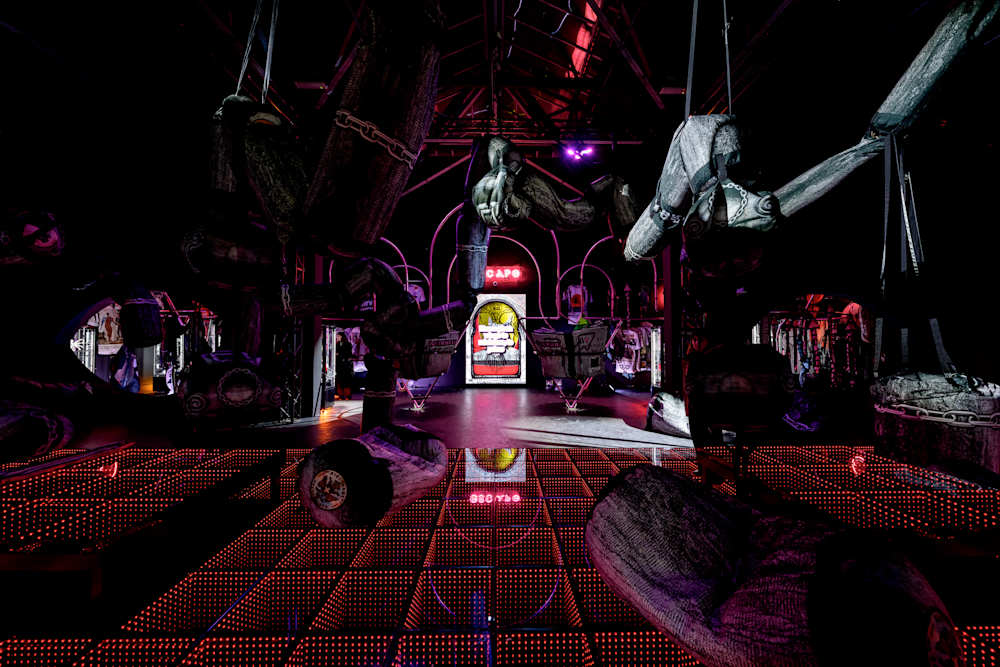
Andreas Angelidakis at the Greek Pavilion — photo by Andrea Avezzù
Elsewhere, Andreas Angelidakis’ show at the Greek pavilion greets guests with a peculiar message: ‘Dear Visitor, we regret to inform you that Grecia has escaped.’ Having reimagined the pavilion as a drag queen, the exhibition is part-escape room, part-disco and part-dungeon, bathed in neon lighting and peppered with plush versions of Byzantine ruins. Greece’s Giardini neighbour, Romania, is also worth a visit for its large-scale audiovisual installation by Anca Benera and Arnold Estefán. Further along, Yto Barrada’s tactile universe at the French pavilion delves into revolution and myth; and Sung Tieu and Henrike Naumann have transformed the German pavilion into a study on memory and migration. Finally, Ei Arakawa-Nash’s exhibition at the Japanese pavilion turns visitors into temporary parents, requiring them to navigate the show while cradling weighted, shades-sporting baby dolls. It feels like an absurd equaliser to watch some of the art world’s most glamorous ‘change’ the nappy of a fake baby — inside which is a QR code that leads you to a poem written specifically for your plastic tot.
The Arsenale
For meditations on death, childhood callbacks and the unmentionable
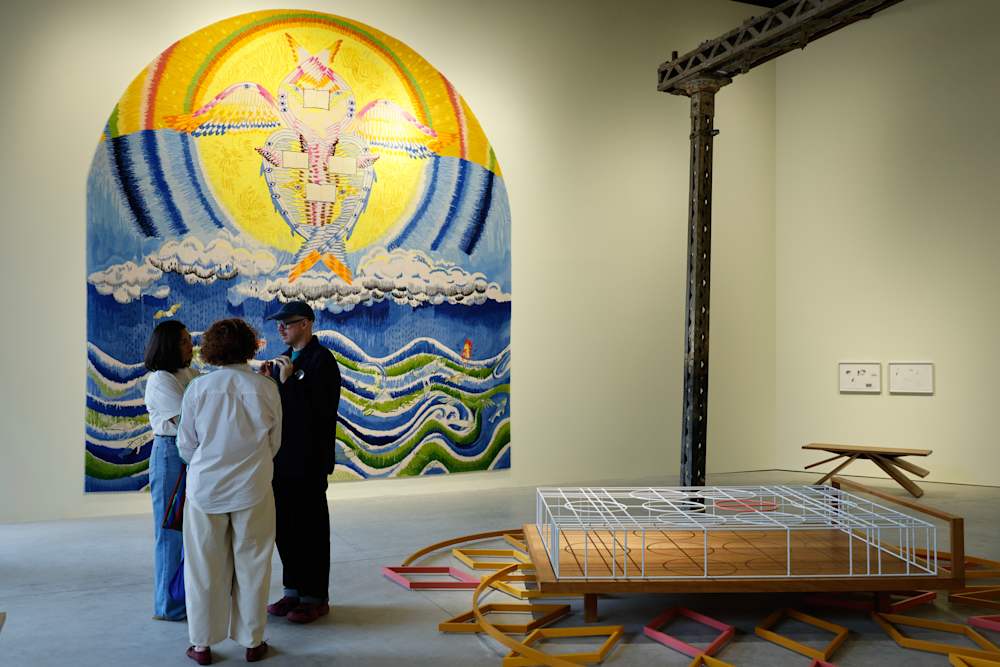
Isabel Nolan at the Pavilion of Ireland — photo by Jacopo Salvi
In the main hall, Theo Eshetu’s The Garden of the Broken-Hearted is a stand-out. It involves a large olive tree that rotates slowly on a platform, gradually losing its leaves as it spins without water or sunlight. Superimposed onto the tree is a video of it full and thriving — a poetically brutal message about temporality. Nearby, Brazilian artist Ayrson Heráclito displays a cluster of stainless-steel sculptures that feel at once folkloric and futuristic, cosmic and cultic. Guadalupe Rosales explores the aesthetics of Chicano youth, who have long shaped the feel and fabric of LA; and Nina Katchadourian re-enacts rituals of play from her childhood in her joyful film The Recarcassing Ceremony. I loved Carrie Schneider’s installation, too, which transforms rolls of high-contrast film images into a monumental sculpture.
In the Arsenale’s Irish pavilion, Isabel Nolan’s Dreamshook captures the fleeting, disorienting moment of waking — that strange, unsettling period where reality feels thin and the logic of the day has yet to set in. Spanning hand-tufted tapestry, delicate drawings and sculpture, her work is inspired by imagery from the Middle Ages and early Renaissance. It’s a space where possibilities stretch out, unburdened by the constraints of the fully conscious mind. Elsewhere, Luxembourg breaks taboo with Belgian artist Aline Bouvy’s video installation La Merde, which is about exactly that. We’ll spare you the details here but it’s a comment on shame as a social construct. Ahem.
For all its theatricality and sensationalism, the Arsenale is at its best when it hits those minor keys. In the Ukrainian pavilion, Zhanna Kadyrova presents a contemplation on memory, displacement and endurance with a video installation that tracks the evacuation of the Origami Deer from the city of Pokrovsk in 2024 due to the approaching frontline. Likewise, in the Slovenian pavilion, Nonument Group’s installation is stark and subtle. Repurposing the remains of the previous Architecture Biennale, they transform the space into a rubble-strewn landscape that functions as a poetic interrogation of waste, art and the leftovers of history.
Satellite Pavilions and Shows
For American dreams, surrealism and absurdist realities
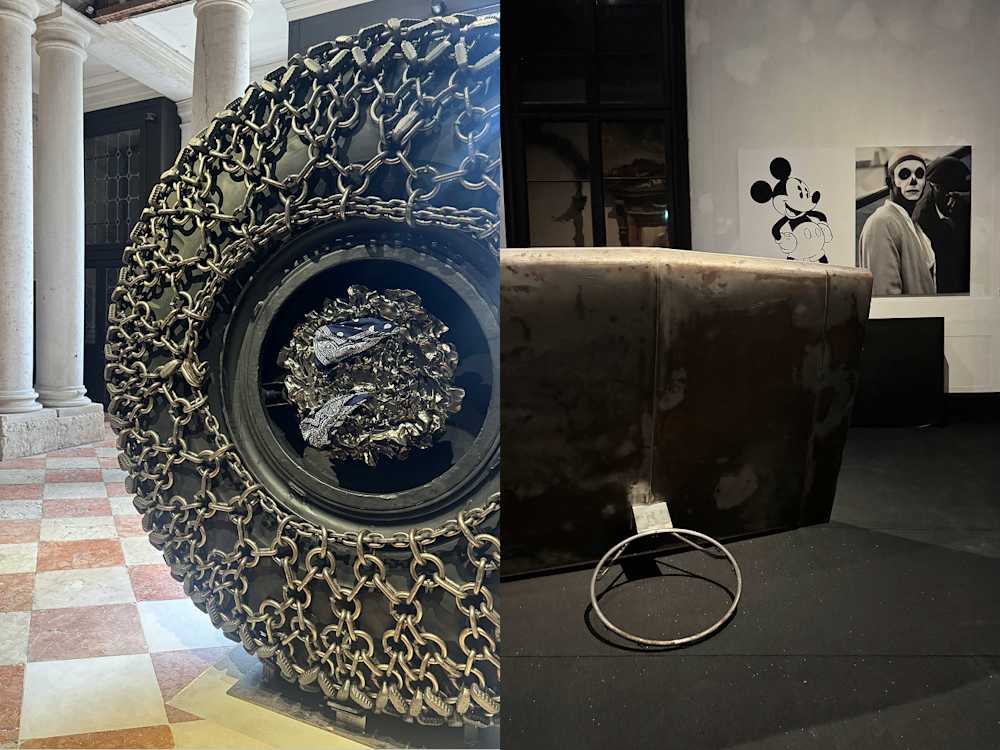
Helter Skelter, Arthur Jafa and Richard Prince at Fondazione Prada
The best thing about the Biennale (second only to those midday Aperol spritzes) is the sheer amount of extracurricular activity in the city. Venice comes alive, with culture activating every crumbling palazzo and deconsecrated church it can get its paint-splattered hands on. This year, these shows are strengthened with a duo of new gallery openings: the Fondazione Dries Van Noten and the Fondazione Sandretto Re Rebaudengo. My favourite was Helter Skelter at Fondazione Prada, which puts Arthur Jafa and Richard Prince in conversation to produce a show that sinks its gold-grilled teeth into the American mythos, interrogating the racial and social tensions baked into our media landscape. Think monster-truck rubber, cowboys, rock stars and pin-up girls, smouldering under 18th-century Baroque frescoes.
At Ca’Pesaro, Hernan Bas directs his gaze to a familiar archetypal villain in this part of the world: the tourist. Though he does so with a little sympathy, a lot of satire and an incredible aptitude for surface. In Palazzo Loredan, Sanya Kantarovsky continues his exploration into humanist and art-history themes, such as spirituality, alienation and vulnerability, with a new body of work made specifically for the space. Meanwhile, Taiwan’s presentation, Screen Melancholy by Li Yi-Fan uses game engines to produce a uniquely unsettling yet comical video that probes our relationship to images and digital media. It’s a Lynchian fever dream that layers up reality like a lasagne and makes it impossible to tell where the ‘real’ world ends and another simulated one begins.
Lydia Ourahmane’s cleverly conceptual show at the Nicoletta Fiorucci Foundation is born from her research into Poveglia, Venice’s supposedly haunted island. And then there’s Isola di San Giacomo, another (importantly, not haunted) island that has just opened as a cultural centre thanks to a six-year renovation by Fondazione Sandretto Re Rebaudengo. What was once a Napoleonic military base has been turned into an art-filled hub with three galleries, landscaped gardens and a handful of outdoor sculptures. The highlights here are Matt Copson’s show Fanfare/Lament, which includes a dozen kites shaped like vein-mapped eyeballs flapping in the lagoon breeze; and Hugh Hayden’s Huff and a Puff, a slanted chapel blending American and Italian architecture into an unusual space shaped by fairy tales and reflection.
Find out how to plot the perfect weekend in Venice, then discover 10 of the best Venice hotels
Images courtesy of La Biennale di Venezia