


From the idyllic landscapes immortalised by some of the world’s greatest artists to sun-drenched vineyards that provide copious amounts of pale rosé, there are many obvious reasons to visit Provence. However, there is one that often slips under the radar when booking flights: the brocantes.
A word beloved by second-hand and antiques enthusiasts, brocante translates loosely as ‘flea market’. Whether you’re looking for a bargain or one-of-a-kind pieces for your home, brocantes can (and often do) offer it all. Their magic lies in the thrill of discovery — you never know what you might find. Among the inevitable tourist tat (sadly, it’s everywhere), you might stumble upon old oil paintings, linen tableware, furniture, glassware and much more.
As a committed antiques hunter back in the UK, I booked a trip to Provence with a mission to explore the brocante scene. Here are the treasures I uncovered…
Vaison-la-Romaine
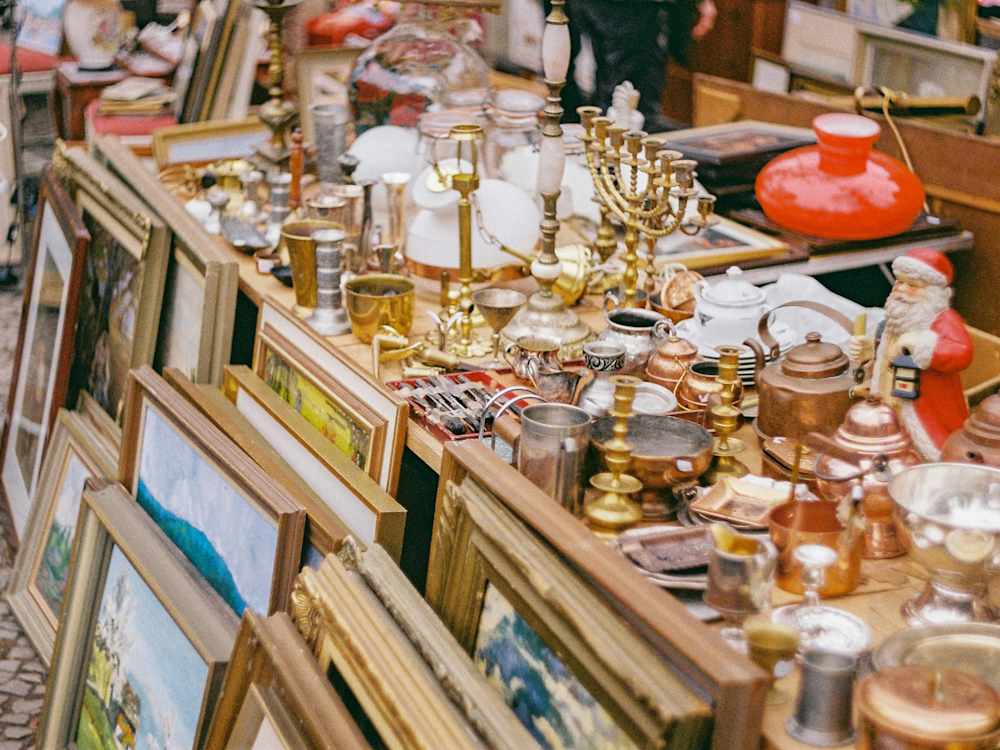
On the third Sunday of each month, the mediaeval town of Vaison-la-Romaine — worth a visit for its extensive Roman ruins alone — holds a bustling monthly brocante. Set in Place François Cévert, it kicks off around 8am and sees all sorts of trinkets, books and decorative objets for sale. It was highly recommended by several London interior experts — insiders who know a thing or two about antique hunting.
Just under 40 minutes’ drive away, winding through equally beautiful landscapes, is Hôtel Crillon le Brave; a peaceful Provençal hideaway overlooking rolling vineyards and olive groves. If your timing doesn’t coincide with the brocante, Vaison-la-Romaine also hosts a great market on Tuesdays and Saturdays in the main square, offering crafty goods, local produce and plenty of classic French fare.
Cours Mirabeau and Maison Empereur in Marseille
There is no shortage of things to see and do in Aix-en-Provence, a picture-perfect city that ticks every quintessential French destination box: leafy squares, handsome Baroque and classical architecture and rows of wooden shutters. Art lovers should pay a visit to Cézanne’s Studio — he was born in Aix-en-Provence — or the Musée Granet, which houses masterpieces by Rembrandt, Monet, Van Gogh and Picasso.
On one Sunday of each month (dates vary), the city’s Cours Mirabeau — a 440-metre boulevard lined with cafés and brasseries — transforms into an open-air antiques fair that runs from 8am until 8.30pm and is full of eclectic finds. There’s also a dedicated antique-book market at Place de l’Hôtel de Ville on the first Sunday of every month, while the traditional market — held on Tuesdays, Thursdays and Saturdays — offers fresh Provençal produce and crafts (I bought some great pottery). For more dedicated treasure hunting, Aix Antiques Family Achat Antiquités Brocante on 355 Route des Milles is also worth a visit.
Just half an hour’s drive away lies Marseille, home to one of the most memorable shops of my trip — even, perhaps, one of the best I’ve ever come across. Maison Empereur, an old-fashioned homeware emporium, stocking everything from ornate door knockers and elegant wooden dustpans to soap, linens, cookware and more. While there are a few antiques for sale — mostly toys — the real joy here is in the sheer abundance of beautifully made, practical objects. I left with a colander, a nail brush and much more, and can wholeheartedly say it’s an unmissable stop.
L’Isle-sur-la-Sorgue and Avignon
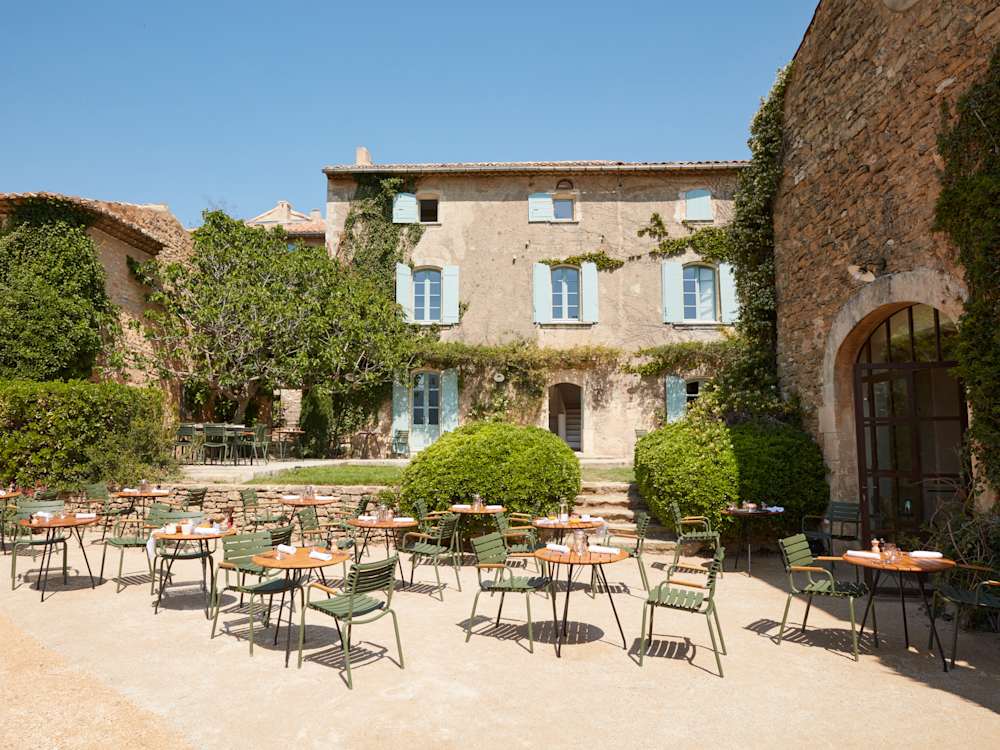
Bastide du Mourre, a rustic 17th-century country house in the heart of the Luberon, makes an ideal base for exploring the region’s many brocantes. Chief among them is L’Isle-sur-la-Sorgue, a pretty town made up of quaint, typically French buildings and winding side streets, just a 20-minute drive away.
It’s a major hub for antiques dealers and collectors, with a twice-yearly international fair (in April and August), which draws over 500 exhibitors and visitors from across the globe. On Sundays, the town also hosts an outdoor antiques market that is just as good — if less crowded — and perfect for a leisurely rummage. A word to the wise: parking is tricky, so aim to arrive by 8.30 to 9am.
Beyond the markets, L’Isle-sur-la-Sorgue is home to more than 250 bricks-and-mortar antiques shops, situated in clusters that are really exciting to explore. Just when you think you’ve reached the end, more stores reveal themselves. Begin at the Avenue de la Libération, where multiple shops are dotted around tucked-away courtyards — you’ll find plenty of statement pieces, but many at equally statement prices. Then, make your way to Avenue des Quatre Otages, which is lined with shops offering everything from chairs and chests of drawers to ceramics. There’s something for everyone.
Further afield, you’ll stumble upon Avignon Antiquités, a cavernous roadside warehouse packed with well-priced pieces across two floors — just half an hour’s drive from Bastide du Mourre. Don’t be put off by the exterior: it’s a treasure trove. In Avignon itself, bargain hunters should set their alarms for the Saturday morning brocante at Place Charles David (from 7am).
Aix-en-Provence
The ultra-luxurious Villa La Coste is not only nestled among scenic vineyards (be sure to book a wine tour), but also doubles as an outdoor gallery, dotted with sculptures and immersive installations by world-renowned artists. Just outside Aix-en-Provence — making it an easy addition to any antiques-hunting itinerary — the Château La Coste estate is worth visiting for the art alone.
On the art tour (from €15 a person), you’ll encounter Louise Bourgeois’s striking Crouching Spider, apparently suspended above the water; a Tracey Emin piece in situ amid the forest canopy; and Prune Nourry’s Mater Earth — a reclining, pregnant figure immersed into the landscape. And there are many more, all on a two- to three-hour walk that takes you through the estate’s sprawling grounds.
How to hack the haggle
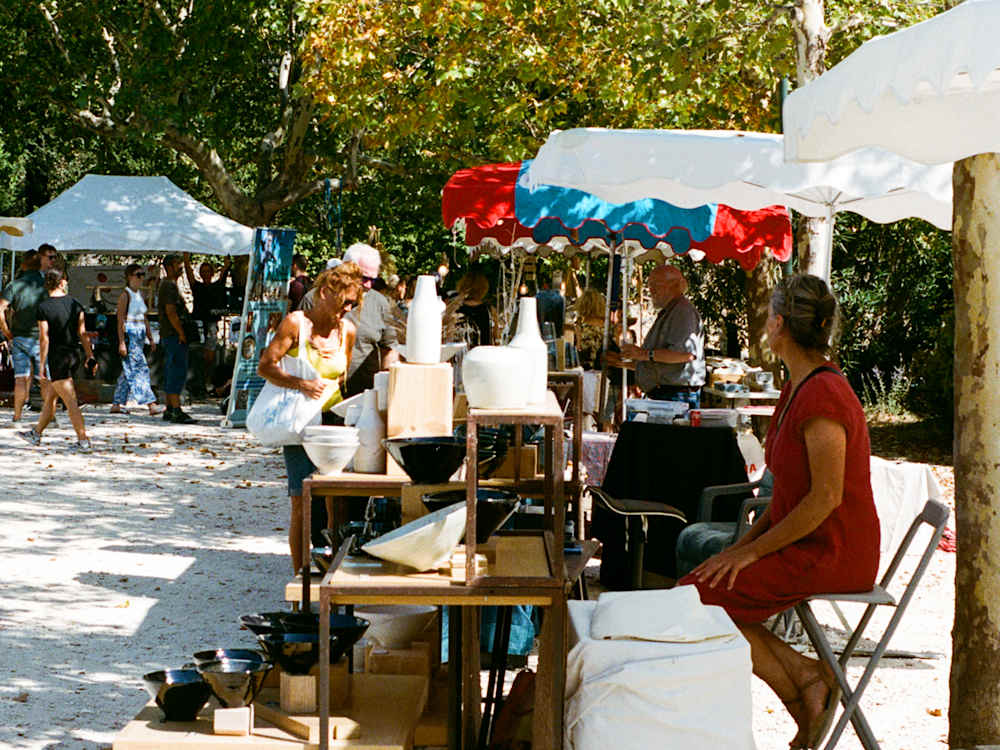
Set yourself up for shopping success at Provence’s brocantes with these tips (nb: I learned the hard way).
– Get there early. Not only will you have more choice and space to enjoy perusing, but it will be much easier to find a safe parking space (essential if you’re in a rental car and aren’t quite sure what your insurance covers).
– Keep cash to hand. You’ll have more bargaining power with sellers.
– Haggle! While it may feel awkward at first to the uninitiated, vendors often expect it. They’ll either accept your offer or counter with another — treat it like a game and enjoy the fun of it.
– Learn a few key phrases in French — ‘C’est combien?‘ (How much?); ‘On peut faire €20?‘ (Can we make it €20?) — along with some basic numbers. Google Translate can back you up, but you’ll earn bonus points if you can converse with a stallholder first.
– Keep an eye on roadside signs advertising ad hoc brocantes that aren’t on a regular schedule — some are really worth the detour.
Uncover our full collection of boutique and luxury hotels in Provence
Hannah Coates is a writer and editor whose work has appeared in The New York Times, The Guardian, Elle, Sunday Times Style and Vogue, where she was formerly Beauty and Wellness Editor. She writes about beauty, wellbeing, interiors and lifestyle, with a focus on simple, thoughtful ways to live a healthier, happier life.